This article contains affiliate links: if you buy through them we may earn a commission, at no extra cost to you. Learn more.
It’s July, the ice is months away, and a skater is in a garage in socks and slippery booties, sliding side to side on a long plastic board, knees bent, back flat, arms swinging like on the straightaway. Later that day there’s a long bike ride, and tomorrow a session of low walks and jumps in the park. That’s speed skating off the ice: a lot of work that looks nothing like racing but builds everything racing needs. This page covers how skaters at every level, from a 10-year-old in a club program to an Olympian, train before the season: dryland and imitation drills, the slide board, cycling, strength, and the hardest part of all, holding the low position.
General guidance. Young skaters should train with a qualified coach, and anyone coming back from injury should follow their PT’s or doctor’s plan. Back to the speed skating hub.
What speed skating asks of your body
Speed skating needs both power and endurance. In a 2026 study of elite short track skaters, the aerobic system supplied about 22% of the energy in a 500 m race, 35% in the 1000 m and 44% in the 1500 m; the rest came from fast, anaerobic energy. Long track distances run from 500 m sprints to 5,000 and 10,000 m races, so the mix shifts again. A 2026 review of Olympic ice sports reports that elite long and short track skaters train about 900 to 1,100 hours a year, mostly with a “polarized” mix of a lot of easy work, a little very hard work, and not much in between, across several types of training. A study of Olympic medal winners’ programs over 38 years found the same shift toward polarized training, and, surprisingly, no link between more total hours and faster times. How you train matters more than how much.
The low position: the skill that makes it hard
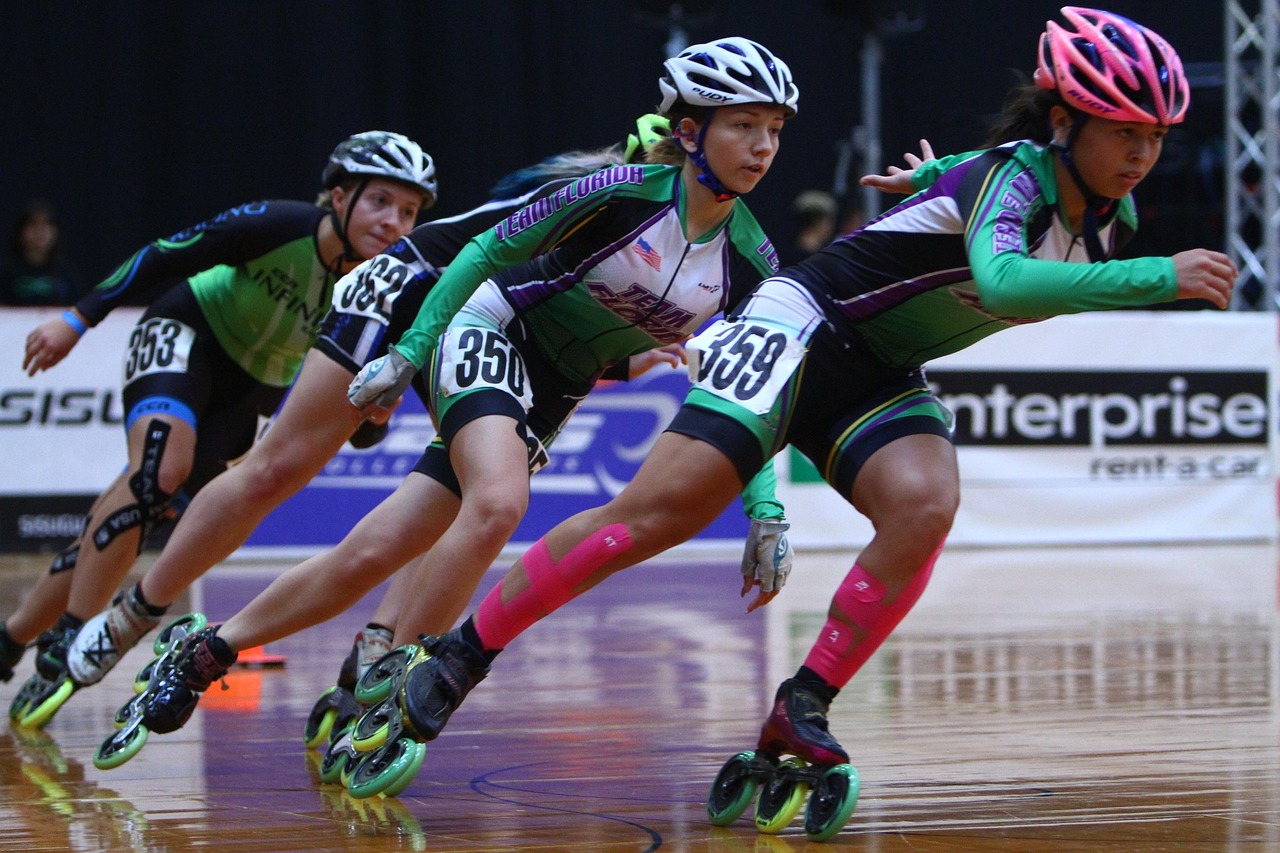
Speed skaters skate in a deep crouch: knees bent sharply, upper body almost flat, to cut air resistance and push sideways with power. A review of long track research explains the catch: the lower and more bent the knee, the more the thigh muscles squeeze their own blood supply and run short of oxygen. In elite short track skaters, the thigh muscles hit their lowest oxygen levels within the first part of a race, well before whole-body oxygen use peaks. That’s why skaters “sit up” as they tire, and why the crouch has to be trained like a fitness quality, not just a technique.
- Static holds: the skating position against a wall or freestanding, building from short holds to longer ones, with a flat back and the weight in the heels.
- Low walks and duck walks: moving forward in the crouch, keeping the hips level.
- Imitation drills: the dryland version of the stroke: side-to-side jumps and push-and-hold drills, landing balanced on one leg as you would on the blade.
- Build it gradually. Long hours in the crouch are linked with back pain in young skaters, so add volume slowly and keep the trunk strong. See speed skating injuries.
Dryland training
Dryland is everything a skater does off the ice: imitation, jumps, sprints, agility and core work. It’s the backbone of summer training and keeps going, in smaller doses, through the season. One example of how directly it carries over: in a study of nine highly trained short track skaters, two dryland sprint-start sessions a week for four weeks (nine timed starts of 14.43 m each) gave a small but real improvement in their on-ice starts. Dryland also covers balance: in a 12-week trial with young speed skaters, a 15-minute balance circuit five times a week improved ankle stability, which matters when you balance on one thin blade.
Slide board training
The slide board is the closest thing to skating without ice: a slippery surface with bumpers at each end, used in booties over your shoes. You push off one bumper, glide across in the low position, and land on the other, just like the side-to-side push of a skating stride. It trains the stroke, the crouch and fitness at the same time, and it’s small enough for a garage or basement.
There’s research on it, too. In a 2026 trial, 27 youth speed skaters trained on a slide board three times a week for four weeks. The two interval groups (3 minutes of work with 2 minutes rest, or 4 minutes work with 1 minute rest) improved their maximal oxygen uptake and anaerobic power; 20 minutes of steady, moderate sliding didn’t make a meaningful difference in that short time. Start with short sets to learn the position, then build to intervals. The SPRI Slide Board (71 x 20 in, with end stops, booties and a bag) is a popular home option.
Cycling cross-training
Speed skaters and bikes go together: cycling uses the same big leg muscles, can be done for hours with little impact, and is easy to make very hard or very easy, which suits polarized training. Researchers even test speed skaters on bikes; a 2026 study measured elite male skaters’ muscle oxygen in a 2-minute cycling time trial. In a trial with high-level inline speed skaters (a sport with the same off-season problem), eight weeks of easy-paced cycling or running twice a week both improved skating endurance, with no difference between the two. The authors’ note is worth keeping: fitness built on a bike still needs skating-specific technique work afterward.
Ride outdoors with a helmet and lights, or indoors on a smart trainer like the Wahoo KICKR CORE 2 when weather or traffic make that hard. Mixing slide board, inline skating, cycling and dryland also spreads the load across different movements. Our cycling training page has more on structuring rides.
Strength and power
Strong legs skate faster. In 17 young short track skaters, the concentric strength of the knee extensors (the quads pushing the knee straight) was closely tied to skating times and speeds. The same study found leg force dropped by about 25% when the skaters were tested standing on skates, so strength has to be matched by stable ankles and knees to reach the ice. In a 39-week program with 23 sub-elite to elite long and short track skaters, alternating strength and power blocks built strength without losing power, and stronger, more powerful skaters raced faster.
- Legs: squats, split squats, step-ups and single-leg work, plus lateral lunges and side-to-side bounds for the sideways push.
- Hips and groin: band walks, side-lying and Copenhagen-style adductor exercises.
- Trunk and back: planks, side planks, bird dogs and back-extension work to hold the flat-back crouch.
- Power: jumps and short sprints, done fresh, early in the session.
The American Academy of Pediatrics supports supervised, technique-first strength training for kids and teens. A set of loop bands like the Fit Simplify bands covers hip, glute and warm-up work at home; see our resistance bands guide.
SPRI Slide Board
- 71 x 20 in
- End stops, booties and bag
- About $49
Wahoo KICKR CORE 2
- Direct drive, ±2% power accuracy (reviews)
- Up to 1,800 W, 16% grade
- Launch price about $550
Fit Simplify Loop Bands
- Set of 5, extra light to extra heavy
- 12 x 2 in natural latex
- About $16
How a training year fits together
- Spring: a real break after the season, then easy cycling, running or inline skating and general strength.
- Summer: the big dryland block: slide board, imitation, low walks, long rides, heavier strength work. Inline skating is popular for keeping the feel of the stride.
- Fall: back on the ice. Ice time goes up, dryland comes down; power and race-pace work begin.
- Race season: keep a little strength and dryland each week, keep easy days easy, and plan rest around competitions. Tracking heart rate and recovery can help; see speed skating wearables.
For young skaters, the American Academy of Pediatrics recommends at least one to two days off a week from the main sport and about three months off a year, in one-month blocks, which suits skating’s natural spring break. Then take what you’ve built into the season with our speed skating race day guide.
Speed skating training: FAQs
How do speed skaters train in the summer?
With dryland: imitation drills, low walks, jumps and sprints, slide board sessions, long bike rides, inline skating and strength training. The aim is to build fitness, strength and the low position before the ice comes back.
Does slide board training work for speed skating?
It copies the side-to-side push of the stride, and in a 2026 trial, four weeks of slide-board intervals three times a week improved aerobic and anaerobic fitness in youth speed skaters. Steady, moderate sessions alone did less in that time.
Why do speed skaters cycle so much?
Cycling trains the same leg muscles with little impact and makes it easy to do long easy rides and hard intervals. In inline skaters, eight weeks of cycling improved skating endurance; technique work on skates is still needed afterward.
How can I hold the low skating position longer?
Train it directly with holds, low walks, imitation and slide board work, and build leg and trunk strength. A deep knee bend limits blood flow to the thigh muscles, so the position takes specific fitness; add volume gradually to protect your back.
How many hours do Olympic speed skaters train?
A 2026 review reports about 900 to 1,100 hours a year for elite long and short track skaters, mostly easy with some very hard sessions. But a 38-year study of Olympic medalists found more hours alone didn’t mean faster times.