This article contains affiliate links: if you buy through them we may earn a commission, at no extra cost to you. Learn more.
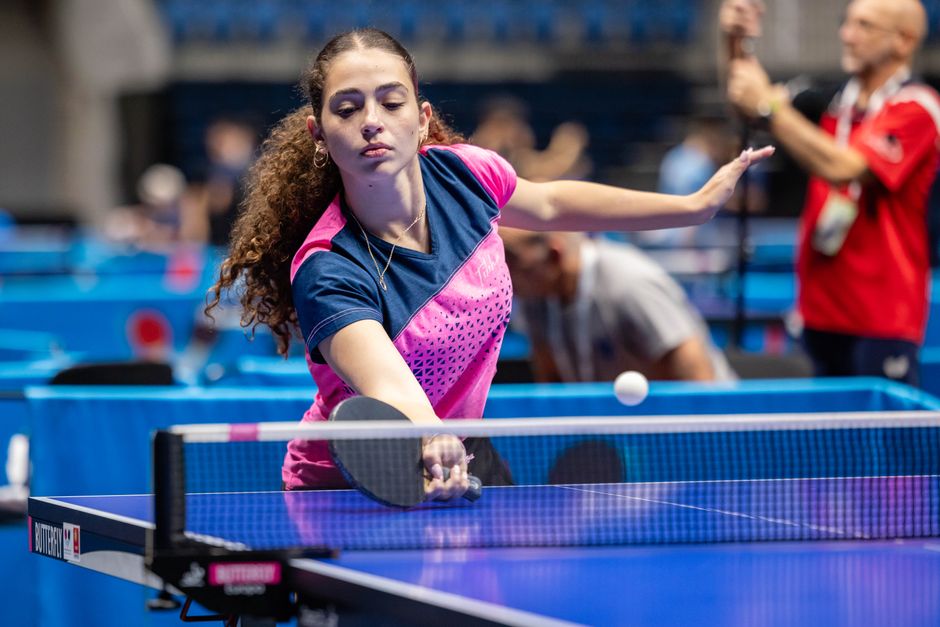
Third hour of a Saturday tournament in a school gym. Twelve tables in rows, barriers between them, the click of white plastic balls everywhere. A 14-year-old steps wide to his forehand for the hundredth time today and feels that familiar ache just below the kneecap. Across the hall, a 50-year-old club player rubs the outside of her elbow between games. Table tennis injuries rarely look dramatic: the sport has no contact and a ball that weighs under 3 grams. But the fast footwork, the twisting topspin strokes and the hours at the table add up. This page covers what actually goes wrong, from juniors to Olympians and league players, what helps prevent it and when to get checked.
This page is general information, not medical advice. If you’re hurt, see a sports medicine doctor, physical therapist (PT) or certified athletic trainer (AT). For the bigger picture of the sport, start at our table tennis hub.
How often table tennis players get hurt
Not often, compared with most sports, and mostly from overuse. At the 2008 Beijing Olympics, 5.2% of table tennis players reported an injury; at London 2012 it was 6.3%. A 2022 scoping review of 42 table tennis studies found the most common problems were tendon-sheath irritation (tenosynovitis), mild muscle injuries, strains and sprains, and the most affected areas, in order, were the legs, shoulder, spine and knee. The authors warned that most of those studies had a moderate or high risk of bias, so the numbers are rough.
Two newer studies sharpen the picture. In a 17-year study of 139 national-level French juniors (ages 8 to 19), there were 1.2 injuries per 1,000 hours of play, and 82.6% were overuse injuries. Knees (30.5%), feet (16.8%), the lower back (14.7%), shoulders (12.6%) and groin (10.5%) led the list. At the elite end, 11 of 19 professional players at the French National Sports Institute (58%) reported hip pain, and 8 had femoroacetabular impingement (FAI), a hip-shape problem.
The review’s risk factors are worth knowing: higher body weight, older age, long training histories (more than 5 years or more than 20 hours a week), poor warm-up, poorly planned training, overtraining and not resting enough after an injury. Female players had more injuries in some studies; others found no difference.
The most common table tennis injuries
Shoulder
The forehand loop is a big, fast rotation of the playing arm, repeated thousands of times a week. Rotator cuff problems were the single most common diagnosis in one study in the review, and shoulder tendinopathy made up 11.6% of injuries in the French juniors. The American Academy of Orthopaedic Surgeons (AAOS) describes shoulder impingement as pain and stiffness lifting the arm, often worse at night, and notes it can take several weeks to months to settle. Fatigue matters too: in 19 elite Chinese players, a fatiguing protocol dulled shoulder position sense in both arms and made forehand placement less accurate.
Elbow and wrist
Pain on the outside of the elbow is the classic “tennis elbow” (lateral epicondylitis), an overuse problem of the forearm tendons that AAOS links to racket sports among other activities. It shows up as pain or burning on the outer elbow and a weaker grip, and AAOS says 80% to 95% of people do well without surgery. The wrist takes the flick and snap of serves, backhand flicks and blocks; tendon irritation in the playing hand and wrist fits the review’s finding that tenosynovitis and tendinopathy top the list. Many players with elbow pain wear a counterforce strap like the McDavid elbow strap, and PTs often use forearm exercises with a rubber bar like the TheraBand FlexBar. Neither is a treatment on its own; ask your PT what fits.
Lower back and hips
Table tennis is played bent forward, with constant trunk rotation to one side. Chronic low back pain made up 8.4% of the French juniors’ injuries and hip impingement 6.3%; the professional study above found hip pain was common and that none of the players had expected it before turning pro. AAOS says most low back pain settles within weeks, but leg weakness, loss of bladder or bowel control, fever or pain that lasts more than a few weeks needs a doctor promptly. A deep, pinching groin or hip pain during wide forehand steps is worth getting checked rather than played through.
Knee and ankle: the footwork injuries
Good table tennis is mostly legs: short, explosive side steps, crossovers and lunges for wide balls. A 2025 motion-lab study of 18 elite players found the two most used steps load the body differently: the chassé (side shuffle) step put more load through the knee, and the one-step put more through the hip. Another lab study found that fatigue cut calf muscle activity and heel lift in elite players. For growing players, the knee pain is often a growth-plate problem: in the French juniors, 40% of injuries were growth-related, led by Osgood-Schlatter disease (15.8%), its cousin at the bottom of the kneecap, Sinding-Larsen-Johansson (9.5%), and Sever’s disease in the heel (13.7%). AAOS notes Osgood-Schlatter usually fades when the growth spurt ends.
Ankle sprains happen when a foot lands awkwardly during a fast lateral move or on a stray ball. The National Athletic Trainers’ Association (NATA) says the most consistent risk factor for a sprain is a previous sprain, and recommends taping or a brace (such as the lace-up ASO EVO) for athletes with a past sprain, plus balance training. Shoes matter on slick gym and sports floors: thin, grippy court shoes built for table tennis, like the Mizuno Wave Medal 7, keep you low and stable. Running shoes with thick, soft soles can roll more on sharp sideways moves. Our ankle brace guide compares more options.
Mizuno Wave Medal 7 Table Tennis Shoes
- Built for table tennis
- Low, grippy court sole
- About $145, price varies by size
McDavid Tennis/Pickleball Elbow Strap
- Counterforce band
- Dual Sorbothane pads
- About $20
TheraBand FlexBar (Red)
- 12 in rubber bar
- About 10 lb to bend into a U
- About $15
ASO EVO Ankle Stabilizer
- Lace-up with figure-8 straps
- Fits left or right foot
- Low profile
Eye strain, lighting and eye safety
Table tennis asks a lot of your eyes: tracking a 40 mm ball spinning fast over a 2.74-meter table, for hours. Real eye injuries from the ball are rare; the scoping review found table tennis behind just 1 of 118, 2 of 63 and 1 of 45 sports eye injuries in three hospital case series. Tired, dry or achy eyes after a long day are more common complaints, and a few things help:
- Good, even light. The ITTF (the world governing body) asks for at least 1,800–2,000 lux over the playing area at world and Olympic events, at least 1,000 lux in practice halls, the same light level on every table, a dark background and lights at least 5 meters up. Dim, patchy garage or basement light makes you strain.
- Blink and rest. The American Academy of Ophthalmology (AAO) notes people blink about 15 times a minute normally but only 5–7 times a minute on screens, which dries the eyes. Between matches, look up from the phone, look into the distance and use the breaks to rest your eyes.
- Get your eyes checked. A small uncorrected vision problem shows up fast in a sport this quick. The AAO says to see an eye doctor if your eyes are consistently red, blurry, watery, light-sensitive or painful.
- One good eye? The American Academy of Pediatrics and AAO say athletes who are functionally one-eyed should wear proper eye protection in all sports.
There’s even a hint that the sport is kind to young eyes: in one 2026 study of 239 teenagers, those who played table tennis had a smaller shift toward nearsightedness over time and reported less visual fatigue. It’s an observational study, so it can’t prove cause.
Prevention: what helps
There are no big prevention trials in table tennis yet; the review calls for them. These steps come from the risk factors above and from the sports-medicine basics:
- Warm up properly. Poor warm-up is a listed risk factor. Five to ten minutes of easy movement, side steps and shoulder circles before hitting, not just the 2 minutes of practice rallies the rules allow at the table.
- Manage the hours. Long training weeks and overtraining show up again and again. Build volume gradually, and take a lighter week after a heavy tournament block.
- Strength for legs, hips, trunk and shoulder. Rotator cuff and shoulder-blade work, single-leg strength, and core work for the twisting. See our table tennis training page for how players build it.
- Train the other side. The sport is one-sided; rotation and strength work the “wrong” way help balance it.
- Rest after injury. Coming back too soon is itself a risk factor in the review.
- Rest days for kids. The AAP recommends at least 1–2 days off a week from a single sport and time off across the year. More on our youth table tennis page.
Head knocks
Concussion is uncommon in table tennis, but players do slip, dive for wide balls or collide with barriers and doubles partners. The CDC’s HEADS UP rule applies in every sport: if you suspect a concussion, take the player out of play that day, and they stay out until a health care provider clears them. Call 911 for danger signs such as one pupil larger than the other, a worsening headache, slurred speech, repeated vomiting, a seizure or growing confusion. If anyone is bleeding, the ITTF rules stop play until they’ve been treated.
When to see a sports medicine doctor, PT or athletic trainer
- Right away: a concussion danger sign, an eye injury with pain, blurred or lost vision, a possible broken bone, or back pain with leg weakness or loss of bladder or bowel control.
- Within a day or two: an ankle or knee you can’t bear weight on, a knee that pops and swells, or a suspected concussion.
- Soon: shoulder pain at night, elbow or wrist pain that’s weakening your grip, back or hip pain lasting more than a few weeks, or a child limping or rubbing a knee or heel after play.
For first aid on a sprain or strain, AAOS lists rest, ice, compression and elevation; the plan after that should come from a professional. On the road back, many players go from shadow footwork to multiball to rallies to matches, each step without pain. Recovery basics are on our table tennis recovery page, and for a sport with similar arms and legs, see tennis injuries.
Table tennis injuries: FAQs
What is the most common table tennis injury?
Overuse problems: tendon irritation, mild muscle strains and sprains. Studies list the legs, shoulder, spine and knee as the most affected areas. In junior players, knee pain from growth-plate problems such as Osgood-Schlatter disease is especially common.
Can you get tennis elbow from table tennis?
Yes. Tennis elbow is an overuse problem of the forearm tendons, and AAOS lists racket sports among its causes. Pain on the outside of the elbow and a weaker grip are typical. Most people get better without surgery; a sports medicine doctor or PT can guide you.
Why does my lower back hurt after table tennis?
Table tennis keeps you bent forward and rotating to one side for long periods, and low back pain is one of the more common complaints in studies. Most back pain settles in weeks. Get it checked if it lasts more than a few weeks, or right away with leg weakness or bladder or bowel changes.
Do table tennis players need eye protection?
Most don’t wear it, and eye injuries from the ball are rare. Players who are functionally one-eyed should wear proper eye protection in all sports, per the AAP and AAO. Anyone with eye pain or vision changes after a hit should see an eye doctor.
What shoes are best to avoid ankle injuries in table tennis?
Low, flexible court shoes with grippy gum-rubber soles, ideally made for table tennis or indoor court sports. They keep you close to the floor for quick side steps. If you’ve sprained an ankle before, NATA suggests tape or a brace plus balance training.