This article contains affiliate links: if you buy through them we may earn a commission, at no extra cost to you. Learn more.
You won 7–6 in the third at 6:40 p.m. The draw sheet says you’re back on court at 10 tomorrow morning, and the doubles is after that. Your legs feel like sandbags and your shoulder is talking to you. That’s the reality of tournament tennis, from a junior event or a USTA league weekend to a college conference tournament or a two-week Grand Slam. Unlike most sports, tennis has no set schedule of games: if you keep winning, you keep playing. This page covers tennis recovery in plain terms: the first hours after a match, multi-day tournaments, sleep, travel and jet lag, and which recovery tools are worth packing.
General information, not medical advice. Pain that doesn’t settle, or soreness that keeps getting worse, deserves a visit to a sports medicine doctor, PT or athletic trainer. Start at our tennis hub for the big picture.
What back-to-back match days do to your body
Researchers in Australia had trained players play four-hour matches on four days in a row, a bit like a deep tournament run. Blood markers of muscle damage, soreness and fatigue rose every day. From day two, sprint and jump performance dropped and serve accuracy slipped. Players also moved less as the days went on, which may have been tactical pacing. A second analysis of the same matches found more unforced errors by day four, a lower second-serve win rate after day one and more emotional outbursts on day three. In short, recovery between matches isn’t a luxury. It shows up in the score.
The first hours after a match
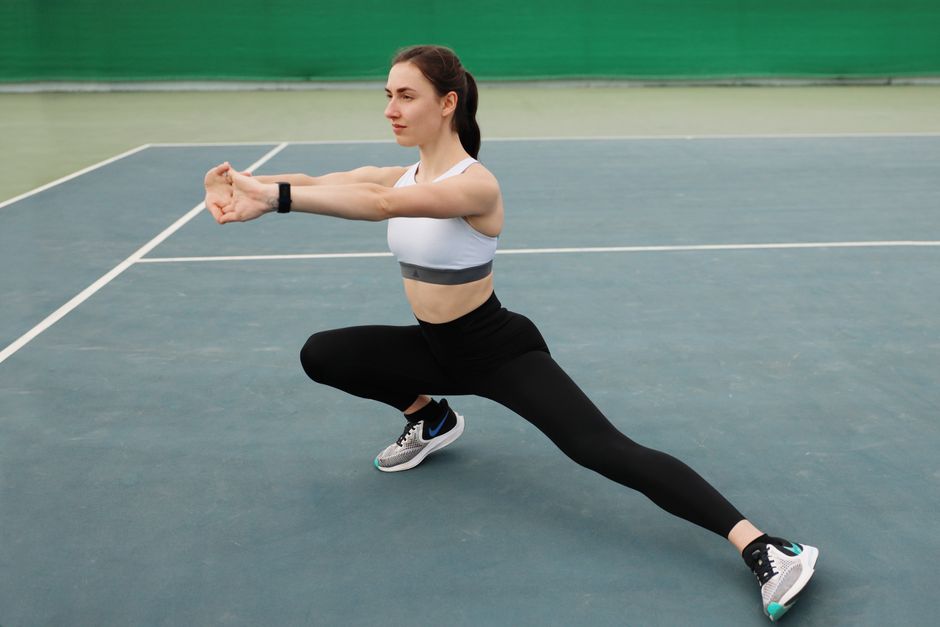
- Cool down for a few minutes: an easy walk or light jog and some gentle stretching or rolling while your heart rate settles.
- Rehydrate on purpose. The ACSM, Academy of Nutrition and Dietetics and Dietitians of Canada suggest replacing 125–150% of the fluid you lost (1.25–1.5 liters for every kilogram of body weight lost), sipped over a few hours. Weigh yourself before and after to know your number.
- Refuel quickly when the next match is soon. When there are fewer than about 8 hours before the next session, the same position stand suggests carbohydrate soon after play and through the next few hours, plus some protein. Tennis heat researcher Michael Bergeron suggests a cold carbohydrate-protein drink (chocolate milk is a classic) and a small, salty, easy-to-digest snack right away.
- Get out of the heat. Shade, air conditioning, a cool shower. Our tennis match-day guide covers heat and two-match days.
- Eat a real meal within a couple of hours: rice, pasta or potatoes, a protein, vegetables and fruit. More in our tennis nutrition guide.
Tournament weekends: a simple routine
- Check the order of play each evening and plan meals, sleep and warm-up times around it.
- Pack food. A cooler with sandwiches, bagels, bananas, yogurt, pretzels and drinks beats the snack bar when matches run late.
- Keep the next morning light: a short warm-up hit, your shoulder band routine and some easy movement. Skip extra practice.
- Protect the shoulder and elbow. If serving hurts, get it checked before the next round. Our tennis injuries guide lists the warning signs.
- Take real rest afterward. After a long run of tournaments, plan easier days before you build training up again (see our tennis training guide).
Sleep: the recovery tool you already own
The CDC’s guidance, based on sleep medicine recommendations, is 9–12 hours a night for children 6 to 12, 8–10 hours for teens and 7 or more for adults. Tennis makes that hard: late matches, adrenaline, hotel rooms and early starts. A 2026 study of 20 professional players found poor sleep quality was common, and worse among the women. Practical steps: keep a regular bedtime even during events, keep the room dark and cool, put the phone away before bed, and avoid caffeine late in the day. A short nap earlier in the afternoon can help on tournament days.
Travel and jet lag
Tennis is a traveling sport, and even juniors and college players often fly to events. A 2026 study tracked 52 WTA players with WHOOP bands. On the first night after travel, they slept about 11 minutes less for every time zone crossed, and flying east cost even more sleep than flying west. The effect faded over the next two nights. Crossing just two time zones east, or four west, was enough to push first-night sleep under seven hours. The authors say players should arrive early enough to adjust, especially when flying east.
A 2021 expert consensus on travel and jet lag in athletes offers a rule of thumb. Your body clock naturally adjusts by about one time zone per day after flying east, and about two per day after flying west. Its toolbox:
- Before: protect your sleep in the days before the flight and plan the trip as soon as you know your schedule.
- On the plane: sip non-alcoholic drinks regularly, skip alcohol, avoid caffeine in the 6 hours before you want to sleep, and use an eye mask and earplugs.
- After landing: time your light exposure to the new time zone, use caffeine only in the local morning, keep naps short and early, and start with light to moderate training.
- Melatonin: the consensus says its use should be decided by a medical team. Talk to your doctor before trying it.
Recovery tools: what’s worth packing
None of these replace sleep, food and fluids, but many players like them for comfort between matches:
- Foam roller: a compact roller like the TriggerPoint GRID 1.0 fits in a tennis bag for calves, quads and the upper back.
- Mini massage gun: the Theragun Mini is small enough for a racquet bag and a hotel room. Keep it off the front of the neck and away from injured areas.
- Compression boots: the Normatec Go wraps the calves only, so it travels well. Many players use these for comfort on long tournament weeks.
- Recovery slides: after hours in tennis shoes, cushioned slides like the OOFOS OOahh feel good on tired feet.
- Cold water: a review found cold-water immersion slightly better than passive rest for soreness, with the best results around 10–15°C for 10–15 minutes. But regular ice baths right after strength sessions may blunt strength gains, so many athletes save them for tournament weeks. Skip cold plunges if you have a heart condition or high blood pressure, Raynaud’s or are pregnant, unless your doctor says yes, and never plunge alone. See how long to ice bath.
Theragun Mini (3rd Gen)
- 3 speeds, 3 attachments
- Smaller and lighter than before
- Travel case included
TriggerPoint GRID 1.0
- 13 x 5 in
- Multi-density surface
- Hollow core keeps its shape
Hyperice Normatec Go
- Calf-only wraps
- Up to 2 h battery
- Fits calves to 22 in
Want to see how your body is coping? A recovery tracker can show sleep and heart-rate trends through a tournament. See our best tennis wearables. Our massage gun, compression boots and recovery shoes guides compare more options, and basketball recovery covers back-to-backs in another sport.
Tennis recovery questions
How do tennis players recover between matches?
They cool down, rehydrate (about 1.25–1.5 liters per kilogram lost), eat carbohydrate and some protein soon after play, get out of the heat and protect their sleep. Light movement and a short warm-up hit the next morning beat extra practice.
How long does it take to recover from a long tennis match?
It varies with the length of the match, the heat and your fitness. In a study of four-hour matches on four straight days, muscle damage markers, soreness and fatigue kept rising, and sprint and jump performance stayed down from day two. Plan easier days after long matches and deep tournament runs.
How many days do I need to get over jet lag before a tournament?
A 2021 expert consensus gives a rule of thumb of about one day per time zone after flying east and half a day per time zone after flying west. Arriving early, timing light exposure and protecting sleep help.
Are ice baths good for tennis players?
They can ease soreness a little during tournament weeks, but regular ice baths after strength training may reduce strength gains. If you have a heart condition, high blood pressure, Raynaud’s or are pregnant, ask your doctor first.
How much sleep do tennis players need?
The CDC’s guidance is 9–12 hours for children 6 to 12, 8–10 for teens and 7 or more for adults. Many athletes aim for the top of their range during tournaments and heavy training.