This article contains affiliate links: if you buy through them we may earn a commission, at no extra cost to you. Learn more.
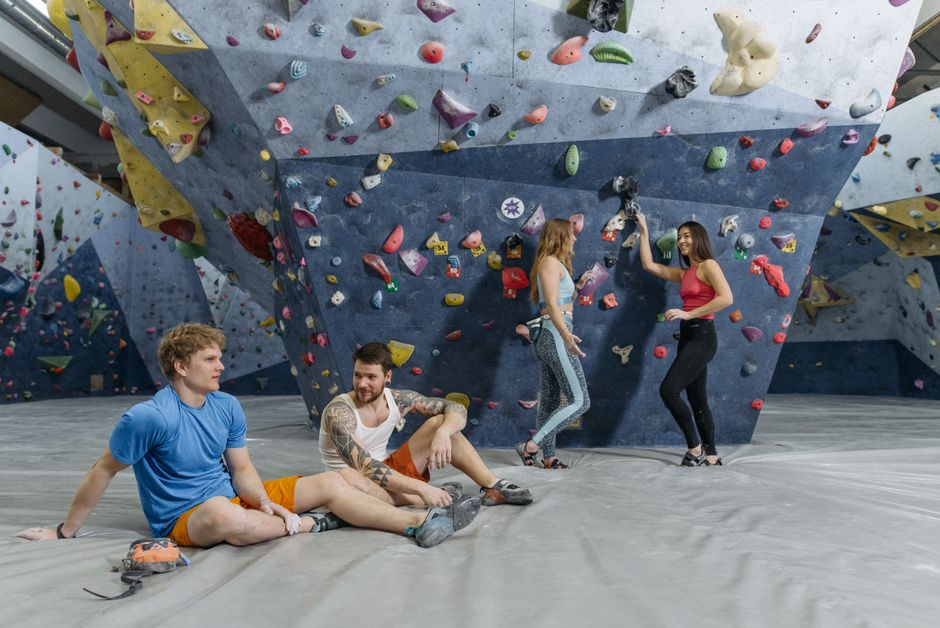
Tuesday night at the bouldering gym. Your third visit, same rental shoes with the faded size number on the heel, and a yellow problem you finally topped on the last try while two strangers on the mats cheered. Somewhere between the chalk and the high-fives you decide: you’re doing this every week now, and it’s time for your own pair. This guide covers the best climbing shoes for beginners in 2026: seven comfortable, really-sold shoes for adults and kids, what flat, moderate and aggressive actually mean, laces vs straps, and how the makers themselves tell you to size them.
Prices change often. The prices below are what we saw on Amazon in October 2026; climbing shoe listings are priced and stocked size by size, so check the current price for your size before you buy.
Our top picks
La Sportiva Tarantulace
- Flat-ish, lace-up
- Unlined leather, 5 mm FriXion RS
- About $99
Black Diamond Momentum
- Neutral, flat last
- Knit upper, 2 straps
- About $88
SCARPA Origin
- Flat last, dual straps
- Suede upper, 5 mm rubber
- About $129
Evolv Defy
- Slight asymmetry + camber
- Synthetic, 1 strap
- About $109
La Sportiva Stickit
- Adjustable heel
- Leather, 3 mm FriXion RS
- About $69
Black Diamond Kids' Momentum
- Flat last, strap
- Knit upper
- About $60
Beginner climbing shoes compared
| Shoe | Profile | Closure | Upper | About (Oct 2026) |
|---|---|---|---|---|
| La Sportiva Tarantulace | Flat, low asymmetry | Laces | Unlined leather | $99 |
| Black Diamond Momentum | Neutral, flat | 2 hook-and-loop straps | Engineered knit | $88 (list $130) |
| SCARPA Origin | Flat, slight asymmetry | 2 straps | Suede leather | $129 |
| Evolv Defy | Slight asymmetry and camber | 1 strap (lace version too) | Synthetic | $109 |
| SCARPA Veloce | Moderately downturned | 1 strap | Microsuede | $159 |
| La Sportiva Stickit | Comfort, lowest asymmetry | Hook-and-loop laces | Leather | $69 |
| Black Diamond Kids’ Momentum | Flat | Hook-and-loop | Knit | $60 |
The best first climbing shoes
1. La Sportiva Tarantulace: best overall
Ask around any gym and someone will say the Tarantulace was their first pair. La Sportiva builds it on a comfort last with low asymmetry and a roomier toe box, with an unlined leather upper, a quick-pull lacing harness and two heel pull tabs. Underneath is a 5 mm FriXion RS sole, which is thick enough to last while you learn to place your feet quietly. La Sportiva lists it at $99 and 245 g, and calls it a shoe for both gym and outdoor climbing. Laces take a few seconds longer than straps, but they let you snug the shoe exactly where your foot needs it.
- Good: comfortable flat-ish shape; durable thick rubber; fine-tunable lace fit; gym and rock.
- Watch out: unlined leather stretches, so the maker suggests sizing down from your street shoe (see sizing below); Amazon stock varies by size.
- Best for: almost any adult beginner who wants one shoe for top-rope, bouldering and a first trip outside.
Check the La Sportiva Tarantulace price on Amazon
2. Black Diamond Momentum: best value
The Momentum is built for the long gym session. Black Diamond uses an engineered knit upper that breathes, two hook-and-loop straps for quick on and off between boulder problems, a soft flex midsole and a neutral, flat last that leaves your toes flat. The maker lists it at $129.95; we saw the strap version for about $88 on Amazon, sold by Black Diamond. There’s a women’s version and a lace version too, so you can pick the closure you like.
- Good: very easy on and off; breathable knit; flat, relaxed fit; often discounted.
- Watch out: a comfort shoe, so it’s less precise on tiny edges than stiffer, more shaped models.
- Best for: gym climbers and boulderers on a budget, and anyone with sweaty feet.
Check the Black Diamond Momentum price on Amazon
3. SCARPA Origin: most comfortable
SCARPA calls the Origin “an ideal introduction to climbing,” and the build backs that up: a flat last made for all-day comfort, a 1.8 mm suede upper, a passive rand that doesn’t squeeze the toes, and a heel system SCARPA says reduces pressure on the Achilles. Two power straps close it, and the 5 mm Vision rubber sole is made to last through a lot of beginner foot-dragging. It’s made in Italy and lists at $129, which is what we saw on Amazon.
- Good: plush, forgiving fit; thick, durable rubber; easy strap closure.
- Watch out: pricier than the Momentum; leather will give a bit as it breaks in.
- Best for: new climbers who want comfort first, and long top-rope sessions.
Check the SCARPA Origin price on Amazon
4. Evolv Defy: best to grow into
Evolv calls the Defy an “advanced entry-level” shoe. Instead of a fully flat, symmetric shape, it has a slight asymmetry and camber, which Evolv says allows more precise foot placements. The current medium-volume version has a 100% synthetic, vegan upper, a single strap, a 3.5 mm TRAX SAS outsole and a full-length 1.6 mm midsole; Evolv lists it at $119, and we saw it for about $109. There’s also a Defy Lace (about $94 when we checked) and a low-volume Defy LV for narrower feet.
- Good: a little more performance without a painful downturn; synthetic upper keeps its size.
- Watch out: Evolv says its shoes aren’t designed to be downsized, so don’t size it like the leather shoes here.
- Best for: athletic beginners who expect to climb two or three times a week and progress fast.
Check the Evolv Defy price on Amazon
5. SCARPA Veloce: best step-up for the gym
The Veloce is the one “moderate” shoe here, for the climber who’s six months in and starting to stand on smaller holds and steeper walls. SCARPA gives it a moderately downturned profile but a relaxed, rounded toe with extra room around the fourth and fifth toes, a soft microsuede upper, a single strap, a 1.0 mm midsole and 4 mm of sticky S-72 rubber that grips plastic volumes and smears. SCARPA lists it at $159 and pitches it at gym training, bouldering, top-rope and endurance routes for beginners building technique.
- Good: soft and sensitive; very sticky rubber; downturn without a cramped toe box.
- Watch out: soft rubber wears faster than the 5 mm soles above; the most expensive pick.
- Best for: a second pair, or a first pair for a mostly-gym boulderer.
Check the SCARPA Veloce price on Amazon
6. La Sportiva Stickit: best for young kids
Kids’ feet grow faster than parents’ budgets. La Sportiva’s answer is a heel lace that wraps around the back of the shoe and can be lengthened or shortened with a simple knot, so one pair adjusts as feet grow. The Stickit is a light (112 g), slip-on leather shoe with hook-and-loop secured laces, a comfort fit with the lowest asymmetry La Sportiva makes and a 3 mm FriXion RS sole. Sizes run in paired EU sizes from 26/27 to 34/35, and the maker says to size by your child’s normal EU street shoe size. List price $69.
- Good: adjustable heel for growing feet; kids can put them on themselves; resoleable.
- Watch out: little-kid sizes only; Amazon stock is patchy by size.
- Best for: young kids in a weekly gym class or youth team.
Check the La Sportiva Stickit price on Amazon
7. Black Diamond Kids’ Momentum: best for older kids
The kids’ version of the Momentum keeps what works in the adult shoe: a breathable knit upper, a neutral, flat last and a round, soft toe box that Black Diamond says is shaped for changing kids’ feet. One hook-and-loop strap makes it easy between climbs. Black Diamond lists it at $89.95; we saw it for about $60 on Amazon, sold by Black Diamond.
- Good: comfortable for long after-school sessions; easy strap; good price.
- Watch out: no adjustable heel, so kids will outgrow it sooner than a Stickit.
- Best for: kids and young teens climbing every week.
Check the Black Diamond Kids' Momentum price on Amazon
How to choose the best climbing shoes for beginners
- Flat, moderate or aggressive? As REI puts it, neutral (flat) shoes let your toes lie flat for all-day comfort and suit beginners; moderate shoes are slightly downturned for more technical climbing; aggressive shoes have strongly downturned toes for hard, steep routes and boulders, and are less comfortable. Start flat. Save aggressive shoes for when your footwork, not your shoes, is holding you back.
- Laces, straps or slippers. Laces give the most precise fit; hook-and-loop straps are fastest between boulder problems; slip-on slippers are soft and sensitive but offer the least adjustment, so most beginners start with laces or straps.
- Size by the maker, not by habit. Sizing advice differs a lot: La Sportiva says the Tarantulace is generally sized 1–2 full EU sizes down from your street shoe; Black Diamond suggests 0.5–1 EU size down for an all-day comfort fit; Evolv recommends adding 0.5–1 size to your street size and says its shoes aren’t made to be downsized. Leather stretches; synthetic and knit stretch less.
- Snug, not painful. Toes should touch the front, flat or slightly bent, with no heel gap. In one study of 56 climbers, 55 wore shoes that didn’t fit well and 91% had foot pain while climbing; long-term use of very tight shoes is linked to toe problems such as bunions. A beginner gains nothing from that.
- Gym vs outdoor. Gym-only climbers can go softer and stickier (like the Veloce). If you’ll climb outside, thicker 4–5 mm rubber and a firmer feel (Tarantulace, Origin) handle rough rock and small edges better and last longer.
- Kids. Buy for comfort and a little growing room, not performance. Adjustable shoes like the Stickit stretch your money; if a child says their shoes hurt, believe them.
Shoes are only one piece of the kit: the full climbing gear list covers harnesses, belay devices, chalk and helmets, and parents will find classes, belay safety and growing-finger advice on the youth climbing page. Toe, finger or skin trouble is covered on the climbing injuries page. After a session, many climbers kick off tight shoes for something soft from our best recovery shoes guide, and use a massage gun on pumped forearms. More in the climbing hub and the climbing blog.
Beginner climbing shoe questions
Should I just keep renting climbing shoes?
Renting is great for your first few visits. Once you climb every week, your own pair usually fits better than a worn rental, and at about $60–$160 it can pay for itself in rental fees if you climb often.
How tight should beginner climbing shoes be?
Snug all around, toes touching the front, flat or gently bent, and no empty space at the heel. You should be able to climb a few routes in a row without needing to rip them off. If they hurt standing still, they’re too small for a beginner.
Do you wear socks with climbing shoes?
Most climbers go barefoot for feel and a closer fit. Thin socks are fine with rentals or if you prefer them; just try your shoes on the way you’ll wear them.
Are velcro or lace-up climbing shoes better for beginners?
Both work. Straps are quicker for bouldering, where shoes come off between problems; laces fine-tune the fit for longer routes and narrow or unusual feet. Pick the one you’ll actually wear.
When should I get aggressive climbing shoes?
When you’re climbing steep routes or harder boulders and you feel your flat shoes are the limit, which for most people is well after the first few months. Many climbers keep a comfortable pair for long days and an aggressive pair for hard attempts.
My toes hurt after climbing. Is that normal?
Some pressure is normal; numbness, nail bruising or pain that lasts after the shoes come off is not. Try a bigger or flatter shoe, and if pain or a toe deformity persists, see a sports medicine doctor, podiatrist or physical therapist.