This article contains affiliate links: if you buy through them we may earn a commission, at no extra cost to you. Learn more.
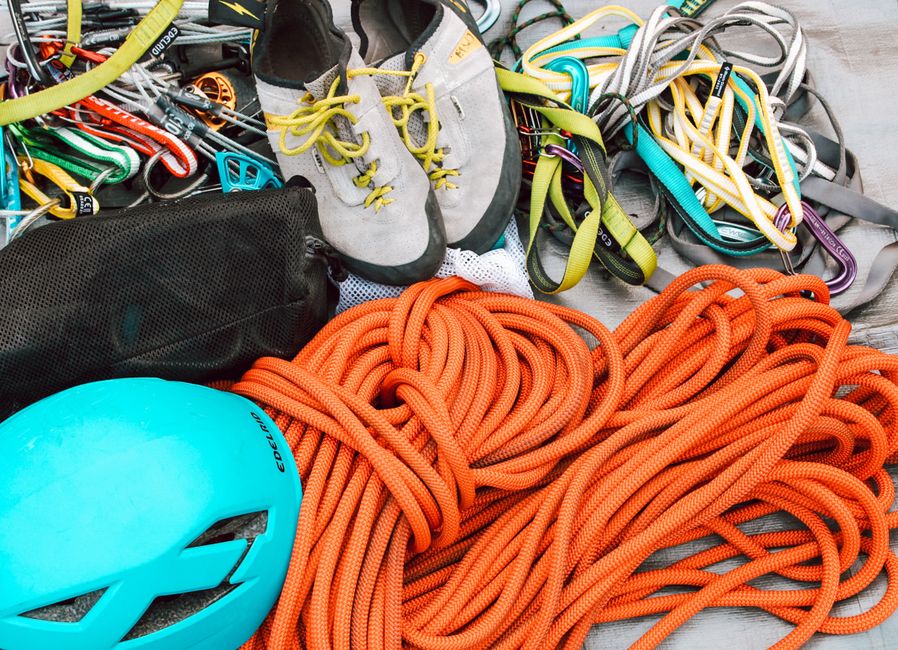
The gym bag by the door: shoes still warm from last night, a harness, a chalk bag with a little dust on the zip, a belay device clipped to a locking carabiner. For a crag day, add a helmet, a rope and maybe a crash pad on your back. Compared with most sports, climbing gear is simple, but some of it holds your life, so it pays to know what to look for. Here’s the climbing equipment list for gym and crag, the safety standards that matter, and the recovery gear many climbers keep for the day after.
Buying guide · Our Climbing buying guide compares the gear we'd pick, with prices and sizing:
Prices change often. The prices below are what we saw at the maker or a major retailer in October 2026; check the current price before you buy.
The quick checklist: climbing shoes; a harness (UIAA 105 or EN 12277); a belay device with a locking carabiner; chalk and a chalk bag. Outdoors, add a helmet (UIAA 106 or EN 12492), and a rope and quickdraws for roped climbing or a crash pad for bouldering. Most gyms rent shoes and harnesses, so you can try before you buy.
Our top picks
La Sportiva Tarantulace
- Lace-up, leather upper
- FriXion RS rubber
- About $99
Black Diamond Momentum Harness (Men's)
- 4 gear loops
- Pre-threaded buckle
- About $75
Petzl GRIGRI Belay Device
- Assisted braking
- 8.5-11 mm single ropes
- About $100
Black Diamond Half Dome Helmet
- CE/EN and UIAA
- EPS foam, ABS shell
- About $70
Metolius Session II Crash Pad
- 122 x 91 x 10 cm open
- Backpack carry
- About $220
Climbing shoes
Shoes are the one piece of gear that changes how you climb from the first day. Beginners do best in a flat, comfortable shoe that fits snugly without curling the toes painfully; more downturned, aggressive shoes are for steep, hard climbing later. Lace-ups fine-tune the fit, Velcro is quick on and off between boulders, and slippers are soft and sensitive. Sizing varies a lot by brand and by model (leather stretches, synthetic stretches less), so try shoes on, ideally late in the day.
The La Sportiva Tarantulace is the classic first shoe: a flat, lace-up introductory shoe for gym and rock, with an unlined leather upper, a roomier toe box and FriXion RS rubber, for about $99. It also comes in a women’s version.
Check the La Sportiva Tarantulace price on Amazon
Harnesses: UIAA and CE
The UIAA, the international climbing and mountaineering federation, has written safety standards for climbing gear since 1960 and works with CEN, the European standards body; in some cases its tests are stricter. Look for UIAA 105 or EN 12277 on a harness. Choose one that fits snugly above the hip bones with leg loops that don’t pinch, and has enough gear loops for how you climb: two are fine for the gym, four for sport and trad. Small children need a full-body harness, which keeps them upright.
The Black Diamond Momentum is the maker’s most popular all-around harness: a pre-threaded Speed Adjust buckle (so there’s nothing to double back), adjustable trakFIT leg loops, four gear loops, 350 g, sizes XS–XXL, about $75 at Black Diamond. There’s a women’s Momentum and a kids’ full-body version (see our youth climbing guide).
Check the Black Diamond Momentum price on Amazon
Belay devices and carabiners
Two main types. Tube devices are light, simple and work for belaying and rappelling, but they rely entirely on your brake hand. Assisted-braking devices have a cam or other mechanism that helps lock the rope when a climber falls; they’re popular in gyms and for sport climbing, but they don’t replace good technique, and the brake hand stays on the rope. Belay devices are covered by UIAA 129 and EN 15151. Pair yours with a locking carabiner, and check that your rope’s diameter is in the device’s range.
The Petzl GRIGRI is the best-known assisted-braking device: cam-assisted blocking, single ropes from 8.5 to 11 mm, 175 g, EN 15151-1 and UIAA certified, about $100 on Amazon. For a tube device, the Black Diamond ATC-XP takes ropes from 7.7 to 11 mm and has a high-friction mode the maker says gives three times the stopping power of regular mode. Whatever you use, learn it from a qualified instructor and pass your gym’s belay test (see climbing rules).
Check the Petzl GRIGRI price on Amazon
Chalk and chalk bags
Chalk (magnesium carbonate) dries sweaty hands for better grip. Loose chalk is the classic; chalk balls and liquid chalk make less dust, and some gyms ask for them. Black Diamond White Gold is a no-nonsense loose chalk (about $16). For a bag, the Black Diamond Mojo Zip has a fleece lining, a magnetic and roll-top closure to keep chalk in, a zippered rear pocket and an adjustable belt (about $30). Outdoors, brush off chalk and tick marks when you’re done, as the Access Fund’s Climber’s Pact asks.
Helmets
Outdoors, a helmet protects against falling rock and dropped gear and against hitting the wall or ground in a fall. Look for UIAA 106 or EN 12492. A climbing helmet is tested to climbing standards, which include impacts from falling objects; a bike helmet isn’t certified for that unless it carries both labels, as some kids’ helmets do. Fit it level and snug, with the strap buckled, and follow the maker’s guidance on replacing it after a big impact.
The Black Diamond Half Dome is a durable, affordable all-rounder: EPS foam, an ABS shell, a one-handed dial and headlamp clips, CE/EN and UIAA certified, 340–356 g, about $70. The Petzl Boreo is a tough hybrid with a thick ABS shell and EPP and EPS foam, certified to EN 12492 and UIAA, 300–330 g, in sizes for 48–58 and 53–61 cm heads (about $75). For kids, the Petzl Picchu is certified for both climbing and cycling.
Check the Black Diamond Half Dome price on Amazon
Crash pads
For outdoor bouldering, a crash pad is your landing. Gym bouldering already has thick matting, but outside, falls are where the injuries happen: in US emergency-room data, falls caused most climbing injuries, and lower-body injuries were the most common. The UIAA has a crash pad standard (UIAA 161). Bigger pads cover more ground; two or three pads and a spotter are better than one. Place pads on durable surfaces and pack them out, per the Climber’s Pact.
The Metolius Session II is a mid-size pad, 122 × 91 × 10 cm open, with high- and low-compression foam, 900D polyester and a backpack carry, for about $220.
Check the Metolius Session II price on Amazon
Ropes and quickdraws, briefly
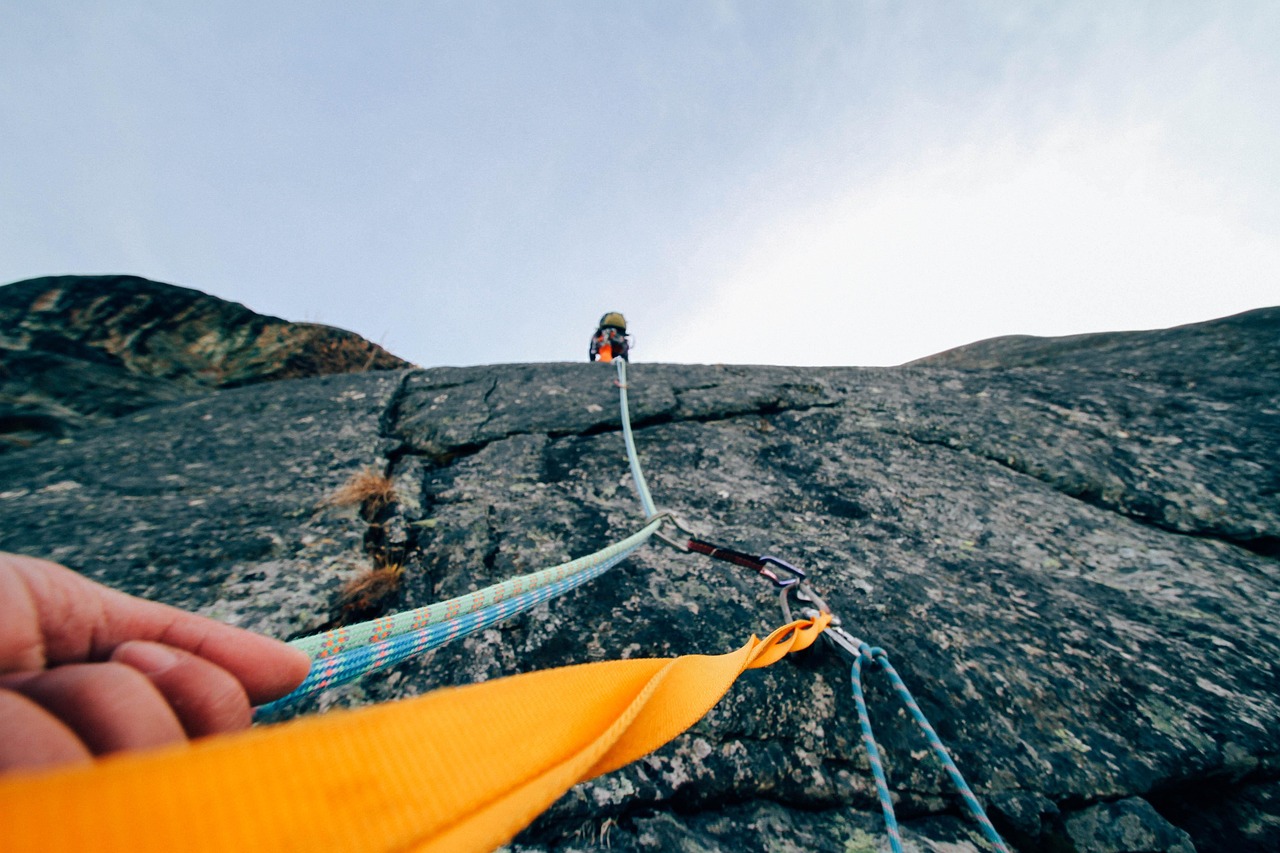
For lead and outdoor climbing you’ll need a dynamic rope (UIAA 101 or EN 892) long enough for your routes, and quickdraws. The American Alpine Club notes many modern routes need a 70-meter rope, and that more than half of reported lowering accidents involved the rope end passing through the belay device, so check route lengths and always tie a stopper knot. Learn to lead, build anchors and place trad gear from a certified instructor or guide before buying a rack.
Climbing gear compared
| Product | Type | Key spec | Standard / note | About price |
|---|---|---|---|---|
| La Sportiva Tarantulace | Shoe | Lace-up, leather | Beginner, gym and rock | $99 |
| Black Diamond Momentum | Harness | 350 g, 4 gear loops | Sizes XS–XXL | $75 |
| Petzl GRIGRI | Belay device | 8.5–11 mm ropes | EN 15151-1, UIAA | $100 |
| Black Diamond Half Dome | Helmet | 340–356 g | CE/EN, UIAA | $70 |
| Petzl Boreo | Helmet | 300–330 g | EN 12492, UIAA | $75 |
| Metolius Session II | Crash pad | 122 × 91 × 10 cm | Backpack carry | $220 |
Recovery gear for climbers
Climbing leaves forearms pumped, backs and shoulders tight and feet sore from tight shoes. Many climbers use a small massage gun such as the Theragun Mini on forearms and upper back, a TriggerPoint GRID foam roller for back and legs, and the OOFOS OOahh Slide once the shoes come off. They’re for comfort, not treatment: finger pain that lingers, a pop in a finger or swelling needs a sports medicine doctor or physical therapist. More in our massage gun guide, foam roller guide and climbing recovery page.
TriggerPoint GRID 1.0 Foam Roller
- 13 x 5 in, hollow core
- Multi-density surface
- About $40
OOFOS OOahh Slide
- OOfoam slide
- APMA Seal of Acceptance
- Machine washable
How to choose climbing gear
- Rent first: most gyms rent shoes and harnesses; buy once you’re climbing every week.
- Check the label: UIAA or CE/EN marks on harnesses, helmets, ropes, carabiners and belay devices.
- Comfort beats aggression early: painful shoes don’t make beginners climb better.
- Buy life-safety gear new: you can’t know the history of a used harness, rope or helmet.
- Retire gear on time: follow the maker’s lifespan guidance, and retire anything after a major fall or impact, or with cuts, wear or damage.
Back to the climbing hub, or browse Training & Performance and Recovery & Regeneration. Comparing sports? See our soccer gear guide.
Climbing gear FAQs
What gear do I need to start climbing?
For gym bouldering, just shoes and chalk (and you can rent shoes). For gym rope climbing, add a harness and, once you’ve passed the belay test, a belay device with a locking carabiner. Outdoors adds a helmet, a rope and quickdraws or a crash pad.
What does UIAA or CE mean on climbing gear?
They’re safety standards. The UIAA writes standards such as UIAA 105 for harnesses and UIAA 106 for helmets; the European EN standards (EN 12277 for harnesses, EN 12492 for helmets) carry the CE mark. Buy gear that meets them.
Is a GRIGRI safer than an ATC?
An assisted-braking device like the GRIGRI adds a mechanism that helps catch falls, which is why many gyms and sport climbers like it, but it isn’t hands-free. Either device is safe only with correct technique, a brake hand on the rope and full attention.
Can I use a bike helmet for climbing?
Only if it’s also certified for climbing. Climbing helmets are tested to climbing standards (UIAA 106 or EN 12492), which include falling objects. A few helmets, like the Petzl Picchu for kids, carry both climbing and bike certifications.
How tight should climbing shoes be?
Snug, with toes flat or slightly bent against the front, but not painful. Beginners should choose comfort; very tight, downturned shoes are for advanced, steep climbing.