This article contains affiliate links: if you buy through them we may earn a commission, at no extra cost to you. Learn more.
The first time most kids hold a bow, it’s in a gym with the bleachers pushed back and a big net behind the targets. The teacher blows two whistles, a row of fourth-graders walks to the line and rests their bows on their toes, and then one whistle, and twenty arrows fly at once. Some hit the target, some don’t, and almost every kid wants another turn. Youth archery is one of the most welcoming sports there is: it doesn’t care how tall or fast you are, boys and girls shoot side by side, and the safety rules are so clear that kids learn them in one lesson. Here’s how kids get started, at what age, how school (NASP) and club (JOAD) archery work, the range rules every child should know, and the questions parents ask most.
When can kids start archery?
- School archery (NASP): grades 4 through 12, taught during the school day, often in PE.
- Club archery (USA Archery): Explore Archery classes and camps and JOAD clubs welcome children from age 8.
- Younger kids: USA Archery has an optional “Yeoman” class for archers 9 and under at local and state events, shooting just 15 meters outdoors and 9 meters indoors. Some clubs and camps offer programs for younger children; ask locally.
The right age is really about readiness: can your child listen to and follow range commands every single time, and hold the bow at full draw with good form? A certified instructor can tell you quickly.
NASP: archery at school
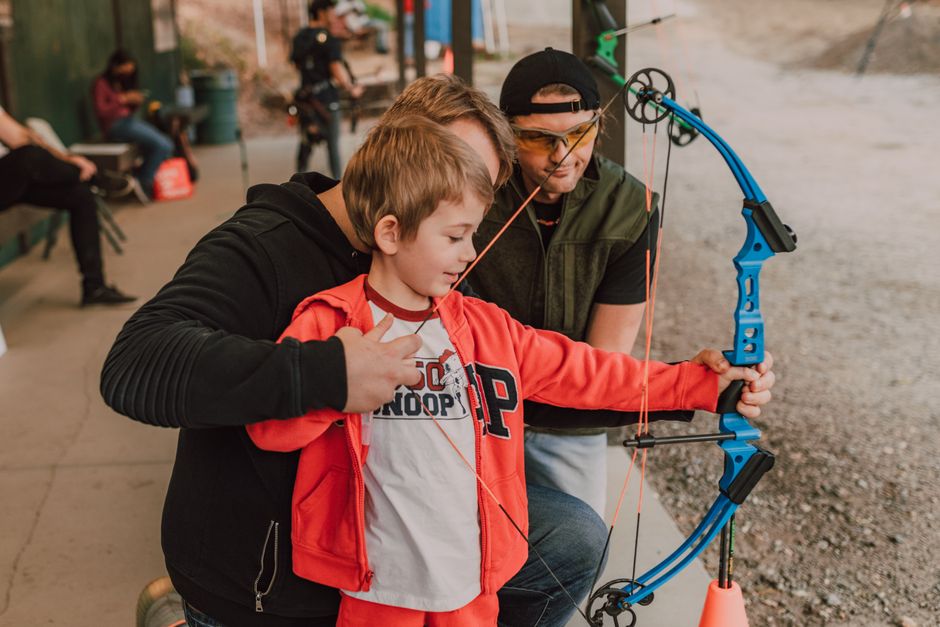
The National Archery in the Schools Program teaches international-style target archery in grades 4–12, and it reports lessons in more than 10,000 schools in the 2024–25 school year. Every school uses the same equipment: the Genesis bow, which has no let-off and adjusts from 10 to 20 pounds of draw weight so it fits nearly every student, and Easton aluminum arrows. Teachers are trained in an eight-hour Basic Archery Instructor course. NASP says 77% of its students had never touched a bow before, and that archery’s safety record is better than every ball sport taught in schools except table tennis.
Many schools also field teams. Under the 2026 NASP tournament rules, archers shoot from 10 and 15 meters: at each distance one practice end and three scoring ends of five arrows, 2 minutes per end, for a perfect score of 300. Teams have 12 to 24 archers, including at least four of the opposite gender, and compete in elementary (grades 4–5), middle (6–8) and high school (9–12) divisions. Homeschool groups can join through their state NASP coordinator.
JOAD: club archery for young archers
USA Archery’s Junior Olympic Archery Development (JOAD) program is year-round club coaching for youth from age 8, indoors and outdoors, in barebow, basic compound, fixed pins, recurve and compound. Kids learn range safety and proper technique, earn achievement “star pins” from green up to gold as their scores improve (plus a “6-Gold” pin for six 10s in a row), and can shoot virtual tournaments and local, state, regional and national events. A USA Archery membership is required. Many clubs have rental equipment, so kids can try it before you buy anything.
Youth age classes and distances
| Age class (USA Archery, 2026) | Recurve outdoor | Compound outdoor | Barebow outdoor | Indoor |
|---|---|---|---|---|
| Yeoman (9 and under, optional) | 15 m | 15 m | 15 m | 9 m |
| U13 | 30 m | 30 m | 30 m | 18 m |
| U15 (new for 2026) | 40 m | 40 m | 30 m | 18 m |
| U18 | 60 m | 50 m | 50 m | 18 m |
| U21 | 70 m | 50 m | 50 m | 18 m |
Classes go by the calendar year: U13, for example, runs through the year of an archer’s 12th birthday. NASP archers shoot 10 and 15 meters at every age. Full rules are on our archery rules page.
Range safety for kids
- Learn the whistles: two whistles, get your bow and go to the line; one whistle, shoot; three whistles, walk forward to get arrows; five or more, emergency: stop.
- In an emergency: if an arrow is already on the string, ease the string forward slowly, put the arrow back in the quiver, put the bow on the rack and walk behind the waiting line.
- Only at the line, only at the target: nock an arrow and draw only on the shooting line, with the bow pointed at the target and the range clear.
- Never dry-fire: drawing and releasing with no arrow can hurt you, someone nearby and the bow.
- Walk, don’t run, and if you drop an arrow in front of the line, leave it until everyone goes forward.
- Pulling arrows: one person per target pulls at a time, one arrow at a time, standing (not kneeling); carry arrows with the points covered by your hand.
- Nothing in the way: NASP instructors check for jewelry, pins, name tags and lanyards that could get in the way of the string.
At home, a backyard target is only for supervised practice, with a safe backstop and nobody, no pets and no paths anywhere behind or beside it.
Young archers’ health
Archery is gentle on growing bodies compared with many sports, but young archers who train a lot can still get overuse pain. At a European Youth Championship (200 archers, average age about 17), 43.5% reported shoulder pain during training and almost a third had stopped training at some point because of an injury. The lessons for parents: keep the draw weight light enough for good form (let a coach decide when to go up), mix archery with other sports and strength work, and don’t ignore pain that keeps coming back. A sports medicine doctor, physical therapist or athletic trainer can help. Kids also need sleep (9–12 hours for ages 6–12 and 8–10 for teens, per the CDC), water and sunscreen at outdoor events. See archery injuries and archery training.
What kids need to start
For a school or club class, the program provides the bow and arrows. When your child gets their own, have them fitted at a pro shop or through the club coach for draw length and weight; kids grow, and a bow that’s too long or heavy makes good form impossible. The small personal gear is worth buying early: an arm guard and, for finger shooters, a glove or tab. NASP allows basic finger tabs, gloves, arm guards and chest protectors in its tournaments. Good picks: the KESHES three-finger archery glove, sized from small for youth hands; the SAS 8″ Armguard, one size with three buckle straps; and, for supervised backyard practice, the Morrell Double Duty bag target for field points. More in our archery gear guide.
KESHES Three-Finger Archery Glove
- Leather finger tabs
- Velcro wrist strap
- Sized by palm width, about $13
Morrell Double Duty Field Point Bag Target
- Field points only
- Carry handles, replaceable cover
- About $80
For other sports your child may play, see youth soccer, and for everything archery, the archery hub and archery associations.
Parents’ questions about youth archery
What age should my child start archery?
USA Archery’s Explore Archery and JOAD programs start at age 8, and NASP starts in fourth grade. What matters most is whether your child can follow the range commands every time; an instructor can tell you after a lesson or two.
Is archery safe for kids?
With trained instructors and strict range rules, it has a strong record: NASP says it’s safer than every ball sport taught in schools except table tennis. The key is supervision, the whistle system, and never drawing a bow away from the line or the target.
Should I buy my child a bow?
Not right away. Many clubs rent equipment, and school programs provide it. When your child is ready for their own, get them fitted at a pro shop or through the club so the draw length and draw weight are right, and expect to size up as they grow.
What’s the difference between NASP and JOAD?
NASP is school archery: in-class lessons and school teams, with the same Genesis bow for everyone and tournaments at 10 and 15 meters. JOAD is USA Archery’s club program, with coaches, several bowstyles, longer distances as kids grow and a path to national competition. Many kids do both.
Can kids get college scholarships for archery?
Some colleges run varsity archery teams with scholarships, listed through USA Archery’s collegiate program, and NASP and the NFAA also award scholarships. Archery isn’t an NCAA championship sport, so the routes are different from most college sports.