This article contains affiliate links: if you buy through them we may earn a commission, at no extra cost to you. Learn more.
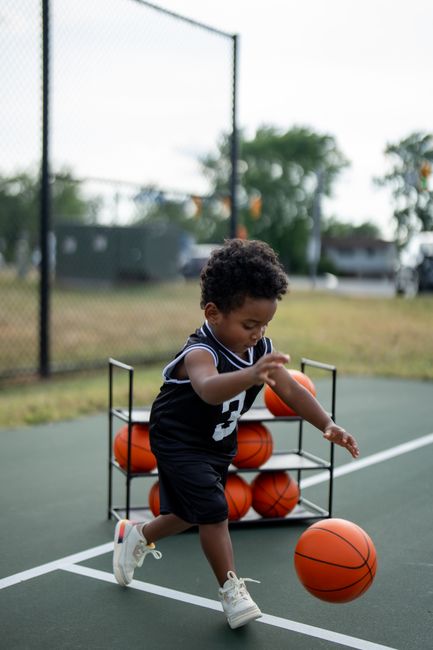
A Saturday-morning rec game at the Y. Ten second-graders chase one ball, nobody stays in their spot, and then a kid in a too-big jersey banks one in off an 8-foot rim and the whole gym cheers. That’s where youth basketball starts. A few years later the same kid might be on a middle school team, a travel team and in a summer camp, all at once. This guide is for parents and coaches: the right ages, ball and hoop sizes, how much is too much, AAU vs school ball, safety and the basics of college recruiting.
For the big picture, start at our basketball hub. The rules page covers how high school and college rules differ.
Youth basketball by age: the NBA and USA Basketball guidelines
In 2016 and 2018 the NBA and USA Basketball published the first national youth basketball guidelines, written with expert groups on health, playing standards and coaching, and endorsed by groups such as the YMCA and Boys & Girls Clubs. They split kids into four stages. Here are the main numbers:
| Ages 7–8 | Ages 9–11 | Ages 12–14 | Grades 9–12 | |
|---|---|---|---|---|
| Ball | Size 5 (27.5 in) | Size 6 (28.5 in) | Size 6 (makers’ charts) | Size 7 boys, size 6 girls |
| Basket | 8 feet | 9 feet | 10 feet | 10 feet |
| Game length | 20–28 min | 24–32 min | 28–32 min | 32–40 min |
| Games per week | 1 | 1–2 | 2 | 2–3 |
| Practices per week | 1 (30–60 min) | 2 (45–75 min) | 2–4 (60–90 min) | 3–4 (90–120 min) |
| Most games in a day | 1 | 2 | 2 | 2 |
| Most organized hours per week | 3 | 5 | 10 | 14 |
| Rules | No zone, no 3-pointers, equal playing time all game | No zone, no 3-pointers, equal time for 3 periods | 30-second shot clock when possible | FIBA rules, 24-second clock |
“Organized basketball” means games, practices and coached training. Pickup games and shooting around in the driveway don’t count. The guidelines lower the basket only through age 11; from 12, kids play on the regulation 10-foot rim. Ball makers’ charts differ a little (some put 9–11-year-olds on a size 5), and many leagues use their own rules, so ask before the season. High school teams play NFHS rules, not the FIBA rules the guidelines suggest for grades 9–12.
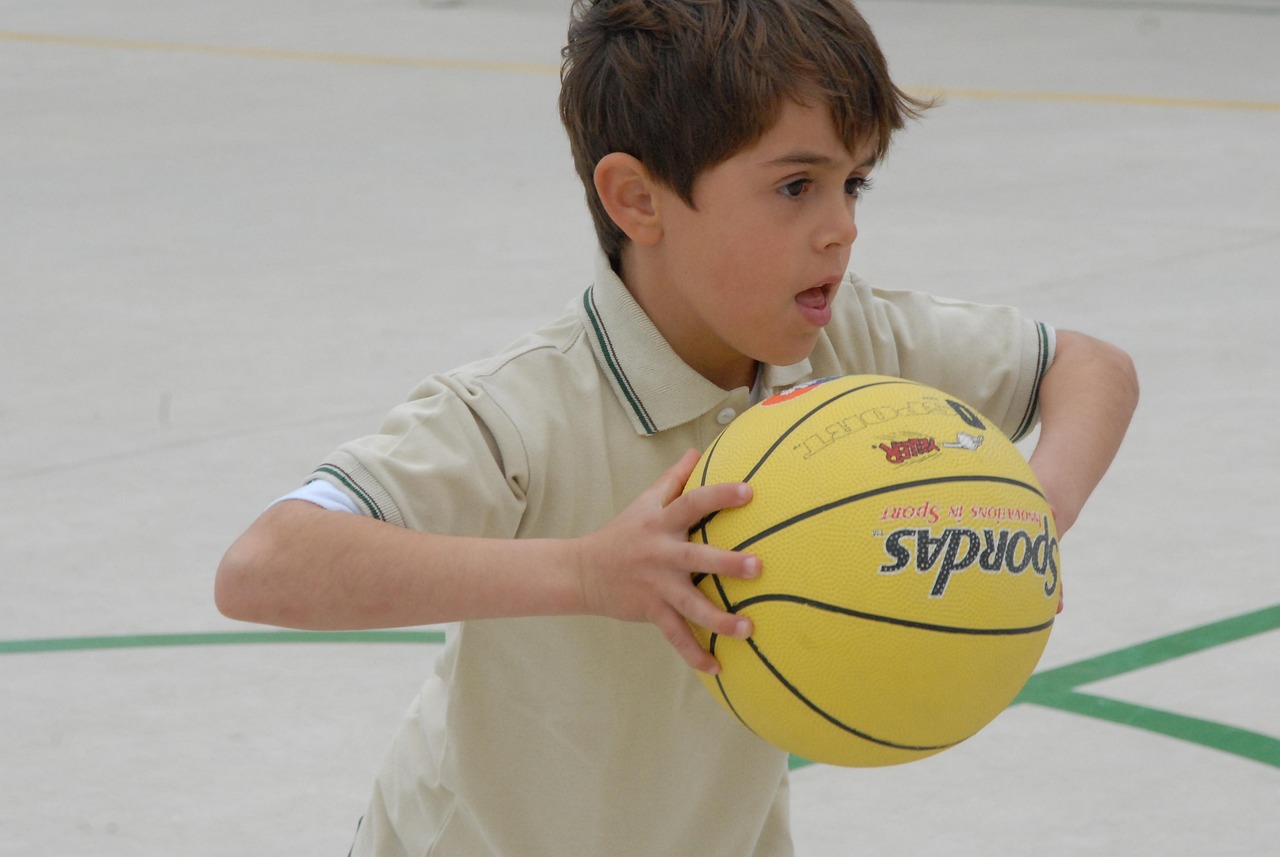
Why smaller? The guidelines’ reasoning is simple: a ball that fits a child’s hands is easier to control, and a lower basket lets kids learn a proper shooting form and actually score. For a younger player, the 28.5-inch Wilson Intermediate Evolution is a real indoor game ball in size 6 (about $100 on Amazon in October 2026), and the Wilson NBA DRV is an inexpensive outdoor ball sold in youth sizes, including the 27.5-inch size 5 (about $17).
Wilson Intermediate Evolution (28.5 in)
- 28.5 in, size 6
- Indoor composite cover
- Girls 12+ and ages 9-11
Wilson NBA DRV Outdoor Basketball
- Outdoor cover
- Youth sizes incl. size 5
- Budget price
McDavid 199 Lace-Up Ankle Brace
- Lace-up
- Spring steel stays
- Several sizes
Where kids play: rec, school, AAU and club
- Rec leagues and the Jr. NBA: local leagues at the Y, parks departments and Boys & Girls Clubs, many in the NBA’s Jr. NBA network for ages 6–14. Low cost, everyone plays, the best place to start.
- School basketball: middle school and high school teams play a set winter season under rules from the NFHS and your state association, with a school coach and often an athletic trainer nearby.
- AAU and club (“travel”) basketball: club teams that play tournaments mostly in spring and summer, often out of town. The Amateur Athletic Union runs age divisions from grade school through high school; top teams play in shoe-company circuits such as Nike’s EYBL, adidas 3SSB and the Under Armour Association, where college coaches watch during set evaluation periods.
AAU vs school: school ball means a team of classmates, a home gym and a season with a clear end. Club ball means more games, more travel, more cost and, for high school players aiming at college, more exposure. Neither is “better”; the risk comes when a child plays both all year without a break. See our leagues and associations guide for who runs what.
Overuse, specialization and rest
The NBA and USA Basketball recommend that kids delay specializing in basketball alone until 14 or older: playing several sports when young helps health and development, and athletes who reach the top are more likely to have played multiple sports as kids. The American Academy of Pediatrics also warns that early specialization can harm young athletes physically and mentally. In a clinical study of young athletes, those who were highly specialized, or who spent more hours a week in organized sport than their age in years, had a higher risk of injury.
- Rest: at least one day a week off organized basketball, and several months a year away from it.
- Watch tournament weekends: the guidelines warn that packing many games into a short time can raise the risk of injury and burnout. Stick to the daily game limits above.
- After camps: camps can run longer than the practice guidelines; the experts suggest extra rest days afterwards.
- Sleep: the CDC recommends 9–12 hours a night for ages 6–12 and 8–10 hours for teens.
Injuries and safety for young players
More than a third of the roughly 314,000 people treated in US emergency rooms for basketball injuries in 2022 were children aged 5–14, AAOS reports. In high school basketball, ankle and foot injuries are the most common, then the knee and the head and face; girls have a higher share of concussions and knee injuries. Simple steps help: shoes that fit and grip, a mouth guard, sports goggles instead of glasses, a warm-up before every game, water breaks, and strength and balance work. In a randomized trial of high school players, lace-up ankle braces cut acute ankle injuries to about a third of the rate in players without them (see our ankle brace guide).
Concussion: recognize and remove. The CDC’s HEADS UP program says to take a child out of play right away if they seem dazed or confused, have a headache, dizziness, balance or vision problems, or say they don’t feel right after a knock to the head or body. They sit out the rest of that day and come back only after a healthcare provider clears them, usually in steps over a week or more. Call 911 for seizures, passing out, a worsening headache or unequal pupils. The CDC offers free HEADS UP training for youth coaches. More on our basketball injuries page; for pain that doesn’t go away, see a sports medicine doctor, physical therapist or athletic trainer.
College recruiting basics
Most kids won’t play in college, and that’s fine. For those who want to, a few facts help. Divisions I and II can give athletic scholarships; Division III can’t, though many players get academic or need-based aid, and the NAIA and junior colleges (NJCAA) are other good routes. Players aiming at Division I or II register with the NCAA Eligibility Center, which checks academic eligibility.
NCAA rules control when Division I coaches can reach out. In men’s basketball, freshmen and sophomores may call coaches, but coaches can’t call back, text or email them; sophomores can make unofficial campus visits from August 1 of sophomore year; and from June 15 after sophomore year, coaches can call, text and send recruiting materials. Women’s basketball has its own calendar, so check the NCAA’s current rules for your sport. Division I coaches can watch club events in person only during set evaluation periods, mostly in spring and summer, so a good school season and honest grades matter as much as the summer circuit.
Youth basketball FAQs for parents
What age should kids start basketball?
The NBA and USA Basketball guidelines start at age 7, with an 8-foot basket, a size 5 ball and one game and one practice a week. The Jr. NBA program welcomes kids from 6. Younger kids can simply play with a small ball and a low hoop at home.
What size basketball should my child use?
Size 5 (27.5 inches) for ages 7–8 and size 6 (28.5 inches) for ages 9–11, per the NBA and USA Basketball. Girls stay with size 6 from then on; boys usually move to size 7 (29.5 inches) in their teens. Check your league’s rules.
How high should the hoop be for kids?
Eight feet for ages 7–8 and nine feet for ages 9–11, when possible. From 12, the regulation 10-foot basket.
How many games a day is too many?
The guidelines suggest at most one game a day for ages 7–8 and two for everyone 9 and older, with weekly limits on total organized basketball (3 hours a week at 7–8, up to 14 in high school). Many tournaments schedule more, so plan rest around them.
Should my child play only basketball?
Not before 14, say the NBA and USA Basketball. Playing several sports builds all-round athletic skills and gives the body a break from the same jumping and cutting. Our soccer guide is a good place to look if your child wants a fall sport.
When can college coaches contact my child?
For NCAA Division I men’s basketball, from June 15 after sophomore year. Before that, your child can call coaches, but coaches can’t call back or text. Other divisions and women’s basketball have their own calendars.
The best youth basketball keeps kids playing for years: right-sized equipment, real rest, a few sports, and adults who know when to sit a child down. For game days and tournament weekends, see our basketball game-day guide and electrolyte powder guide.