This article contains affiliate links: if you buy through them we may earn a commission, at no extra cost to you. Learn more.
Tuesday league, third game, lane 14. Your team needs a double in the tenth. The thumb hangs in the ball half a beat too long, and when you sit down the inside of your thumb is sore and slightly numb again, just like last week. Bowling isn’t a collision sport, but a heavy ball swung and released game after game adds up, and so does a slide on a polished approach. This page covers the bowling injuries that keep showing up, for kids, high school and college teams, PBA pros and league bowlers alike, what helps prevent them and when to see a professional.
This page is general information, not medical advice. If you’re hurt, see a sports medicine doctor, physical therapist (PT) or certified athletic trainer (AT). For the bigger picture of the sport, start at our bowling hub.
What the research shows (and how thin it is)
Bowling has very little injury research compared with other sports, but what exists tells a consistent story:
- Emergency rooms: a 2026 study of US emergency department data from 2014 to 2023 estimated about 141,800 bowling injuries over the decade. The trunk (21.9%), head and neck (13.4%) and fingers (12.6%) were hurt most often. Falls were the leading cause (27.5%), especially in children and seniors; adults had more overuse injuries. About 95% were treated and sent home.
- Kids: an earlier study covering 1990 to 2008 found that almost half of injuries in children under 7 were to the fingers, and 42.8% came from dropping the ball. In bowlers 65 and older, 72.4% of injuries involved falling, slipping or tripping.
- College bowlers: in a 2023 survey of 101 bowlers from top US college programs, 87% reported at least one injury and 75% had an injury come back. Upper-body injuries were the most common, and injuries were more frequent among bowlers who did no conditioning program.
- Elite bowlers: when doctors examined all 39 of Malaysia’s national-level bowlers, 53.8% had de Quervain’s tenosynovitis, a painful tendon problem at the thumb side of the wrist.
Put simply, kids and seniors mostly get hurt in accidents like a dropped ball or a fall, while regular and competitive bowlers mostly get overuse injuries in the bowling hand, wrist and arm.
The most common bowling injuries
Bowler’s thumb
Bowler’s thumb is irritation of a small nerve that runs along the inside of the thumb, the side that rubs against the edge of the thumb hole. A 2015 case report and literature review in Eplasty describes it in bowlers who keep the thumb in the ball a long time to add spin. Signs are pain and tenderness at the web between the thumb and index finger, numbness or tingling running up the inside of the thumb, and sometimes a small, tender lump. It’s uncommon, but bowlers who keep bowling usually need a change in grip or thumb-hole placement. Rest and taking pressure off the spot come first.
Wrist and fingers: de Quervain’s, sprains and blisters
The American Academy of Orthopaedic Surgeons (AAOS) describes de Quervain’s as pain and swelling on the thumb side of the wrist that gets worse with gripping, grasping and twisting, the exact motions of a hook release. A quick self-check AAOS describes is the Finkelstein test: tuck your thumb into your palm, close your fingers over it and bend the wrist toward the little finger. If that hurts at the thumb side of the wrist, get it looked at. Nonsurgical care usually comes first (activity changes, a splint, ice), and AAOS advises seeing a doctor if it is severe or lasts more than six weeks. The United States Bowling Congress (USBC) coaching course also tells coaches to check bowlers’ hands for blisters, calluses and pressure points.
Elbow
Pain or burning on the outside of the elbow with a weaker grip is tennis elbow; AAOS says it’s most common from 30 to 50, builds over weeks or months, and 80% to 95% of people do well with nonsurgical care such as a forearm brace and PT exercises. Pain on the inside is golfer’s elbow. Bowlers often blame muscling the ball instead of letting it swing, but no bowling study has proven that, so treat it as a coaching question.
Shoulder
USBC teaches the arm swing as a loose pendulum from the shoulder, powered by the ball’s weight; a ball that’s too heavy or a forced swing loads the shoulder more. AAOS describes rotator cuff tendinitis as pain and stiffness when lifting the arm, often worst at night. Rest, activity changes and physical therapy (stretching first, then rotator cuff strengthening) are the usual first steps.
Knee and low back from the slide
The finish position is a deep, one-legged lunge with the upper body bent forward, repeated on every shot of every game, and over and over in a long tournament block. Pain around the kneecap that’s worse on stairs, kneeling or squatting fits what AAOS calls patellofemoral pain; AAOS points to weak thigh and hip muscles as contributors and to strengthening them as treatment. USBC’s coaching material says a balanced, solid finish at the foul line reduces the chance of injury. For the low back, AAOS says almost every adult has back pain at some point and most cases settle, but leg weakness, loss of bladder or bowel control, or pain with fever needs a doctor right away.
Slips, falls and the foul line
Falls lead the emergency-room numbers, and most are avoidable. Bowling shoes have leather or synthetic suede soles so you can slide; performance shoes put a slide sole on one foot and a rubber traction sole on the other, according to USBC. That slide sole is the weak point. Bowling center safety rules (these are from Bowlero’s posted rules) spell it out:
- Keep soles clean and dry. Water, a spilled drink or grit on a sole can stop you dead at the line or send you sliding. Clean your soles before bowling and after every trip to the restroom or bar. Shoe covers make that easy.
- Never cross the foul line. The lane is oiled and extremely slippery. If you do step over, clean your soles before your next shot.
- No food or drink on the approach, and test the approach with a practice slide before you bowl. Report sticky or slippery spots to the staff.
- Keep hands out of the ball return. It has moving parts. Watch small children here, and keep their fingers clear when another ball rolls back.
If anyone falls and hits their head, follow the CDC HEADS UP advice: stop bowling, watch for concussion signs, and call 911 for danger signs like a worsening headache, repeated vomiting, slurred speech, unusual drowsiness or growing confusion.
Bowling injury prevention
- Get the ball fitted. USBC’s coaching guidance says the thumb hole should be just snug enough that a relaxed thumb exits easily, with holes “snug to slightly loose.” Holes too big make you squeeze; too tight and the ball won’t come off cleanly. USBC suggests adults have the grip checked once a year and kids once a month, since hands change. A pro shop does this.
- Use the right weight. USBC says a ball that’s too heavy makes the body stiff and the swing slow; the right weight swings within your body’s natural movement. Heavier isn’t automatically better.
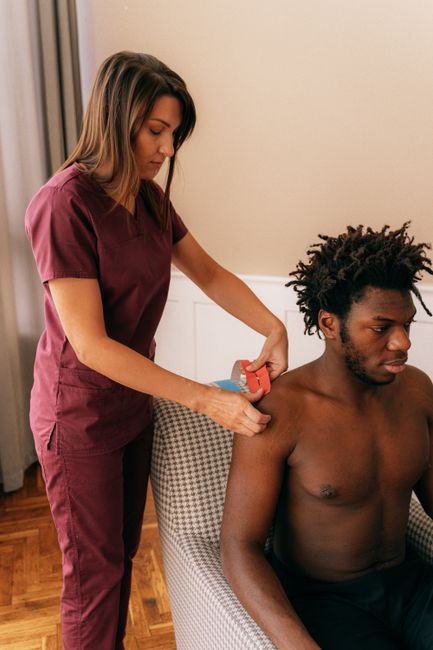
- Fine-tune with tape. USBC’s equipment rules say tape in a gripping hole is not a device and is allowed, so bowlers use it to adjust thumb-hole fit as the thumb swells or shrinks through a night.
- Condition the body. College bowlers with no conditioning program had more injuries. Our bowling training page has a simple strength and mobility plan.
- Use wrist supports wisely. USBC suggests young bowlers use wrist supports as a training tool to learn a firm wrist, not all the time, because the muscles won’t get stronger if the support does the work. An injured bowler is the exception; ask your PT.
- Warm up and build volume slowly. A few minutes of easy movement before practice balls, and fewer games after a layoff, rather than three tournament blocks in your first week back. See our league night and tournament day page.
Gear many bowlers keep in the bag
None of this replaces a good fit or rehab, but it helps with the basics. Many bowlers carry thumb tape like Storm Max Pro Thumb Tape for fit, a wrist support like the Brunswick Pro Wrist Support, and shoe covers like Hammer Black Widow Shoe Covers for every trip off the approach.
Storm Max Pro Thumb Tape
- Tape fine-tunes thumb-hole fit
- Allowed in USBC competition
- About $15 on Amazon
Brunswick Pro Wrist Support
- Keeps the wrist firm at release
- Use as a tool, not a crutch
- About $18 on Amazon
Hammer Black Widow Shoe Covers
- Keep slide soles clean and dry
- For trips off the approach
- About $22, LG/XL pair
When to see a sports medicine doctor, PT or athletic trainer
- Right away (emergency): a head injury with concussion danger signs, a possible broken bone or dislocated finger, or back pain with leg weakness or loss of bladder or bowel control.
- Within a few days: a finger or wrist that’s swollen and hard to move after a dropped ball or a fall, or a knee that gave way in the slide.
- Soon: thumb numbness or a tender lump at the base of the thumb, thumb-side wrist pain lasting more than a few weeks, elbow or shoulder pain that’s getting worse, or pain at night. AAOS advises an orthopaedic visit if de Quervain’s symptoms last beyond six weeks.
A sports medicine physician diagnoses, a PT or hand therapist runs rehab, and a pro shop operator or USBC-certified coach fixes the fit and technique behind it. Return usually goes from easy arm swings to a few spare shots, then full games, adding the next step only when the last is pain-free. See also bowling recovery, and our golf injuries page, which shares many of the same wrist, elbow and back problems.
Bowling injuries: FAQs
What is the most common bowling injury?
In emergency rooms, sprains and strains, mostly to the trunk, head and neck and fingers, with falls the leading cause. Among regular and competitive bowlers, overuse problems in the bowling hand, wrist and arm are the most common.
Why is my thumb numb after bowling?
Pressure from the thumb hole can irritate the small nerve on the inside of the thumb, a condition called bowler’s thumb. It’s uncommon but real. Have your fit checked at a pro shop, and see a doctor if numbness keeps returning or you feel a tender lump.
Should I wear a wrist support every time I bowl?
Not necessarily. USBC suggests young bowlers use one as a training tool, because the wrist muscles won’t strengthen if a support always does the work. Many adults wear one for consistency; if you have a wrist injury, ask your PT.
How do I stop slipping or sticking on the approach?
Keep your slide sole clean and dry: wear shoe covers off the approach, clean your soles after any trip away from the lanes, and stay behind the foul line. Take a practice slide first and tell the staff about any wet or sticky spot.
Can a heavier ball cause injuries?
A ball that’s too heavy makes your body stiff and your swing slow, according to USBC, and forcing it puts more strain on the wrist, elbow and shoulder. Pick the weight you can swing freely, up to the 16-pound maximum.