This article contains affiliate links: if you buy through them we may earn a commission, at no extra cost to you. Learn more.
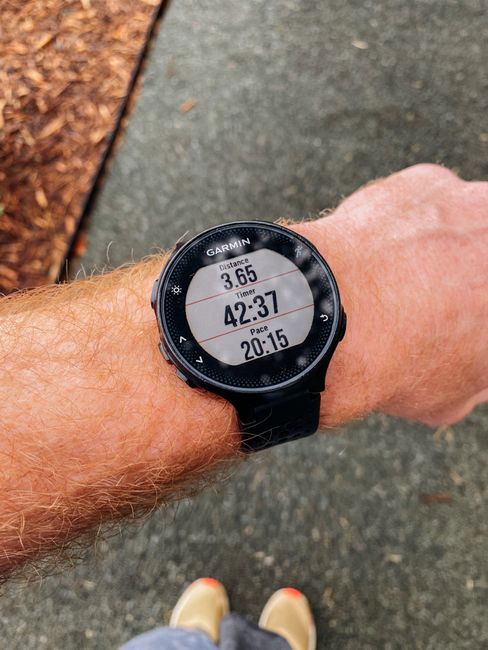
Between burns on a project, a climber glances at her wrist: route logged as “attempted”, three falls, rest timer running. Her partner has nothing on his wrist but a ring tan line, because his Oura stays in his bag until bedtime. Climbing is harder on gadgets than most sports: watches scrape against rock, rings can catch on holds, and GPS pace means nothing on a 15-meter wall. But the right wearable can log your sessions, time your rests, guide you on long alpine days and show when your body needs a break. Here are the best climbing watches and wearables for gym climbers, boulderers, sport and trad climbers, alpinists and competitors.
Prices change often. The prices below are what we saw at the maker or a major retailer in October 2026; check the current price before you buy.
Our top picks
Garmin Instinct 3 AMOLED (45 mm)
- Bouldering + indoor climbing modes
- Up to 18 days battery
- Flashlight, barometric altimeter
Garmin fenix 8 (47 mm AMOLED)
- Indoor climbing route logging
- Up to 16 days / 47 h GPS
- Maps, flashlight, speaker
Apple Watch Ultra 4
- Up to 45 h extended workout
- Fall detection, satellite SOS text
- Climbing logs via apps
Oura Ring 5
- 6 to 9 day battery
- Sleep and Readiness scores
- Take it off to climb
Tindeq Progressor 200
- Measures pull force via app
- 200 kg design load
- USB-C rechargeable
Climbing wearables compared
| Device | Type | Climbing features | Battery | About (Oct 2026) |
|---|---|---|---|---|
| Garmin Instinct 3 AMOLED | Rugged watch | Bouldering and indoor climbing modes: grade, completed or attempted | Up to 18 days | $350 |
| Garmin fenix 8 | Multisport watch | Indoor climbing: routes, grade, falls, auto rest timer; maps for approaches | Up to 16 days / 47 h GPS | $730 (launched $999.99) |
| Apple Watch Ultra 4 | Smartwatch | Route logging through third-party apps; fall detection | Up to 45 h extended workout | $780 (GPS + Cellular) |
| Oura Ring 5 | Smart ring | None while climbing; sleep, HRV, readiness | 6–9 days | $399 + $5.99/mo |
| WHOOP | Screenless band | Strain, recovery and sleep scores | 14+ days | From $199/yr membership |
| Polar H10 | Chest strap | Accurate heart rate for cardio and circuit days | Up to 400 h | $105 list |
| Tindeq Progressor 200 | Force gauge | Finger and pull strength tests, hangboard tracking | Rechargeable | Varies |
What to buy first
- Gym climbers and boulderers: a watch with a climbing mode, to log routes and time rests, or simply a notebook and a phone timer. Nothing beats more climbing.
- Outdoor and alpine climbers: a rugged watch with an altimeter, compass, maps and long battery for approaches, descents and long days.
- Climbers training on a hangboard: a force gauge to measure finger strength and progress without guessing (see climbing training).
- Anyone training hard, competing or over 40: a recovery tracker to watch sleep and heart-rate variability trends.
The best climbing wearables
1. Garmin Instinct 3 AMOLED: best value climbing watch
Tough, simple and made for the outdoors. Garmin’s Instinct 3 AMOLED has a 1.2-inch AMOLED screen in a fiber-reinforced polymer case with a metal-reinforced bezel, a built-in flashlight, a 3-axis compass, a barometric altimeter and multi-band GPS, with up to 18 days of smartwatch battery (45 mm, Garmin’s figure). Garmin’s Instinct 3 owner’s manuals include a Bouldering activity and an indoor climbing activity: you pick a grading system and difficulty, then save each problem as completed or attempted. It also tracks sleep and heart rate. On Amazon it was about $350.
- Good: rugged; great battery; climbing modes; flashlight for dark descents.
- Watch out: no detailed maps; you log grades and results by hand.
- Best for: boulderers and crag climbers who want a tough watch that lasts weeks.
Check the Garmin Instinct 3 AMOLED price on Amazon
2. Garmin fenix 8: best for big outdoor days
For multi-pitch, alpine routes and long approaches. The fenix 8 (47 mm AMOLED) has a 1.4-inch AMOLED screen, stainless steel bezel, built-in flashlight, a speaker and mic, topo maps and Garmin’s Training Readiness score, with up to 16 days of smartwatch battery or 47 hours of GPS. Its indoor climbing activity records each route with grade, number of falls and completed or attempted status, and starts a rest timer automatically when you’re back on the ground. It launched at $999.99; with the newer fenix 9 out, it was about $730 on Amazon.
- Good: maps and navigation for approaches and descents; strong battery; full training features.
- Watch out: expensive and fairly heavy on the wrist; a big face takes knocks in cracks and chimneys.
- Best for: trad, multi-pitch and alpine climbers, and climbers who also run, ski or hike.
Check the Garmin fenix 8 price on Amazon
Comparing Garmin lines? Our Garmin Forerunner vs fenix guide explains the differences.
3. Apple Watch Ultra 4: best for iPhone users
Apple’s rugged watch is a strong safety tool for climbers. Apple lists up to 45 hours of tracking in its maximum extended workout mode, detection of a hard fall, and satellite messaging to text emergency services when you have no cell service or Wi-Fi, which is useful at remote crags. It measures heart-rate variability frequently and gives a daily readiness score. For climbing logs, third-party apps such as Redpoint use the watch’s barometer to track climbs and support grading scales for bouldering, top rope, sport and trad. The GPS + Cellular 49 mm model was about $780.
- Good: fall detection and satellite SOS; best smartwatch features; large app choice.
- Watch out: needs an iPhone; shorter battery than Garmin; climbing logs depend on apps.
- Best for: iPhone users who climb outdoors, often in places without signal.
Check the Apple Watch Ultra 4 price on Amazon
4. Oura Ring 5 and WHOOP: best recovery trackers
Recovery trackers watch what happens off the wall: sleep, resting heart rate and heart-rate variability (HRV), rolled into a daily score. The Oura Ring 5 starts at about $399 plus a $5.99 monthly membership and lasts 6 to 9 days. One climbing rule: take any ring off before you climb. A ring can catch on a hold or in a crack, and fingers swell during a session; many climbers put the Oura on only for the evening and sleep. WHOOP is a screenless band sold as a membership (from about $199 a year), with more than 14 days of battery and Recovery, Strain and Sleep scores. Neither is a medical device. Read our WHOOP vs Oura vs Garmin comparison and HRV for athletes.
Check the Oura Ring 5 price on Amazon
5. Tindeq Progressor 200: best finger-strength tool
Not a wearable, but the most climbing-specific piece of training tech. The Progressor is a small force gauge you hang between a hold or edge and a fixed point, then pull; the app shows your force in real time. The Progressor 200 has a 200 kg design load, samples at 80 times a second, connects by Bluetooth, charges by USB-C and has an open API for other apps. Climbers use it to test finger strength on each hand, run hangboard protocols at a set percentage of their max, and see progress over months, a more precise way to follow the “small steps” rule for safe finger training.
Check the Tindeq Progressor 200 price on Amazon
6. Polar H10: best heart-rate strap for training days
Wrist sensors can be thrown off by tensed forearms and hard gripping, and accuracy studies find chest straps hold up better than wrist sensors. For cardio days, circuits and approach hikes, a chest strap reads the heart’s electrical signal directly. The Polar H10 (Polar lists it at $104.95) runs up to about 400 hours on a coin battery and connects to watches and apps by Bluetooth and ANT+. See our best heart rate monitors guide.
Check the Polar H10 price on Amazon
How to choose climbing wearables
- Check the climbing modes. Bouldering and indoor climbing profiles vary by watch model; check the owner’s manual before you buy.
- Protect the screen. Rock and gym walls are abrasive. Many climbers turn the face to the inside of the wrist, use a screen protector, or take the watch off for crack climbing.
- No rings on the wall. Wear smart rings for sleep and rest days only.
- Add up the real cost: one-time purchases (watches, straps, gauges) versus memberships (WHOOP, Oura).
- Numbers aren’t everything. A tracker can’t feel a sore pulley. If a finger, elbow or shoulder hurts, see a sports medicine doctor, physical therapist or hand therapist (see climbing injuries).
Back to the climbing hub, or see climbing recovery and Session & Comp Day. Browse all our wearables, the best smart rings, or compare with soccer wearables.
Climbing wearable questions
Can a watch track rock climbing?
Yes, in a basic way. Garmin watches such as the fenix 8 and Instinct 3 have indoor climbing and bouldering activities where you log each route’s grade and whether you completed it; some also count falls and time rests automatically. Apple Watch users rely on apps like Redpoint.
Should I wear a watch while climbing?
Many climbers do in the gym and on sport routes. Expect scratches, and take it off for crack climbing or when it gets in the way of jamming. Never wear a ring while climbing.
Can I wear an Oura ring while climbing?
It’s best not to. Rings can catch on holds or in cracks, and fingers swell when you climb. Take it off for the session and put it back on for the evening, when it does most of its useful work tracking sleep and recovery.
What is a Tindeq Progressor used for?
It’s a force gauge that measures how hard you pull, shown live in an app. Climbers use it to test finger strength, set hangboard loads as a share of their max, compare hands and track progress over time.
Is wrist heart rate accurate when climbing?
Not always: tensed forearm muscles and hard gripping can disturb wrist optical sensors, and accuracy studies favor chest straps. For training sessions where heart rate matters, a chest strap like the Polar H10 is more reliable.