This article contains affiliate links: if you buy through them we may earn a commission, at no extra cost to you. Learn more.
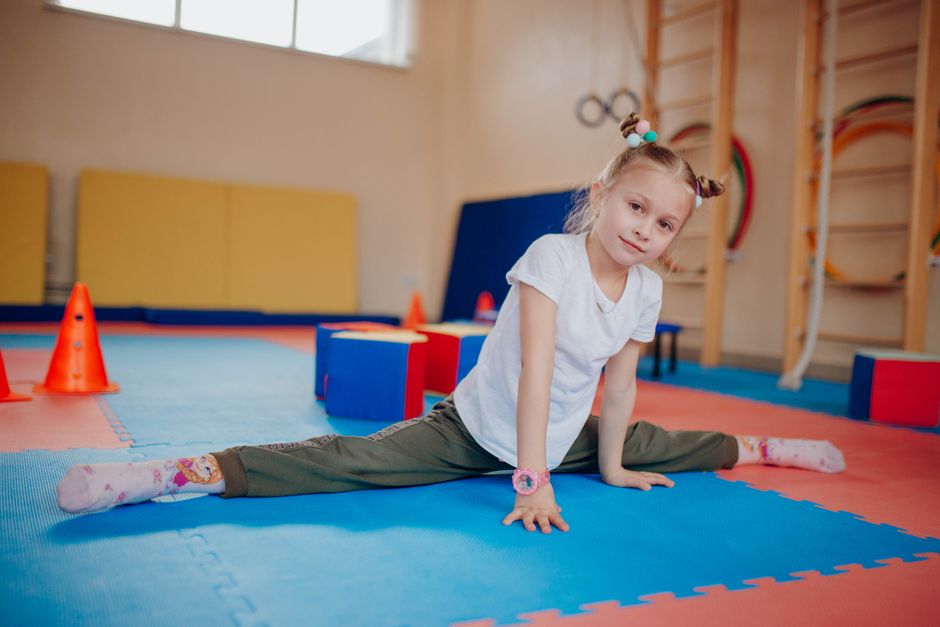
It starts with cartwheels across the living room and handstands against the couch. Then a rec class, a coach who says “she should try out for pre-team,” and suddenly practice is three nights a week, then four, and the family calendar revolves around meets. Youth gymnastics can give kids strength, confidence and friends for life. It also asks more hours of young athletes than most sports, so parents need good information. This page covers starting ages, recreational versus competitive gymnastics, training hours and overuse, athlete safety and choosing a gym, high school and college recruiting, and the questions parents ask most.
For the big picture of the sport, start at our gymnastics hub.
What age can kids start gymnastics?
The American Academy of Pediatrics (AAP) says most children don’t have the basic motor skills for organized sports before about age 6, and suggests ground-level activities for preschoolers, including tumbling in beginner gymnastics, with lots of free play. By 6, most kids are ready for simple organized sports, gymnastics among them. So a play-based preschool class is fine, as long as it’s about fun and moving, not drilling.
Competition comes later. USA Gymnastics’ minimum ages for its women’s programs are a gymnast’s 4th birthday for Development Program Level 1, 5th for Level 2 and Xcel Bronze, 6th for Level 3 and Xcel Silver, and 7th for Level 4 and Xcel Gold. A child must reach the minimum age before the first qualifying meet, not just during the season.
Recreational vs. competitive gymnastics
- Recreational classes: once a week or so, grouped by age and skill, no meets. The best fit for most kids, and a great base for other sports.
- Pre-team: many gyms run an invitation-only group that prepares kids for competition.
- Xcel: USA Gymnastics’ alternative competitive program, built for gymnasts “of varying abilities and commitment levels,” with flexible routines and divisions from Bronze to Sapphire. Many gyms run Xcel with fewer weekly hours than the Development Program, but that varies by gym.
- Development Program: Levels 1–10, compulsory routines through Level 5 and optional routines from Level 6. The traditional path toward college and elite, and usually the most hours.
- Other disciplines: boys’ programs, rhythmic, trampoline and tumbling, and acro each have their own levels, and the AAU runs a separate program. Ask your gym which ones it offers.
Our gymnastics organizations page lists every level with its age and score requirements.
Training hours and overuse: what the AAP says
Gymnastics is one of the few sports where the AAP accepts that specialization may start early, because peak performance often comes before full physical maturity. The same 2016 report also says girls in these early-specialization sports have a higher risk of overuse injuries and of the female athlete triad. The AAP’s guidance for young athletes:
- Rest days: at least 1 to 2 days off a week from competition and sport-specific training (2024 clinical report).
- Time off: at least 2 to 3 months a year away from any one sport, which can be split into one-month blocks, filled with other activities and free play.
- Build gradually: training load is commonly advanced by no more than 10% to 20% a week.
- Watch the hours: one study the AAP cites found that kids who trained more hours a week than their age in years had a higher risk of overuse injury, and another linked more than 16 hours a week to more injuries in high schoolers. The AAP says these thresholds still need to be confirmed, but they’re a useful check.
- Keep it fun: the AAP says the focus should be fun, skill, safety and sportsmanship, and asks pediatricians to think about overtraining and burnout when young athletes have fatigue, mood changes, poor sleep or slipping grades.
Real gym schedules often go past these lines. In one study of young gymnasts, 10- to 13-year-olds averaged about 16.5 hours a week, and the two youngest age groups averaged more hours than their age. If your child’s schedule is heavy, talk with the coach and your pediatrician about rest days and time off.
Warning signs parents shouldn’t ignore
- Wrist pain with handstands, vault or tumbling. Repeated loading can stress the growth plate of the wrist (“gymnast’s wrist”), which the AAP describes in young gymnasts.
- Low back pain, especially with back walkovers or arching. AAOS lists gymnastics among the causes of spondylolysis, a stress fracture of the lower spine.
- Heel or knee pain in growing kids, limping, or a joint that swells.
- Eating too little, weight talk, or, in teen girls, missed periods. The AAP notes that low energy intake can make bone stress injuries more likely. No child should be pushed to diet for gymnastics.
- Any head injury. Follow the CDC’s HEADS UP steps: out of practice right away, out for the day, back only with a healthcare provider’s OK.
For any of these, see a pediatric sports medicine doctor, physical therapist or athletic trainer. Our gymnastics injuries page explains each one.
Safe sport: how to choose a gym
Athlete safety matters in every youth sport, and gymnastics now has strong rules. The U.S. Center for SafeSport’s Minor Athlete Abuse Prevention Policies (MAAPP) apply to USA Gymnastics clubs. A short checklist for touring a gym:
- Is it a member club of USA Gymnastics (or another recognized organization)? Its coaches should be professional members, which means a background check and the U.S. Center for SafeSport course.
- Can parents watch? MAAPP requires that parents be allowed to observe individual training sessions, and one-on-one contact between a coach and a minor must be observable and interruptible.
- How do coaches message kids? Under MAAPP, a parent or another adult must be copied on electronic messages to minor athletes.
- Who handles injuries? Ask about the concussion plan, who stretches or tapes athletes (MAAPP requires parental consent, another adult present, and recommends that coaches not massage minors), and when kids are sent to a doctor.
- What’s the culture? Look for good mats and spotting, skill progressions, kids who are allowed to say “my wrist hurts,” and coaches who never shame bodies or weight.
Concerns can be reported to the U.S. Center for SafeSport at uscenterforsafesport.org. If a child is in immediate danger, call 911.
Home practice: what’s safe
Kids love to practice at home. Stretching, conditioning, handstand holds against a wall and balance work on a floor-height beam are good options. New skills, flips and anything inverted belong in the gym with a coach and proper matting. The AAP strongly discourages home trampolines: most trampoline injuries happen with several kids on the mat at once, and neck injuries often come from falls or attempted flips. Two practical buys for the living room: the BalanceFrom 4-panel folding mat (10 × 4 feet, 2 inches thick, 15 lb) and the Z Athletic folding low beam (9 feet long, 2 inches tall, 4-inch top). If wrists get sore with tumbling, many gymnasts wear Tiger Paw wrist supports, but ongoing pain needs a professional, not just a brace.
BalanceFrom 4-Panel Folding Gymnastics Mat
- 10 x 4 ft, 2 in thick
- Folds to 4 x 4 ft, 15 lb
- About $103
Z Athletic Folding Low Balance Beam
- 9 ft long, 2 in tall
- 4 in top, 6 in base
- Folds in half, 4 lb
Tiger Paw Gymnastics Wrist Supports
- Sold in pairs
- Adjustable, sized by body weight
- Made in USA
More options in our gymnastics gear guide.
High school and college recruiting
High school: girls’ gymnastics is offered in some states (26 reported it in the NFHS 2023–24 survey) and boys’ in only a few. Many club gymnasts stay with their club through high school.
College: Top NCAA women’s programs start evaluating gymnasts early, in some cases in middle school, according to USA Gymnastics. Under NCAA Division I rules, coaches can start calling, texting and making offers from June 15 after a gymnast’s sophomore year, and official and unofficial visits open on August 1 before junior year. Division III schools don’t give athletics scholarships. Men’s college gymnastics has 12 Division I and 3 Division III programs. Register with the NCAA Eligibility Center, keep your grades up, film routines, and email coaches. Ask a school’s compliance office if you’re unsure, since recruiting rules change.
Sleep, food and school
The CDC recommends 9–12 hours of sleep a night for kids 6–12 and 8–10 hours for teens, which can be hard with evening practice. Pack a real snack for the drive, plan dinner and homework around training, and protect at least one free day a week. See our gymnastics recovery and nutrition pages, and compare with youth soccer.
Parents’ questions about youth gymnastics
Is 3 too young for gymnastics?
Not for a play-based class. The AAP suggests tumbling and other ground-level activities for preschoolers, with lots of free play. Structured training and competition can wait; USA Gymnastics’ competitive levels start at age 4 or later.
How many hours a week should my child do gymnastics?
It depends on age and level, and no number is proven safe. The AAP recommends 1–2 days off a week and 2–3 months off a year from one sport, and research it cites links more weekly hours than a child’s age to more overuse injuries.
Should my child do Xcel or the Development Program?
Xcel offers more flexibility in skills and often fewer hours; the Development Program is the traditional path to Level 10, college and elite. Both compete under USA Gymnastics. Pick the one that fits your child’s goals and your family’s time.
Can I watch my child’s practice?
Under the U.S. Center for SafeSport’s MAAPP, parents must be allowed to observe individual training sessions, and one-on-one contact must be observable and interruptible. Ask your gym about its viewing policy before you join.
Is a home trampoline good practice for gymnastics?
The AAP strongly discourages home trampoline use. Trampoline is a real gymnastics discipline, but it belongs in a gym with coaching and proper safety measures.
When do college coaches start recruiting gymnasts?
Under NCAA Division I rules, coaches can contact recruits from June 15 after sophomore year, and visits start August 1 before junior year. Many programs watch gymnasts at meets well before that.