This article contains affiliate links: if you buy through them we may earn a commission, at no extra cost to you. Learn more.
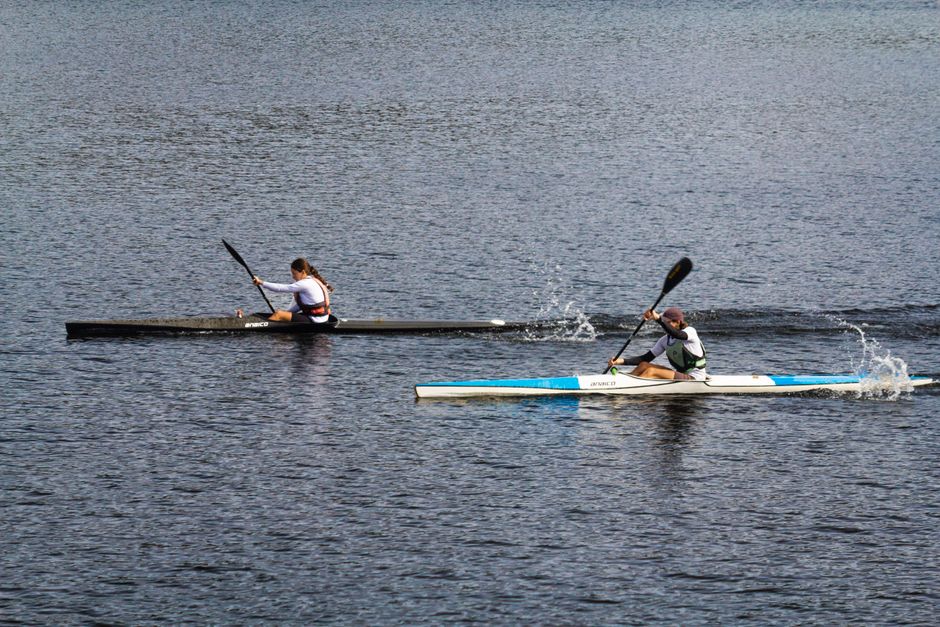
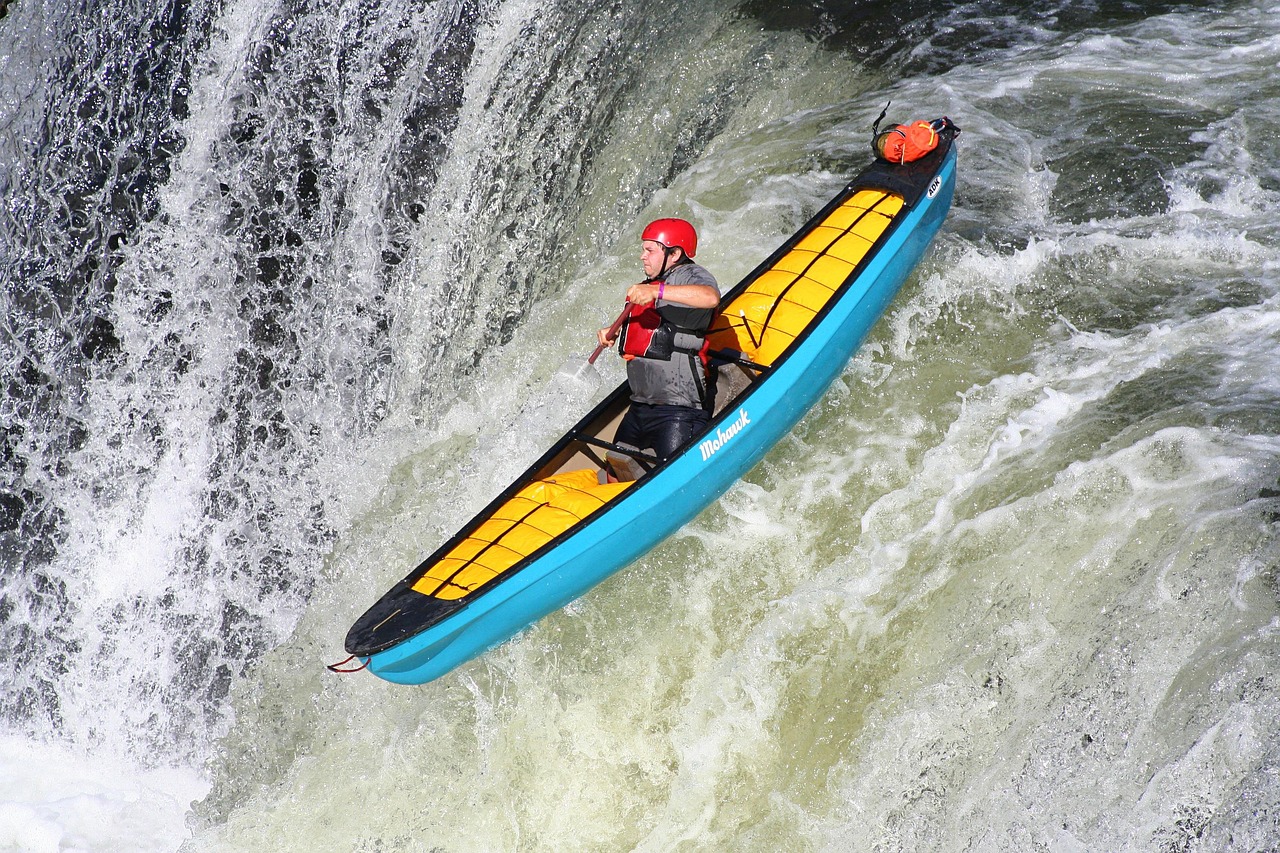
A winter Tuesday night at the community pool: a row of whitewater kayaks along the deep end, and a dozen club paddlers taking turns upside down, practicing rolls before the spring rivers come up. Across town, a masters marathon racer is on a kayak ergometer in the garage, and a high school sprint squad is doing band work in the gym. Training for kayaking looks different for a weekend tourer, a whitewater boater, a sea kayaker, a surf-ski racer and an Olympic K1 sprinter, but the building blocks are the same: a forward stroke that uses the whole body, shoulders that hold up, a strong trunk, the endurance to paddle all day, and the skills to get yourself out of trouble.
General information, not medical or coaching advice. If you have pain, an old shoulder injury or a health condition, check with a sports medicine doctor or physical therapist before ramping up. Back to the kayaking hub.
What kayaking asks of your body
The Compendium of Physical Activities, the standard research list of how hard activities are (in METs, multiples of resting energy use), shows how wide the range is in a kayak:
| Kayaking activity | METs |
|---|---|
| Kayaking, moderate effort | 5.0 |
| Whitewater kayaking | 5.0 |
| Kayaking, slalom, flat water | 9.0 |
| Kayaking, competition, faster than 6 mph | 12.5 |
| Kayaking, competition | 13.5 |
Even Olympic sprint races are mostly aerobic. In a study of internationally ranked flatwater kayakers, the aerobic system supplied about 78% of the energy in a 500 m race and about 87% in a 1,000 m race. So whatever kind of kayaker you are, a big aerobic base comes first, with strength and speed built on top.
Technique first: the forward stroke and torso rotation
Most new kayakers pull with their arms. Coaches teach the opposite: the power comes from rotating the torso, with the arms mostly transferring it to the blade. The big trunk and back muscles are stronger and tire more slowly than the arms, and using them takes load off the shoulders. With a double-bladed paddle, every stroke on one side winds you up for the next on the other:
- Sit tall, slightly forward, feet firm on the foot pegs, knees lightly braced against the deck. Slouching against the backrest locks up rotation and loads the low back.
- Wind up and catch: rotate your shoulders so the stroke-side shoulder reaches forward, and put the blade in fully near your feet.
- Unwind: drive by turning your torso back, pushing on the foot peg on the stroke side. The top hand pushes forward at about eye level; the bottom arm stays fairly long.
- Exit at the hip: lift the blade out when it reaches your hip. Pulling it farther back just lifts water and slows the boat.
- Relax your grip on the push side, which spares the wrist tendons (more on our kayaking injuries page).
Research on elite kayakers backs up the “core-powered” idea, with some nuance. In a 2024 on-water study of eight international sprint kayakers, faster boat speed went with less rotation of the lower trunk and strong activity of the abdominal and thigh muscles, suggesting a stable base with the upper body rotating on it, driven by the legs through the foot pegs. That’s why good sprint and surf-ski paddlers look like they’re pedaling a bike as they go. A lesson or two from an American Canoe Association kayak instructor, or a club coach filming your stroke, is one of the best investments a new kayaker can make.
Shoulder care
The shoulder is the most injured body part in kayaking, so it deserves its own plan. In a study of elite sprint kayakers followed for three years, the shoulder accounted for 27% of injuries. In a group of Swedish flatwater kayakers, those with shoulder pain had less internal (inward) rotation and more often showed poor control of the shoulder blade (scapular dyskinesis); the researchers suggested screening for both. A practical routine, two or three times a week, with a light resistance band:
- Rotator cuff: band external and internal rotations with the elbow at your side.
- Shoulder blade control: band pull-aparts, rows, scapular push-ups, and Y-T-W raises lying face down.
- Mobility: gentle stretches for the back of the shoulder and the chest, since paddling builds tightness in front.
- Skills that protect: learn braces and rolls with elbows low and hands in front of the shoulders (the “paddler’s box”). A UK case series found that capsizes, bracing and rolling caused many of the serious shoulder injuries in kayakers and canoeists, with the arm raised and turned out.
A light band kit like the THERABAND Beginner Kit (yellow, red and green, about $19) packs into a dry bag for trips. If something hurts, a physical therapist can tailor the exercises to you. More options in our resistance bands guide.
Strength and core
Off-water strength work makes the stroke stronger and more durable. In elite adolescent kayakers, the low back was the most injured area, ahead of the shoulder and wrist, which is one more reason the trunk gets so much attention. What the research shows:
- Trunk programs help young paddlers. In a 6-month randomized trial of 103 young flatwater paddlers (kayakers and canoeists), a trunk program improved core muscle strength, low-back control and posture compared with a control group.
- For young sprinters, lighter and longer may work better. Over a season, 13-year-old sprint paddlers who trained with light loads and many reps (30–40% of their max, 60–120 reps a set) improved their 2,000 m time trial and 2-minute pulling power more than a group lifting moderate loads for 6–12 reps.
- Strength takes time to show on the water. In another study, 24 weeks of twice-weekly free-weight training improved core strength in 14-year-old sprint paddlers but didn’t yet change their paddling performance.
- Consistency protects. In a survey of 583 Australian kayak and surf-ski racers, those with lower training volumes had a higher relative risk of shoulder and low-back injury, a reminder that paddling once a month after a winter on the couch is when many problems start. Less flexibility went with more wrist injuries, too.
A balanced week for adults: two strength sessions with pulling (rows, pull-ups or lat pulldowns), pushing (push-ups, presses), legs (squats, lunges, deadlift variations, since the legs drive the boat), rotational core work (cable or band rotations, Pallof presses, side planks) and the shoulder routine above. Hip and hamstring mobility helps you sit tall in the cockpit for hours. For kids and teens, the American Academy of Pediatrics supports resistance training when it’s supervised and focused on technique before load.
Endurance: building the aerobic engine
- Mostly easy: long, steady paddles at a pace where you could hold a conversation build the base for tours, marathons and sprints alike.
- Some hard: once or twice a week, intervals such as several 2–4 minute efforts with easy paddling between, or short sprints for K1 racers. Elite sprint training emphasizes high-intensity aerobic work for 1,000 m and shorter anaerobic work for 500 m.
- Slalom and whitewater paddlers add short, sharp efforts with lots of turning, ferrying and eddy work, closer to the 9.0-MET slalom figure above.
- Build distance gradually before a big trip or race season, and add a longer paddle every week or two rather than all at once.
- Off-season options: a kayak ergometer, rowing machine, swimming, cycling or cross-country skiing keep the engine running when the water is frozen or too cold for safe practice.
A chest-strap heart rate monitor such as the Polar H10 reads well under a spray skirt and PFD and helps keep easy days truly easy. See our heart rate monitor guide and VO2 max training, and for GPS watches with stroke-rate data, our kayaking wearables page.
Rolls, rescues and boat control are training too
For kayakers, the safety skills belong in the training plan, practiced until they’re calm and automatic:
- Wet exit: pull the spray-skirt grab loop and slide out while upside down, without panic. Everyone with a skirt learns this first.
- Braces: low and high braces stop many capsizes before they happen, with the elbows kept low.
- The roll: essential for whitewater and very useful on the sea. Kayak cross, the Olympic event that debuted at Paris 2024, even includes a compulsory roll zone on the course.
- Deep-water re-entry: sea and touring kayakers practice assisted rescues with a partner and a solo re-entry, plus towing.
- Swimming in current: whitewater kayakers learn defensive swimming (on your back, feet high, pointing downstream).
The Coast Guard asks paddlers whether they can climb back in with all their gear on, and whether they’ve practiced. Practice in warm, shallow water or a pool, with a qualified instructor. More in our paddle day and race day guide.
A sample week
| Day | Recreational / touring kayaker | Racing kayaker (high school to masters) |
|---|---|---|
| Mon | Rest | Strength + shoulder routine |
| Tue | Strength + shoulder routine | Intervals on the water |
| Wed | Easy 30–45 min walk, ride or swim | Easy steady paddle |
| Thu | Easy paddle with technique focus | Strength + core |
| Fri | Shoulder routine, mobility | Rest or easy technique paddle |
| Sat | Longer paddle | Long steady paddle |
| Sun | Rest or rolling and rescue practice | Rest |
This is an example, not a prescription. Young athletes need at least one or two days off a week from organized sport, according to the AAP. Recovery days matter as much as hard ones: see kayaking recovery. Rowers train a similar engine; compare with rowing training. Paddling a canoe? Canoeing has its own guide: canoe training.
THERABAND Resistance Band Beginner Kit
- 3 bands: yellow, red, green
- Light to medium resistance
- About $19; latex
Polar H10 Heart Rate Sensor
- ECG chest strap
- Bluetooth + ANT+
- Up to 400 h coin battery, about $105
TriggerPoint GRID 1.0 Foam Roller
- 13 in multi-density
- Hollow core
- About $40
Kayak training: FAQs
Should kayaking work my arms or my core?
Your core, back and legs, mostly. Good technique uses torso rotation and leg drive through the foot pegs to power the stroke, and the arms transfer that power to the blade. Arm-only paddling tires you quickly and puts more load on the shoulders and wrists.
What exercises are best for kayakers?
Pulling exercises (rows, pull-ups), rotational core work (band rotations, Pallof presses, side planks), leg strength, and a rotator cuff and shoulder-blade routine. In a randomized trial of young flatwater paddlers, a 6-month trunk program improved core strength, low-back control and posture.
How do I protect my shoulders when kayaking?
Use torso rotation instead of pulling with your arms, keep your hands in front of your shoulders on braces and rolls, and strengthen the rotator cuff and shoulder-blade muscles two or three times a week. Pain that keeps coming back deserves a visit to a sports medicine doctor or PT.
Is kayaking good cardio?
Yes. Moderate-effort kayaking is rated 5.0 METs in the Compendium of Physical Activities, about five times resting energy use, flatwater slalom 9.0 and racing 13.5. Even a 500 m Olympic sprint is mostly aerobic.
How can I train for kayaking in winter?
A kayak or rowing ergometer, swimming, cycling or cross-country skiing for the aerobic base, plus strength and shoulder work in the gym, and pool sessions to practice rolls and rescues. Kayaking cold water in winter calls for a drysuit and a group.