This article contains affiliate links: if you buy through them we may earn a commission, at no extra cost to you. Learn more.
The bus ride home after a college game, and half the team is looking at the same screen: total distance, top speed, number of sprints, pulled from a GPS pod that sat between their shoulder blades all game. College programs have tracked players this way for years, and USA Lacrosse’s U.S. National Teams use GPS trackers too. Now the same kind of pod is sold to individual players. This page sorts out the lacrosse wearables worth knowing in 2026: the GPS vests that measure the game, the heart-rate straps that measure the effort, a watch for off-season training, and the recovery trackers players wear to bed.

Prices change often. The prices below are what we saw at the maker or a major retailer in October 2026; check the current price before you buy.
Our top picks
STATSports Academy (APEX)
- About $320, one payment
- 24 metrics, vest included
- Same maker as U.S. National Team GPS
Catapult One
- About $180 a year, kit included
- 10 Hz GPS pod + vest
- Lacrosse listed as a sport
Garmin HRM 600
- Records on its own, no watch needed
- Heart rate + HRV
- Up to 2 months per charge
Polar H10
- ECG chest strap
- Up to 400 h coin battery
- Bluetooth + ANT+
Garmin Forerunner 570
- About $550, no subscription needed
- Training Readiness, HRV Status
- Up to 11 days as a smartwatch
Oura Ring 5
- From about $399 + $5.99/month
- 6 to 9 day battery
- Readiness and Sleep scores
Lacrosse wearables compared
| Device | Type | Where you wear it | Subscription | About (Oct 2026) |
|---|---|---|---|---|
| STATSports Academy | GPS tracker | Vest under the jersey | None | $320 |
| Catapult One | GPS tracker | Vest under the jersey | Yearly membership | $180/year with starter kit |
| Garmin HRM 600 | Heart-rate strap | Chest | None | $160–170 |
| Polar H10 | Heart-rate strap | Chest | None | $105 at Polar |
| Garmin Forerunner 570 | GPS watch | Wrist | Optional | $550 |
| WHOOP 5.0 | Recovery band | Wrist or arm | Required (Peak tier) | $239/year |
| Oura Ring 5 | Smart ring | Finger | $5.99/month | From $399 |
What’s worth measuring in lacrosse
Lacrosse is a sprint-and-recover game, and GPS research shows big differences by sex and position. In a college study that tracked both a men’s and a women’s team through a season, women’s players covered more total and sprint distance, while men made more hard accelerations and decelerations. Midfielders on both teams covered the most ground at high speed. So the most useful numbers are:
- Sprint distance and number of sprints, which show how hard a game or practice really was.
- Accelerations and decelerations, the stops and starts that load the knees and hamstrings.
- Weekly load, to avoid sudden jumps in preseason, when NCAA data show injury rates are highest (see lacrosse training).
- Heart rate and recovery, especially on hot days and during tournament weekends.
First, the rules: can you wear it in a game?
Lacrosse rules are written around protective equipment, not electronics, and they vary by level and league. College teams wear GPS vests in games; the studies above collected data during NCAA matches. High school and youth rules restrict jewelry and anything that could injure another player, so a watch, ring or wrist band will usually have to come off. A small pod in a snug vest under the jersey and pads, or a soft chest strap, is the kind of device teams use. Check with your league, coach or officials before game day, and never let a device change how your required gear fits: boys’ chest protection must still meet the NOCSAE ND200 standard and sit where it’s designed to (see lacrosse injuries).
The best lacrosse wearables
1. STATSports Academy (APEX): best GPS vest with no subscription
STATSports makes the GPS system USA Lacrosse’s national teams use, and the Academy pack is its version for individual players: a GPS tracker, a vest and an app with 24 metrics, including total and sprint distance, max speed, accelerations, decelerations, high-speed running and heart-rate zones with the optional belt. It’s a one-time payment of about $320 at STATSports, with no monthly fee, and women’s-cut vests are sold too.
- Good: no subscription; pro-level metrics; app drills.
- Watch out: the app’s drills are built mostly for soccer.
- Best for: high school and college players who want game and practice data.
2. Catapult One: best pro-style GPS on a membership
Catapult builds tracking systems for elite teams, and Catapult One brings it to individual players; Catapult lists lacrosse among its sports. The starter kit has the pod, a four-way-stretch vest (Youth to XL), a charge clip and a carry case. The pod logs 10 GPS points a second (10 Hz) and tracks sprint distance, total distance, top speed, intensity and heat maps. In the US it’s about $179.99 a year with the kit included. The pod is water-resistant (IPX6), not waterproof.
- Good: lower upfront cost; youth vest sizes.
- Watch out: no free tier; the cost repeats every year.
- Best for: players who want to try GPS without a big one-time spend.
3. Garmin HRM 600 and Polar H10: best heart-rate straps
A chest strap measures heart rate from the heart’s electrical signal, which a systematic review found more accurate than optical wrist sensors. The Garmin HRM 600 records on its own without a watch on your wrist, then syncs later, which suits team sports. It also tracks heart-rate variability (HRV), lasts up to about two months per charge and costs about $160–170. The Polar H10 (about $105 at Polar) is the long-time favorite for training: up to 400 hours on a coin battery, Bluetooth and ANT+, and one session of memory. Use either for conditioning to see how fast your heart rate drops between sprints. Our heart rate monitor guide compares more.
4. Garmin Forerunner 570: best watch for training
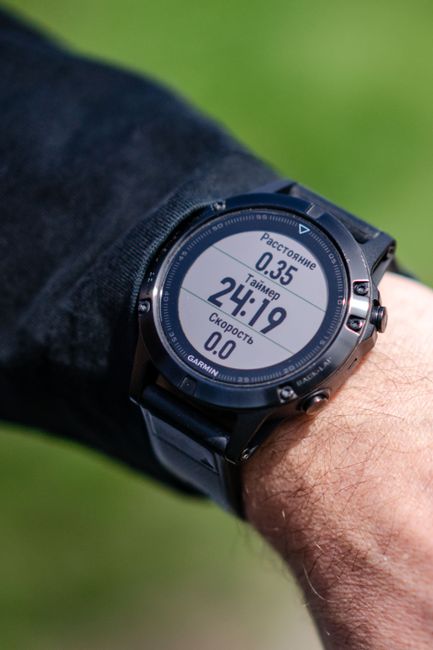
For off-season runs, lifting days and conditioning, a GPS watch does more than a vest. The Forerunner 570 has an AMOLED screen, up to 11 days of battery as a smartwatch (47 mm), and Training Readiness, HRV Status and Body Battery, all free without the optional Connect+ subscription. It’s about $550. Plan on taking it off for games.
5. WHOOP 5.0 and Oura Ring 5: best for sleep and recovery
Recovery trackers watch what happens after the game: sleep, resting heart rate and HRV, rolled into a daily score. WHOOP is a screenless band sold as a membership (about $239 a year for the Peak tier, sensor included) with 14+ days of battery. The Oura Ring 5 starts at about $399 plus $5.99 a month, lasts 6 to 9 days and is the easiest to sleep in. In a study of college women’s lacrosse players, harder training days were linked with slightly worse sleep that night, which is exactly what these devices show. Neither is a medical device. See our WHOOP vs Oura vs Garmin comparison and HRV for athletes.
How to choose a lacrosse tracker
- Want game data? Pick a GPS vest (STATSports or Catapult) and check your league’s rules first.
- Want to train smarter in conditioning? A chest strap gives the most accurate heart rate for the money.
- Midfielders get the most out of GPS, because they cover the most ground at speed. Goalies get more from heart rate and recovery data.
- Count the subscription. A one-time price can beat a cheaper yearly plan after two seasons.
- For young players, a tracker is optional. Skills, sleep and fun matter more than numbers.
For more options across sports, see our best GPS tracker for team sports guide and the soccer wearables page. Back to the lacrosse hub, or see lacrosse recovery and lacrosse gear.
Lacrosse wearable questions
Can you wear a GPS tracker in a lacrosse game?
College teams use GPS vests in games, and research on NCAA lacrosse collects data during matches. High school and youth rules vary, and jewelry and hard objects that could injure someone aren’t allowed. Ask your league or officials before wearing any device in a game.
What GPS tracker do lacrosse teams use?
USA Lacrosse’s U.S. National Teams use STATSports GPS trackers, and many college programs use team systems from companies like STATSports and Catapult. STATSports Academy and Catapult One are those companies’ versions for individual players.
Can I wear a smartwatch during a lacrosse game?
Usually not. Watches and other jewelry-like items typically have to come off, and boys wear gloves anyway. Wear the watch in training, and use a vest pod or chest strap if you want game data and your league allows it.
Do lacrosse GPS trackers need a subscription?
Some do. STATSports Academy is a one-time payment of about $320. Catapult One is a yearly membership, about $180 with the kit. Heart-rate straps have no subscription.
Is a wearable worth it for a youth lacrosse player?
Usually not yet. Young players gain more from wall ball, sleep and playing several sports. A tracker makes more sense for high school and college players who train with a plan.