This article contains affiliate links: if you buy through them we may earn a commission, at no extra cost to you. Learn more.
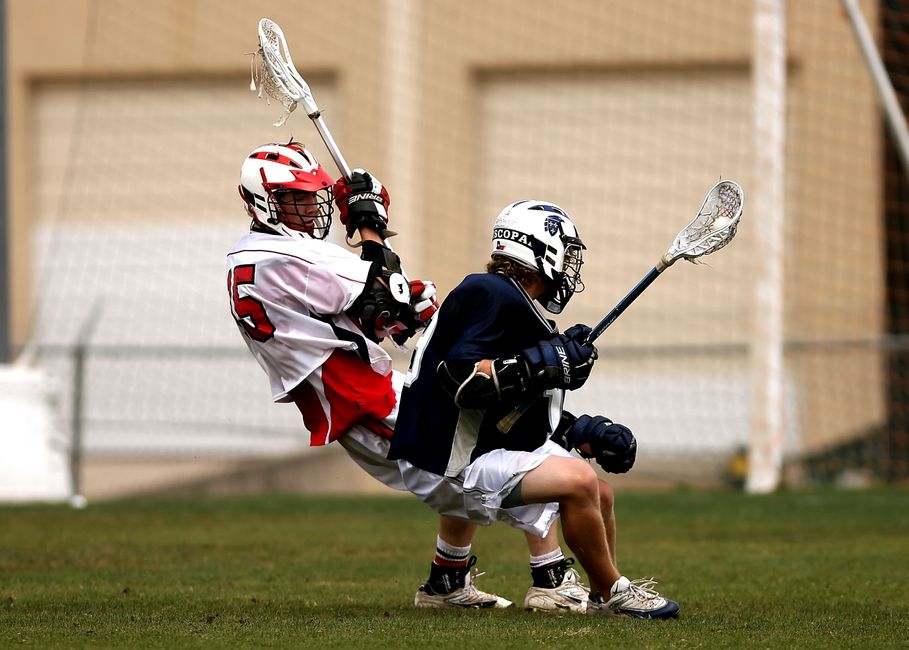
A spring Saturday on a turf field, sticks clattering and a parent cheering every ground ball. A crease scrum in a high school playoff. A college midfielder planting hard to dodge in the fourth quarter. It’s a fast game, and most lacrosse injuries come from a short list: ankle sprains, pulled hamstrings, knee ligament tears (more often in girls), hits from a stick or ball, and concussion. There’s also one rare emergency every lacrosse family should know about: commotio cordis, a blow to the chest that stops the heart. Here’s each one in plain language, with what lowers the risk and when to get it checked.
This is general information, not medical advice. If you’re hurt, see a sports medicine doctor, a physical therapist (PT) or a certified athletic trainer (AT). For the big picture of the sport, start at our lacrosse hub.
How often lacrosse players get hurt
In US high schools (2008–09 to 2013–14), boys had 2.12 time-loss injuries per 1,000 athlete-exposures (one player in one practice or game) and girls 1.45. College players were hurt more often: 3.77 for men and 2.55 for women over the same seasons. At every level, games are riskier than practice: about 3.6 times the practice rate for high school boys and 2.3 times for girls. Concussion was the most common game diagnosis for every high school boys’ position, and the most common diagnosis for every high school girls’ position.
In recent NCAA data (2014–15 to 2018–19), men’s lacrosse had 4.90 injuries per 1,000 athlete-exposures, and the top three were concussion (8.0%), ankle sprains (7.7%) and hamstring strains (6.9%). Women’s lacrosse had 4.99, led by ankle sprains (9.1%), concussion (7.2%) and hamstring strains (3.8%). Both studies found preseason injury rates higher than in the regular season, a good reason to build fitness before the first practice (see lacrosse training).
Concussion: recognize and remove
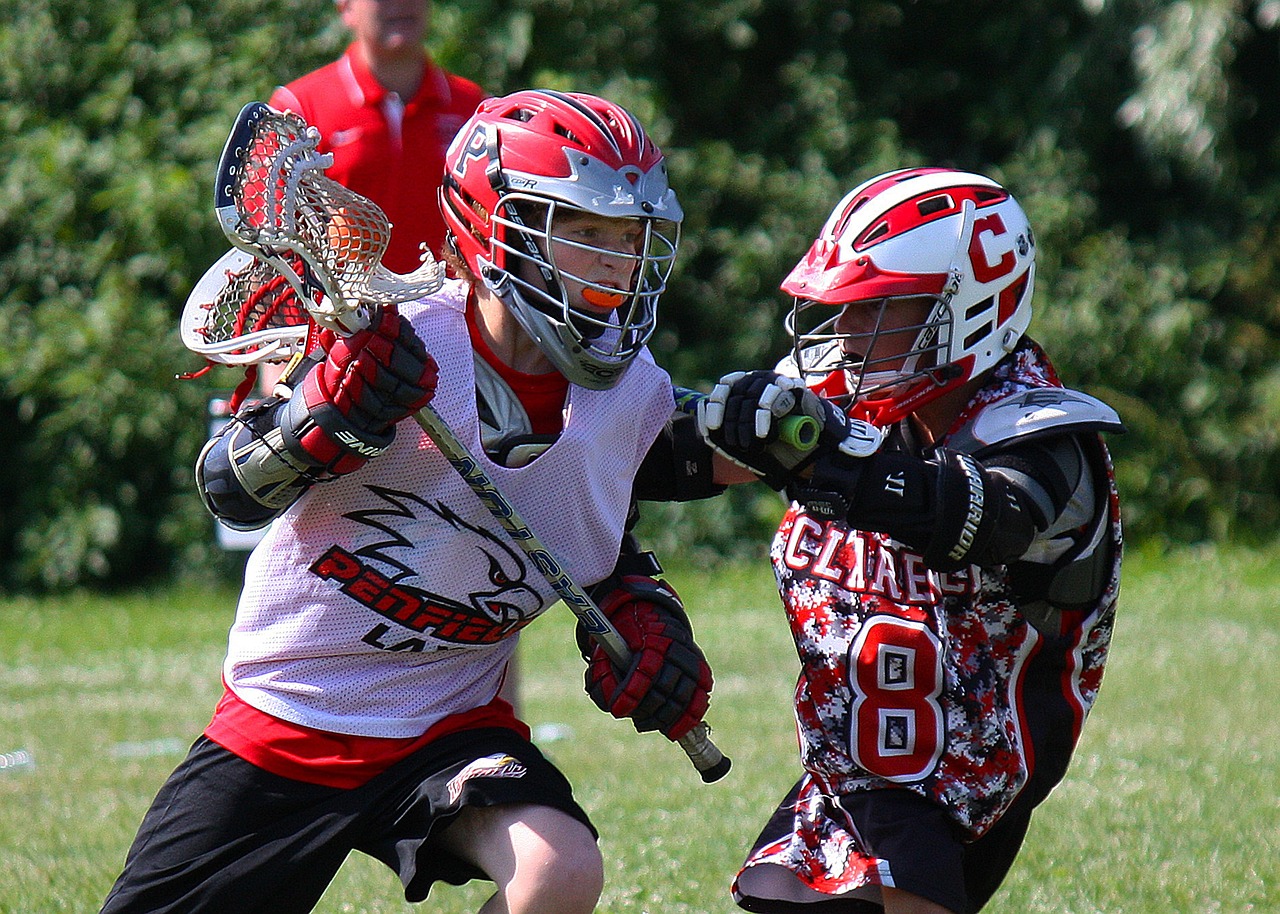
Boys’ and men’s lacrosse allows body checking, with helmets. Girls’ and women’s lacrosse limits contact, so the head is more often hit by a stick or ball. In girls’ lacrosse injury data, the most common source of contact was a stick or the ball.
The CDC’s HEADS UP program asks coaches and parents to watch for a player who looks dazed or confused, is slow to respond or moves clumsily. Listen for headache, dizziness or balance problems, nausea, vision problems, sensitivity to light or noise, feeling slowed down or foggy, or mood changes.
- Remove the player from play right away if you see signs after a blow to the head or body. When in doubt, sit them out.
- Keep them out for the rest of the day and until a healthcare provider clears them.
- Return in steps. Going back to sport is gradual and usually takes a week or more. In one college study of women’s sports, lacrosse players had a five-fold higher risk of an ACL injury in the year after a concussion, one more reason not to rush back.
- Call 911 for danger signs: a headache that gets worse and won’t go away, repeated vomiting, seizures, passing out or growing drowsiness, slurred speech or weakness, or unequal pupils or double vision.
Rules help. After high school rules raised the penalty for hits to the head and neck (2012–13) and banned body checks on a defenseless player (2013–14), concussion rates from delivering checks fell by about half.
Headgear in girls’ lacrosse. Protective eyewear meeting the ASTM F3077 standard is required for girls’ and women’s field players, and headgear is optional but must meet ASTM F3137 if worn. Florida requires it in high school. A study comparing Florida with 31 states without a mandate found a lower concussion rate where headgear was required (0.27 vs 0.44 per 1,000 athlete-exposures). A 2025 international review rated the evidence for headgear in girls’ lacrosse and soccer as “very low certainty”, and a video study found more head impacts in Florida games. The debate isn’t settled. Ask your league or club what’s allowed.
Commotio cordis and chest protectors
Commotio cordis is a rare but life-threatening event: a blow to the chest, from a ball, a stick or another player, lands at an exact moment in the heartbeat and throws the heart into a deadly rhythm. The heart itself is usually normal. In US organized sports from 1982 to 2023, researchers counted 64 cases, and lacrosse had the second most (17), after baseball (20). Over half of all the cases were fatal, but survival has been rising.
Two things make the difference:
- Fast CPR and an AED. In the US Commotio Cordis Registry, 40% of people survived when resuscitation started within 3 minutes, against 5% when it was later. In the most recent years of that study, 58% survived, and having an automated external defibrillator (AED) on site protected against death. Every team should have an emergency action plan, know where the nearest AED is, and have someone at the field trained in CPR.
- Chest protectors built to the NOCSAE ND200 standard. ND200 is the first performance standard designed specifically to cut the force of a blow over the heart enough to lower the risk. USA Lacrosse says ND200 chest protection has been required for goalies at youth, high school and college level since January 1, 2021, and for all field players in boys’ and men’s lacrosse since 2022. The standard lowers the risk; it can’t remove it, so the AED plan still matters.
When you buy shoulder pads or a chest pad, look for the ND200 mark on the label. The STX Stallion 400 shoulder pads are one ND200-certified option. Girls’ field players don’t have to wear a chest protector, but they must wear goggles: the STX 4Sight+ S is labeled ASTM F3077 and SEI certified. Both groups need a mouthguard, like the Shock Doctor Gel Max. Our lacrosse gear guide covers the rest of the bag.
STX Stallion 400 Shoulder Pads
- Meets NOCSAE ND200 (maker)
- Adjustable shoulder caps
- Boys' and men's field players
STX 4Sight+ S Goggles
- ASTM F3077-17, SEI certified
- Oval wire design
- Silicone padding
ASO EVO Ankle Stabilizer
- Lace-up with figure-8 straps
- Fits left or right foot
- Low profile, fits in cleats
Shock Doctor Gel Max Mouth Guard
- Youth and adult sizes
- Gel-fit liner
- Detachable helmet strap
ACL tears, and why girls need a prevention plan
The anterior cruciate ligament (ACL) usually tears when a player plants and cuts, pivots or lands with the knee nearly straight: exactly what a dodge looks like. The American Academy of Orthopaedic Surgeons (AAOS) lists a “pop”, fast swelling and a knee that gives way as the classic signs. Across high school sports, girls tear their ACL at about 1.6 times the rate of boys per exposure. A review of high school data put the yearly risk at about 0.53% per season for a girls’ lacrosse player and 0.44% for boys, behind only soccer and basketball for girls. In other words, both sexes carry real risk.
The good news is that prevention works. In a classic study of high school girls in soccer, volleyball and basketball, girls who skipped a preseason jump-and-land program had 3.6 times the rate of serious knee injury. A later meta-analysis found the biggest drop in ACL injuries when these programs start in the mid-teens. Yet in a 2026 survey of 522 high school teams, only 3.5% used one. The most common reasons were no trained staff and no time. A regular warm-up with strength, balance, jumping and landing work is the fix (our training page shows how, and soccer’s FIFA 11+ is a ready-made model on our soccer injuries page).
Footwear may matter too: in one study of female lacrosse and soccer players, those who tore an ACL were more often wearing cleats with long conical studs than turf shoes. It’s one study, so ask your AT before changing shoes.
Ankle sprains and hamstring strains
Ankle sprains top the list in women’s college lacrosse and come second in men’s. The National Athletic Trainers’ Association (NATA) calls a previous sprain the most consistent risk factor and recommends tape or a brace for all practices and games once you’ve sprained an ankle before. Lace-up braces, semi-rigid braces and tape all reduce repeat sprains. NATA also recommends a balance and neuromuscular program of at least three months, so the brace is a seatbelt, not a fix. Many players keep a lace-up brace like the ASO EVO in the bag; our ankle brace guide compares more.
Hamstring strains (a sudden pull at the back of the thigh, usually while sprinting) are in the top three for both men and women in college. Ask your coach or AT about building sprint work up gradually in preseason and adding hamstring strength exercises, two common ways teams try to lower the risk.
Hits from sticks and balls, and the upper body
A lacrosse ball is solid rubber, and sticks swing fast. A national emergency-room study found the shoulder was the most often injured part of the upper body in high school and college-age players, and fractures were the most common upper-body injury type. Boys’ and men’s players had more than four times the rate of girls and women. Fitted gloves, arm pads and shoulder pads matter, and goalies need their full gear for every shot, warm-ups included. Among catastrophic lacrosse injuries recorded over four decades, contact with a stick or ball was the leading cause (41%).
Overuse injuries
Not every injury comes from a collision. In NCAA women’s lacrosse, about a quarter of injuries were overuse (25.2%), almost as many as non-contact injuries (26.6%), and overuse problems were more common in women than men. These problems build quietly over long seasons and summer club ball. The American Academy of Pediatrics (AAP) advises young athletes to take at least 1–2 days a week off their main sport and to play several sports at least until puberty. More on our youth lacrosse page.
When to see a doctor, PT or athletic trainer
Don’t play through pain. Get it checked if you notice any of these:
- Any concussion signs after a hit to the head or body.
- A player collapses after a blow to the chest: call 911, start CPR and get the AED right away.
- The knee went “pop”, swelled fast or gives way.
- You can’t put weight on the leg, or a joint looks out of shape.
- A hand, wrist or collarbone is painful, swollen or deformed after a stick or ball hit.
- Pain gets worse with each practice, which can point to a stress fracture or tendon problem.
A sports medicine physician diagnoses the problem and manages most injuries without surgery. A physical therapist guides rehab and return to play. Athletic trainers are licensed or regulated health care professionals who work with physicians, and many high schools and colleges have one at practice. NATA adds that an injured leg should perform at least 80% as well as the healthy one before sport-specific drills.
Lacrosse injury FAQs
What is the most common injury in lacrosse?
It depends on the level and the game. In NCAA data, concussion was the most reported injury in men’s lacrosse and ankle sprains in women’s lacrosse, with hamstring strains third for both. In high school, concussion was the most common game diagnosis at every boys’ position and the most common diagnosis at every girls’ position.
Do girls’ lacrosse players have to wear headgear?
Usually not. Headgear is optional but must meet ASTM F3137 if worn; ASTM F3077 goggles and a mouthguard are required. Florida requires headgear in high school, and a study there found a lower concussion rate, though the evidence is still limited.
What is commotio cordis in lacrosse?
It’s cardiac arrest caused by a blow to the chest at a precise moment in the heartbeat, for example from a shot or a stick. It’s rare, but lacrosse has the second-most cases among US organized sports. CPR and an AED within 3 minutes give the best chance of survival.
Do lacrosse players need a chest protector?
Goalies at youth, high school and college level must wear a NOCSAE ND200 chest protector, and so must all boys’ and men’s field players since 2022. Look for the ND200 mark; many shoulder pads now include ND200 chest protection.
Warm up with purpose, wear the right certified gear, practice your emergency plan and sit out anything that looks like a concussion. Keep going with our training, game-day and recovery guides, and our knee sleeves guide.