This article contains affiliate links: if you buy through them we may earn a commission, at no extra cost to you. Learn more.
The first practice of youth lacrosse looks a lot like chaos: a dozen 7-year-olds chasing a soft pink ball, sticks waving, a coach on the field reminding everyone to keep two hands on the stick. Then someone catches a pass for the first time and you can see the hook set. This guide is for parents and coaches of youth lacrosse players: how the age groups work, what changes at 8U, 10U, 12U and 14U, contact and checking rules by age, the girls’ headgear question, the safety basics and how recruiting really works.
For the big picture, start at our lacrosse hub. The rules page compares youth, high school and college rules.
How youth age groups work
USA Lacrosse, the sport’s national governing body, writes separate youth rule books for boys and girls, covering 14U and younger. Divisions are named by age: 6U, 8U, 10U, 12U and 14U. USA Lacrosse recommends grouping players by birth date in 12-month bands, with up to 24 months allowed when a program is small. Many clubs and tournaments use 15-month groups tied to a player’s graduation year instead; in that system USA Lacrosse says players shouldn’t play down a year from their class. Player members 18 and under complete a one-time age verification.
Most kids start in a town or parks league in the spring. Brand-new players can try Flex6, USA Lacrosse’s small-sided, non-contact format that needs almost no equipment and can be played on any surface. Boys’ and girls’ lacrosse are different games with different rules and gear, so make sure you sign up for the right one.
Boys’ youth lacrosse by age
| 6U and 8U | 10U | 12U | 14U | |
|---|---|---|---|---|
| Format | 4 v 4, cross-field | 6 v 6 or 7 v 7 cross-field, or 10 v 10 | 7 v 7 or 10 v 10 | 10 v 10, full field |
| Game | 2 × 12 min, running clock, no faceoffs | 4 × 10 min, running | 4 × 10 min, running | 4 × 10 min, running |
| Field stick | 37–42 in, no long poles | 37–42 in; long poles 47–54 in | 40–42 in; long poles 52–72 in | High school lengths |
| Body checking | No | No | No | Yes, no “take-out” checks |
| Stick checking | Limited: lift checks, poke checks and checks below the shoulders; no one-handed checks at 10U and below | Full stick checking | ||
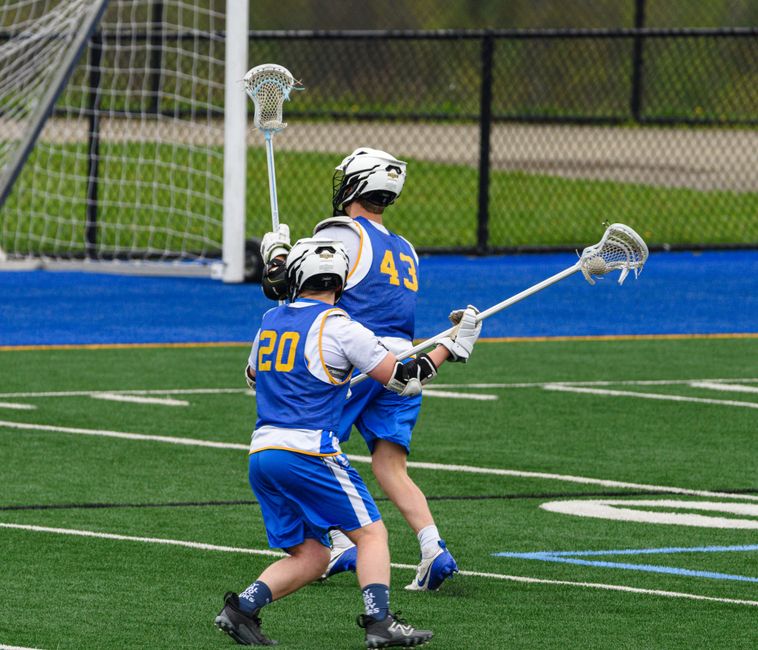
Through 12U, “some body contact” is allowed (holds, pushes, boxing out), but body checking is illegal. At 14U, legal body checks come in: both players upright, both hands on the stick, contact only between the shoulders and waist, to the front or side, and only on a player with the ball or within 3 yards of a loose ball. Targeting the head or neck is a 3-minute non-releasable foul with automatic ejection. Every boys’ field player needs a NOCSAE-certified helmet with SEI certification, a mouthpiece, lacrosse gloves, shoulder pads that meet NOCSAE ND200, arm pads, a protective cup and athletic shoes or cleats. Since 2026, losing a helmet in play is a foul, so check that chin straps are snug.
Girls’ youth lacrosse by age
| 6U and 8U | 10U | 12U | 14U | |
|---|---|---|---|---|
| Format | 3 v 3 up to 7 v 7, cross-field | 3 v 3 up to 8 v 8, cross-field | High school (NFHS) field | High school (NFHS) field |
| Game | 6–8 min quarters, running clock | Up to 10 min quarters | 10 min quarters | 12 min quarters |
| Goalie | Optional, not recommended at 6U | Optional | Yes | Yes |
| Stick checking | None | None | Modified | Transitional |
There’s no body checking at any age in girls’ lacrosse. Modified checking at 12U means a check may only try to knock the ball out of the stick with a motion that goes down and away from the body, below the ball carrier’s shoulder. Transitional checking at 14U, introduced in 2019, allows a bit more but keeps every check outside a 12-inch “sphere” around the ball carrier’s head and never across her body. The youngest players may use soft balls; once standard NOCSAE balls are used, eyewear that meets ASTM F3077 is required. Every girls’ field player needs a stick, a mouthpiece and that eyewear.
Headgear for girls: the rules and the research
In USA Lacrosse youth rules, NFHS high school rules and NCAA rules, headgear for girls’ field players is optional. If a player wears it, it must meet ASTM F3137, the women’s lacrosse headgear standard first developed in 2015, carry SEI certification and be marked as F3137 on both the box and the product. Headgear with built-in eyewear must also meet the F3077 goggle standard. Florida requires F3137 headgear for its high school girls.
Does it help? A 2022 study comparing Florida high schools with schools in 31 states without a mandate (2019–2021 seasons) found a lower concussion rate where headgear was required: 0.27 versus 0.44 per 1,000 athlete-exposures. A video study of 189 games found more head impacts in Florida games, most from sticks, and surveys of players, coaches and officials show many worry headgear could change how the game is played. USA Lacrosse’s position is that F3137 headgear can reduce concussion rates but is one factor, along with coaching, officiating, consistent rules and good technique. For many families it comes down to the player’s comfort and choice; our lacrosse gear guide shows what to look for.
Safety basics for parents and coaches
- Concussion: in youth leagues, most injuries are bruises from sticks and balls, but concussions happen, mostly in older divisions. Follow the CDC’s HEADS UP rule: if you suspect a concussion, take the player out, keep them out for the day and until a healthcare provider clears them.
- Chest protection: goalies in boys’ and girls’ lacrosse must wear chest protectors that meet NOCSAE ND200, and boys’ field players ND200 shoulder pads, to lower the risk of commotio cordis, a rare cardiac arrest from a blow to the chest. Look for the NOCSAE logo and SEI mark on both the box and the pad.
- An emergency plan: know who is in charge of first aid, where the nearest AED is and how to call for help. Immediate CPR and defibrillation are what save a player in cardiac arrest.
- Helmet fit: follow the maker’s sizing chart, expect firm, even pressure, and refit after a haircut. A proper fit should never cause headaches; replace a bent facemask.
- Lightning and heat: follow your league’s lightning policy (USA Lacrosse publishes guidelines), and on summer tournament days plan shade, fluids and rest. Our lacrosse game-day guide covers fueling and heat.
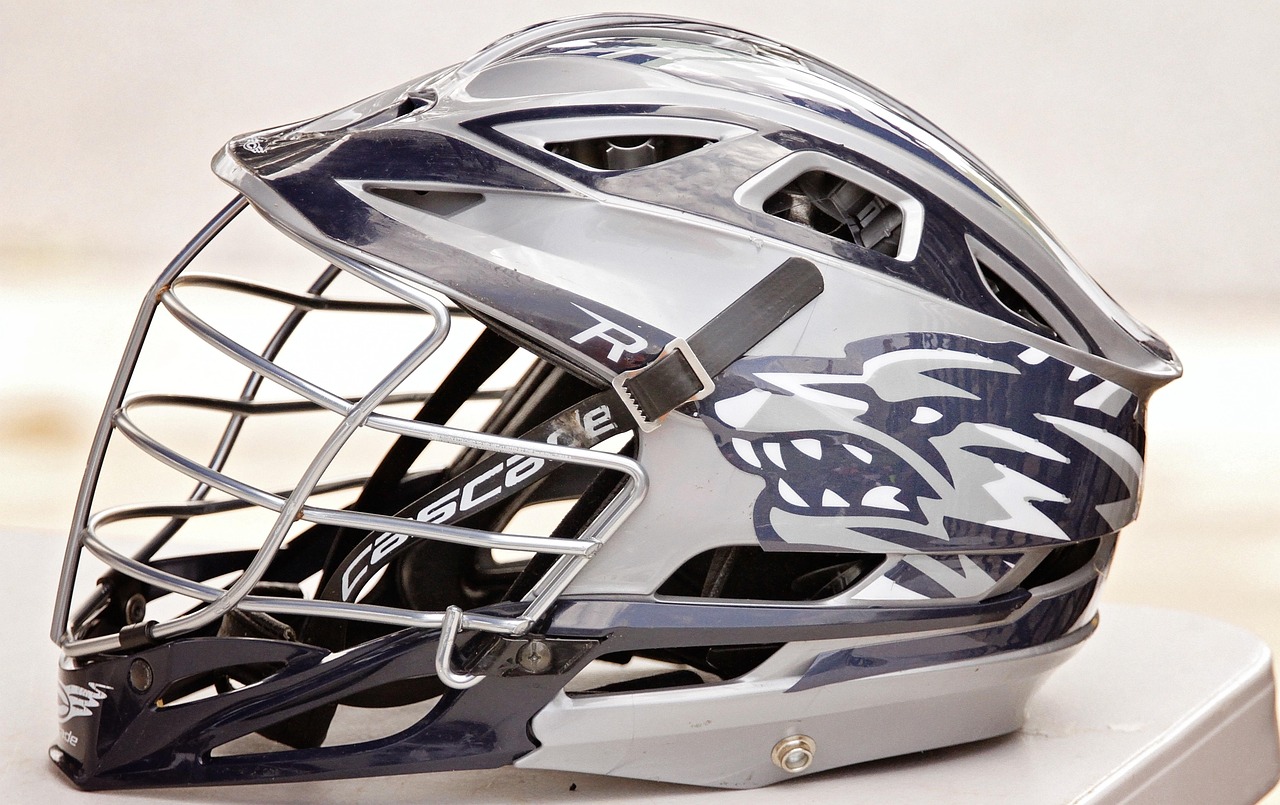
For the youngest players, keep gear simple and right-sized. The STX Stallion 50 is a 39-inch youth boys’ stick with a softer head for beginners (about $60). For helmets, the STX Rival Junior is made for players under 9, fits heads up to 22 inches and meets NOCSAE standards (about $130), and the Cascade CS-R Youth is built for players under 12 (about $130). The STX Stallion 75 shoulder pad is sized for elementary-age players and STX says it meets the NOCSAE chest-protection standard (about $55); check the ND200 and SEI marks. Add a Shock Doctor Gel Max mouthguard in the youth size (10 and under).
STX Stallion 50 Youth Complete Stick
- 39 in youth boys' stick
- Softer head, mesh pocket
- About $60
STX Rival Junior Youth Helmet
- Heads up to 22 in
- Meets NOCSAE standards
- About $130
Cascade CS-R Youth Helmet
- Sized for players under 12
- 3-bar mask for smaller faces
- About $130
STX Stallion 75 Shoulder Pad
- Meets NOCSAE chest standard (maker)
- For elementary-age players
- About $55
Shock Doctor Gel Max Mouthguard
- Youth size (10 and under)
- Boil-and-bite fit
- Helmet strap included
Club, school and how much is too much
Spring is usually school or town lacrosse; summer and fall are club season, with tryouts, travel and weekend tournaments. USA Lacrosse encourages kids to play other sports rather than specializing early, because broad athleticism lowers injury risk, and the American Academy of Pediatrics warns that specializing too young can harm young athletes physically and mentally. Watch the total load when a child is on a school team and a club team at once, and protect sleep: the CDC recommends 9–12 hours a night for ages 6–12 and 8–10 hours for teens. In a study of boys’ summer club tournaments, nearly a fifth of the injuries athletic trainers recorded were concussions, and the authors note club players may have no medical coverage, so ask whether an athletic trainer will be on site.
College recruiting basics
- Timing: NCAA Division I lacrosse coaches can’t call, text, make verbal offers or host official or unofficial visits until September 1 of a player’s junior year of high school. Players can still email coaches and attend camps before then. Division II, Division III and NAIA coaches can often reach out earlier.
- How coaches recruit: USA Lacrosse’s recruiting partner NCSA describes it as a funnel: a big list of prospects, then questionnaires and camp invites, evaluations, offers and signings. Reply to every message, send recent video and grades, and ask your coach to vouch for you.
- Many paths: more than 900 NCAA varsity programs, plus NAIA, junior colleges and hundreds of club teams in the MCLA, WCLA and NCLL. See our lacrosse leagues and associations page.
Building speed and footwork at home helps at every age; our speed training equipment guide has simple ideas, and the youth soccer guide is a good place to look for a fall sport.
Youth lacrosse questions
At what age does body checking start in boys’ lacrosse?
In USA Lacrosse youth rules, at 14U. Through 12U some body contact is allowed but body checking is illegal, and even at 14U “take-out” checks and any contact to the head or neck are fouls.
Do girls have to wear headgear in lacrosse?
Not under USA Lacrosse, NFHS or NCAA rules, where it’s optional; Florida requires it in high school. Any headgear worn must meet ASTM F3137. Goggles that meet ASTM F3077 are required for all girls’ field players once standard balls are used.
What age can kids start lacrosse?
USA Lacrosse youth rules start at 6U with small-sided, cross-field games and soft balls, and Flex6 lets beginners of any age try the game without contact or much equipment.
What equipment does my child need for lacrosse?
Boys: a stick, NOCSAE helmet, gloves, ND200 shoulder pads, arm pads, mouthguard and protective cup. Girls: a stick, mouthguard and ASTM F3077 goggles, with headgear and gloves optional. Goalies in both games wear extra protection, including an ND200 chest protector.
When can college lacrosse coaches contact my child?
For NCAA Division I men’s and women’s lacrosse, September 1 of the junior year of high school. Before that, your child can email coaches and go to camps, and Division II, Division III and NAIA coaches can often reach out sooner.