This article contains affiliate links: if you buy through them we may earn a commission, at no extra cost to you. Learn more.
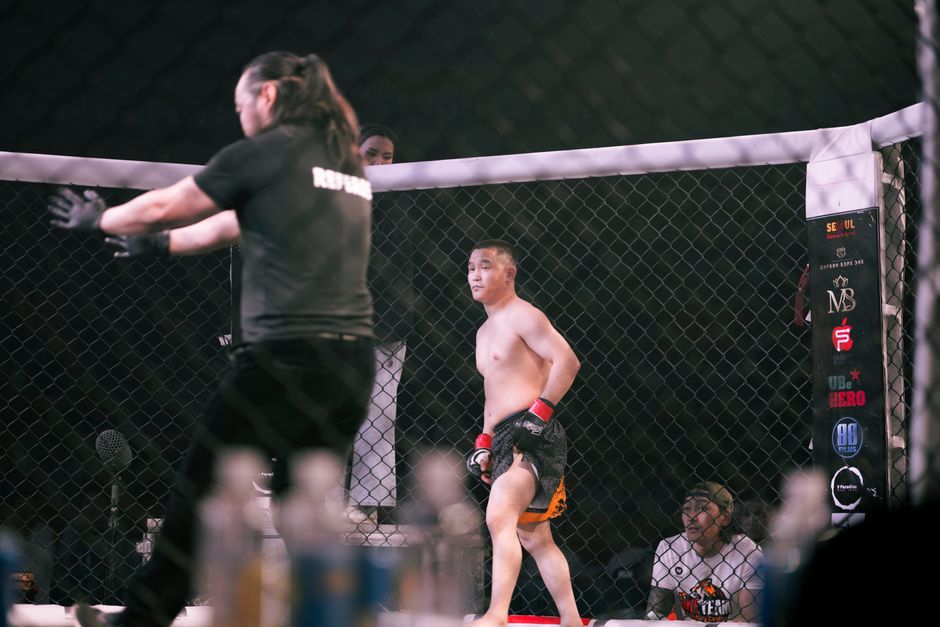
The referee brings both fighters to the center of the cage. “Protect yourselves at all times. Obey my commands. Touch gloves if you want.” Behind those few words sits a full rulebook: how long the rounds are, what’s legal on the ground, how judges score a close fight and what happens after an eye poke. Knowing the MMA rules makes you a safer fighter, a better coach and a smarter fan. This page explains the Unified Rules of MMA used by most US athletic commissions, from rounds and scoring to fouls and weight classes, and how amateur and youth rules differ.
Where the Unified Rules come from
Early MMA events had very few rules. In 2001, regulators in New Jersey met with promoters to agree on one set of rules, and Nevada and New Jersey began sanctioning MMA that year. Today the Association of Boxing Commissions and Combative Sports (ABC) keeps the official text. Its document says the rules were approved in April 2001, amended several times since, and changed again in July 2024 with an implementation date of November 2024; the latest edition is dated August 2025. Each state or tribal commission adopts them into its own regulations, so small details can differ from place to place.
Rounds and fight length
- Professional rounds: 5 minutes, with a 1-minute rest between rounds.
- Number of rounds: a bout can be one to five rounds, and no fighter may fight more than five rounds or 25 minutes in 24 hours. Under the commonly used rules, non-championship bouts are three rounds and championship bouts five.
- Amateur and youth: shorter. Under IMMAF youth rules, 16- and 17-year-olds fight three 2-minute rounds, 14- and 15-year-olds one 4-minute round, and 10- to 13-year-olds one 3-minute round.
How MMA is scored
Three judges score every round with the 10-point must system: 10 points to the winner of the round and 9 or fewer to the loser. A 10-10 round is rare and only for a round with no difference at all. Judges look at three things, in this order:
- Effective striking and grappling (Plan A): the damage and effect of legal strikes, and the impact of takedowns, submission attempts, reversals and advantageous positions.
- Effective aggressiveness (Plan B): actually trying to finish the fight. Judges only use it if Plan A is even.
- Fighting area control (Plan C): who dictates the pace, place and position. Only if A and B are even.
A 10-9 is a close round. A 10-8 means one fighter won by a large margin in damage, dominance and duration, and a 10-7 means one fighter was completely dominated. The rules say that just holding a dominant position isn’t dominance; what a fighter does from it is what counts.
Ways to win
- Submission: a tap-out, a verbal tap-out (including a scream of pain), or a technical submission when a legal hold causes unconsciousness or a broken or dislocated joint.
- Knockout (KO): the referee stops it because a fighter can’t intelligently defend themselves after strikes.
- Technical knockout (TKO): a referee stoppage for strikes or a cut, a corner stoppage, a fighter not answering the bell, or a medical stoppage by the ringside doctor.
- Decision: unanimous, split or majority, or a technical decision when an accidental foul ends a fight after enough rounds.
- Disqualification after an intentional foul that ends the fight, repeated fouls or flagrant disregard for the referee. A no contest happens when an accidental injury stops a fight too early to go to the scorecards.
Fouls
The Unified Rules list more than two dozen fouls. The ones that matter most for safety:
- Head butts, eye gouging, biting or spitting, fish hooking and hair pulling.
- Spiking an opponent onto the head or neck (a pile driver). A throw with an arc is legal even if the head hits the canvas.
- Strikes to the back of the head and spine, throat strikes and grabbing the trachea.
- Fingers outstretched toward the opponent’s face or eyes.
- Groin attacks of any kind, for men and women alike.
- Kicks or knees to the head of a grounded opponent. A fighter is grounded when any part of the body other than the hands or feet touches the canvas. Stomping a grounded fighter is also illegal.
- Small-joint manipulation (single fingers and toes); grabbing most of the fingers at once is allowed.
- Holding the fence, ropes, shorts or gloves; timidity; attacking after the bell or while the opponent is under the referee’s care; and interference from the corner.
What happens next depends on intent. An intentional foul that causes an injury costs a mandatory two points if the fight goes on, or a disqualification if the fighter can’t continue. After a groin strike or eye poke, the fouled fighter can have up to five minutes to recover; after an eye poke, the fighter must say “yes” or “no” to whether they can see. The referee can also bring in a cutman during the timeout to treat a cut caused by a foul. If a fighter loses control of bodily functions during a round, the fight is stopped and they lose by TKO for a medical stoppage. Referees stand fighters up when neither is working to finish.
Weight classes
| Class | Weight |
|---|---|
| Atomweight | up to 105 lb |
| Strawweight | over 105 to 115 lb |
| Flyweight | over 115 to 125 lb |
| Bantamweight | over 125 to 135 lb |
| Featherweight | over 135 to 145 lb |
| Lightweight | over 145 to 155 lb |
| Super lightweight | over 155 to 165 lb |
| Welterweight | over 165 to 170 lb |
| Super welterweight | over 170 to 175 lb |
| Middleweight | over 175 to 185 lb |
| Super middleweight | over 185 to 195 lb |
| Light heavyweight | over 195 to 205 lb |
| Cruiserweight | over 205 to 225 lb |
| Heavyweight | over 225 to 265 lb |
| Super heavyweight | over 265 lb |
Promotions use only some of these. If a fighter misses weight and the two end up in different classes, the heavier fighter may not be more than 5 lb over the lighter one, and commissions can refuse a catchweight fight if the difference looks unsafe. Making weight safely is a health topic as much as a rule; see our MMA hub and our MMA nutrition page.
Equipment and attire rules
- Mouthpiece: required; a round can’t begin without it, and the referee can take points for spitting it out on purpose.
- Gloves: the commonly used rules call for gloves of at least 4 oz, generally no more than 6 oz, supplied by the promoter and approved by the commission. IMMAF amateur gloves are 6 to 8 oz.
- Hand wraps: up to one roll of soft gauze (2 in by 15 yd) and one roll of athletic tape (1.25 in by 10 ft) per hand; tape can’t cover the knuckles.
- Clothing: trunks no longer than the knee and with no exposed Velcro, pockets or zippers; men wear groin protection and no shirt; women wear a sports bra and/or a short-sleeved or sleeveless form-fitting rash guard. No shoes, jewelry or body cosmetics.
- Sleeves: only soft neoprene sleeves on the knees and ankles; no braces or tape on the upper body.
Gear that matches those rules: the Hayabusa T3 4oz Pro Style MMA Gloves (about $100), a Shock Doctor Gel Max mouthguard, Ringside 180-inch Mexican-style hand wraps for training (under $10), and Shock Doctor compression shorts with a Bio-Flex cup. More on our MMA gear page.
Hayabusa T3 4oz Pro Style MMA Gloves
- Pre-curved design
- Dual-X wrist closure
- About $100
Shock Doctor Gel Max Mouthguard
- Boil-and-bite gel-fit liner
- Breathing channels
- Youth and adult
Ringside Mexican Style Hand Wraps (180 in)
- 180 in semi-elastic
- Thumb loop, hook-and-loop
- Machine washable
Shock Doctor Compression Shorts with Bio-Flex Cup
- Removable cup
- Moisture-wicking fabric
- Vented design
How amateur and youth rules differ
IMMAF’s amateur rules ban elbows and forearm strikes, heel hooks, neck cranks and twisters, knees to the head and front kicks to the knee, and make shin guards and rash guards mandatory. Its youth rules (ages 10 to 17) go further: no strikes to the head or face at all, and the youngest group (10 and 11) can’t throw knees, strike on the ground, slam, or use leg locks or guillotines. US amateur rules vary by state. Our youth MMA page explains what that means for families, and our leagues and associations page covers who makes the rules.
MMA rules questions
How many rounds are in an MMA fight?
Usually three 5-minute rounds, or five for title fights. The Unified Rules allow one to five rounds, never more than 25 minutes.
Are elbows legal in MMA?
Yes, in professional MMA under the Unified Rules, except to the back of the head and spine. IMMAF amateur and youth rules ban elbows and forearm strikes.
When can you kick a downed opponent?
You can’t kick or knee the head of a grounded opponent, meaning anyone with any body part other than hands or feet on the canvas. Kicks to the body or legs of a grounded fighter aren’t on the foul list, but stomping is.
What is a 10-8 round?
A round one fighter wins by a large margin in damage, dominance and duration. A 10-9 is a close round, and a 10-7 means one fighter was completely dominated.
What happens after an eye poke in MMA?
The referee calls time. The fighter can use a cold compress, the ringside doctor may check the eye, and the fighter has up to five minutes before saying whether they can see. If an intentional foul ends the fight, the fouling fighter is disqualified; an accidental one leads to a no contest or a technical decision, depending on how many rounds are done.
Rules exist to keep fighters safe enough to fight again. Learn them, train within them, and respect the tap. For the health side, start with our MMA guide, our MMA injuries page, and our MMA recovery gear guide.