This article contains affiliate links: if you buy through them we may earn a commission, at no extra cost to you. Learn more.
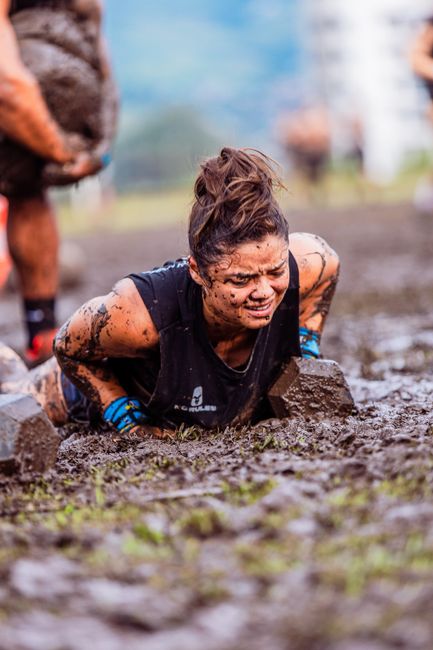
The medal is around your neck, the free beer ticket is in your hand, and you’re standing under a cold hose in a field with two hundred other people, picking gravel out of your knees. Your forearms are shaking, there’s mud in places you didn’t know existed, and tomorrow the stairs are going to be a problem. Recovery from an obstacle course race (OCR) is a bit different from recovery after a road race: on top of tired legs, you have skin to clean, cuts to look after and, now and then, germs from the mud to watch for. Here’s how to do it well, whether you just finished your first Tough Mudder, a Spartan Beast, an elite heat or a kids’ race.
General information, not medical advice. If a wound looks infected or you feel sick after a race, see a doctor. For the whole sport, start at our obstacle course racing hub.
The first hour: wash, warm, eat
- Rinse off, then wash properly. A review of obstacle event hazards recommends rinsing off mud after the race to lower infection risk. The course hoses get the worst off; soap and water (at home or the venue showers) finish the job. A Dutch study of 2,646 obstacle racers found that rinsing off in a hot tub afterwards was linked to more skin infections, so skip the shared tub.
- Wash your hands before you eat or drink anything. Outbreaks after mud races have been linked to swallowing mud. If there’s no soap at the finish, use body wipes and then hand sanitizer, and wash properly as soon as you can.
- Get warm and dry. Wet clothes off, dry layers and a hat on, warm drink. The CDC advises warming the center of the body first if someone is chilled.
- Eat and drink. A meal or snack with carbs and protein in the hour or two after helps refuel; the joint ACSM position statement suggests about 15–25 g of protein after exercise (0.25–0.3 g per kg). Drink to replace what you lost, with some salt if you sweated a lot.
- Bag your muddy kit and wash it separately. In a 2018 E. coli outbreak after an English mud race, two of the nine cases were family members who caught it at home, and young children are most at risk of serious complications.
Cleaning cuts and scrapes
Barbed-wire crawls and gravel leave most racers with a collection of scrapes. The American Academy of Dermatology (AAD) advice for everyday wounds is a good routine:
- Wash your hands, then gently wash the wound with mild soap and clean running water. Take your time getting the grit out; mud in a wound is the part to worry about.
- Keep it moist with a thin layer of petroleum jelly, which the AAD says helps healing.
- Cover it with a bandage and change it daily.
- Check your tetanus shot. The CDC notes wounds with dirt or soil can need a tetanus vaccine depending on your history; adults should have a booster every 10 years.
See a doctor for a cut that’s deep, gaping, or still has dirt in it you can’t clean out, and over the next few days for any sign of infection: spreading redness, warmth, swelling, pus, red streaks, increasing pain or fever.
Skin, hands and feet
Hours in wet shoes and mud leave feet soft, wrinkled and blistered. Dry them well, including between the toes, and leave small unbroken blisters alone; the AAD advises keeping blisters clean and covered and seeing a doctor for redness, pus or increasing pain or swelling. Torn calluses from monkey bars and rigs need the same care as any wound: clean, trim loose skin with clean scissors, and cover. CrossFit’s hand-care advice fits OCR well: once healed, file calluses down regularly and moisturize, because dry, thick calluses are the ones that rip. Mud and repeated washing also dry the skin; a plain fragrance-free moisturizer after your shower helps.
If you get sick in the days after
Most racers never do, but it’s worth knowing the timing. After a 2012 Nevada race, the CDC found Campylobacter infections with fever, vomiting and bloody diarrhea; sick racers had overwhelmingly swallowed muddy water. The CDC says leptospirosis, which can come from water or soil contaminated by animal urine, shows symptoms 2 to 30 days after exposure (fever, muscle aches, headache, vomiting and more). So for a few weeks after a mud race: if you develop diarrhea (especially bloody), vomiting, fever or a flu-like illness, see a doctor and tell them you did a mud race, as the CDC report recommends. Wash your hands carefully around the house, especially with young kids. More is on our OCR injuries page.
Muscle recovery: the next three days
Expect soreness to peak a day or two after the race, especially in your forearms, shoulders, quads and anywhere you carried a sandbag. That’s normal. What helps, and what the evidence says:
- Sleep: adults need 7 or more hours a night, teens 8–10, according to sleep medicine consensus statements. It’s the cheapest recovery tool you have.
- Easy movement: a walk, an easy bike or swim the day after usually feels better than lying on the couch. Our active recovery day ideas has more.
- Massage and foam rolling: a large review of recovery methods found massage the most effective for soreness and perceived fatigue; a meta-analysis of foam rolling found small benefits, mostly in how sore you feel. A massage gun is a convenient way to get some of that at home.
- Compression: research finds small benefits, mainly for strength recovery.
- Cold water: an ice bath can feel good after a hot race, but regular cold-water immersion after strength training has been linked to smaller strength and muscle gains, so use it around races rather than after every gym session. Our how long to ice bath article covers timing and safety; ask your doctor first if you have a heart condition.
Soreness or something more?
Normal soreness eases a little more each day. Get checked if a joint keeps swelling or you can’t put weight on it, if a shoulder feels loose or weak, or if pain stays sharp in one spot. Very severe muscle pain with dark, cola-colored urine after a hard effort can be rhabdomyolysis, which MedlinePlus lists among the effects of severe exertion and dehydration; that needs urgent medical care. A sports medicine doctor, physical therapist or athletic trainer can tell you when you’re ready to train again.
Back to training
After a Sprint, most people feel ready for easy running within a few days; after a Beast or Ultra, give yourself a full easy week or more before hard sessions. Ease back into hanging and grip work last if your hands are torn. Racing a Trifecta (Sprint, Super and Beast in one season) or a double weekend? Plan an easier week after each race. How to rebuild is on our OCR training page, and refueling is covered in OCR nutrition and supplements.
Recovery kit many racers keep in the car
For the finish line: Defense Soap Body Wipes to get the worst off your hands and face before food, and Band-Aid Water Block Flex bandages for scrapes once they’re clean. At home: recovery slides like OOFOS OOahh for sore, wrinkled feet, a TriggerPoint GRID foam roller and a compact massage gun like the Hypervolt Go 3. Compare more in our guides to massage guns, recovery shoes and foam rollers. These are comfort tools, not treatments.
Defense Soap Body Wipes (2 pack)
- Body wipes with tea tree oil
- 2 packs
- About $27
Band-Aid Water Block Flex Bandages
- 100% waterproof
- Flexible fabric-like material
- About $3.50 for 20
TriggerPoint GRID 1.0
- 13 in, hollow core
- Multi-density surface
- About $40
For a different sport’s recovery routine, see soccer recovery.
OCR recovery questions
How do I clean cuts after a mud run?
Wash your hands, then wash the cut gently with mild soap and running water until the grit is out, put on a thin layer of petroleum jelly and cover it with a bandage you change daily. See a doctor if it’s deep, still dirty or shows signs of infection.
How long does it take to recover from a Spartan race?
Soreness usually peaks a day or two after and fades within several days. Many racers are back to easy training within a few days after a Sprint and take a week or more after a Beast or Ultra.
Why do I feel sick a few days after a mud race?
It might be unrelated, but outbreaks of stomach infections have followed mud races, and some infections show up days or weeks later. See a doctor if you have diarrhea, vomiting or fever, and tell them about the race.
Should I use the hot tub after an obstacle race?
Better not, at least not a shared one at the venue. A Dutch study linked rinsing off in a hot tub after obstacle runs to more skin infections; showering with soap was the advice.
How do I care for torn hands after monkey bars?
Clean the tear, trim loose skin with clean scissors, cover it and let it heal before heavy hanging again. Once healed, file calluses down and moisturize so they’re less likely to rip next time.