This article contains affiliate links: if you buy through them we may earn a commission, at no extra cost to you. Learn more.
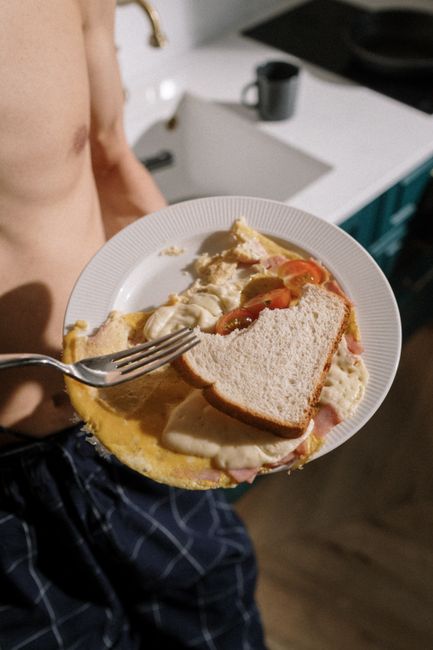
Sunday afternoon, rice cooker going, a row of containers on the counter, a shaker bottle drying by the sink. Powerlifters are famous for meal prep, and for good reason: you can’t build a bigger total on an empty tank. But powerlifting nutrition has its own puzzles. You need enough food to recover from heavy squats, benches and deadlifts, maybe a weight class to stay inside, and, if you compete in a drug-tested federation, every supplement you take is your responsibility. This page covers what powerlifters eat, protein and creatine according to the ISSN and IOC, how to choose and change weight classes safely, and how drug-tested federations and third-party testing work, for teens at their first meet through masters lifters.
General information, not medical or nutrition advice. Talk to your doctor or a registered sports dietitian before starting a supplement or changing your diet, especially if you’re under 18, pregnant, take medication or have a health condition. Back to the powerlifting hub.
Food first: what powerlifters need
- Protein. The International Society of Sports Nutrition (ISSN) says 1.4–2.0 g per kg of body weight a day is enough for most people who train, in servings of about 20–40 g every 3–4 hours. During a calorie deficit, resistance-trained athletes may need more (2.3–3.1 g/kg) to hold on to lean mass. The ACSM joint position with the Academy of Nutrition and Dietetics gives a similar 1.2–2.0 g/kg range. For a 93 kg lifter, 1.4–2.0 g/kg works out to roughly 130–185 g a day.
- Carbohydrate. Powerlifting isn’t a marathon, but a two-hour session of heavy sets still runs on carbohydrate. The ACSM position sets 3–5 g/kg a day for light training and 5–7 g/kg for about an hour a day of moderate exercise. Many lifters eat more carbs on heavy squat and deadlift days.
- Enough total energy. Under-eating is a real risk in weight-class sports. The IOC’s 2023 consensus on Relative Energy Deficiency in Sport (REDs) links long-term low energy availability to problems with hormones, bones and performance in both women and men. Warning signs include missed periods, bone stress injuries, ongoing fatigue and unplanned weight loss.
- Real meals. Meat, fish, eggs, dairy, beans and tofu for protein; rice, potatoes, oats, bread and fruit for carbs; plenty of vegetables. Supplements fill gaps; they don’t replace meals.
Choosing a weight class safely
As of the 2026 IPF rulebook, the classes are 59, 66, 74, 83, 93, 105, 120 and 120+ kg for men and 47, 52, 57, 63, 69, 76, 84 and 84+ kg for women, with an extra lighter class for sub-juniors and juniors (53 kg for men, 43 kg for women). IPF national members such as Powerlifting America generally follow these classes; other federations, such as the USPA, may use different ones, so check yours. Results across classes are often compared with a points formula, which our powerlifting rules page explains.
- Start where you are. For a first meet, enter the class you already weigh in, and lift.
- Move classes slowly. Gradual dieting over months protects training; crash cuts in the last days are where the trouble starts. At the 2018 IPF Classic Worlds, 83% of lifters cut weight and most reported fatigue, anxiety or other mood changes. We don’t recommend dehydration cuts at all.
- No diuretics or laxatives. Diuretics are banned at all times in tested sport, and both carry health risks.
- Teens grow; let them. The American Academy of Pediatrics warns against unhealthy weight-loss practices in young athletes in weight-class sports. Young lifters should move up classes as they grow. See youth powerlifting.
How weigh-ins work and what to eat on the day is on our meet day page.
Supplements with real evidence
The International Olympic Committee’s 2018 consensus statement is blunt: supplements make at most a small contribution, and only a few have good evidence for performance: caffeine, creatine, some buffering agents and nitrate. For a strength sport, creatine and caffeine are the two that matter. The IOC recommends a full nutrition assessment before deciding on any of them.
Creatine
For powerlifters, creatine is the big one. The ISSN’s position stand calls creatine monohydrate the most effective nutritional supplement currently available for increasing high-intensity exercise capacity and lean body mass during training, and finds it safe and well tolerated in healthy people at recommended doses. One thing matters a lot in a weight-class sport: the IOC notes creatine typically adds 1–2 kg of body mass, mostly water. Plan for that well before a meet. Follow the label for how much to take. Compare products in our best creatine guide.
Protein powder
Not magic, just convenient. The ISSN notes that whole food can cover protein needs, and that powders are a practical way to hit your target. Pick one that’s third-party certified for sport. See our protein powder guide.
Caffeine and pre-workouts
Caffeine is on the IOC’s short list, but it can cause jitters, stomach upset and poor sleep, and it isn’t for everyone. The American Academy of Pediatrics says energy drinks have no place in the diets of children and teens. Check caffeine per serving on the label (many pre-workouts are strong), avoid stacking several products across a long meet day, and check with a doctor if you have a heart condition, high blood pressure or are pregnant. Our pre-workout guide lists caffeine per serving.
Drug-tested federations and third-party testing
Powerlifting has both drug-tested and untested competition, and the difference matters. We don’t cover or promote performance-enhancing drugs: anabolic steroids are banned in tested sport, and AAOS lists them as a risk factor for pec and patellar tendon tears. If you compete in a tested federation, the rule is strict liability: if a banned substance is in your sample, you’re responsible, even if it came from a contaminated supplement. How it works in the US, as of 2026:
- Powerlifting America (the IPF’s US member since 2021): follows the IPF anti-doping rules and the World Anti-Doping Agency (WADA) Code. Since an October 2024 agreement, the US Anti-Doping Agency (USADA) runs its in- and out-of-competition testing.
- USA Powerlifting (USAPL): a drug-tested federation that has operated outside the IPF since late 2021.
- USPA and some other federations run both tested and untested meets or divisions, with separate results and records. Read your federation’s rules before you enter. All the federations are compared on our powerlifting federations page.
Contamination is a real risk: in a widely cited lab study of 634 supplements from 13 countries, about 15% contained anabolic steroid precursors not listed on the label. Third-party programs like NSF Certified for Sport and Informed Sport/Informed Choice test products for banned substances. That lowers the risk but doesn’t remove it. USADA’s Supplement Connect resources help athletes judge supplements; its Global DRO tool checks medications, not supplements. Products sold as “test boosters”, “fat burners” or SARMs are the riskiest category; avoid them.
Third-party tested picks
Prices change often. The prices below are what we saw in October 2026; check the current price before you buy. Price per serving is the price divided by the servings on the label.
| Product | Per serving (label) | Certification | About |
|---|---|---|---|
| Thorne Creatine | 5 g creatine monohydrate | NSF Certified for Sport | $44 / 90 servings (about $0.49) |
| Thorne Whey Protein Isolate | 21 g protein | NSF Certified for Sport | $65 / 30 servings (about $2.17) |
| Klean Athlete Klean Multivitamin | 2 tablets, 1,000 IU vitamin D | NSF Certified for Sport | $46 / 30 servings (about $1.53) |
| Nuun Sport | 300 mg sodium, 1 g sugar | Informed Choice | $7.49 / 10 tablets (about $0.75) |
Thorne Creatine
- 5 g creatine monohydrate per serving
- 90 servings
- NSF Certified for Sport
Thorne Whey Protein Isolate
- 21 g protein per serving
- 30 servings
- NSF Certified for Sport
Klean Athlete Klean Multivitamin
- 2 tablets per serving
- 1,000 IU vitamin D, no iron
- NSF Certified for Sport
Certification covers specific products and flavors, so check the NSF or Informed Sport database for the exact item you buy. Recovery habits that go with good food are on our recovery page.
Powerlifting nutrition: FAQs
How much protein do powerlifters need?
The ISSN says 1.4–2.0 g per kg of body weight a day is enough for most people who train, and resistance-trained athletes in a calorie deficit may need 2.3–3.1 g/kg. Spread it over the day in servings of about 20–40 g.
Is creatine allowed in drug-tested powerlifting?
Creatine isn’t on the WADA prohibited list. The risk is contamination of the product, so tested lifters choose creatine that’s certified by NSF Certified for Sport or Informed Sport.
Will creatine make me heavier for weigh-in?
It can. The IOC notes creatine typically adds about 1–2 kg of body mass, mostly water. If you’re close to your class limit, plan around it with your coach or dietitian well before the meet.
What are the IPF weight classes?
Men: 59, 66, 74, 83, 93, 105, 120 and 120+ kg. Women: 47, 52, 57, 63, 69, 76, 84 and 84+ kg. Sub-juniors and juniors also have a 53 kg class for men and 43 kg for women.
Which powerlifting federations are drug tested?
In the US, Powerlifting America (the IPF member, tested by USADA) and USA Powerlifting run drug-tested meets, and federations like the USPA hold both tested and untested meets. Check each meet’s rules.
Should teen powerlifters take supplements?
The American Academy of Pediatrics advises against performance-enhancing supplements for young athletes and says energy drinks have no place in their diets. Food comes first; any supplement should be discussed with a pediatrician or sports dietitian.