This article contains affiliate links: if you buy through them we may earn a commission, at no extra cost to you. Learn more.
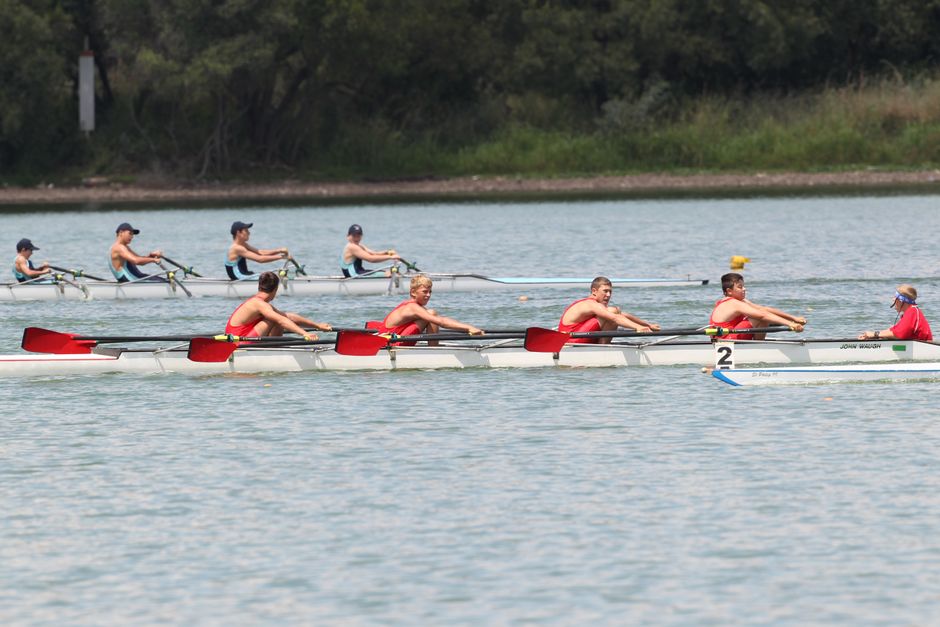
Regatta morning starts in the dark: boats rigged on trailers, parents setting up a tent and a cooler by the water, a coxswain with a race schedule in a plastic sleeve. Your heat goes off at 8:40, a semifinal might come after lunch, and if all goes well, the final is late in the afternoon. In between there’s a lot of waiting, a lot of sun or wind, and a few minutes of the hardest effort in sport. A 2,000-meter race is short, but a rowing race day is long. This page covers how regattas work, what to eat and drink between races, heat and storms, and how lightweight rowers can make weight safely.

General information, not medical or nutrition advice. Back to the rowing hub.
How a regatta day works
There are two kinds of rowing races. Sprint racing, in spring and summer, puts crews side by side over 2,000 meters (shorter for some youth and masters events). Head races, in the fall, send crews off one after another to race the clock over a longer course; the Head of the Charles in Boston, one of the biggest, runs October 16–18, 2026.
Big sprint regattas use rounds. Under World Rowing’s system, crews race a heat; the fastest go straight through, and the rest get a second chance in a repechage. Then come semifinals and finals: the A final decides the medals, the B final the next places. At smaller regattas you may race a heat and a final the same day; at championships like the NCAA’s three-day regatta, rounds are spread across days. Either way, plan to race hard two or three times with hours in between, and to warm up and cool down each time.
Fueling on race day
The joint sports-nutrition position from the American College of Sports Medicine (ACSM), the Academy of Nutrition and Dietetics and Dietitians of Canada gives the frame:
- Day before: normal, carbohydrate-rich meals. A 2,000 m race is short, so no big “carb load” is needed; just don’t arrive under-fueled.
- Pre-race meal: 1–4 g of carbohydrate per kilogram of body weight, 1–4 hours before, low in fat, fiber and protein so it sits well. For a 70 kg (154 lb) rower, 1 g/kg is 70 g of carbs: a bagel with jam and a banana. Early heat? Eat something small and familiar.
- Between races: small, easy carbs and fluids soon after each race (fruit, pretzels, rice cakes, a sports drink), then a light meal if there are several hours to the next race. The position stand notes that when the next session is less than 8 hours away, refueling quickly matters most.
- Nothing new on race day. Practice your regatta foods at training.
Hydration, heat and storms
Regattas mean hours in the open: on the dock, in the boat park, waiting at the start. The National Athletic Trainers’ Association (NATA) suggests aiming to lose no more than 2% of body weight to sweat, drinking to thirst when you don’t know your sweat rate, and not drinking so much that you gain weight. The ACSM position adds about 5–10 mL per kg of body weight 2–4 hours before exercise. A big bottle like the Nalgene 32 oz in the tent helps you keep track; on hot days, an electrolyte drink such as Skratch Labs Hydration adds sodium and some carbohydrate.
USRowing’s safety guidelines list what to do in the heat: avoid the middle of the day where you can, drink before leaving the dock and often on the water, wear sunscreen and a hat or visor, choose light, wicking clothing, and stay in the shade between races. They describe heat exhaustion (headache, nausea, chills, pale sweaty skin: stop, drink, shade) and heat stroke (confusion or collapse, hot skin: cool with water, call for medical help right away). Heat stroke is an emergency.
Lightning: rowers sit in long boats on open water. USRowing says not to launch if you hear thunder or see lightning, to head for shore at once if a storm comes up, and not to handle boats, riggers or trailers in an electrical storm. Regattas pause racing; follow the officials.
Weigh-ins for lightweight rowers, done safely
Lightweight events have weight limits. Under World Rowing’s rules, lightweight men may weigh no more than 72.5 kg each with a crew average of 70.0 kg, and lightweight women no more than 59.0 kg each with a crew average of 57.0 kg. Rowers are weighed in racing kit 1–2 hours before their first race of the event, every day of the regatta. College lightweight women’s rowing in the US uses a 130 lb (59 kg) line. Lightweight rowing left the Olympic program after Paris 2024; at LA28, rowing adds coastal beach sprints instead, but lightweight racing goes on at world, college and club level.
A 2014 review in the British Journal of Sports Medicine found that most lightweight rowers lose some weight just before racing. Its findings: moderate short-term weight loss seems to hurt erg and on-water performance only a little, especially when rowers use the time between weigh-in and the race to recover with fluid, sodium and carbohydrate, which gave the best performances. But rowers who are already very lean, or who lose weight too fast, can pay for it. Lightweight rowing has a health side too: in a 2020 study of 158 college women rowers, lightweights were more likely than openweights to carefully restrict food (42% vs 30%) and to report a past eating disorder (26% vs 13%).
- Be close to weight well before race week, with the help of a sports dietitian, rather than cutting hard in the last days.
- No dangerous shortcuts: skip saunas, sweat suits, laxatives, diuretics, vomiting or not drinking at all. Large, fast cuts are where health and performance suffer.
- After the weigh-in, recover: drink fluids with sodium and eat easy carbohydrate in the hour or two before racing, then refuel again between races.
- Watch for warning signs of under-fueling: missed periods, stress fractures (including ribs), frequent illness, constant fatigue, or a lot of anxiety about food. Talk to a doctor. More on our rowing nutrition page.
- Juniors shouldn’t be cutting weight. If a young rower doesn’t naturally fit the lightweight limit, openweight is the right category.
The regatta bag
- Two uniforms (unisuits get wet), warm layers, a rain shell, a hat and sunscreen.
- A big water bottle, electrolytes and familiar snacks for every gap between races.
- Blister pads and tape for hands, and a small towel.
- Dry clothes and sandals for after racing; a heart-rate strap or watch if you track warm-ups.
Prices change often; these are what we saw at the maker or a major retailer in October 2026.
Skratch Labs Hydration Sport Drink Mix
- 400 mg sodium per serving
- About 20 g carbs per serving
- 20 servings, about $24
Nuun Sport Tablets
- 300 mg sodium per tablet
- 1 g sugar
- Informed Choice (maker says)
Nalgene Sustain 32 oz Wide Mouth
- 32 oz, wide mouth
- BPA-free Tritan
- About $16
Follow the label on electrolyte products, and check with a doctor or dietitian first if you have high blood pressure, kidney or heart problems, or follow a low-sodium diet. After the last race, see rowing recovery; for more on drinks, read our best electrolyte powders guide, and compare with swim meet days.
Race day: FAQs
What should I eat before a rowing race?
A carbohydrate-based meal 1–4 hours before, low in fat and fiber: oatmeal, a bagel, rice, fruit. Between races, small easy snacks and a sports drink. Only eat foods you’ve tried in training.
What is a repechage in rowing?
A second-chance race. Crews that don’t qualify directly from their heat race again in the repechage for the remaining places in the semifinals or final.
What is the weight limit for lightweight rowing?
Under World Rowing rules: men 72.5 kg maximum each, crew average 70.0 kg; women 59.0 kg maximum each, crew average 57.0 kg. Rowers weigh in 1–2 hours before their first race each day. US college lightweight women race at 130 lb.
Is cutting weight for lightweight rowing safe?
Small, planned weight changes with good recovery after weigh-in appear to cost little performance, but big or fast cuts, and long-term under-eating, carry real health risks, including RED-S and stress fractures. Work with a sports dietitian, avoid dehydration tricks, and don’t cut weight as a junior.
What do I do if there’s lightning at a regatta?
Get off the water and away from boats and trailers right away, and wait for officials to restart racing. USRowing guidance is not to launch at all if you hear thunder or see lightning.