This article contains affiliate links: if you buy through them we may earn a commission, at no extra cost to you. Learn more.
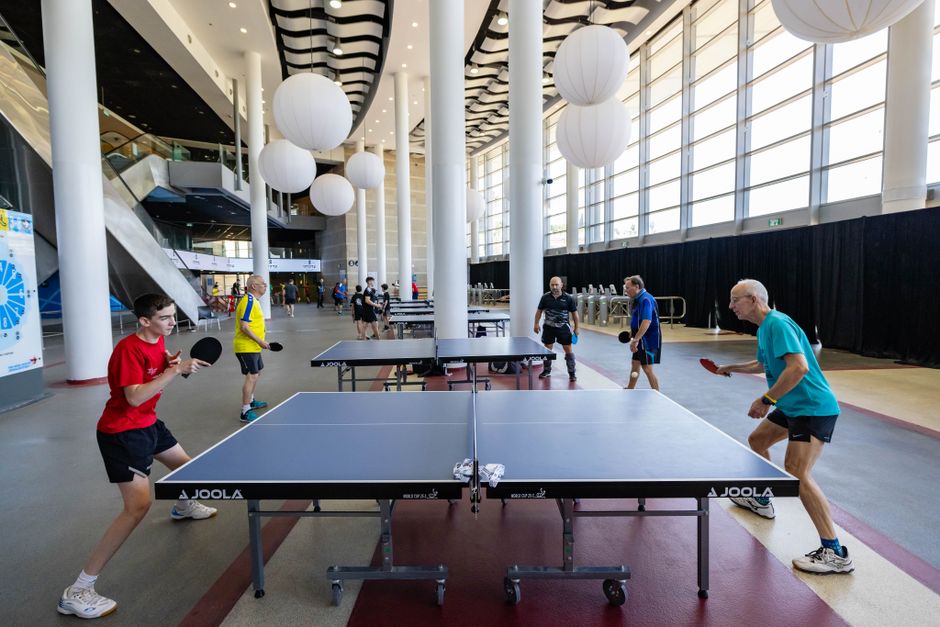
Doors open at 8 a.m. By 9, the draw sheets are taped to the wall, the hall is warming up and you’re scanning for your name: a round robin group of four in your rating event at 9:30, a second event at noon, doubles in the afternoon and, if things go well, knockout rounds into the evening. That’s a typical table tennis tournament day, whether it’s a local rating tournament, a junior open or a national championship, and at the top level, events can run for a week with singles, doubles and team matches on the same day. Most matches are over in well under an hour, but the day is long. This page is about getting through all of it with energy left: what the rules give you between games, what to eat and drink, and how to handle the waiting.
General information, not medical advice. Players with diabetes, heart conditions or other health issues should plan match days with their doctor or a sports dietitian. More about the sport on our table tennis hub.
How a tournament day is built
Most USA Table Tennis–sanctioned events start with round robin groups: in a group of four, you play the other three, and the top finishers move on to a single-elimination draw. US coach and author Larry Hodges advises arriving at least 30 minutes before your first match, and notes that a player who doesn’t show for about 15 minutes can be defaulted. Matches are the best of an odd number of games, each to 11 points (win by two), and in USATT-sanctioned tournaments every match counts toward your rating. Enter two or three events and you can play a lot of matches in a day, with gaps of anything from a few minutes to a few hours.
The breaks the rules give you
The ITTF laws, used in sanctioned play worldwide, are strict about time. Knowing them helps you plan your drinks and your thinking:
- Up to 2 minutes of practice at the table before the match. That’s not a warm-up; do that beforehand.
- Up to 1 minute between games. This is your main chance to drink, towel off and talk to your one designated adviser (coach).
- Towel breaks after every 6 points from the start of each game, and at the change of ends in the last game. Keep them brief.
- One time-out of up to 1 minute per match, called with a “T” sign between rallies.
- Team matches: a player in back-to-back individual matches can claim up to 5 minutes between them.
- Cramp doesn’t stop the clock. The referee can allow a suspension of up to 10 minutes only for an accident such as a fall, not for cramp or exhaustion. That’s one more reason to fuel and drink well all day.
Breakfast and the first match
The American College of Sports Medicine (ACSM) recommends a carbohydrate-based meal 1 to 4 hours before competing, lower in fat, protein and fiber so it sits easily. Think oatmeal with a banana, toast with jam and yogurt, or rice with eggs. If your first match is at 9:30, that means eating around 7. Hodges’ tournament advice is the same in plain words: eat carbohydrate foods before and during the tournament, drink plenty, and consider bringing your own food and sports drinks, because venue food is hit and miss.
Fueling between matches
A 2026 review of table tennis nutrition notes that players may play several matches a day (singles, doubles, team) across events that can last a week, which makes regular refueling important. Most of a match’s energy comes from the aerobic system, which burns carbohydrate and fat, and carbohydrate is the main fuel. The review suggests carbohydrate-electrolyte drinks during intense training or when competing several times a day. A simple plan:
- Gap under an hour: sip a sports drink, eat something small and easy (a banana, a few crackers, a granola bar).
- Gap of 1–3 hours: a light, carb-based snack meal: a sandwich, rice or pasta, fruit, with a little protein.
- Long day: keep eating small amounts every couple of hours instead of one big lunch that leaves you heavy for the 2 p.m. match.
Hydration in a warm hall
Table tennis is played indoors, where temperature is easier to control than on an outdoor court, but a packed hall on a summer day can still get warm. The nutrition review cites research that losing even 1% of body weight through fluid loss can hurt cognitive function and attention, which is exactly what a game of fast reading and decisions runs on. The National Athletic Trainers’ Association (NATA) advises knowing your own sweat rate (weigh yourself before and after a session) and not drinking so much that you gain weight, which can dilute blood sodium. ACSM uses pale-yellow urine as a simple check.
Keep a big bottle like the Nalgene 32 oz at your bag and sip during the 1-minute breaks between games. On long or hot days, many players add an electrolyte drink: Nuun Sport tablets are low in sugar, while Skratch Hydration adds some carbs and more sodium. Our electrolyte guide compares more.
Nuun Sport Tablets
- 300 mg sodium per tablet
- 1 g sugar
- Informed Choice certified
Skratch Labs Hydration Sport Drink Mix
- 400 mg sodium per scoop
- 19 g carbs, 80 calories
- Light, real-fruit flavor
Nalgene Sustain 32 oz Wide Mouth
- 32 oz
- BPA-free Tritan
- Wide mouth for ice and powder
Butterfly R40+ 3-Star Balls
- 40 mm, 3-star
- ITTF approved
- 3, 6 or 12 pack
Staying sharp through the waiting
- Warm up before every match, not just the first one: 5 minutes of easy movement and shadow strokes before you’re called. A long wait cools the body down.
- Practice with the right ball. Find out which ball the event uses and warm up with the same kind, such as an ITTF-approved 3-star ball like the Butterfly R40+.
- Limit screen time. A 2026 meta-analysis found mental fatigue slows reaction time and hurts decisions in sport. Scrolling for hours between matches is mental work too.
- Keep warm and dry. A dry shirt and a light layer between matches. A spare shirt helps on hot days.
- Watch your next opponent if you can, then rest your eyes and mind before you play.
Heat illness and when to stop
Heat illness is less common indoors, but halls without air conditioning can get hot. Early warning signs include headache, nausea and dizziness. Stop, move somewhere cooler, drink and tell someone. Confusion or collapse is a medical emergency; for exertional heat stroke NATA’s rule is “cool first, transport second,” with cold-water immersion as the most effective cooling. If you get hurt, tell the umpire; play stops for a fall-type injury and for any bleeding. Injury basics are on our table tennis injuries page.
When the last match is done, the next day starts with recovery: eat a proper meal with carbs and protein, rehydrate and sleep. See our table tennis recovery page and, for daily eating, table tennis nutrition. Tennis players face a similar long-day problem outdoors; their version is tennis match day.
Tournament day: FAQs
What should I eat during a table tennis tournament?
A carb-based breakfast 1–4 hours before your first match, then small, easy carb snacks (fruit, crackers, sandwiches, rice) between matches, with a sports drink on long or hot days. Avoid heavy, fatty meals right before you play.
How long is the break between games in table tennis?
Up to 1 minute between games under ITTF rules. Players may also towel off briefly after every 6 points, and each player or pair gets one time-out of up to 1 minute per match.
How many matches do you play in a table tennis tournament?
It depends on how many events you enter and how far you go. In a typical round robin group of four you play three matches per event, then any knockout rounds. Several events can mean a long day with many matches.
Can you stop a table tennis match for cramp?
Not under ITTF rules. The referee may allow a suspension of up to 10 minutes only for an accident, such as an injury from a fall, not for cramp or exhaustion. Fueling and hydrating through the day is the best way to avoid getting there.
Should I bring my own drinks to a table tennis tournament?
Yes, it’s a good idea. Venues vary, and having your own water, electrolyte drink and snacks means you can refuel in short gaps between matches without hunting for food.