This article contains affiliate links: if you buy through them we may earn a commission, at no extra cost to you. Learn more.
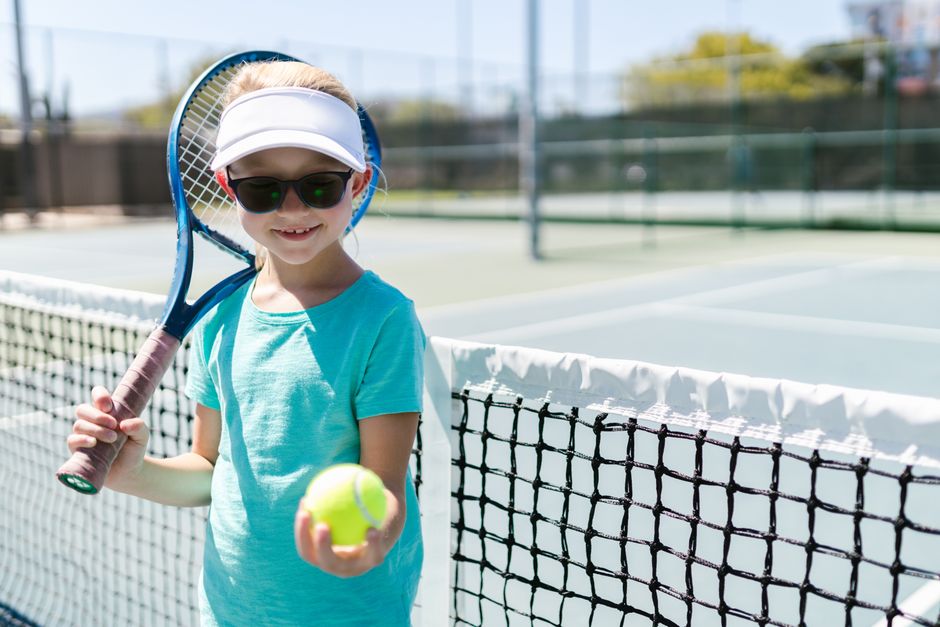
A Saturday clinic at the park: a regular court split into small courts with chalk lines and portable nets, six-year-olds in oversized T-shirts swinging little racquets at soft red balls, and a coach counting “one, two, three!” every time a rally keeps going. That’s how youth tennis starts now: smaller courts, slower balls, shorter racquets and lots of play. This guide is for parents and coaches: USTA Net Generation, the red, orange and green ball stages, when kids move to the yellow ball, junior rankings and ratings, high school tennis, staying healthy, and how college recruiting works.
For the big picture, start at our tennis hub. The rules page explains scoring, including the short formats kids play.
USTA Net Generation: where kids start
Net Generation is the USTA’s youth tennis program for ages 5 to 18. Its competition pathway follows the American Development Model, which puts fun, teamwork and long-term development first. Kids progress from red to orange to green to yellow ball, with three kinds of beginner competition:
- USTA Team Challenge: a first taste of competition as a team, in a fun, social setting, for kids who can drop-hit a serve and keep a short rally going.
- USTA Junior Team Tennis: local team play grouped by level.
- USTA Junior Circuit: non-elimination events where players are grouped by ability and nobody goes home after one loss.
Net Generation events don’t count for junior rankings. Results go into the Net Generation PlayTracker, which, along with age, decides when a child under 11 can move up a ball color and when they can start ranking tournaments. Programs run through schools, parks and clubs; your USTA section can point you to one nearby.
Red, orange, green, yellow: the ball progression
The idea is simple: a slower, lower-bouncing ball on a smaller court lets kids rally, serve and score like real players instead of chasing balls over their heads. The ITF rules allow these balls and courts for 10-and-under competition, and the USTA sets the minimum ages and racquet sizes for its programs.
| Stage | Court | Net (center) | Racquet (USTA) | Who plays (ITF / USTA) |
|---|---|---|---|---|
| Red (Stage 3) | 36 feet long (ITF allows 36–42) | 33 in | Up to 23 in | Up to about 8; USTA minimum age 5 |
| Orange (Stage 2) | 60 feet long (ITF allows 58–60) | 36 in | Up to 25 in | About 8 to 10; USTA recommends not before 7 |
| Green (Stage 1) | Full 78-foot court | 36 in | Up to 27 in | Advanced 9- and 10-year-olds; USTA: age 9, or 7–8 with PlayTracker progress |
| Yellow | Full court | 36 in | Adult rules (up to 29 in) | USTA: age 11, or earlier with PlayTracker progress |
The ITF’s own guide puts red-ball players on racquets up to 23 inches, orange on 23–25 inches and green on 25–26 inches. The red ball can be foam or felt; orange and green are slower, lower-bouncing felt balls. In practice, a coach will tell you when your child is ready to move up. Don’t rush it: a child who wins at orange usually has better strokes for it.
For home practice, you only need the right ball and racquet. Penn QST 36 red felt balls are made for players 8 and under on a 36-foot court (about $27 for a 12-ball bag on Amazon in October 2026); Penn QST 60 orange balls are for 9- and 10-year-olds on a 60-foot court; and Wilson Starter Play Green balls are the next step on the full court (about $26 for four cans). A 25-inch racquet like the Wilson Ultra 25 V5 suits most orange-ball players.
Penn QST 36 Red Felt Balls (12)
- For ages 8 and under
- 36-foot court
- Low-compression core
Penn QST 60 Orange Balls (12)
- For ages 9-10
- 60-foot court
- USTA approved for 10 and Under
Wilson Starter Play Green (4 cans)
- Stage 1 green ball
- Lower bounce than a regular ball
- Full-size court
Wilson Ultra 25 V5 Junior Racquet
- 25 inches
- For orange-ball players
- Junior performance frame
Junior tournaments, rankings and ratings
Once kids play yellow ball, they can enter USTA junior tournaments, which count for rankings. There are four age divisions (12, 14, 16 and 18 and under) and seven levels, from Level 7 local events up to Level 1 national championships. Players earn points for each match won, more at higher levels, and the USTA counts each player’s best six singles and best six doubles results over the past 12 months. National standings come out weekly. Each USTA section’s championship is a Level 3 event whose winner gets direct entry to the national championships in that age group. Internationally, juniors can play the ITF World Tennis Tour Juniors.
Alongside rankings, juniors get two ratings: UTR (1.00 to 16.50, higher is better, from up to 30 matches in the last 12 months) and the ITF World Tennis Number (40 to 1, lower is better, free and updated weekly). Ratings compare players across ages and regions, which is why college coaches look at them. More in our leagues and associations guide.
High school tennis
High school tennis is a great team experience in an individual sport. In 2024-25, 158,667 boys and 204,721 girls played on 22,548 school teams, according to the NFHS. Each state association sets the season and format (Georgia, for example, plays three singles and two doubles in team matches), using USTA rules. Many strong juniors play both high school and USTA tournaments; check your state’s rules on playing outside events during the season.
Keeping young players healthy
- Don’t specialize too early. The American Academy of Pediatrics warns that early single-sport specialization and intense training can lead to overuse injuries and burnout. Other sports build the athleticism tennis needs.
- Watch the serving arm. In one study that followed adolescent players for 24 months, about 1 in 4 had a shoulder injury. Sudden jumps in hours and matches are a known risk; build up gradually, and see a professional if the shoulder or elbow hurts when serving.
- Ankles matter. In US high school tennis, the ankle was the most common injury site, and in another study girls had twice the ankle injury rate of boys. Good tennis shoes and balance work help.
- Heat: summer tournaments can mean several matches a day in the sun. Plan water, shade and snacks, and know the warning signs of heat illness. See tennis game day.
- Sleep: the CDC recommends 9–12 hours for children 6–12 and 8–10 hours for teens.
- Concussion: rare in tennis, but if a child is hit in the head or falls and seems dazed or has a headache, stop play and see a healthcare provider (CDC HEADS UP).
Our tennis injuries page covers when to see a sports medicine doctor, physical therapist or athletic trainer.
College recruiting
- Where to play: NCAA Divisions I, II and III, the NAIA and junior colleges (NJCAA) all have tennis. NCAA Divisions I and II can offer athletic scholarships; Division III can’t.
- When coaches can contact you: for Division I tennis, recruiting communication can start on June 15 after the sophomore year of high school, and official and unofficial visits from August 1 before the junior year. Before that, coaches watch results and ratings.
- What coaches look at: UTR and WTN, results in junior tournaments, video, grades and character. Register with the NCAA Eligibility Center if you plan to play Division I or II.
- Prize money: the NCAA used to limit how much prize money a tennis player could keep before college ($10,000 a year plus expenses). In a 2026 class-action settlement brought by tennis players, which a federal judge preliminarily approved on June 29, 2026, the NCAA agreed to drop limits on prize money earned before college enrollment, and the change is already in effect. Rules for players already in college didn’t change. Check with the NCAA Eligibility Center before accepting money.
Back to the tennis hub, or see tennis training, nutrition for young players and tennis gear. Kids who play soccer too? See youth soccer.
Parents’ questions about youth tennis
What age should my child start tennis?
USTA Net Generation programs that use red balls start at age 5. Many kids start a bit later, which is fine: the red, orange and green stages let them catch up quickly.
What size tennis racquet does my child need?
Match it to the ball stage: up to 23 inches for red ball, up to 25 inches for orange and up to 27 inches for green, per USTA Net Generation rules. A racquet that is too long or heavy makes good strokes harder.
When does my child move from orange to green ball?
The USTA allows green ball at age 9, or at 7 or 8 for kids who have met the Net Generation PlayTracker requirements. Ask the coach: being able to rally and serve with control at orange is a good sign.
When can my child play ranking tournaments?
Ranking tournaments use the yellow ball. The USTA allows yellow-ball play at 11, or earlier once the PlayTracker requirements are met. The youngest ranking division is 12 and under.
How much tennis is too much for a kid?
There’s no single number, but pediatric experts warn against early specialization, and sudden jumps in training load are linked with injuries. Keep rest days, play other sports, and watch for pain that lasts, especially in the serving shoulder or elbow.
When can college tennis coaches contact my child?
For NCAA Division I tennis, from June 15 after the sophomore year of high school, with visits from August 1 before the junior year. Other divisions have their own rules, so check the NCAA’s recruiting guides.