This article contains affiliate links: if you buy through them we may earn a commission, at no extra cost to you. Learn more.
The night before the first meet: a new pair of spikes on the kitchen table, a spike wrench, a bag of tiny pyramid spikes and a teenager trying to remember whether the discus is 1 kilo or 1.6. Track and field gear is different for every event. Sprinters live in stiff, light spikes, throwers spin in flat-soled shoes, and jumpers need grip and cushioning for takeoff. This guide covers track spikes by event, throwing shoes, the legal spike rules, starting blocks, implements for practice, a few training tools and the recovery kit for after.
Buying guide · Our Track and Field buying guide compares the gear we'd pick, with prices and sizing:
Prices change often. The prices below are what we saw at the maker or a major retailer in October 2026; check the current price before you buy.
Our top picks
adidas Throwstar
- For shot, discus, hammer
- Synthetic outsole
- About $70
Champion Sports Olympic Style Starting Block
- Slotted chrome rail
- Locking pedals, rubber traction
- About $118
Champion Sports Iron Shot Put, 12 lb
- 12 lb iron
- High school boys' weight
- About $44
NordStick Nordic Hamstring Curl Strap
- Fits under a door
- Adjustable foam pad
- About $25
TriggerPoint GRID 1.0
- 13 x 5 in foam roller
- Multi-density surface
- About $40
Track spikes by event
Spikes should fit snugly, like a glove, with no heel slip, because any wiggle wastes force. Try them on with thin socks and run a few strides. Models change every year, so think of the shoes below as examples of each type; the right one is the one that fits your foot and your event.
Sprint and hurdle spikes (100 to 400 m)
Sprint spikes have a stiff plate under the forefoot and little heel cushioning, to keep you up on your toes. The Nike Rival Sprint is a popular first spike: a ¾-length plate, six replaceable spikes and rubber at the heel, for about $72 on Amazon. The adidas Adizero Sprintstar is built for 50 to 400 m with a breathable mesh upper and light cushioning, from about $55–70 depending on size and color.
Check the Nike Rival Sprint price on Amazon
Middle and long distance spikes
For the 800 m and up, distance spikes add more cushioning and a softer plate so your calves survive four laps or twenty-five. Many runners use the same pair for track and cross country, swapping in longer spikes for grass. Our running gear page covers shoes for the road and the cross country course.
Jump spikes
Long and triple jumpers need sprint-like grip plus cushioning and stability for a hard takeoff. The Nike Rival Jump (about $52) has six forefoot spikes, a firm plate, extra cushioning at the midfoot and heel, and a diagonal midfoot strap. High jump spikes are a separate kind of shoe, often with spikes under the heel for the plant, and World Athletics allows longer spikes in the high jump (up to 12 mm). Pole vaulters usually use a sprint or jump spike; ask your coach.
Check the Nike Rival Jump price on Amazon
Throwing shoes
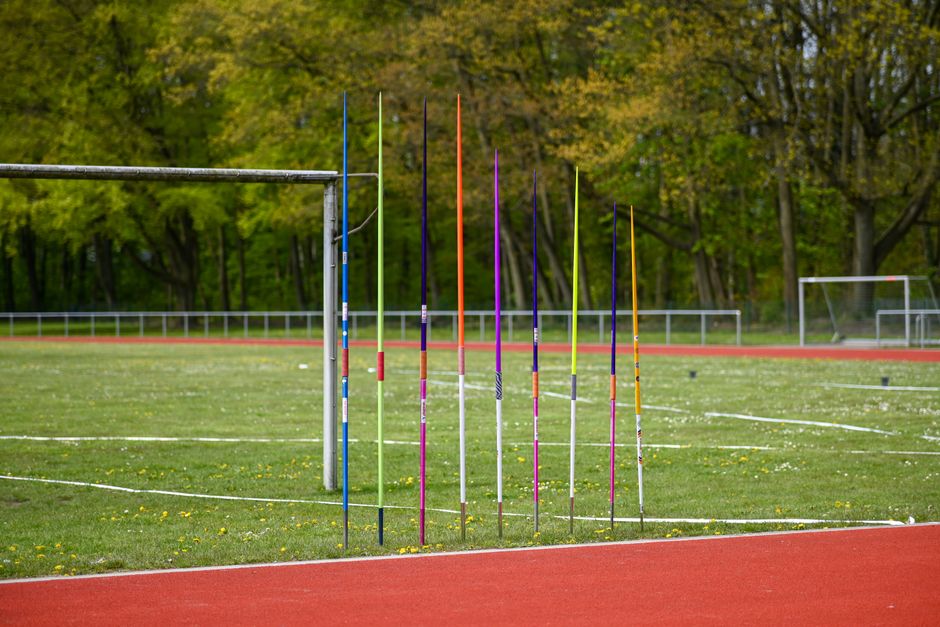
Shot, discus and hammer throwers need a flat, smooth sole that spins and grips in the concrete circle, so never wear spikes in the circle. The adidas Throwstar (about $70) is a budget throwing shoe with a synthetic outsole and textile lining. Step up and the Nike Zoom Rotational 6 (about $100) has a full-length smooth rubber outsole, a Pebax plate, a thin EVA midsole and a midfoot strap for lockdown. Javelin throwers need something else entirely: spiked javelin boots with ankle support, since the javelin is thrown from a runway.
Check the adidas Throwstar price on Amazon
Spike rules: length, type and sole thickness
- Elite meets (World Athletics): up to 11 spikes per shoe. Outdoors, spikes may stick out no more than 9 mm, or 12 mm in the high jump and javelin. Indoors the limit is 6 mm unless the venue allows 9 mm.
- Sole thickness: from November 1, 2024, shoes for track events, jumps and the javelin can have soles no thicker than 20 mm. Throwing shoes for the shot, discus and hammer are exempt.
- High school and youth: the NFHS lets each meet set spike length on all-weather tracks. Many state and youth meets allow only ¼-inch pyramid spikes (the 2026 AAU Junior Olympic Games did), and some allow 3/8-inch on javelin runways. Read the meet information.
Keep a set of legal pyramid spikes and a wrench in your bag. This 130-piece kit of ¼-inch stainless steel pyramid spikes comes with a wrench and a storage box for about $10. Swap worn spikes before big meets and check they’re tight.
Check the pyramid spike kit price on Amazon
Starting blocks
Meets provide blocks, but sprinters and hurdlers who practice starts on their own improve faster. Under World Athletics rules blocks are used in every race up to 400 m. In AAU and USATF youth meets they’re required from age 15. The Champion Sports Olympic Style Starting Block (about $118) has a slotted chrome rail and locking pedals with rubber traction that adjust to any angle. Check that the pins suit your track surface and that your coach is fine with blocks on the practice track.
Check the Champion Sports starting block price on Amazon
Implements for practice
Throw the weight you compete with: a 12 lb shot and 1.6 kg discus for high school boys, 4 kg and 1 kg for girls, and lighter implements for younger kids (see the table on our youth page). At meets your implement must pass the weigh-in, and at international meets only certified implements are allowed, so a practice implement is for practice. Good options:
- Champion Sports Iron Shot Put, 12 lb (about $44), the high school boys’ weight; other weights are sold separately.
- Champion Sports Rubber Practice Discus, 1 kg (about $9), the weight for high school girls and younger athletes, with smooth edges that are gentle on gym floors.
- Turbojav 400 g (about $42), the soft-nosed training javelin used in youth meets.
Check the Champion Sports shot put price on Amazon
Training tools
Hamstring strength is the best-studied way to protect sprinters: a 2019 review found programs that include the Nordic hamstring exercise cut hamstring injuries by up to 51%. You need a partner or something to anchor your heels. The NordStick (about $25) is a padded strap that anchors under a door. For drills, the SKLZ Speed Hurdle Pro set of six (about $70) adjusts to 6, 9 or 12 inches. For honest sprint times, the Freelap Timing Pack 112 (from about $535 at Freelap USA) uses a chip and transmitters instead of cables. More in our best speed training equipment guide.
Check the NordStick price on Amazon
Recovery gear
Prelims on Friday, finals on Saturday: recovery between rounds matters. These are comfort tools, not treatment. A foam roller like the TriggerPoint GRID 1.0 (about $40) is the basic. The Theragun Mini (about $220) is a pocket massage gun with three speeds and three attachments for calves and quads between events. After a long meet, many athletes use compression boots such as the Hyperice Normatec Go (about $379) and slip into the OOFOS OOahh Slide after a day in spikes. Compare more in our massage guns, compression boots and recovery shoes guides.
Hyperice Normatec Go
- Calf compression
- Fits calves to 22 in
- About $379
OOFOS OOahh Slide
- OOfoam slide
- APMA Seal of Acceptance
- Machine washable
How to choose track and field gear
- Buy for your main event. A sprint spike is fine for most beginners; specialists need jump, distance or throwing shoes.
- Fit beats brand. Snug, no heel slip, and comfortable for strides.
- Check the meet’s spike rule before every season, and carry legal spikes and a wrench.
- Match implement weights to your age group, and don’t let young kids throw adult implements.
- Ease into new spikes. A stiff plate loads the calves and Achilles; wear them for short sessions first.
Back to the track and field hub, or see the track and field rules, recovery and best wearables for track.
Track and field gear questions
Can I use sprint spikes for every event?
For a beginner, a sprint spike works for sprints, hurdles and the long jump. Throwers shouldn’t wear spikes in the circle, and distance runners usually want more cushioning. Specialists eventually get event-specific shoes.
What size spikes should I use?
Whatever the meet allows. Many high school and youth meets allow only ¼-inch pyramid spikes. World Athletics allows up to 9 mm outdoors (12 mm in the high jump and javelin) and 6 mm on most indoor tracks.
How much do track spikes cost?
Entry-level spikes such as the Nike Rival Sprint or Rival Jump cost about $50–75 in October 2026. Elite racing spikes cost much more and aren’t needed by most high school athletes.
Do throwers need special shoes?
Shot, discus and hammer throwers do best in flat, smooth-soled throwing shoes made for spinning, like the adidas Throwstar or Nike Zoom Rotational 6. Javelin throwers wear spiked javelin boots.
Are thick-soled “super spikes” legal?
At World Athletics-ranked meets, track, jump and javelin shoes must have soles no thicker than 20 mm and be on the approved shoe list. High school rules are looser, but check your state.