This article contains affiliate links: if you buy through them we may earn a commission, at no extra cost to you. Learn more.
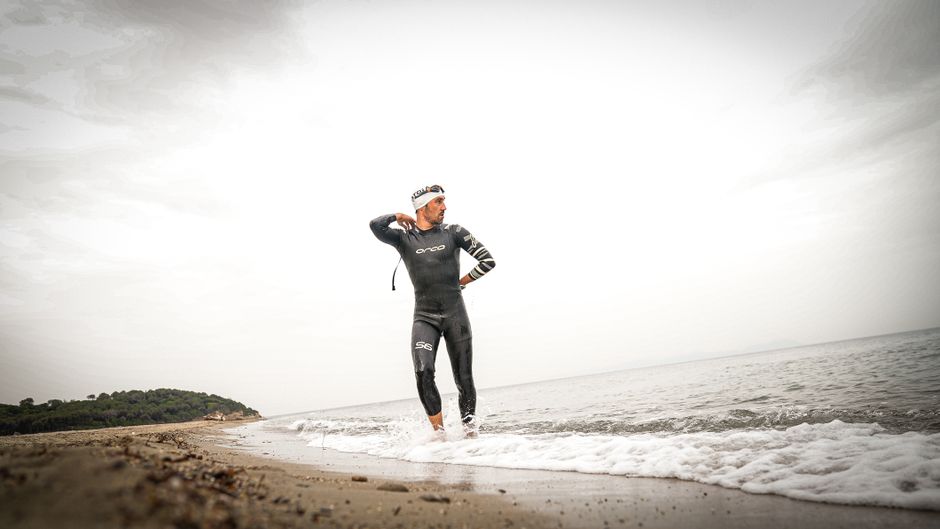
You cross the line, someone hangs a medal around your neck and wraps you in a foil blanket, and your legs suddenly forget how to walk. A few hours later you’re at dinner with a sunburn in the shape of your tri-suit, already scrolling for the next race. Recovery in triathlon happens on two clocks: the days after a race, and the daily rhythm of training three sports, often twice a day, around work and family. Get both right and you arrive at the next race fresh instead of frayed. This page covers both, for every distance and level.
General guidance for healthy athletes. Recovery tools are comfort and convenience products, not medical treatment. If pain doesn’t settle, see a sports medicine doctor, physical therapist (PT) or athletic trainer (AT). Back to the triathlon hub.
The first hour after the finish
- Keep walking for a few minutes rather than collapsing on the grass. Some athletes feel faint when they stop suddenly.
- Go to the medical tent if you feel confused, very dizzy, can’t stop shivering or feel overheated, have chest pain, or have a headache with nausea and puffy hands. After long races these can be signs of heat illness or hyponatremia (low blood sodium), which need medical care, not just more water. More on our triathlon injuries and safety page.
- Drink and eat something once your stomach settles: a sports drink, chocolate milk, a banana, a salty snack.
- Get out of wet kit and into dry, warm clothes; clean any road rash or chafing.
Refuel and rehydrate: the numbers
The joint position statement of the American College of Sports Medicine (ACSM), the Academy of Nutrition and Dietetics and Dietitians of Canada gives these targets:
- Carbohydrate: when you have less than 8 hours before your next session, about 1–1.2 g per kg of body weight per hour for the first 4 hours (70–84 g an hour for a 70 kg athlete). This matters most for doubles: a morning swim and an evening run.
- Protein: about 0.25–0.3 g per kg, or 15–25 g, soon after training and spread through the day. A shake like Thorne Whey Protein Isolate (21 g per scoop, NSF Certified for Sport) is a convenient option; real food works just as well.
- Fluids: replace about 125–150% of what you lost, roughly 1.25–1.5 L for every kg of body weight lost. Weighing yourself before and after a long session shows the gap.
- Alcohol: the same statement discourages heavy drinking after exercise, because it gets in the way of refueling and recovery. Celebrate, but go easy.
One more thing: skip taking anti-inflammatory painkillers to “get through” a long race. A study at the New Zealand Ironman linked NSAID use with hyponatremia and changes in kidney markers. Ask your doctor what’s right for post-race soreness.
Recovery by race distance
Your body needs more time the longer you race. Research on the longest distance shows why: in a study of 42 well-trained men, blood markers of muscle damage and inflammation (CK, myoglobin, IL-6, CRP) were still clearly raised five days after an Ironman, and most only returned to pre-race levels by day 19. Another Ironman study found muscle strength and jump height dropped and soreness rose after the race. Exact timelines vary from person to person, so use these as general patterns:
| Race | Common approach (not a prescription) |
|---|---|
| Sprint | An easy day or two, then normal training |
| Olympic distance | A few easy days; hard sessions again after soreness is gone |
| 70.3 | About a week of easy swimming and riding before running hard |
| Ironman | Two to three weeks of mostly easy, short sessions; no hard running until you feel fully back |
Triathletes have one advantage: low-impact swimming and easy spinning keep you moving while the running muscles heal. Many athletes start back in the pool.
Recovery during a training week
- Easy means easy. Recovery days are short swims or spins at a conversational effort; most of a triathlete’s training should be easy anyway (see triathlon training).
- A real day off every week, and a lighter week every three or four, is a common pattern.
- Young triathletes need 1–2 days a week off organized sport and time off during the year, according to the American Academy of Pediatrics.
- Eat enough. Three sports burn a lot of energy. Under-fueling over time leads to Relative Energy Deficiency in Sport (REDs), which affects hormones, bones and performance in women and men; see triathlon nutrition.
- Warning signs that you need more rest: sleep getting worse, a resting heart rate that stays high, heavy legs that don’t freshen up, frequent colds, irritability, or losing interest in training.
Sleep: the cheapest recovery tool
Early swim sessions eat into sleep, and triathletes are famous for 5 a.m. alarms. The American Academy of Sleep Medicine recommends at least 7 hours a night for adults and 8–10 hours for teens aged 13–18. If your first session is at 5:45 a.m., working back from the alarm to a set bedtime is the only way to hit that. Keep the bedroom dark and cool, put screens away, and avoid caffeine late in the day. A tracker like the Oura Ring 5 or a watch with HRV trends can show whether hard weeks are catching up with you; see HRV for athletes and best triathlon wearables.
Recovery tools: what the research says
- Massage came out on top for reducing muscle soreness and perceived fatigue in a review of 99 studies of recovery methods. A massage gun like the Theragun Mini or a foam roller like the TriggerPoint GRID are do-it-yourself versions many athletes like; research on massage guns themselves is still limited.
- Compression: a meta-analysis found compression garments give small recovery benefits. Pneumatic boots like Hyperice Normatec Go are popular after long rides and runs; think of them as comfort, not magic.
- Cold water: immersion at about 10–15°C for 10–15 minutes slightly reduced soreness compared with doing nothing in a meta-analysis. But in a 12-week study, regular ice baths after strength sessions reduced gains in muscle and strength, so skip them after lifting days. If you have a heart condition, high blood pressure or Raynaud’s, are pregnant, or have other health conditions, check with your doctor first, and never plunge alone. Our how long to ice bath guide has more.
- Recovery shoes: after a long race, many athletes slip into cushioned slides like the OOFOS OOahh for comfort.
Hyperice Normatec Go
- Calf wraps, 7 pressure levels
- Up to 2 h battery
- About $379
Theragun Mini (3rd Gen)
- 3 speeds, 3 attachments
- Bluetooth app
- About $220
TriggerPoint GRID 1.0
- 13 in, hollow core
- Multi-density surface
- About $40
Thorne Whey Protein Isolate
- 21 g protein per scoop
- NSF Certified for Sport
- About $2.17 per serving
OOFOS OOahh Slide
- OOfoam cushioning
- APMA Seal of Acceptance
- About $60
Compare more options in our guides to compression boots, massage guns and recovery shoes. For sport-specific recovery see swimming, cycling and running recovery.
Triathlon recovery: FAQs
How long does it take to recover from an Ironman?
Longer than most people think. In one study, markers of muscle damage and inflammation were still raised five days after the race and most were back to normal only by day 19. Many athletes keep training easy and short for two to three weeks and wait to run hard until they feel fully recovered.
What should I eat after a triathlon?
Carbohydrate to refill your energy stores, 15–25 g of protein, and fluids with some salt. The ACSM statement suggests about 1–1.2 g of carbs per kg per hour for the first four hours when you need to recover fast. A recovery shake, chocolate milk, or a real meal like rice, chicken and fruit all work.
Is swimming good for recovery after a run or race?
Many triathletes use an easy swim as a recovery session because it’s low-impact and takes load off the legs. Keep it short and relaxed. If you have open wounds from a crash, let them heal before getting in the water.
Should I take an ice bath after a triathlon?
It may slightly ease soreness, and some athletes like it after a hot race. Avoid making it a habit after strength sessions, because research shows it can blunt strength gains. Check with your doctor if you have a heart condition, high blood pressure or other health concerns, and never do it alone.
How many rest days does a triathlete need?
Most age-group plans include at least one full rest day a week and a lighter week every three to four weeks. Kids and teens need 1–2 days off a week from organized sport, per the American Academy of Pediatrics. If your sleep, mood or legs keep getting worse, take more.