This article contains affiliate links: if you buy through them we may earn a commission, at no extra cost to you. Learn more.
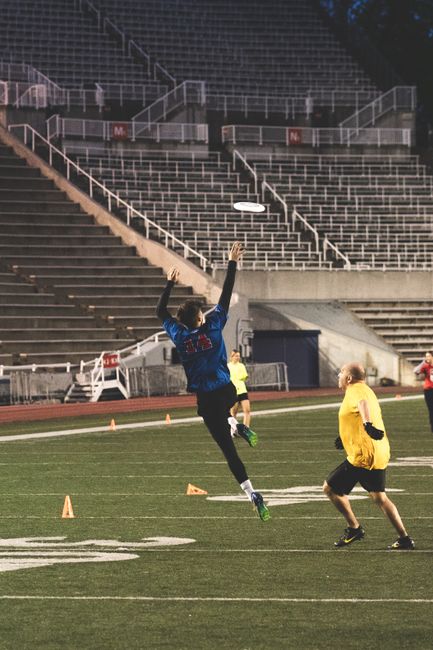
Saturday, 7:30 a.m., a field complex outside town. Pop-up tents go up along the sideline, coolers come out of car trunks, someone is taping ankles on a tailgate, and the first pull of the day goes up at 8:30. By the time the bracket is decided on Sunday afternoon, a team may have played six or seven games in two days, in sun, wind and sometimes rain. That’s ultimate’s game day: less a single game than a whole tournament weekend, at every level from youth and high school to college club, mixed-gender rec and the pro UFA. Here’s how to fuel, hydrate and handle heat and sun so you still have legs in the final, based on guidance from USA Ultimate and sports-medicine organizations.
General guidance for healthy players. If you have diabetes, a heart condition or other medical needs, or a special diet, follow your doctor’s or a registered dietitian’s plan. For the overview of the sport, see our ultimate frisbee hub.
What a tournament day looks like
- Club, college and rec tournaments: under USA Ultimate’s rules a standard game is played to 15 points, with halftime at 8 and a standard 7-minute halftime. Event organizers set time caps, so games often end on a cap rather than at 15. Expect several games a day.
- Youth events: USA Ultimate caps teams at 3 full-length games a day and 6 a weekend, requires at least 30 minutes from one round’s hard cap to the next, and recommends a 1-hour break if a team plays more than 2 games in a day.
- Pro (UFA): one game at a time, with referees and four 12-minute quarters.
That schedule matters for your body. Researchers tracking Australia’s under-24 women’s team across 12 games at a world championship found the last games of the tournament were shorter but more intense than the first ones, and a Hong Kong study found injury risk higher at tournaments than in training. Fueling and recovering between games is part of the game.
Before the first pull
- Meal: the joint position statement of the American College of Sports Medicine (ACSM), the Academy of Nutrition and Dietetics and Dietitians of Canada recommends a carbohydrate-based meal or snack 1 to 4 hours before exercise lasting more than an hour, avoiding foods high in fat, protein or fiber right before. USA Ultimate’s medical quick reference says the same: a snack or meal high in carbs and moderate in protein 1–2 hours before. Think bagels, oatmeal, bananas, rice, toast with honey.
- Fluids: USA Ultimate suggests about 2–3 mL per pound of body weight 3–4 hours before playing (300–450 mL for a 150 lb player), adding that more than this isn’t helpful.
- Sunscreen and warm-up: put sunscreen on before you warm up, then do your full warm-up before the first point, even (especially) on a cold early morning.
During games: hydration and fuel
Ultimate gives you natural breaks: the sideline between points, timeouts and halftime. Use them.
- Drink to thirst, not to excess. USA Ultimate’s guidance: drink according to thirst, aim to weigh about the same after play as before, and keep urine light in color. The National Athletic Trainers’ Association (NATA) says to avoid losing more than 2% of body weight and warns that drinking far more than you sweat can cause dangerously low sodium (hyponatremia).
- Carbs every hour. Both ACSM and USA Ultimate list about 30–60 g of carbohydrate per hour of play: a sports drink, a banana, a gel or a handful of pretzels between points or games.
- Salt matters on long days. USA Ultimate notes water is fine for a workout under 2 hours, but at a tournament sports drinks add carbs and electrolytes, and salty snacks help too. NATA says heavy, salty sweaters may benefit from extra sodium.
Bag picks from our best electrolyte powder guide: Skratch Labs Hydration Sport Drink Mix (carbs plus sodium for long days) and Nuun Sport tablets (light and low sugar). Bring a big refillable bottle such as the Nalgene 32 oz so you’re not hunting for the water jug between points.
Between games: the refuel window
- Rehydrate first. USA Ultimate suggests at least 16–24 oz (450–675 mL) of fluid for every pound lost during play. NATA, for short recoveries, says about 150% of what you lost.
- Refuel early and often. On a tournament day, USA Ultimate’s quick reference suggests 1.0–1.5 g of carbohydrate per kg of body weight in the first 30 minutes after a game, and again every 2 hours. Its list of easy carbs reads like a tournament snack table: bagels, crackers, rice cakes, potatoes, cereal, honey, sports drinks, gummy candies.
- Keep it familiar. With an hour between games, small and easy beats a big lunch. Save the full meal for the long break or the evening.
- Get off your feet and into shade. USA Ultimate advises resting and cooling down after play: find shade, wet the skin, sit in a breeze. A wet cooling towel such as the MISSION Original Cooling Towel helps you feel cooler; it doesn’t replace rest, shade and fluids.
Heat: how USA Ultimate events adjust
Heat is the biggest game-day danger in summer ultimate. USA Ultimate’s 2025 heat guidelines use the wet bulb globe temperature (WBGT), which combines temperature, humidity, sun and wind:
- Below 82°F WBGT: normal play.
- 82.0–86.9°F: one official hydration break per half (when the first team reaches 4, and 4 points after halftime), adding 3 minutes before the next pull.
- 87.0–89.9°F: longer hydration breaks, an extra minute between every point, games shortened to a 90-minute hard cap and at least 30 minutes between rounds.
- 90°F WBGT or higher: play cancelled and moved to cooler conditions.
Know the warning signs. USA Ultimate lists unusual fatigue, nausea, headache, dizziness, vomiting or chills: rest in the shade with fluids, and no return to play for at least 2 hours. Confusion, loss of coordination or collapse can be exertional heat stroke, a medical emergency: call 911. NATA says to cool first and transport second when trained medical staff are on site, and that cold-water immersion is the most effective cooling. NATA also says getting used to heat takes 7 to 14 days, so the first hot tournament of the year deserves extra care. USA Ultimate adds: avoid alcohol, and check whether your medications or supplements (like caffeine) affect hydration. For a youth team, remember children are more prone to heat illness because they tend to drink less.
Sun: a whole weekend outdoors
Two days on open fields is a lot of sun. The American Academy of Dermatology recommends a broad-spectrum, water-resistant sunscreen of SPF 30 or higher, reapplied every two hours and after sweating; USA Ultimate’s packet also says SPF 30+, applied 15–30 minutes before going out. The CDC adds shade, clothing that covers skin, a hat and UV-blocking sunglasses, and notes UV is strongest from 10 a.m. to 4 p.m. A zinc-based sunscreen like Blue Lizard Sport SPF 30+, a team tent and a hat for the sideline make the difference by Sunday.
Skratch Labs Hydration Sport Drink Mix
- 400 mg sodium
- 80 calories, 19 g carbs
- Real fruit flavor
Nuun Sport Tablets
- 300 mg sodium per tablet
- 1 g sugar
- Informed Choice
Nalgene Sustain 32 oz Wide Mouth
- 32 oz, wide mouth
- BPA-free Tritan
- Made with 50% plastic-waste material
MISSION Original Cooling Towel
- Cools when wet
- UPF 50 (maker)
- 10 x 33 in
Blue Lizard Sport Mineral Sunscreen SPF 30+
- Zinc oxide, broad spectrum
- Water and sweat resistant
- Fragrance free
Electrolyte drinks are food products, not medicine. Follow the label, and check with a doctor or registered dietitian first if you have high blood pressure, kidney or heart problems, or are on a low-sodium diet.
Lightning and storms
USA Ultimate’s event lightning policy: if you hear thunder or a detection app shows a strike within 10 miles, play stops and everyone goes to safe shelter, a building with wiring and plumbing or a hard-topped vehicle with the windows closed (not a tent). Play waits at least 30 minutes after the last thunder or strike within 10 miles. A team that heads for shelter before the call isn’t penalized.
Pack the night before
- Two pairs of cleats or at least spare socks, and a dry shirt for every game or two.
- A cooler with water, electrolyte drink, sandwiches, fruit, pretzels and other salty snacks.
- Sunscreen, hat, sunglasses, tent or umbrella, cooling towel.
- Tape, ankle brace if you use one, and a small first aid kit (layout scrapes need cleaning and covering).
- For minors at USA Ultimate events: the medical authorization form, which the team chaperone keeps on site.
After the last game, the work moves to ultimate recovery, especially if there’s a second day. What to eat in the weeks around tournaments is on our ultimate nutrition and supplements page, and how heat and collisions cause injuries is on ultimate injuries.
Ultimate game day and tournament day: FAQs
What should I eat between games at an ultimate tournament?
Easy carbohydrates soon after each game, plus fluids and some salt: bagels, crackers, fruit, rice cakes, pretzels, sports drinks. USA Ultimate’s quick reference suggests 1.0–1.5 g of carbs per kg of body weight in the first 30 minutes and again every 2 hours on tournament days.
How much water should I drink at an ultimate tournament?
Drink to thirst during play, aim to weigh about the same after a game as before, and keep urine light in color. After play, USA Ultimate suggests 16–24 oz for each pound lost. Don’t force down far more than you sweat.
When is ultimate cancelled for heat?
Under USA Ultimate’s 2025 guidelines, play is cancelled at a WBGT of 90°F or higher, with hydration breaks, longer rests and shorter games from 82°F WBGT up. Other organizers may use their own rules, so ask the tournament director.
How many games a day do ultimate teams play?
It depends on the event. Adult club, college and rec tournaments often have several games each day. For youth events, USA Ultimate limits teams to 3 full-length games a day and 6 per weekend.
How often should I reapply sunscreen during a tournament?
Every two hours and after heavy sweating, says the American Academy of Dermatology, using a water-resistant, broad-spectrum SPF 30+. Between games is a good habit. Don’t forget ears, neck and lips.