This article contains affiliate links: if you buy through them we may earn a commission, at no extra cost to you. Learn more.
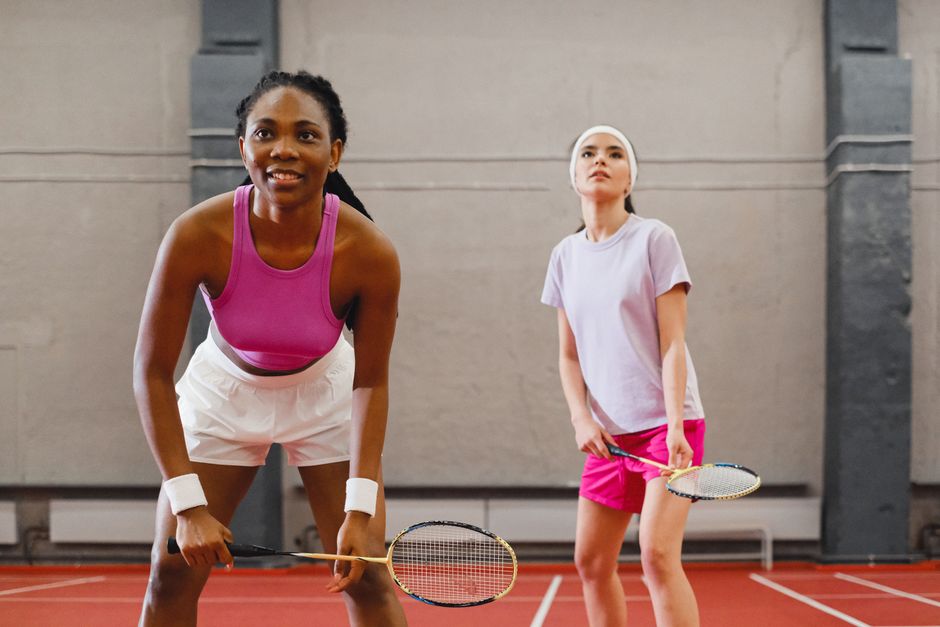
Thursday night at the rec center: four courts, the squeak of shoes, a stack of nylon shuttles on the bench, and a rotating doubles game where nobody wants to sit out. Half the players are on borrowed rackets, and one of them has just asked the group chat which racket to buy. This guide answers that: the best badminton rackets in 2026, from a first badminton racket for beginners to a step-up frame for club smashers, with weight classes (3U, 4U, 5U), balance, flex and string tension explained in plain words.
Prices change often. The prices below are what we saw on Amazon in October 2026; check the current price before you buy.
Our top picks
Yonex NanoFlare 1000 Play
- 4U, G5 grip
- Head-light, medium flex
- Pre-strung, 19-27 lbs advised
Yonex NanoFlare 700 Play
- 4U, G5 grip
- Head-light, flexible shaft
- Pre-strung, 20-28 lbs advised
Yonex Astrox 88 Play
- 4U, G5 grip
- Head-heavy, medium flex
- Pre-strung, 20-28 lbs advised
Li-Ning G-Force 5900 Superlite
- 5U, 79 g unstrung
- Head-heavy, flexible
- Up to 30 lbs, G6 grip
Yonex Astrox Nextage
- 4U, G5 grip
- Head-heavy, medium flex
- Pre-strung, 20-28 lbs advised
Senston N80 2-Player Set
- 2 carbon rackets
- 5U, 75-79 g
- Pre-strung 24-26 lbs
Badminton rackets compared
| Racket | Weight class | Balance | Flex | Tension range | About (Oct 2026) |
|---|---|---|---|---|---|
| Yonex NanoFlare 1000 Play | 4U | Head-light | Medium | 19-27 lbs | $58 |
| Yonex NanoFlare 700 Play | 4U | Head-light | Flexible | 20-28 lbs | $69 |
| Yonex Nanoray 10F | 77 g listed | Head-light series | Hi-flex | Not stated | $38 |
| Yonex Astrox 88 Play | 4U | Head-heavy | Medium | 20-28 lbs | $62 |
| Li-Ning G-Force 5900 Superlite | 5U | Head-heavy | Flexible | Up to 30 lbs | $60 |
| Yonex Astrox Nextage | 4U | Head-heavy | Medium | 20-28 lbs | $155 |
| Senston N80 (pair) | 5U | Not stated | Not stated | Strung 24-26 lbs, up to 28 | $60 for two |
The best badminton rackets in 2026
1. Yonex NanoFlare 1000 Play: best for most beginners
The listing calls it “a great introductory model,” and the specs back that up: a head-light balance and medium-flex shaft, so it’s easy to swing and quick on defense, plus an isometric (squarer) head that Yonex says gives a larger sweet spot. It’s a 4U frame with a G5 grip, comes pre-strung from the factory with a cover, and Yonex advises 19 to 27 lbs when you restring.
- Good: forgiving and easy to handle; a real graphite Yonex at a starter price; ready to play out of the box.
- Watch out: head-light frames give less “free” power on smashes; stock was limited when we looked.
- Best for: adult beginners, club-night regulars and teens moving up from a junior racket.
Check the Yonex NanoFlare 1000 Play price on Amazon
2. Yonex NanoFlare 700 Play: easiest deep clears
If your clears land mid-court instead of at the back line, a flexible shaft helps. The NanoFlare 700 Play pairs a flexible shaft with a head-light balance and an isometric head, and Yonex pitches it for “quicker swings” with “a special emphasis on deep clears.” It’s a 4U, G5 racket, factory pre-strung with a cover, with 20 to 28 lbs advised.
- Good: the most forgiving shaft among the Yonex picks; light and quick at the net.
- Watch out: a very flexible shaft can feel a little delayed once your swing gets fast.
- Best for: beginners, older players and anyone with a slower, smoother swing.
Check the Yonex NanoFlare 700 Play price on Amazon
3. Yonex Nanoray 10F: best budget graphite
At about $38, the Nanoray 10F is the cheapest way into a graphite Yonex frame. The title says hi-flex and pre-strung, the description places it in Yonex’s head-light Nanoray series built for a fast, controlled swing, and the listing gives a weight of 77 g. It’s one of the best-selling rackets in Amazon’s badminton category.
- Good: low price; light and flexible; a big step up from aluminum backyard rackets.
- Watch out: the listing doesn’t give a U class or a string-tension range; the factory strings are basic.
- Best for: first-timers on a budget and a spare racket for the bag.
Check the Yonex Nanoray 10F price on Amazon
4. Yonex Astrox 88 Play: best for doubles attackers
Once you’re the one jumping on short lifts in doubles, a head-heavy racket puts more mass behind the smash. The third-generation Astrox 88 Play has a head-heavy balance and a medium shaft, which Yonex says helps deliver power and steep, angled smashes. The listing gives 4U (80 to 84 g) with a G5 grip and 20 to 28 lbs advised; it’s factory pre-strung with a cover.
- Good: real smash weight at a Play-series price; still a light 4U frame.
- Watch out: head-heavy frames are slower in fast net exchanges and ask more of the shoulder.
- Best for: improving club players who mostly play from the back court in doubles.
Check the Yonex Astrox 88 Play price on Amazon
5. Li-Ning G-Force 5900 Superlite: lightest power racket
Li-Ning combines two things that usually pull in opposite directions: a very light 5U frame (79 g unstrung, about 85 g strung, per the listing) and a head-heavy balance with a flexible shaft for attacking shots. It’s carbon fiber, comes strung with a cover, has a slim G6 grip and takes up to 30 lbs of tension.
- Good: very light to swing for long sessions; easy power from the flexible shaft.
- Watch out: G6 is a thin handle, so larger hands will want an overgrip; very light frames can feel less stable against hard smashes.
- Best for: smaller players, juniors moving to adult frames and anyone who tires with heavier rackets.
Check the Li-Ning G-Force 5900 Superlite price on Amazon
6. Yonex Astrox Nextage: best step-up racket
The Nextage is the pick when a starter frame starts to feel limiting. Yonex aims it at intermediate players who want power and comfort: a head-heavy balance, a medium-flex shaft, wide grommets that let the strings move more for shuttle hold, and a vibration-dampening mesh in the graphite that the listing says makes it more arm-friendly than the similar Astrox 77 Tour. It’s 4U (80 to 84 g), G5, pre-strung with a full cover, with 20 to 28 lbs advised.
- Good: a racket you won’t outgrow fast; power with a softer feel.
- Watch out: about $155, more than double the Play models; “arm-friendly” is the maker’s claim.
- Best for: weekly club players and league or tournament doubles players.
Check the Yonex Astrox Nextage price on Amazon
7. Senston N80 2-Player Set: best for backyard pairs
For a couple, two teens or a family that plays in the driveway, this set gives you two full-carbon rackets for about $60. Senston lists a 5U weight (75 to 79 g), an isometric head, pre-stringing at 24 to 26 lbs (restringable up to 28), a G4 handle, and two grips and two bags in the box. Shuttles aren’t included.
- Good: two light carbon rackets for the price of one Yonex; nice for sharing.
- Watch out: balance and flex aren’t stated; a lesser-known brand than Yonex or Li-Ning.
- Best for: backyard and family play, and friends trying the sport together.
Check the Senston N80 set price on Amazon
How to choose a badminton racket
- Weight class (U): a higher U number means a lighter racket. On Yonex spec sheets, 3U averages about 88 g and 4U about 83 g; 5U is lighter still (listings above give 75 to 80 g). Exact ranges vary by brand and listing. Most beginners and doubles players do well with 4U; 3U suits strong players who want more stability and smash weight.
- Balance: head-light rackets are quicker for defense and net play; head-heavy rackets add power on smashes but are harder work for the shoulder. Even balance sits in between.
- Flex: a flexible shaft helps a slower swing get the shuttle to the back of the court; stiff shafts reward fast, well-timed swings. Beginners rarely need stiff.
- Grip (G): on Yonex and Li-Ning, a higher G number means a thinner handle; G5 is a common adult size. You can build a thin grip up with an overgrip, but you can’t make a thick one smaller.
- String tension: stay inside the range printed on your racket, toward the low end as a beginner. Lower tension is springier and more forgiving; higher tension gives control but less margin for error. Yonex advises just 17 to 22 lbs for its NanoFlare Junior. A common all-round string is Yonex BG65 (about $17 for a set).
- Shuttles, briefly: nylon for practice and club nights (the Yonex Mavis 350 is about $23 for six, with speeds by hall temperature); feather for tournaments (the Yonex Aerosensa 30 is about $65 for twelve).
Two safety notes. The American Academy of Pediatrics and the American Academy of Ophthalmology rate badminton as high-risk for eye injuries and recommend eye protectors that meet ASTM F803 for racket sports, especially for kids and doubles players at the net. And no racket fixes a sore shoulder or elbow: if pain lasts more than a few days, see a sports medicine doctor, physical therapist or athletic trainer, and ask your stringer about a lower tension in the meantime.
For the rest of the bag (shoes, grips, eyewear, shuttles), see our badminton gear list. Buying for a child? The youth badminton guide covers junior rackets and tournaments, and badminton injuries explains the shoulder, ankle and Achilles problems the sport is known for. After a long tournament day, our best recovery shoes and best massage guns guides can help. Everything else is on the badminton hub and in our badminton blog.
Badminton racket questions
What is the best badminton racket for beginners?
A light (4U or 5U), head-light or even-balance racket with a flexible or medium shaft, pre-strung. The Yonex NanoFlare 1000 Play and NanoFlare 700 Play fit that description at about $58 to $69; the Nanoray 10F is a cheaper graphite option.
Is 3U or 4U better?
Neither is better in general. 4U is lighter and quicker, which suits most beginners and doubles players. 3U is about 5 g heavier on Yonex spec sheets, which adds stability and smash weight for strong, experienced players.
What string tension should a beginner use?
The low end of the range printed on the racket, often around 20 to 22 lbs on Yonex frames that list 20 to 28 lbs. Lower tension is more forgiving and easier on the arm; raise it gradually as your timing improves.
How much should I spend on a badminton racket?
About $40 to $70 buys a good graphite starter racket that you can keep for a few seasons. Around $150 and up gets you intermediate frames like the Astrox Nextage. Very cheap steel or aluminum sets are fine for the backyard but heavy for club play.
Head-heavy or head-light: which should I choose?
Head-light if you play a lot at the net, defend a lot or are just starting. Head-heavy if you mostly attack from the back court and already have a solid, relaxed swing. Not sure? An even-balance or mildly head-light racket is the safe middle.