This article contains affiliate links: if you buy through them we may earn a commission, at no extra cost to you. Learn more.
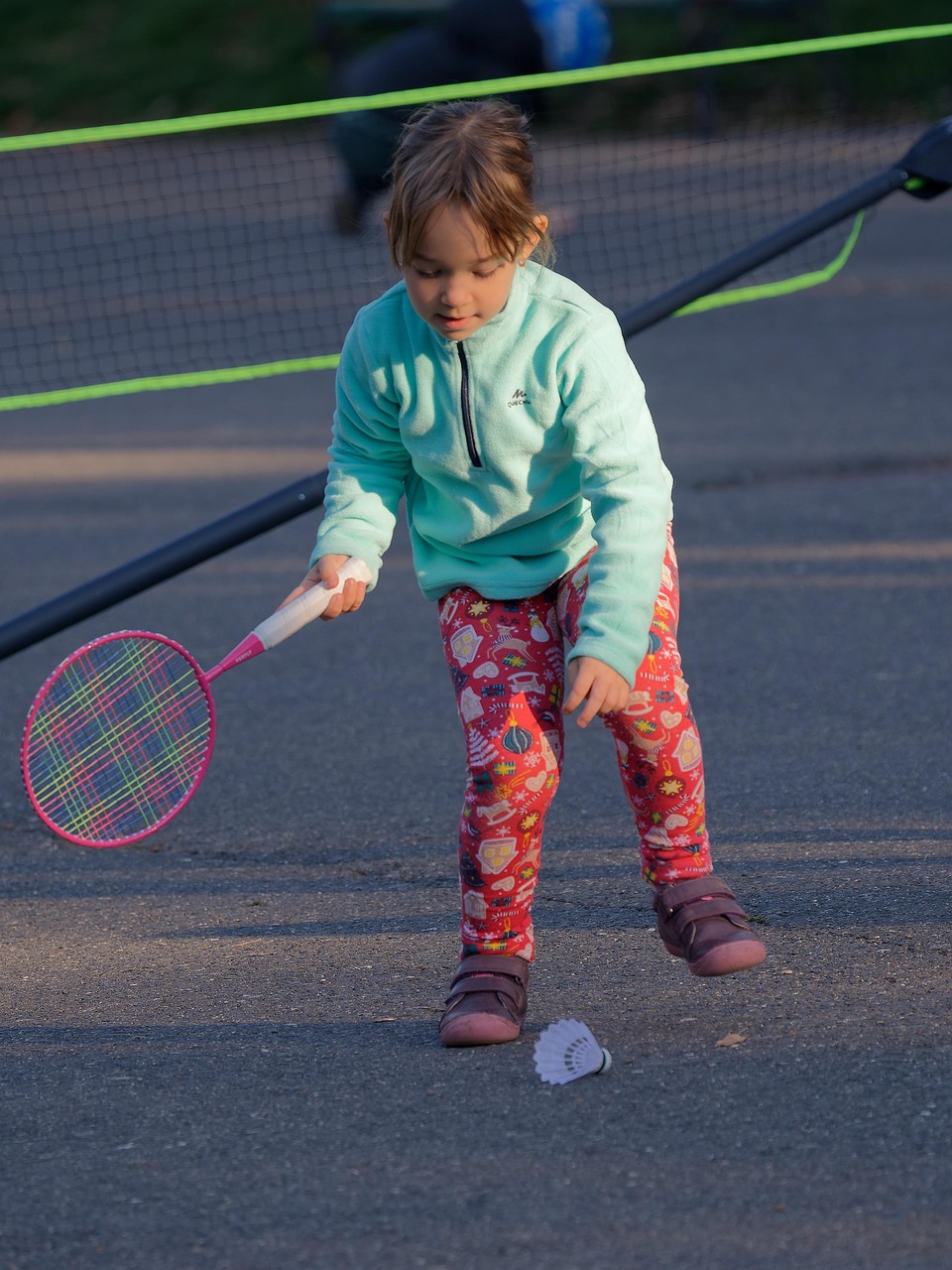
A PE class in late fall: rackets handed out from a mesh bag, shuttles flying in every direction, and one kid who suddenly can’t stop playing. A few months later that kid is at a club on Saturday mornings, doing footwork drills with ten others and asking when the next tournament is. That’s how youth badminton often starts. This guide is for parents and coaches: when kids can start, school and club programs, junior badminton tournaments and rankings, high school and college, staying healthy (eyes and growing joints especially), and the questions parents ask most.
For the big picture, start at our badminton hub. The rules page explains scoring, including the switch to 15-point games.
What age can kids start badminton?
Early, if it’s play. The BWF’s Shuttle Time schools program, which USA Badminton launched in the US in 2023, is built for children aged 5 to 15: nearly two dozen hour-long lesson plans that teachers can adapt, with free resources and training, and equipment such as rackets, shuttles and nets for programs that use the curriculum. Its motto is “Giving Every Child the Chance to Play for Life.” If your child’s school doesn’t offer it, a teacher or PE department can contact USA Badminton about a Shuttle Time course.
Competition starts later. USA Badminton’s youngest tournament age group is under-11, and its Junior Nationals advise that the event “should not be a player’s first tournament.” In between, most kids learn at a club: group classes, then a junior squad, then local tournaments. A backyard net is a great way to get the first thousand hits in.
Junior tournaments and age groups
USA Badminton junior events are open to current USAB members who meet the age rules. First-time players also send age-verification documents. Events are boys’ and girls’ singles, boys’ and girls’ doubles and mixed doubles, in five age groups based on age at the end of the calendar year (for the 2026 Junior Nationals, a player qualified if under the age limit on December 31, 2026):
| Age group | Born in (2026 season) |
|---|---|
| Under-11 | 2016 or 2017 |
| Under-13 | 2014, 2015 or later |
| Under-15 | 2012, 2013 or later |
| Under-17 | 2010, 2011 or later |
| Under-19 | 2008, 2009 or later |
Younger players may “play up.” At the 2026 Junior Nationals, each player could enter up to three events (one singles, one doubles, one mixed) spanning no more than two age groups, and points earned in an older group don’t count in the younger one. Matches were best of three games to 21; USA Badminton has proposed moving its junior events to the new 3×15 scoring for the 2026-27 season, so check each prospectus. Players who turn 18 before the end of a tournament must complete SafeSport training and a background check.
How junior rankings work
USA Badminton ranks juniors separately in singles, doubles and mixed doubles within each age group. Points depend on the finish and the level of the tournament. Under the USAB junior ranking-points table, for example, winning under-19 singles is worth 20,000 points at Junior Nationals, 10,000 at an Open Regional Championship (ORC) and 3,000 at an Open Local Championship (OLC); younger age groups earn smaller totals on the same pattern. Rankings decide seeding and, when an event is full, who gets in: the 2026 Junior Nationals used rankings as of June 1 to cap and seed events. In practice, a local tournament or two is the right first step, then regionals, then nationals.
Beyond the US, the top juniors play the BWF World Junior Championships, for players under 19 throughout the calendar year, with a mixed team event (the Suhandinata Cup) and individual titles.
High school and college
High school: badminton is a varsity sport in only some states. The NFHS counted 14,041 girls at 580 schools and 5,522 boys at 270 schools in 2024-25. California has the most programs; girls’ badminton is also played in Illinois, Arizona, New York, Minnesota and Maryland. If your school has a team, it’s an easy, affordable way to compete.
College: badminton isn’t an NCAA sport, so there are no NCAA badminton scholarships or recruiting calendar. Players keep competing through college club teams, which play regional leagues and a national intercollegiate championship, and through USA Badminton’s Collegiate Nationals. Our leagues and associations page has the details.
Keeping young players healthy
- Protect their eyes. The American Academy of Pediatrics and the American Academy of Ophthalmology rate badminton as a high-risk sport for eye injuries because of small, fast projectiles, and recommend eye protectors meeting ASTM F803 for racket sports. Ordinary glasses aren’t protective; a shuttle can shatter them. Doubles at the net is where kids get hit most easily.
- Watch the training load. A 2026 scoping review of ten studies found injuries are common in youth badminton, with reported injury prevalence of about 18% to 34% in national-level and elite juniors, and risk that may rise in mid-to-late adolescence and with more training. The AAP warns that early single-sport specialization and intense training can bring overuse injuries and burnout. Keep rest days and other sports.
- Warm up every time. Lunges, jumps and smashes load the knees, ankles, Achilles tendons and the hitting shoulder. A few minutes of easy movement, footwork and gradually harder hits before play is a habit worth building early.
- Sleep: the CDC recommends 9–12 hours a night for children 6–12 and 8–10 hours for teens.
- Head knocks: rare, but a racket to the head in doubles can happen. Follow the CDC’s HEADS UP advice: out for the day, and back only after a healthcare provider clears them.
Pain that lasts more than a few days, a swollen joint, or any eye injury needs a sports medicine doctor, physical therapist, athletic trainer or, for eyes, urgent eye care. More on our badminton injuries page.
Gear for young players
Kids need less than you think: court shoes, a light racket, shuttles and eye protection. For competitive juniors, Yonex makes the NanoFlare Junior, a light (4U) graphite racket with a flexible shaft, for which Yonex advises a low string tension of 17–22 lbs. For practice at home, Yonex Mavis 350 nylon shuttles last far longer than feather ones (about $23 for six on Amazon in October 2026), and a portable net like the Boulder Portable Net (14 feet wide, height adjustable up to 60 inches, about $67) sets up in the yard or driveway. Add Tourna Clear Eye Protection, polycarbonate eyewear the maker says meets ASTM F803 (about $17). The full list is on our badminton gear page.
Yonex NanoFlare Junior
- 4U, light
- Hi-flex graphite shaft
- Stringing 17-22 lbs (Yonex)
Yonex Mavis 350 Nylon Shuttles (6)
- Durable nylon skirt
- Cork base
- Tube of 6
Boulder Portable Badminton Net
- 14 ft wide
- Adjustable 34-60 in
- Tool-free setup, carry bag
Tourna Clear Eye Protection
- Polycarbonate wrap lens
- Meets ASTM F803 (maker)
- Anti-fog coating
Keep going: badminton training, nutrition for players and recovery. Racket-sport family? See our youth tennis guide too.
Parents’ questions about youth badminton
What age should my child start badminton?
Play-based badminton can start around 5: the BWF’s Shuttle Time program is designed for ages 5 to 15. Tournament play usually starts later; USA Badminton’s youngest age group is under-11.
How does my child enter a junior tournament?
Buy a USA Badminton membership through Club Locker, find an event on USAB’s junior tournament schedule, read the prospectus, and register online before the deadline. First-timers send age-verification documents. Start with a local tournament.
Should kids wear eye protection for badminton?
Pediatric and eye doctors’ groups rate badminton as high-risk for eye injuries and recommend ASTM F803 eye protectors for racket sports. Polycarbonate sports eyewear is inexpensive; regular glasses are not a substitute.
Are there badminton scholarships for college?
Not through the NCAA, because badminton isn’t an NCAA sport. Players continue in college club teams and USA Badminton’s Collegiate Nationals. Choose a college for its academics and ask its badminton club how often it practices and travels.
How much badminton is too much for a kid?
There’s no single number. Injury risk appears to climb in the teen years and with more training, and pediatricians warn against early specialization. Keep rest days, encourage other sports, and get pain that lasts checked by a professional.