This article contains affiliate links: if you buy through them we may earn a commission, at no extra cost to you. Learn more.
Six a.m., still dark, and a boxer is already three miles into roadwork, hood up, breath steaming. By evening he’ll be back in the gym: skipping rope to the buzz of the round timer, then the heavy bag, then the pads, where the coach calls combinations faster than he can think. That rhythm has barely changed in a hundred years, and for good reason. Boxing training has to build an engine that lasts every round, hands that are fast and sharp when you’re tired, legs that keep you out of trouble, and a body strong enough to take the work. This page breaks down how boxers train, from the first fitness class to an Olympic or pro fight camp, and how to manage the one part of training that carries real risk: sparring.

General information, not medical or coaching advice. Get a sports physical before you start (USA Boxing requires one every year), and train under a qualified coach. Back to the boxing hub.
What a bout demands
Under USA Boxing’s 2026 rules, elite and youth bouts are three rounds of three minutes; juniors box three two-minute rounds, and the youngest prep boxers three rounds of a minute and a half. Pro fights run up to 12 three-minute rounds with a minute of rest in between (California’s law, for example). A review of amateur boxing research found that top boxers combine a high level of aerobic fitness, to last and recover between rounds, with powerful anaerobic bursts and strength in both the upper and lower body. The International Society of Sports Nutrition (ISSN) notes that once a combat bout lasts more than about four minutes, the aerobic system can supply over 70% of the energy, while short, all-out efforts power each flurry. In a lab simulation of a three-round amateur bout, elite boxers’ average heart rate sat around 150 to 156 beats per minute and blood lactate rose every round.
So boxing training needs three things at once: a big aerobic base, the ability to repeat hard bursts, and power. Here’s how each piece fits.
Roadwork and conditioning
- Easy runs build the base. Classic roadwork is steady running at a pace where you could still talk. Many boxers run several mornings a week. A Polar H10 chest strap helps keep easy days truly easy.
- Intervals build round fitness. Hill sprints, bike intervals or shuttle runs that mirror the work-and-rest of rounds: hard for a set time, then a short break. Build up slowly; a sudden jump in load is a common route to injury, according to the IOC’s consensus statement on training load.
- Skipping rope every day. Rope work warms you up, trains footwork and rhythm, and builds calf endurance. A light speed rope like the WOD Nation adjusts to your height.
Bag work, pads and shadowboxing
Most gym sessions run on a round timer, often three-minute rounds with a minute off, so the body learns the rhythm of a bout.
- Shadowboxing in front of a mirror: technique, footwork and defense without impact. It’s where habits are made, so slow down and get it right.
- Heavy bag: power, combinations and conditioning. Always wrap your hands (a 180-inch wrap like the RDX is standard) and wear real bag gloves such as the Everlast Powerlock 2. Hand and wrist injuries are among the most common training injuries in boxing.
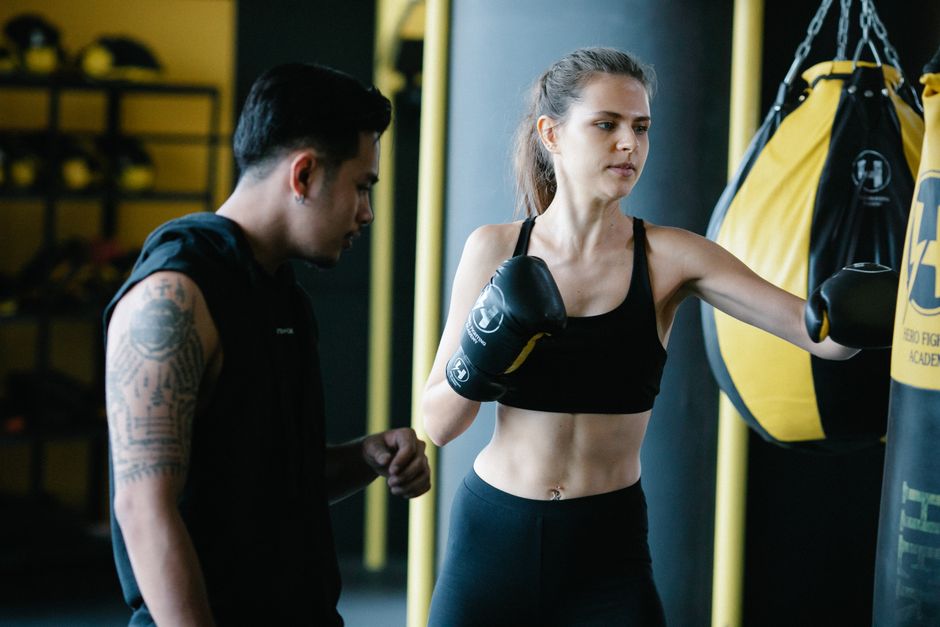
- Pad work (mitts) with a coach: timing, accuracy, defense and fast decisions under fatigue. It’s the closest thing to a fight without getting hit.
- Speed bag and double-end bag for hand speed, rhythm and accuracy.
Want to count your punches? Punch trackers that sit under your wraps measure count, speed and output per round; see our boxing wearables page.
Strength and power for boxers
The amateur boxing review calls muscle strength in the upper and lower limbs one of the keys to success, and says the dynamic nature of punches demands well-developed power. That doesn’t mean bodybuilding. Many boxers lift two or three times a week in the off-season and once or twice during a fight camp, with:
- Legs and hips (squats, deadlifts or trap-bar lifts, lunges): punches start from the ground.
- Power (jumps, medicine-ball throws and rotational throws): moving fast, not just strong.
- Upper back and shoulders (rows, pull-ups, band work for the rotator cuff) to balance thousands of punches. Resistance bands are a cheap way to do it at the gym or on the road; see our resistance bands guide.
- Neck and core for a strong base. Whether neck strength lowers concussion risk is still unproven, so think of it as general robustness, not protection.
For young boxers, the AAP says supervised, technique-first resistance training is safe and effective for children and teens. Light loads and good form first.
Sparring load: train the skill, limit the hits
Sparring teaches distance, timing and composure like nothing else. It’s also where boxers take most of their head impacts outside fights. In a study of 237 professional boxers, more sparring went with worse scores on thinking-speed and balance tests, and in the Professional Fighters Brain Health Study, more sparring rounds went with higher levels of a blood marker of nerve-cell damage. A small study of national-level boxers found that reaction time slowed by the third round of sparring during pre-competition training. So:
- Most sparring should be technical: controlled, light contact, working on one skill at a time.
- Hard sparring is a tool, not a habit. Save it for fight preparation, with a coach watching and a clear stop rule.
- Body-only and defense-only rounds build skills with fewer head shots.
- Headgear, mouthguard and padded sparring gloves, always. And no sparring with any concussion symptom. USA Boxing bars sparring during any medical restriction.
More on head safety and the rest periods after a knockout on our boxing injuries page.
A sample training week
Every coach builds it differently, and amateurs with jobs and school train less than full-time pros. A common shape for a competitive amateur:
- Monday: easy roadwork; evening rope, shadowboxing, bag and pads.
- Tuesday: technical sparring; strength session.
- Wednesday: intervals; light technique work.
- Thursday: easy roadwork; bag, pads, speed bag.
- Friday: sparring (harder only in fight camp); strength or power.
- Saturday: longer easy run or bike; mobility.
- Sunday: rest. The AAP recommends young athletes take at least one to two days a week off their main sport.
In the final week or two before a fight, many coaches cut volume and keep intensity so the boxer arrives fresh. Plan your weight early too: a fight camp is not the time for a crash diet. See our boxing nutrition page for safe weight management.
The mental game
Boxing is famously lonely: it’s you in the ring. Boxers train the mind the way they train the body. They visualize rounds, keep a pre-fight routine, use breathing to calm the nerves between rounds, and keep a simple game plan of two or three ideas. A sport psychologist or experienced coach can help, and our mental training tools guide covers apps and tools many athletes use.
Training gear we’d start with
Everlast Powerlock 2 Boxing Gloves
- Hook-and-loop closure
- Four layers of foam
- About $65
RDX Boxing Hand Wraps 180 in
- 4.5 m (180 in)
- Semi-elastic, thumb loop
- About $14
Polar H10 Heart Rate Sensor
- Chest strap ECG sensor
- Bluetooth + ANT+
- Up to 400 h battery
After hard weeks, our boxing recovery page covers sleep, food and tools. The same approach to building an engine shows up in wrestling training, another sport with rounds of all-out effort.
Boxing training: FAQs
How many times a week should a boxer spar?
There’s no official number. Studies link more sparring to worse thinking and balance scores in pros, so most sparring should be light and technical, hard sparring kept for fight camps, and none at all with concussion symptoms. Your coach should set the plan.
Is running necessary for boxing?
Boxing relies heavily on aerobic fitness; the ISSN notes the aerobic system can supply over 70% of the energy in bouts longer than about four minutes. Running is the classic way to build it, but cycling, rowing or swimming can do the job if running hurts.
Should boxers lift weights?
Yes. Research on amateur boxers links strength and power in both the upper and lower body to performance. Focus on legs, hips, power moves and the upper back, with good technique.
How long are amateur boxing rounds?
In USA Boxing, elite and youth bouts are three rounds of three minutes, juniors box three two-minute rounds, and the youngest boxers three rounds of a minute and a half. Local shows can use shorter rounds.
How long is a boxing fight camp?
There’s no standard length; it depends on the boxer, the level and how far they are from fight shape and fight weight. The principles stay the same: build up gradually, keep hard sparring limited, plan your weight early and ease off in the last week or two.