This article contains affiliate links: if you buy through them we may earn a commission, at no extra cost to you. Learn more.
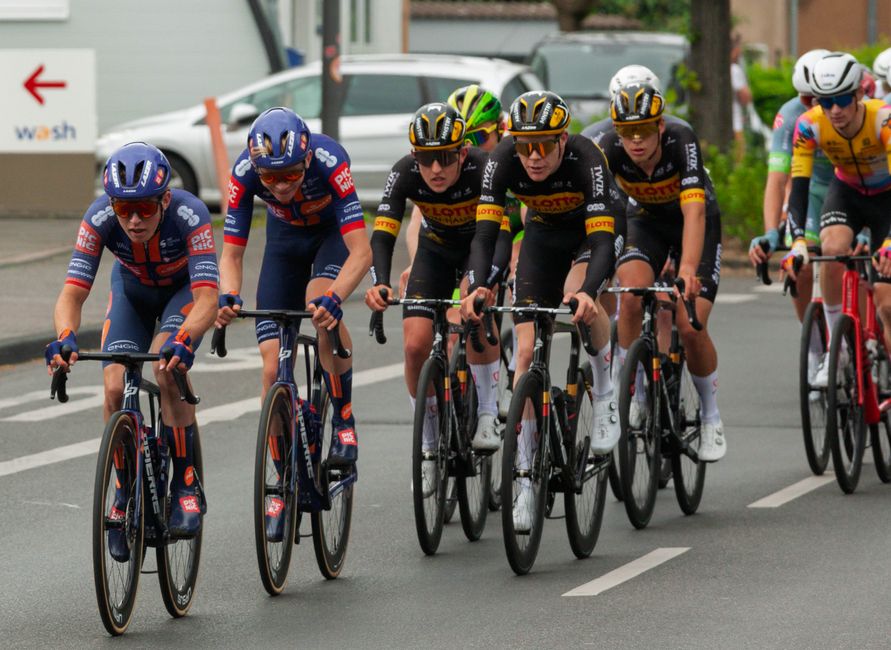
A 5:50 a.m. start in Emporia, Kansas, the elite field rolling out into the Flint Hills for 200 miles of gravel. A college team in matching kits warming up on rollers before a spring road race. A middle schooler lining up for her first NICA race while her parents stand at the feed zone with a bottle. And on TV, the peloton climbing Mont Ventoux in the Tour de France Femmes. Cycling has a lot of organizations and a lot of ways in. This guide to cycling leagues and associations explains who runs what, from the UCI and USA Cycling to the Grand Tours, NICA, collegiate racing, gravel and the Olympics and Paralympics, as of the 2026 season.
Back to our cycling hub for the overview, or see the rules each kind of race follows.
The governing bodies
UCI (Union Cycliste Internationale)
The UCI is cycling’s world governing body. It was founded in Paris in 1900 by the national cycling bodies of Belgium, France, Italy, Switzerland and the United States, and is now based in Aigle, Switzerland. It says it represents 197 national federations in five continental confederations, more than 1,500 professional riders and about a million licensed competitors. The UCI runs eight disciplines: road, track, mountain bike, BMX racing, BMX freestyle, cyclo-cross, trials and indoor cycling, five of them on the Olympic program and two at the Paralympics. It also runs gravel and para-cycling world events, writes the rules for pro racing and ranks riders and teams.
USA Cycling
USA Cycling is the national governing body for bike racing in the US, based in Colorado Springs and a member of the UCI. It sanctions road, track, mountain bike, cyclo-cross, gravel and BMX racing, plus BMX freestyle and esports, picks the national teams and runs national championships. Racing is open to ages 6 to “99+”, and members with a race license can find more than 1,500 events a year in its event finder. There are two main licenses: a domestic race license and a UCI international license for races abroad. You can also buy a one-day license to try a race; USA Cycling memberships include medical coverage for race day.
USA BMX
USA BMX is the sanctioning body for BMX racing in the US, with local tracks across the country. It offers a free one-day trial and a 60-day membership so families can try the sport before committing. Riders race in classes by age and skill, starting as novices.
Pro road racing and the Grand Tours
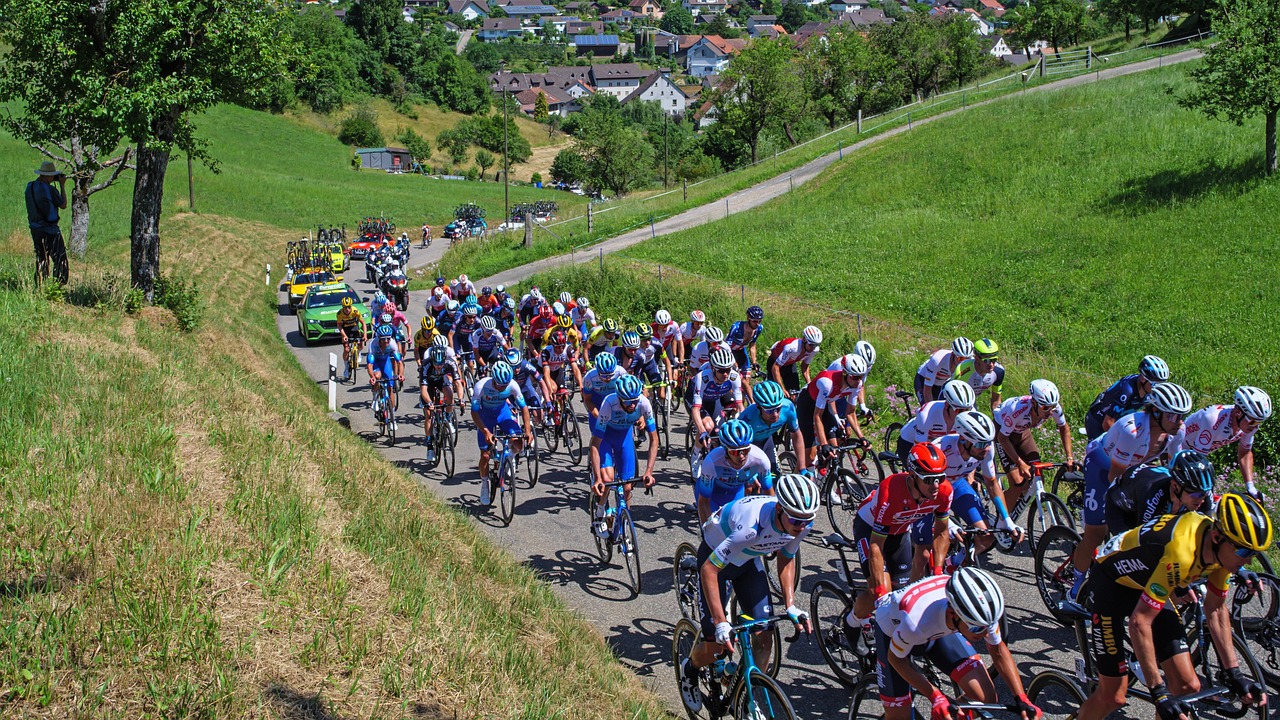
Top-level men’s and women’s road racing is organized by the UCI into the WorldTour, a season of one-day classics and stage races contested by pro teams. The three biggest races are the Grand Tours, each three weeks long with 21 stages and two rest days:
| Race | When | 2026 edition |
|---|---|---|
| Giro d’Italia | May | May 8 (Nesebar, Bulgaria) to May 31 (Rome); 3,459 km and about 49,150 m of climbing |
| Tour de France | July | 3,333 km and about 54,450 m of climbing; first held in 1903 |
| Vuelta a España | August–September | 3,275 km and about 58,156 m of climbing, the hilliest of the three |
Women’s Grand Tours have grown fast. The Tour de France Femmes began in 2022; the 2026 edition ran August 1–9 over nine stages and 1,174.7 km, from Lausanne, Switzerland, to Nice, with a summit finish on Mont Ventoux. The Giro d’Italia Women and La Vuelta Femenina complete the trio. At the Tour, teams of eight riders chase four jerseys: yellow (overall), green (points), polka dot (climbers) and white (best young rider).
Gravel events
Gravel is cycling’s fastest-growing scene, and most of its big events let amateurs line up with pros. Unbound Gravel in Emporia, Kansas, is the best known: its 200-mile race, on rural roads through the Flint Hills, held its 20th-anniversary edition May 28–31, 2026, and many riders treat it as the unofficial world championship. The official one is the UCI Gravel World Championships, held since 2022; the 2026 worlds are set for Nannup, Australia, on October 10–11. Riders qualify through the UCI Gravel World Series, a record 45 events in 32 countries in 2026, where the top 25% of each age group earn a spot. Long gravel days need a plan for food and water; our race day page covers fueling.
NICA: high school and middle school mountain biking
The National Interscholastic Cycling Association started in Berkeley, California, in 2009, and uses mountain biking “as a tool to build strong minds, bodies, character, and community.” It says it now has 33 leagues (in the US, plus Australia), more than 25,000 student-athletes, 1,055 teams and 15,000 adult coaches. Leagues must be open to high school students (grades 9–12) from public, private and home schools, and may include middle schoolers (grades 6–8); riders race against their own grade group, and small schools can join “composite” teams. Fall leagues start racing in August; spring leagues in late January or February.
Safety is built in. Coaches earn NICA licenses at three levels, and a team’s required level rises over its first years. Student-athletes must wear a helmet any time they’re on a bike. NICA also tracks injuries nationwide; in its first year of data (18,576 student-athletes), 3% had an injury event, and concussion or possible concussion was the most common injury. Our youth cycling guide has more for parents.
Collegiate cycling
College cycling isn’t an NCAA sport. It’s run by USA Cycling’s collegiate program (the National Collegiate Cycling Association), and riders need a USA Cycling collegiate license and full-time student status. Racing happens in 11 regional conferences, with:
- Club Division I and II: student clubs, split by school size (Division I for schools of 15,000 students or more).
- Varsity: school-run programs that can offer athletic scholarships.
- Seasons: track in summer through September, mountain bike August to October, cyclo-cross November to January and road February to May, with national championships in each.
Starting a club is simple: USA Cycling lets new clubs register free for their first year. Collegiate road, cyclo-cross and mountain bike races ban aero gear such as disc wheels and tri-bars, which keeps costs down for students.
The Olympics and Paralympics
Cycling has been on every modern Olympic program since 1896. Paris 2024 had 22 cycling events in five disciplines, with equal events for men and women, and LA 2028 keeps the same 22: road race and time trial, six track events, cross-country mountain bike, BMX racing and BMX freestyle park. Cycling runs July 15–30, 2028, with road racing from Venice Beach through Los Angeles streets, track at the Carson velodrome, mountain biking at Industry Hills and BMX in the Valley.
Para cycling joined the Paralympics in 1984 on the road and added track at Atlanta 1996. Riders compete in 15 sport classes: handcycles (H1–H5), tricycles (T1–T2), bicycles (C1–C5) and tandems for visually impaired riders with a sighted pilot (B). The LA28 Paralympic Games run August 15–27, 2028.
Clubs: where most riders start
Most riders find the sport through a local club or bike shop ride. Clubs run group rides at different paces, skills clinics, races and charity rides, and many are USA Cycling clubs whose members race together. Wherever you start, you’ll need the basics: a helmet that meets the CPSC standard, like the Giro Register MIPS (about $40 to $85 on Amazon in October 2026), something to drink on long days, like Skratch Labs Hydration Sport Drink Mix (NSF Certified for Sport, the maker says; about $24 for 20 servings), and maybe a Theragun Mini (about $220) for tight legs after a race weekend. See our cycling gear page and best electrolyte powders.
Giro Register MIPS Helmet
- MIPS rotational liner
- Universal adult fit (54-61 cm)
- Meets CPSC standard
Skratch Labs Hydration Sport Drink Mix
- 400 mg sodium per serving
- NSF Certified for Sport (maker)
- 20 or 60 servings
Also on our cycling pages: training and injuries. If your family follows other sports, our soccer leagues guide works the same way.
Cycling leagues and associations questions
What is the governing body of cycling?
The UCI (Union Cycliste Internationale) governs cycling worldwide, and USA Cycling is the national governing body in the United States. USA BMX sanctions BMX racing in the US, and NICA runs middle and high school mountain biking.
What are the three Grand Tours?
The Giro d’Italia (May), the Tour de France (July) and the Vuelta a España (August–September). Each lasts three weeks with 21 stages. The women’s versions are the Giro d’Italia Women, the Tour de France Femmes and La Vuelta Femenina.
Is college cycling an NCAA sport?
No. It’s run by USA Cycling’s collegiate program, with club divisions and a varsity division. Varsity programs can offer athletic scholarships; you need to be a full-time student with a collegiate license to race.
How do I start racing bikes?
Find a local race in USA Cycling’s event finder, buy a one-day license or an annual race license, and enter the Novice or Category 5 field. USA Cycling suggests focusing on what you can control: arrive early, warm up, and don’t try new foods on race day.
What is NICA?
The National Interscholastic Cycling Association, which runs mountain bike racing for high school students and, in many leagues, middle schoolers. It has more than 25,000 student-athletes on over 1,000 teams, with trained volunteer coaches and helmets required at all times.