This article contains affiliate links: if you buy through them we may earn a commission, at no extra cost to you. Learn more.
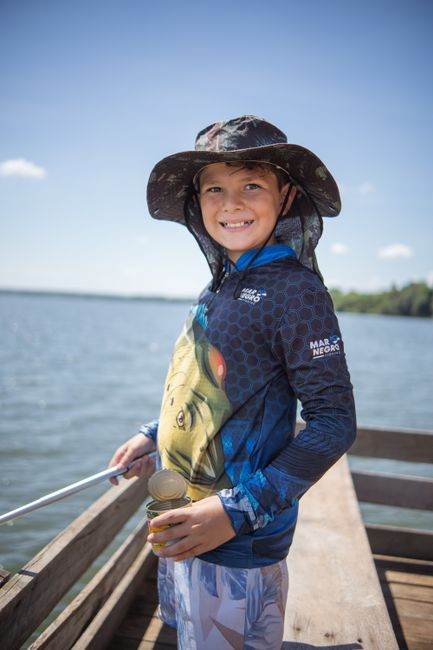
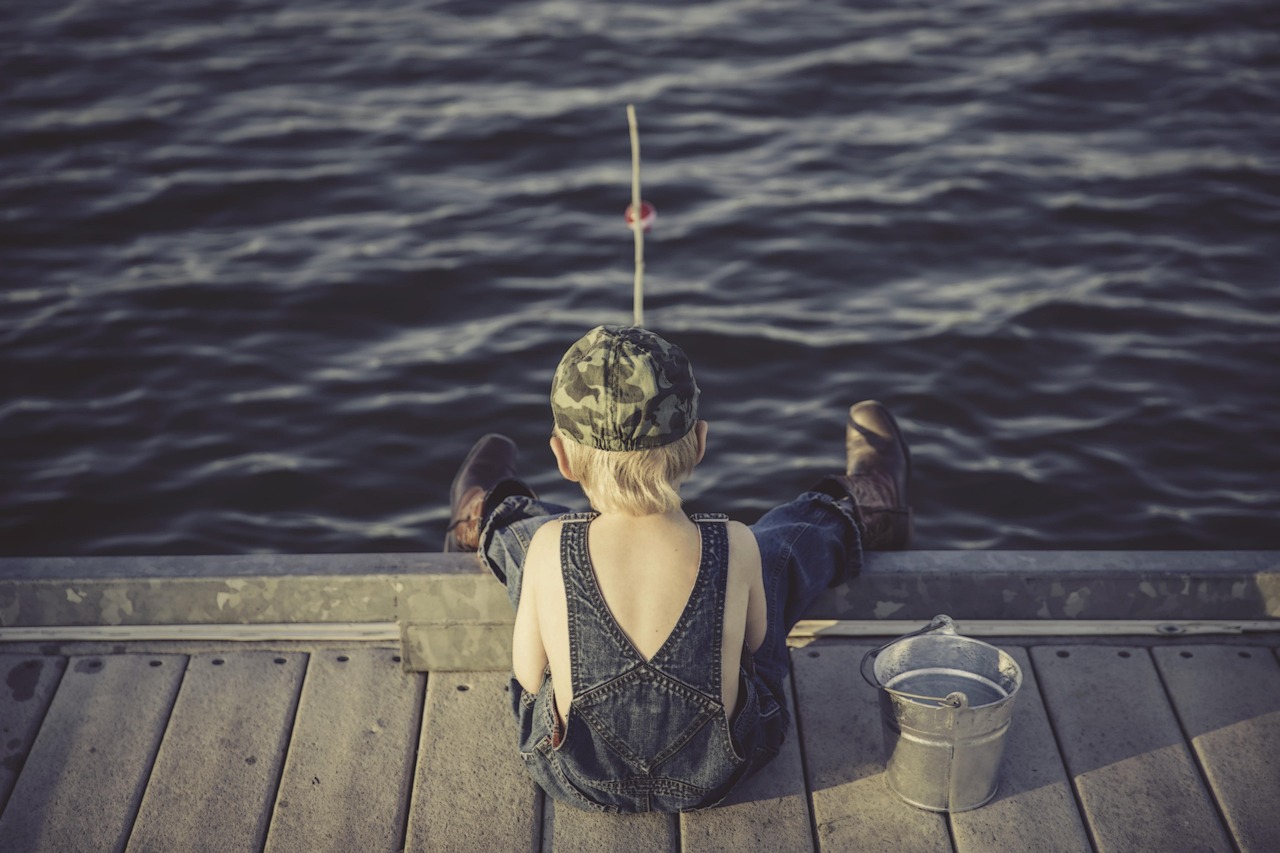
A five-year-old in a too-big life jacket on the end of a dock, gripping a little rod with both hands, eyes locked on a bobber. It dips, she yanks, and a bluegill the size of her palm flips onto the boards. She squeals, insists on touching it, and asks to do it again. That’s the whole magic of fishing with kids, and for a lot of anglers it’s where a lifelong sport begins. This page is for parents, grandparents and coaches: when kids can start, the safety basics (life jackets, hooks, sun), simple gear, keeping it fun, and where young anglers go next, from kids’ derbies to high school bass teams.
When can kids start fishing?
There’s no minimum age. Toddlers can “help” reel in on a dock with an adult right beside them, preschoolers can hold their own short rod and watch a bobber, and by the early school years many kids can bait a hook and cast with some coaching. The limits are attention span and water safety, not age. In many states, kids under 16 don’t need a fishing license (California, Colorado and New York all set the cutoff at 16), but the adults helping them usually do, and every state has its own rule, so check your state fish and wildlife agency. Many states also hold free fishing days and kids’ fishing events at stocked ponds, which are perfect first trips.
Water safety comes first
Drowning is quick and often silent. The CDC notes that for children aged 5 to 14, more than 40% of drowning deaths happen in natural water such as lakes, rivers and ponds, exactly where families fish. The American Academy of Pediatrics’ 2026 drowning prevention policy recommends layers of protection: Coast Guard-approved life jackets for young children near water, for weak or non-swimmers and for anyone on a boat; close, arm’s-length “touch supervision” of young and weak swimmers; swim lessons; and caregivers who know CPR.
- On a boat: federal rules require children under 13 to wear a Coast Guard-approved life jacket while the boat is underway, unless they’re below deck or in an enclosed cabin (your state’s rule applies if it differs).
- On docks, piers and banks: put the life jacket on young kids there too. Docks are where little ones fall in.
- Fit by weight: child life jackets are approved for weight ranges printed on the label (for example under 30 lb, 30 to 50 lb, or 50 to 90 lb). The Coast Guard says a snug but not tight fit matters most. The Stearns Original Puddle Jumper (about $30) is Coast Guard approved for kids 30 to 50 lb. Kids need foam life jackets: inflatable ones aren’t approved for children under 16.
- Model it: kids copy adults. Wear yours too.
Hooks, eyes and other kid injuries
Fishhooks are designed to grab, and kids’ faces are at casting height. A study of US emergency room data from 2013 to 2022 estimated about 37,500 fishing-related head and neck injuries in children over the decade; hooks caused 84.6% of them, most often in the face, then the ears and eyelids. The average child was 9.5, and the youngest kids were more often hurt by the rod itself, usually in the face or mouth. Another study found about 42% of fishing-related eye injuries seen in emergency rooms from 2014 to 2023 were in children, and the authors recommend protective eyewear.
- Make a casting zone: teach “look behind you, then cast,” and keep other kids out of the swing area.
- Glasses on: sunglasses or kids’ safety glasses for everyone, every trip.
- Pinch the barbs: crimping the barb flat with pliers makes hooks easier to remove from fish and people.
- Adults handle sharp stuff for little kids: baiting, unhooking fish, cutting line. Spiny fins and catfish spines can poke too.
- If a hook goes in: MedlinePlus says don’t try to remove a hook in or near the eye, in a joint or deep in muscle; get medical care. Clean any puncture well and check that your child’s tetanus shots are up to date.
Our fishing injuries page covers first aid in more detail. This is general information, not medical advice; if your child is hurt, see your pediatrician or urgent care.
Sun, heat and bugs
Water reflects sun, and kids burn fast. The American Academy of Dermatology recommends a broad-spectrum, water-resistant sunscreen of SPF 30 or higher, reapplied every two hours and after swimming or sweating, and the CDC adds shade, a brimmed hat and UV-blocking sunglasses, especially between 10 a.m. and 4 p.m. A mineral sunscreen like Badger Sport Mineral SPF 40 (about $18, zinc oxide, water resistant for 80 minutes) is easy on kids’ skin, and a long-sleeve sun shirt means less to reapply. Bring more water and snacks than you think you need, and pack bug spray for evenings.
Simple gear that fits kids
Prices change often. The prices below are what we saw at the maker or a major retailer in October 2026; check the current price before you buy.
Kids don’t need fancy tackle. The U.S. Fish and Wildlife Service’s beginner kit is a rod and reel, 4- to 12-pound monofilament, a few split-shot weights, size 6 to 10 hooks, a bobber and worms. Two reel types work for kids:
- Spincast (push-button) reels are the easiest for young kids: press the button, cast, let go. The Zebco 33 combo (about $50) has a 5 ft 6 in fiberglass rod and comes pre-spooled with 10 lb line.
- Small spinning combos cast farther and tangle less once a child can manage the bail, usually older kids. The Ugly Stik GX2 Youth spinning combo (about $60) has a 5 ft 6 in, 2-piece rod rated for 6 to 12 lb line and a size 30 reel.
Skip the cartoon toy rods with flimsy reels if your child is ready to really fish; they tangle and frustrate. Add a small tackle box, a pair of pliers, a towel, and a bucket for looking at fish before you let them go. Full adult gear advice is on our fishing gear page.
Ugly Stik GX2 Youth Spinning Combo
- 5 ft 6 in, 2-piece rod
- Size 30 spinning reel
- 6 to 12 lb line rating
Zebco 33 Spincast Combo
- Push-button spincast reel
- 5 ft 6 in fiberglass rod
- Pre-spooled 10 lb line
Stearns Original Puddle Jumper
- USCG approved Type V/III
- For kids 30 to 50 lb
- Soft woven polyester
Badger Sport Mineral Sunscreen SPF 40
- Non-nano zinc oxide
- 80 min water resistant
- 4 ingredients
Keep it fun (so they want to go back)
- Go where the bites are. Sunfish, bluegill and perch in a stocked pond beat hours waiting for one trophy bass. Action is everything.
- Short trips. An hour or two is plenty for young kids. Leave while they’re still having fun.
- Let them do it. Let them reel in, even if you hooked the fish. Tangles are part of it.
- Make the fish the star. Take a photo, look at the colors and fins, and release it gently with wet hands. It’s a great first lesson in respecting nature.
- Snacks and breaks. Skipping rocks, spotting turtles and eating sandwiches all count as fishing.
Planning to cook what you catch? The EPA and FDA advise children, and anyone who is or may become pregnant or is breastfeeding, to pay special attention to fish advisories, which states issue for locally caught fish. Check your state’s advisory for the water you fish. Our licenses and regulations page explains limits and catch-and-release.
From the dock to a fishing team
Kids who get hooked have real places to go. Local clubs, Trout Unlimited chapters and state agencies run youth clinics and derbies. For competition, the Bassmaster Junior Series is for students in grades 2 through 8 fishing with official junior clubs, and the Bassmaster High School Series and Major League Fishing’s Abu Garcia High School Fishing (through Student Angler Federation clubs) take over in high school. In several states, including Illinois, Kentucky, Tennessee, Georgia, Louisiana and Mississippi, bass fishing is a sanctioned high school sport. In these events an adult boat captain drives the boat but doesn’t fish. Some colleges even offer fishing scholarships. See our tournaments and organizations page for the full picture.
Young tournament anglers are athletes: long hot days on the water call for real fueling and hydration (see fishing day and tournament day), and a little shoulder and core work helps with thousands of casts. For general youth sports advice, our youth soccer page covers sleep, overuse and avoiding early specialization.
Parents’ questions about fishing with kids
What age can kids start fishing?
Any age, with close supervision and a life jacket near water. Preschoolers can watch a bobber and reel in with help; most kids can cast a push-button spincast reel on their own in the early school years.
Does my child need a fishing license?
Usually not until 16 in many states, including California, Colorado and New York, but the age varies, so check your state fish and wildlife agency. The adults fishing with them generally need a license.
Does my child need to wear a life jacket while fishing?
On a moving boat, federal rules require it for children under 13 (state rules may differ). On docks and banks it isn’t always the law, but the AAP recommends Coast Guard-approved life jackets for young children near water. Choose one approved for your child’s weight.
What is the best fishing rod for a kid?
For young kids, a push-button spincast combo around 5 ft such as the Zebco 33. Older kids who can manage a bail do well with a short spinning combo like the Ugly Stik GX2 Youth. Real, simple combos beat toy rods.
What should I do if my child gets a fishhook stuck?
Stay calm and keep them still. If the hook is in or near the eye, in a joint or deep, don’t pull it out; go to urgent care or the emergency room. For anything else, many parents let urgent care remove it. Clean the area and make sure tetanus shots are current.
The best fishing trip with a kid isn’t the one with the biggest fish; it’s the one they talk about all week. Keep it safe, keep it short, and let them reel. Back to the fishing hub, or see fishing gear and licenses and regulations.