This article contains affiliate links: if you buy through them we may earn a commission, at no extra cost to you. Learn more.
A Sunday morning at the lake. Dad steadies a tandem kayak at the dock while a seven-year-old, buckled into a bright life jacket, climbs into the front seat with a paddle almost as long as she is tall. Twenty minutes later she’s spotted a turtle, splashed her brother’s sit-on-top and announced that she wants her own kayak. That’s how most paddlers start. Kayaking with kids can be one of the best family habits there is, and it’s built around one thing first: a life jacket that fits and stays on.
This page is for parents and young paddlers: first trips, life jacket rules and sizing, swimming, lessons and youth programs, and the health basics. For the big picture of the sport, start at our kayaking hub.
How kids usually start
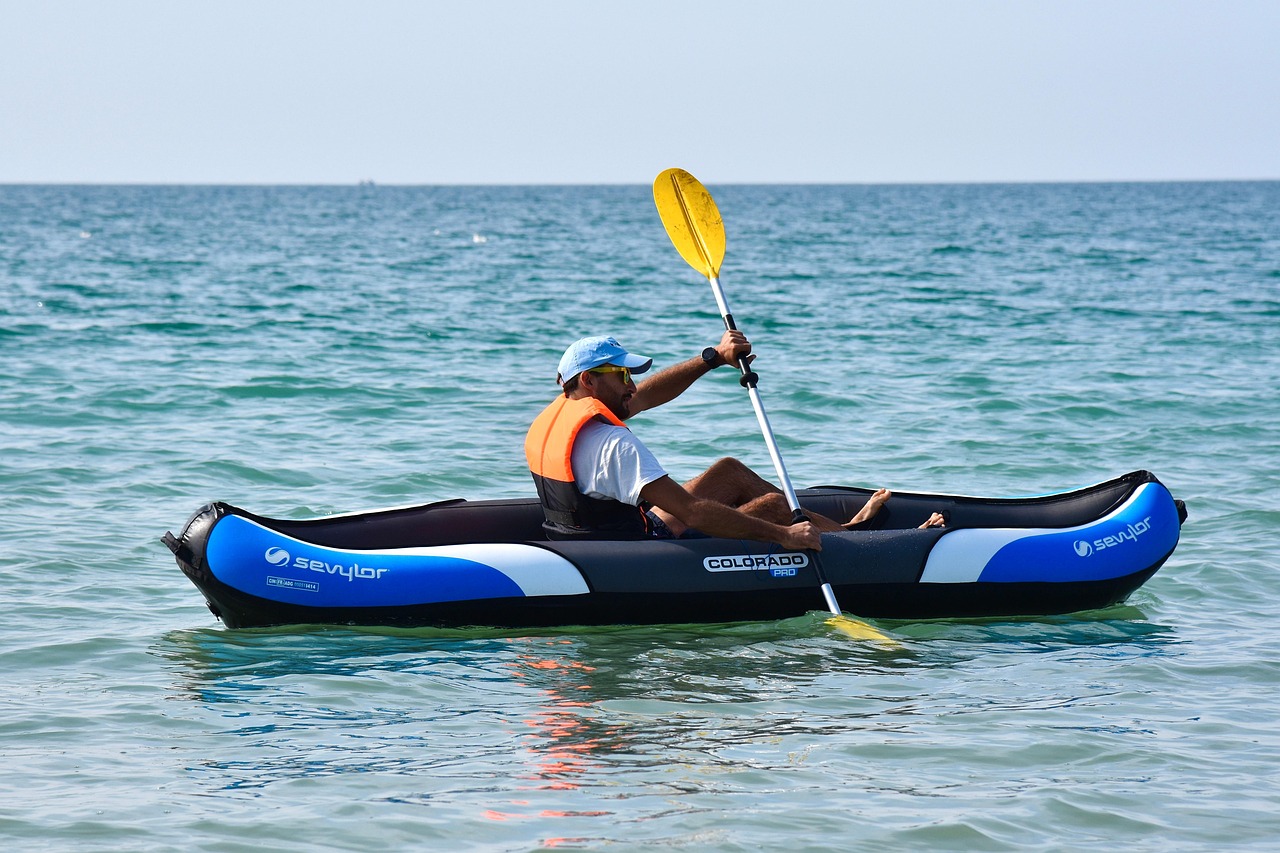
- As a passenger: the ACA’s beginner guide notes that tandem kayaks are useful for paddling with a child. A young child in the front of a tandem gets the fun without having to steer, while the adult in back sets the course. (Families who’d rather share an open boat can see our canoeing with kids page.)
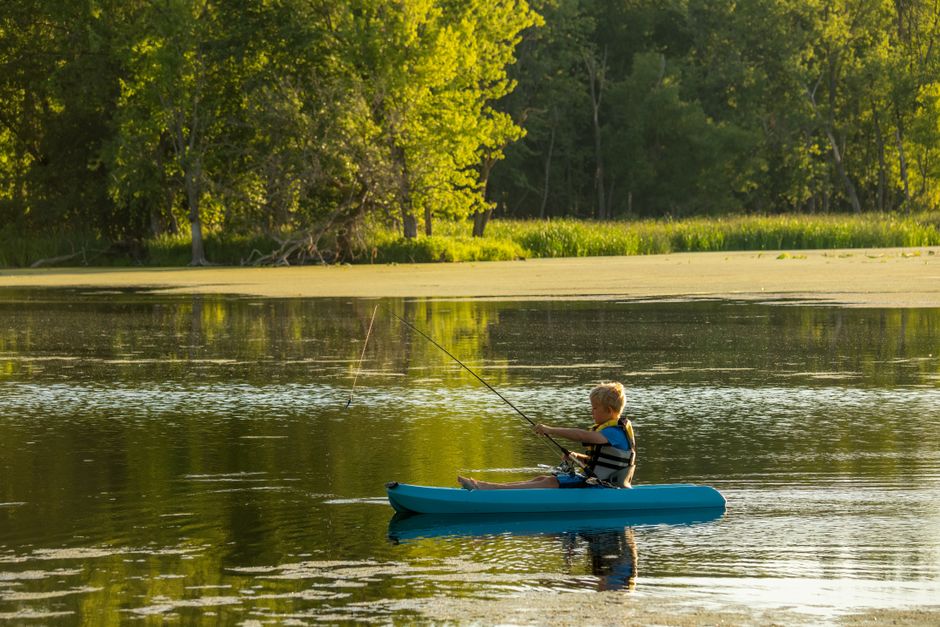
- Their own little boat: youth sit-on-tops are short, stable and light. The Lifetime Dash 66, for example, is 6 feet 6 inches long, holds up to 150 pounds and is made for ages 5 and older with adult supervision. A sit-on-top is easy for a child to climb back onto after a tip.
- Lessons and camps: ACA-certified instructors teach youth courses and camps, and the ACA’s Kids Go Paddling booklet teaches strokes, safety and games.
- Teens and racing: clubs run junior slalom K1 and sprint kayak programs, and the ACA selects junior and U23 national teams each year. Riversport in Oklahoma City, the LA28 slalom and kayak cross venue, runs youth slalom programs.
Sit-on-top or sit-inside for a child?
For most kids, start on a sit-on-top. The ACA calls sit-on-tops especially suitable for beginners because after a tip you simply climb back on, with no cockpit to get out of. A sit-inside kayak keeps a child warmer and drier, but before they use one alone they need to practice a wet exit, sliding out of the cockpit upside down, with an adult standing right beside the boat. Skip the spray skirt until a child can release it confidently every time.
Life jackets for kids: the rules and the fit
In 2024 the Coast Guard counted 89 kayak deaths across all ages, and 77 were drownings; of those 77 kayakers, 60 weren’t wearing a life jacket. For kids, there’s no debate:
- The law: children under 13 must wear a Coast Guard-approved life jacket while the boat is underway, unless your state has its own rule, and some states are stricter. Every person aboard needs one that fits.
- Size by weight: kids’ life jackets come in weight ranges, typically under 30 pounds (infant), 30 to 50 pounds (child) and 50 to 90 pounds (youth). The Coast Guard says fit, “snug but not tight,” is the most important thing. Never put a child in an adult jacket.
- The fit check: zip it, buckle it, tighten it, then lift gently at the shoulders. The ACA says it should stay secure on the body; if it rides up over the chin or ears, it’s too big or too loose.
- Foam, not inflatable: the Coast Guard doesn’t recommend inflatable life jackets for anyone under 16 or for non-swimmers.
- Wear it, don’t stow it: as the ACA puts it, putting a life jacket on in the water after a capsize is extremely difficult. Have kids wear theirs on the dock, too.
A strong swimmer still needs one: currents, cold water and a bump on the head can overwhelm anyone. The ACA has a whole video on exactly that question for parents.
Swimming and drowning prevention
The CDC reports that drowning is the leading cause of death for children ages 1 to 4, and that formal swimming lessons can reduce drowning risk. The American Academy of Pediatrics’ 2026 drowning-prevention policy recommends swim lessons starting as early as age 1, layers of protection, and life jackets for boating, and warns that teens often overestimate their swimming skills. Before your child kayaks on their own, practice in warm, shallow water: tipping the kayak over on purpose, getting out (a “wet exit” from a sit-inside kayak), and climbing back on. Our youth swimming page covers lessons in more depth.
Lessons and youth programs
The ACA’s Kids Go Paddling booklet teaches young paddlers the L.I.F.E.R. principle: Life jacket, Immersion, File a float plan, Evaluate your venue and Return safely. When you look at a program, ask:
- Are the instructors certified? Look for current ACA certification for the boat and water the class uses.
- How big are the groups? The ACA’s beginner guide describes small groups, five or fewer boats with one or two instructors, as giving both safety and individual attention.
- Is it built for kids? The same guide, quoting the book Paddling with Kids, says kids are hands-on learners and that a child’s age times two gives a rough idea of their attention span in minutes, so a class for 10-year-olds should change activities about every 20 minutes. Lots of praise, short talks, more paddling.
- Is there a swim check and a capsize drill? Good programs practice tipping over early, in a controlled way.
Choosing the water and the day
For the first trips, pick calm, protected water close to shore: a small lake or a slow river section with an easy take-out. Check the forecast and the wind, and plan a short paddle with a fun stop. Dress for the water temperature, not the air: the National Weather Service calls water of 70°F or lower “cold water,” and a sudden plunge can make anyone gasp. On rivers, teach kids early that trees in the water (strainers) and low-head dams are no-go zones. American Whitewater rates rivers from Class I to VI; family trips belong on calm water and Class I, and anything harder needs whitewater training and gear. Our paddling rules and water safety page explains the classes.
Health basics for young paddlers
- Sun: UV reflects off the water. The American Academy of Dermatology recommends broad-spectrum, water-resistant SPF 30 or higher, reapplied every two hours and after swimming, plus a hat and a long-sleeve top.
- Heads and helmets: on whitewater and in slalom races, helmets are required. If a child hits their head, follow the CDC’s HEADS UP rule, “When in doubt, sit them out”: off the water for the day and until a health care provider clears them. A worsening headache, repeated vomiting or unusual drowsiness means emergency care.
- Shoulders and backs: in a 2025 study of elite teenage flatwater kayakers, the lower back and then the shoulder were the most injured sites. Young racers should build training gradually, have at least a day off each week, and see a sports medicine doctor, physical therapist or athletic trainer for pain that lasts. More on our kayaking injuries page.
- Food and water: pack snacks and water in a dry bag. Hungry, cold kids stop having fun fast.
Gear for kids
Prices change often. The prices below are what we saw at the maker or a major retailer in October 2026; check the current price before you buy.
Buy the life jacket first and buy it to fit now, not to grow into. For younger kids, the NRS Crew Child (about $60) is Coast Guard and Transport Canada approved for 33 to 55 pounds. For bigger kids, the Stearns Youth Life Jacket (about $48) is a Coast Guard-approved Type III for 50 to 90 pounds, and the NRS Vista Youth (about $95) is a lighter paddling cut for the same range, with 11.5 pounds of flotation. A first boat like the Lifetime Dash 66 (about $270) comes with a paddle and has a swim-up deck with hand grips for climbing back on. Teens who outgrow it may like an adjustable paddle sized for them, such as the Accent Youth Wahoo (about $110, 190 to 210 cm). Adult paddles and helmets are on our kayaking gear page.
NRS Crew Child Life Jacket
- USCG and Transport Canada approved
- Foam flotation
- 200 denier nylon shell
Stearns Youth Life Jacket, 50-90 lb
- USCG-approved Type III
- Fits 50-90 lb
- Closed sides, three buckles
NRS Vista Youth Life Jacket
- Type III, 50-90 lb
- 11.5 lb flotation
- Front zip, six adjustment points
Lifetime Dash 66 Youth Kayak
- 6 ft 6 in sit-on-top
- Ages 5+, up to 150 lb
- Paddle included
Parents’ FAQs
What age can kids start kayaking?
Young children can ride as passengers in a tandem kayak once they have a life jacket that fits their weight. Youth kayaks such as the Lifetime Dash 66 are made for ages 5 and up with adult supervision. Comfort in the water and a well-fitted life jacket matter more than a birthday.
Does my child have to wear a life jacket in a kayak?
Yes. Federal rules require children under 13 to wear a Coast Guard-approved life jacket while the boat is underway, unless your state sets its own rule. Some states require everyone to wear one. Choose one for your child’s weight and check the fit every time.
How do I know a kids’ life jacket fits?
Check the label for the weight range, then zip and buckle it and tighten the straps. Lift gently at the shoulders: it should stay put and not ride up over the chin or ears. It should feel snug but not tight.
Does a child who can swim still need a life jacket?
Yes. Capsizes happen fast, cold water causes a gasp reflex, and currents are stronger than they look. The law for under-13s doesn’t depend on swimming ability, and the Coast Guard’s numbers show most paddlers who drown weren’t wearing one.
Should my child take kayaking lessons?
Lessons are the fastest, safest way to learn strokes, how to tip over and get back on, and how to read the water. Look for ACA-certified instructors, small groups, a swim check and plenty of time on the water.
Start small, keep it fun and make the life jacket non-negotiable, and kayaking can become a family habit that lasts. Next: kayaking gear, paddling rules and water safety, kayaking organizations, or compare with our youth sailing page.