This article contains affiliate links: if you buy through them we may earn a commission, at no extra cost to you. Learn more.
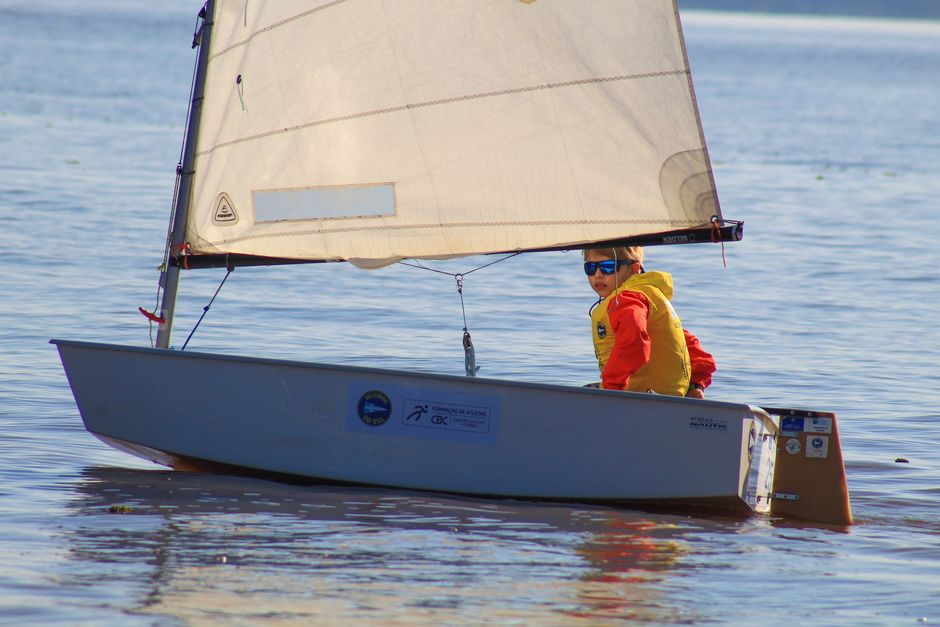
Day one of summer sailing camp. Before anyone touches a boat, the kids jump off the dock for a swim check, then line up while an instructor tugs on every life jacket shoulder to make sure it fits. By the afternoon they’re tipping Optis over on purpose, climbing onto the centerboard and pulling them back up, laughing the whole time. By Friday some of them are sailing alone for the first time. Youth sailing is one of the best things a kid who loves the water can do, and it’s built around safety from the first hour. This page is for parents and young sailors: ages and boats, what programs require, life jackets, and the health basics.
For the big picture of the sport, start at our sailing hub.
Ages and boats: how kids progress
- First steps (about 5 to 8): some community centers run intro programs for younger kids in stable boats or small keelboats with an instructor aboard. Charleston Community Sailing’s “Guppy” program, for example, starts at age 5.
- The Opti (about 8 to 15): the Optimist, or “Opti,” is a small, single-handed pram sailed by kids worldwide. Racers can compete in it until the end of the calendar year they turn 15, so January birthdays get almost a full extra year.
- Two-person dinghies (about 12 to 18): the Club 420 is the backbone of many local junior, high school and college programs: simple enough for beginners and challenging enough for champions.
- Faster boats and boards: US Sailing’s Youth Performance Pathway moves racers from club boats to faster, more technical boats and boards, and then to Olympic classes such as the ILCA, 49er, windsurf foils and foiling kites.
Not every kid needs to race. Plenty of junior programs mix racing with adventure sailing, keelboat days, paddleboarding and seamanship. Ask what a typical week looks like.
What a learn-to-sail program covers
US Sailing’s sample beginner syllabus shows how seriously the first day is taken: a swim test, life jacket inspection and sizing, and capsize recovery lessons and practice all happen in the first class, before knots and rigging. Over the following sessions kids learn the parts of the boat, points of sail, tacking and gybing, right of way and how to get back to the dock. Look for:
- Certified instructors. A US Sailing Level 1 instructor must turn 16 within the year of the course, complete a NASBLA-approved safe boating course and hold First Aid/CPR, and adult instructors complete SafeSport training every year.
- Safety boats on the water whenever kids are sailing, and a clear plan for wind, fog and storms.
- Life jackets on at all times on docks and in boats. Most programs require it, and it’s the rule you want.
- A swim check on day one. Requirements differ by program (a short swim plus treading water, often in a life jacket), so ask what theirs is and practice beforehand.
Swimming and drowning prevention
Sailing is a water sport first. The CDC says formal swimming lessons can reduce the risk of drowning, and drowning is the leading cause of death for children ages 1 to 4. The American Academy of Pediatrics’ 2026 drowning prevention statement recommends lessons for most children from age 1, layers of protection, and life jackets in open water, and warns that teens often overestimate their swimming skills. A sailing program’s swim check is not a swim lesson: if your child isn’t comfortable in deep water, start with lessons. See our youth swimming page for how kids learn.
Life jackets for kids: the rules and the fit
- The law: under federal rules, children under 13 must wear a Coast Guard-approved life jacket on a boat that is underway, unless they’re below deck or in an enclosed cabin. Where a state has its own child-wear rule, the state’s rule applies.
- Size by weight: child life jackets are approved for weight ranges printed on the label, such as “less than 30 lbs,” “30 to 50 lbs” or “50 to 90 lbs.” Buy for the child’s weight now, not the weight they’ll grow into.
- Fit test: the Coast Guard says fit, snug but not tight, is the most important thing. Safe Kids Worldwide’s check: buckle everything, have your child raise their arms, then lift the jacket by the shoulders. If it rides up past the chin or ears, it’s too big or too loose. Crotch straps on small sizes help keep it in place.
- No inflatables for kids: the Coast Guard’s boating safety program doesn’t recommend inflatable life jackets for anyone under 16 or for non-swimmers. Kids wear foam.
For a young sailor, a foam vest with big arm openings and a short torso stays out of the way in a small boat. The Stearns youth life jacket (about $47) is a Coast Guard-approved Type III for kids 50 to 90 lb. Junior racers often move up to a sailing-specific vest like the Gill junior front-zip PFD (about $110), Coast Guard approved with a front zip, adjustable shoulders and a crotch strap on the child size.
Cold water, weather and sun
- Cold water: the Coast Guard describes cold shock (a gasp and fast breathing for about a minute), then loss of useful movement in fingers, arms and legs within about 10 minutes. In spring and fall, small sailors get cold fast; dress them for the water temperature, not the air, with a wetsuit or spray top when needed, and teach them to stay with a capsized boat.
- Lightning: “When thunder roars, go indoors.” Good programs bring everyone ashore at the first sign of a storm.
- Sun: UV reflects off water, and kids sail through the middle of the day. The American Academy of Dermatology recommends a broad-spectrum, water-resistant sunscreen of SPF 30 or higher, reapplied every two hours and after getting wet. A mineral sunscreen like Blue Lizard Sport SPF 50 (about $9 for 3 oz) fits in a life jacket pocket. Add a hat, sunglasses on a strap and a long-sleeve UPF shirt.
- Water and snacks: long days on the water add up. Send a full bottle and an easy snack; our race day page covers fueling for regattas.
Bumps, booms and concussion
Most injuries in beginner and recreational sailors are bruises and scrapes from bumping into the boom or other parts of the boat during tacks and gybes, according to a review of sailing injuries. Teach kids to call “ready to tack” and “tacking,” and to duck low under the boom every time. A blow to the head from a boom can cause a concussion. Follow the CDC HEADS UP approach: if a child shows signs of a concussion (headache, dizziness, confusion, nausea, acting differently), take them off the water and out for the rest of the day, and see a doctor before they sail again. “When in doubt, sit them out.” Our sailing injuries page has more.
Young racers also get sore knees and backs from hiking (leaning out over the side to keep the boat flat). Rest days matter: the American Academy of Pediatrics suggests 1 to 2 days off a week from organized sport. Ongoing pain is a reason to see a pediatric sports medicine doctor, physical therapist or athletic trainer, not to push through. Our sailing training page covers age-appropriate strength work.
High school and college sailing
Many teens sail for their high school through the Interscholastic Sailing Association (ISSA), mostly in Club 420s, with national championships in fleet racing, team racing and singlehanded sailing. In college, the Inter-Collegiate Sailing Association (ICSA) runs racing at more than 230 schools. One thing to know early: ICSA rules don’t allow financial aid based on sailing ability, so there are no sailing scholarships. More on both on our sailing leagues and associations page.
What kids need for sailing camp
Prices change often. The prices below are what we saw at the maker or a major retailer in October 2026; check the current price before you buy.
Programs usually lend boats and often life jackets, but a jacket that fits your child is worth owning. Beyond that: closed-toe shoes that grip a wet deck (no flip-flops), quick-dry clothes, a towel and dry clothes for the ride home. Small hands get sore from lines, and junior gloves like the Gill Junior Deckhand (about $29, short fingers, UV 50+ back) help. For cold or wet days, the Gill Junior Short Cruising Boot (about $90, natural rubber, non-marking sole) keeps feet warm. The adult version of everything is on our sailing gear page.
Stearns Youth Life Jacket (50-90 lb)
- USCG-approved Type III
- Kids 50 to 90 lb
- Odor-resisting layer
Gill Junior Front Zip PFD
- USCG approved, Type III
- Front zip, adjustable shoulders
- Crotch strap on child size
Gill Junior Deckhand Sailing Gloves
- Short 3/4 fingers
- UV 50+, water repellent
- Amara palm reinforcement
Blue Lizard Sport Mineral Sunscreen SPF 50
- Zinc oxide and titanium dioxide
- 80-minute water resistance
- 3 oz, fits a PFD pocket
Back to the sailing hub, or see sailing rules and boating safety, sailing organizations and sailing gear. Other water sports for kids: youth rowing and youth surfing.
Youth sailing questions from parents
What age can kids start sailing?
Many learn-to-sail programs start around age 8 in Optis, and some community centers offer intro programs from about age 5 with an instructor aboard. Comfort in the water matters more than age.
Does my child need to know how to swim?
Yes. Most programs give a swim check on the first day, and kids wear life jackets the whole time. Formal swim lessons, which the CDC says can reduce drowning risk, are the best preparation.
What size life jacket does my child need?
Go by weight on the Coast Guard label (for example 30 to 50 lb or 50 to 90 lb) and check the fit: snug but not tight, and it shouldn’t ride up over the chin when you lift it by the shoulders. Foam, not inflatable, for anyone under 16.
Is sailing safe for kids?
Good programs make it very safe: certified instructors, safety boats on the water, life jackets at all times and weather rules. Most injuries are bumps from the boom; take any head knock seriously and follow CDC concussion guidance.
What is an Opti?
The Optimist, a small single-handed boat sailed by kids around the world. Racers can sail it until the end of the year they turn 15, then usually move to two-person boats like the Club 420 or faster singlehanders.
Can sailing help my teen get into college?
It can be part of an application and there are college teams at more than 230 schools, but college sailing has no athletic scholarships: ICSA rules don’t allow aid based on sailing ability.