This article contains affiliate links: if you buy through them we may earn a commission, at no extra cost to you. Learn more.
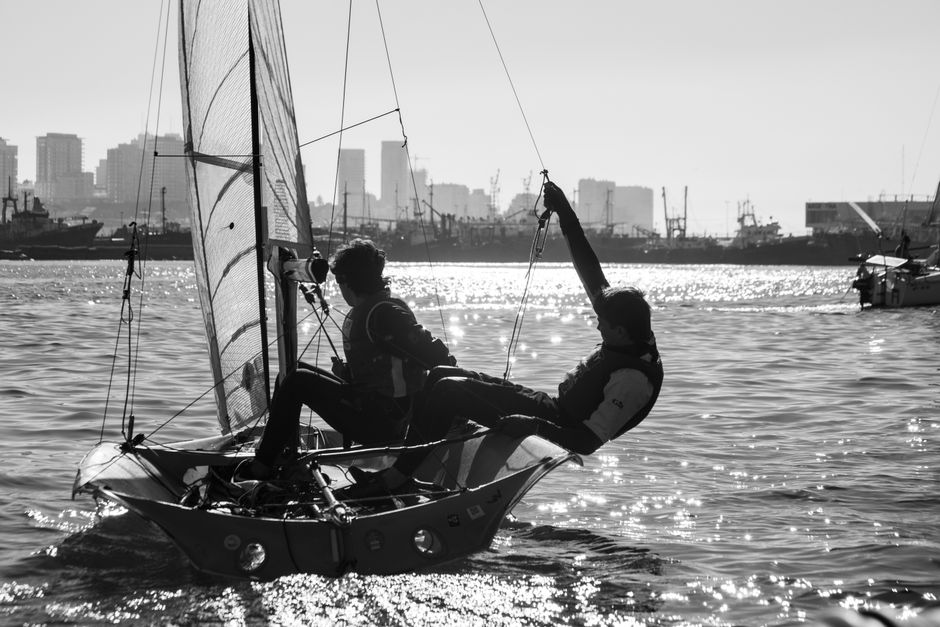
A summer morning at a community sailing center: a row of Optis on the dock, a few teenagers rigging Club 420s, and an instructor with a whistle in a small motorboat. Twelve years later, one of those kids might be racing for a college team, crewing on a keelboat in a Wednesday-night series, or flying across a harbor at highway speed on a SailGP catamaran. Sailing organizations connect all of it, from the club that lends you your first boat to the federation that runs Olympic sailing. This page maps who’s who in the sport, as of the 2026 season.
For the big picture, start at our sailing hub.
World Sailing: the global governing body
World Sailing is the international federation for the sport. It traces back to a meeting at the Yacht Club de France in Paris in October 1907, when it was founded as the International Yacht Racing Union; it became the International Sailing Federation in 1996 and later World Sailing. Its members are national sailing authorities, such as US Sailing. Two things it does touch every racer:
- The rulebook. World Sailing writes The Racing Rules of Sailing, updated every four years. The 2025–2028 edition is in force now; our sailing rules page covers the basics.
- Olympic and world championship sailing. It picks the Olympic events and equipment, runs world championships and keeps world rankings.
US Sailing: the national governing body
US Sailing is the National Governing Body for sailing in the United States, with more than 120 years of history. It runs the US Sailing Team for the Olympics, certification courses for sailors at every level, instructor training, its Reach youth program, support for community sailing, and safety-at-sea education. Membership is open to anyone, and it’s run with the help of more than 50 committees and 300-plus volunteers.
For young racers, US Sailing’s Youth Performance Pathway (launched in October 2022) has three tiers:
- Racing Development: “club” boats such as the Opti and Club 420, high school sailing and other learn-to-race boats and boards.
- Performance: faster, more technical boats and boards that are the global standard for youth racing.
- Olympic: the boats and boards raced at the Olympic Games, where sailors can qualify for the US Sailing Team.
US Sailing also certifies instructors. A Level 1 small-boat instructor must turn 16 within the calendar year of the course, complete a NASBLA-approved safe boating course and hold First Aid/CPR, and adults need annual SafeSport training. It’s worth asking any program whether its instructors are certified.
Yacht clubs and community sailing centers
Most sailors start at one of two places. Yacht clubs run junior programs, weeknight and weekend race series and regattas for their members, and many host open events for visiting boats. Community sailing centers are usually public or nonprofit, with club-owned boats, summer camps, adult learn-to-sail classes and memberships that cost far less than owning a boat. A typical center runs programs by age and boat: Charleston Community Sailing, for example, lists Optis and prams for ages 8 to 15, Club 420s for ages 12 to 18, and small keelboats in a program open to ages 5 to 18. Find one near you through US Sailing or your local yacht clubs, and see our youth sailing page for what kids need.
High school sailing: ISSA
The Interscholastic Sailing Association (ISSA) governs high school sailing in the US, at both public and independent schools. Racing is organized in seven districts: New England (NESSA), Mid-Atlantic (MASSA), South Atlantic (SAISA), Southeast (SEISA), Midwest (MISSA), Pacific Coast (PCISA) and Northwest (NWISA). ISSA’s national championships are the Mallory for fleet racing (high school sailing’s oldest trophy), the Baker for team racing (created in 1990) and the Cressy for singlehanded sailing. High school sailing mostly happens in two-person dinghies like the Club 420, raced in short races close to shore.
College sailing: ICSA
The Inter-Collegiate Sailing Association (ICSA) runs college sailing, with organized racing since 1928 and more than 230 active colleges in seven conferences. Most racing is in double- and single-handed dinghies, and ICSA holds national championships in open dinghy, women’s dinghy, team racing, women’s team racing, singlehanded and match racing. Two facts surprise parents:
- It isn’t an NCAA championship sport. Some schools count women’s sailing as a varsity sport for NCAA sponsorship and Title IX purposes, and many teams are clubs.
- There are no sailing scholarships. ICSA’s rules say no student-athlete may receive financial aid to attend college based on sailing ability. Eligibility is limited to full-time students, eight seasons within five years, and no prior bachelor’s degree.
Olympic and Paralympic sailing
The Los Angeles 2028 Olympics will have 10 sailing events from July 16 to 28, 2028. The board events race first at Belmont Shore in Long Beach, the site of the 1984 Olympic regatta; the rest race at the Port of Los Angeles:
- Kiteboarding: men’s and women’s Formula Kite (foiling kites).
- Windsurfing: men’s and women’s iQFOiL (foiling windsurfers).
- One-person dinghy: ILCA 7 (men) and ILCA 6 (women), the boat many sailors know as the Laser.
- Skiffs: 49er (men) and 49erFX (women).
- Mixed events: the two-person 470 dinghy and the Nacra 17 foiling catamaran.
Para sailing is not on the LA28 Paralympic program; the International Paralympic Committee left it out, and US Sailing has explained why. World Sailing is building “Para Inclusive” events into its world championships, including Valencia in 2026 and Gdynia in 2027, and sailing nations are campaigning to bring it back for Brisbane 2032. Adaptive sailing programs at clubs and community centers still welcome sailors with disabilities.
SailGP and the America’s Cup
SailGP is a pro league of national teams racing identical F50 foiling catamarans, which researchers note can reach about 100 km/h (around 60 mph). The 2026 season, the league’s sixth, has 13 teams, including the United States, and runs from January 17 to November 29, 2026, with stops such as Perth, Sydney, Rio de Janeiro, Bermuda, New York, Halifax, Portsmouth, Saint-Tropez and Dubai before a winner-takes-all Grand Final in Abu Dhabi. Each boat sails with a crew in set roles (helm, flight controller, wing trimmer, grinders and a strategist), and a 2025 study of the third season looked at injuries by position.
The America’s Cup comes to Naples, Italy, in 2027 for its 38th edition. The Louis Vuitton Cup challenger series starts with fleet racing on May 22, 2027, and the Match itself opens on July 10, with a finish planned by the weekend of July 17–18. Emirates Team New Zealand defends; the challengers include Athena Racing (GB1, the Challenger of Record), Luna Rossa, Tudor Team Alinghi and K-Challenge, racing 75-foot foiling AC75 monohulls. Unlike fleet racing, the Cup is match racing, with umpires on the water.
Adult racing and cruising
Most adult sailors race in club series and regattas, either in one-design fleets (everyone in the same class of boat, each with its own class association) or in handicap fleets where different boats are rated against each other. Others never race at all: they cruise, daysail or charter, and US Sailing’s certification courses are a common way to learn. Whatever you sail, the health side is the same: hiking, grinding and long days in the sun. Our sailing training page covers fitness, and the sailing injuries page covers backs, knees and hands.
Gear for the racecourse
Prices change often. The prices below are what we saw at the maker or a major retailer in October 2026; check the current price before you buy.
Racing sailors at every level carry a few of the same things: gloves for sheets and lines, like the Gill Championship short-finger gloves (about $35, Dura-Grip palm, UV 50+ back); a countdown timer, such as the regatta timer on the Garmin quatix 8 (about $1,100); a current rules guide like The Rules in Practice 2025–2028 (about $28); and water, in a bottle such as the Nalgene Sustain 32 oz (about $16). The full list is on our sailing gear page, and watches are compared on the sailing wearables page.
Gill Championship Sailing Gloves, Short Finger
- Dura-Grip palm
- UV 50+ back of hand
- 3/4-length fingers
Garmin quatix 8 (47 mm)
- Regatta timer and race start guidance
- Tack assist
- Up to 16 days smartwatch
The Rules in Practice 2025-2028 (Bryan Willis)
- 2025-2028 rules
- 160 pages
- Color diagrams
Nalgene Sustain 32 oz Wide Mouth
- 32 oz, wide mouth
- BPA-free Tritan
- 50% plastic-waste material
Back to the sailing hub, or see sailing rules, youth sailing and sailing gear. Comparing pathways? See how rowing does it on our rowing leagues page, or soccer leagues and associations.
Sailing organizations questions
What is the governing body for sailing in the US?
US Sailing is the National Governing Body. Internationally, World Sailing governs the sport, writes the Racing Rules of Sailing and runs Olympic sailing.
Is college sailing an NCAA sport?
No. The Inter-Collegiate Sailing Association (ICSA) runs college sailing, with more than 230 active colleges. Some schools count women’s sailing toward NCAA sponsorship and Title IX, but there’s no NCAA championship.
Are there college sailing scholarships?
No. ICSA rules say no student-athlete may receive financial aid to attend college based on sailing ability. Sailing can still help an application, but not through an athletic scholarship.
What sailing events are in the 2028 Olympics?
Ten: men’s and women’s Formula Kite, men’s and women’s iQFOiL windsurfing, ILCA 7 and ILCA 6 dinghies, 49er and 49erFX skiffs, and the mixed 470 and Nacra 17. Racing runs July 16–28, 2028, in Long Beach and the Port of Los Angeles.
Is sailing in the Paralympics?
Not at LA28. The International Paralympic Committee did not include Para sailing, and the sport’s federations are campaigning to bring it back for Brisbane 2032.
What is SailGP?
A professional league of national teams racing identical F50 foiling catamarans in short, fast races around the world. The 2026 season has 13 teams and ends with a Grand Final in Abu Dhabi in November.