
This article contains affiliate links: if you buy through them we may earn a commission, at no extra cost to you. Learn more.
The gym bag by the door tells you how long someone has been kickboxing. Week one: borrowed gloves that smell like everyone else’s. Month three: their own gloves, a pair of hand wraps drying on the radiator and a mouthguard in a case. Year one: shin guards, foot pads, a head guard, a skipping rope, maybe point-fighting gloves for the first tournament and a heavy bag hanging in the garage. This page covers the kickboxing gear you actually need, in the order you’ll need it: gloves by ounce, point-fighting gloves, hand wraps, shin guards and foot pads, mouthguards, headgear, focus mitts and kick shields, heavy bags, plus the recovery gear that helps you come back tomorrow.
Buying guide · Our Kickboxing buying guide compares the gear we'd pick, with prices and sizing:
Prices change often. The prices below are what we saw at Amazon in October 2026; check the current price before you buy. For the sport itself, see our kickboxing hub. Training Muay Thai instead? Thai pads, elbow pads and Thai-style gloves are on our Muay Thai gear page.
Our top picks
Title Classic Pro Style Training Gloves 3.0
- Synthetic leather, hook-and-loop
- 8 to 16 oz
- About $35
Everlast Elite 2 Boxing Gloves
- Triple-layer foam, raised cuff
- 8 to 16 oz
- About $55
Top Ten WAKO Approved Point Sparring Gloves
- Open-hand point gloves
- Sold as WAKO competition approved
- About $82
Everlast Elite 180" Hand Wraps
- 180 in, wide thumb loop
- Cotton-polyester
- About $15
Venum Kontact Shin Guards
- Slip-on, shin to foot
- Machine washable
- About $28
Fairtex SP5 Shin Guards
- Shin and instep padding
- Two straps
- About $80-105 by size
Shock Doctor Gel Max Mouthguard
- Boil-and-bite gel liner
- Youth and adult sizes
- About $12
Title Classic Traditional Training Headgear 2.0
- Leather, multi-layer foam
- Padded cheeks
- About $60
Ringside 100 lb Powerhide Heavy Bag
- 42 x 14 in, soft-filled
- Chain and swivel included
- About $220
Gloves by ounce
Glove weight is mostly padding: heavier gloves protect your hands and your partner more. A common rule of thumb from Hayabusa is about 12 oz for bags and 16 oz for sparring. Body weight matters too. Title Boxing’s chart is a good starting point:
| Your weight | Training gloves |
|---|---|
| Kids up to about 100 lb | Youth gloves, 6-8 oz |
| Up to 90 lb | 8-10 oz |
| 91-135 lb | 12-14 oz |
| 136-150 lb | 14-16 oz |
| Over 150 lb | 16-18 oz |
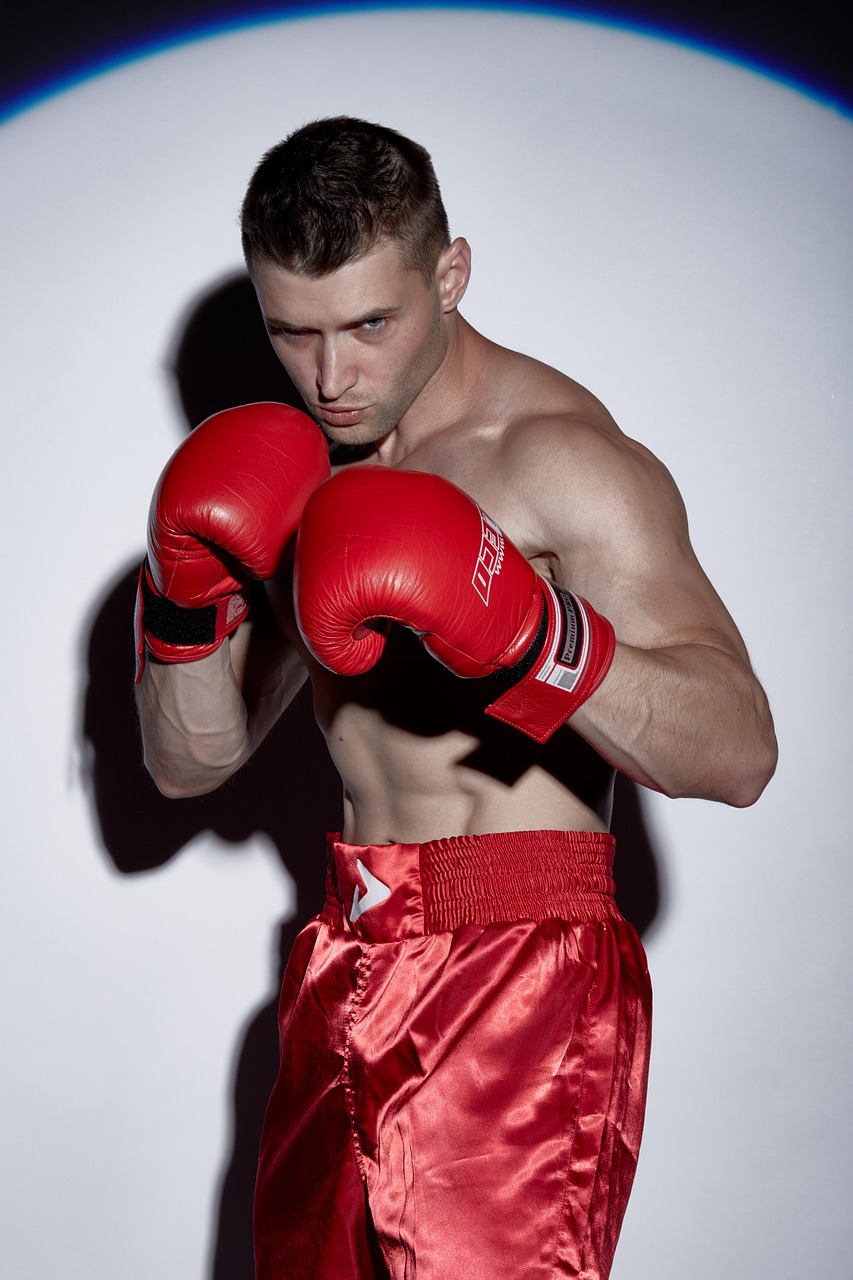
Kickboxing gloves are boxing-style gloves. In competition, WAKO uses approved 10 oz gloves for light contact, kick light and the ring; the ABC’s amateur model rules use 10 or 12 oz; GLORY supplies 8 oz gloves under 65 kg and 10 oz above; ONE uses 8 or 10 oz. For training, the Title Classic Pro Style 3.0 is a simple, affordable first pair in synthetic leather, and the Everlast Elite 2 adds a raised cuff and triple-layer foam. One pair for everything? Choose a weight you can spar in.
Point-fighting gloves and foot pads
Mat kickboxers need different kit. WAKO point fighting uses 8 oz open-hand gloves that cover the striking area of the fist and the first half of the fingers, with the thumb attached, a hook-and-loop wrist strap and no buckles. Fighters on the mat, and full contact fighters in the ring, also wear padded foot protectors, and point fighters add elbow pads. At WAKO’s world and continental championships, cups and other top-level events, only gear from WAKO-approved makers is allowed, so tournament fighters often buy gloves sold as approved, like the Top Ten point sparring gloves or Top Ten 10 oz leather gloves for the ring. Check your event’s current list before you buy.
Hand wraps
Wraps go under every pair of boxing-style gloves, every time. Hand and wrist injuries are among the most frequent in punching sports, and the American Academy of Orthopaedic Surgeons names the “boxer’s fracture” after the classic way it happens: punching something hard with a closed fist. Title’s chart runs from wraps up to 120 inches for kids to 160-180 inches for large hands and 180 or more for extra-large ones. Semi-elastic “Mexican-style” wraps, like the RDX 180-inch wraps, conform to the hand; cotton wraps like the Everlast Elite 180″ are simple and machine washable. In competition, WAKO allows 2.5 to 5 m of 5 cm cotton, with no tape on top; wraps are optional under point-fighting gloves.
Shin guards
Wear them for every kicking drill with a partner. Look for padding from just below the knee down the shin, two straps that keep the guard from spinning, and a size that matches your leg. WAKO uses two types: shin guards worn with separate foot pads in point fighting, light contact, kick light and full contact, and one-piece guards that cover shin and instep for low kick and K1, where sock-type guards aren’t allowed. Slip-on guards like the Venum Kontact are light and cheap for drills and light sparring; strapped guards with instep padding like the Fairtex SP5 or Hayabusa T3 Striking Shinguards give more padding for low-kick and K1 sparring, protecting your shins and your partner’s thighs.
Mouthguards
Required at every amateur event and smart for any sparring. In an Italian survey of 142 amateur kickboxers, 13% had injured a tooth, yet only 68% wore a mouthguard. In a UK survey of 92 kickboxers, those who used a mouthguard reported far fewer face and jaw injuries than those who used no protection. The American Dental Association describes three kinds: stock (cheapest, least fit), boil-and-bite like the Shock Doctor Gel Max, and custom guards from a dentist (best fit). Rinse it after use, keep it in a ventilated case away from heat, and replace it when it’s worn or damaged; kids need new ones more often. WAKO allows any color, but braces need a dentist’s note.
Headgear
WAKO requires a head guard in every fighting discipline, and most gyms ask for one in sparring. It must cover the forehead, top and back of the head, temples, ears and upper jaw without blocking vision, and children and younger cadets add a face mask for point fighting. In lab tests on boxing headgear, approved designs roughly halved the rotational acceleration of a gloved punch, and in the UK kickboxing survey, headgear users reported the fewest face injuries. But the American Academy of Pediatrics notes there’s no evidence soft headgear prevents concussion, so the headgear isn’t a reason to spar harder. Fit matters: Title’s chart runs from youth (up to 20¾ inches around) to XL (23 inches and up). Training models like the Title Classic Traditional 2.0 add cheek padding.
Focus mitts and kick shields
Pad work is where kickboxing combinations come together. A coach wears focus mitts for punches and quick combinations, like the light, teardrop-shaped Hayabusa PTS 3 (sold as a pair), and holds a kick shield for full-power round kicks, side kicks and, for K1 fighters, knees: the Revgear Kick Pad Shield is 25 × 16 inches and 6 inches thick, with side handles. You need them if you coach or train with a partner or a child at home; if you only take classes, the gym provides them.
Heavy bags
Hayabusa’s sizing guide suggests about 40-70 lb for beginners, 70-100 lb for intermediates and 100-150 lb or more for advanced hitters, and 3-4 feet long for boxing. Kickers want a longer bag that hangs low enough to take low kicks at thigh height. A hanging bag like the Ringside 100 lb Powerhide (42 × 14 inches, chain and swivel included) needs a solid beam or stand; a freestanding bag needs no mounting.
Groin protection, clothing and the rest
WAKO requires groin protection for men and women; compression shorts with a cup like the Shock Doctor Bio-Flex work for training. Women and girls from 13 need chest protection in competition. Clothing depends on the discipline: point fighters wear a V-neck top and long pants, full contact fighters long kickboxing pants, and low kick and K1 fighters shorts. Add a skipping rope like the WOD Nation Jump Rope and a towel for barefoot mat sessions.
Recovery gear
Kicking all evening leaves hips, calves and shins tight. Many kickboxers use a TriggerPoint GRID 1.0 foam roller, a Hypervolt Go 3 massage gun for calves and shoulders, and soft OOFOS OOahh slides after hours barefoot. These are comfort tools, not treatment: a shin that stays painful or swollen needs a doctor. More in our foam roller, massage gun and recovery shoe guides, our combat sports recovery gear guide and our kickboxing recovery page.
TriggerPoint GRID 1.0 Foam Roller
- 13 in hollow core
- Multi-density surface
- About $40
OOFOS OOahh Slide
- Cushioned foam slide
- APMA Seal of Acceptance
- About $60
How to choose kickboxing gear
- Buy in order: wraps and a mouthguard first, then gloves, then shin guards and foot pads, then headgear when sparring starts.
- Match your discipline: open-hand gloves and foot pads for point fighting; 10 oz gloves and shin-instep guards for the ring.
- Ask your coach: many gyms set a minimum glove weight for sparring; Hayabusa’s rule of thumb is 16 oz.
- Fit beats brand: gloves should close around a wrapped hand; shin guards shouldn’t spin; headgear shouldn’t block your view.
- Competition gear must be approved: check your federation’s list before buying for a tournament.
- Keep it clean: air gloves out after every session, wash wraps often and replace anything cracked or flattened.
For the rules behind the gear, see our rules page; for kids’ sizes, our youth page; and for boxing-specific kit, our boxing gear page.
Kickboxing gear FAQs
What size gloves do I need for kickboxing?
It depends on your weight and use. Many adults spar in 16 oz and use 12-14 oz for bags and pads; Title’s chart suggests 16-18 oz for people over 150 lb. Ask your coach what the gym requires for sparring.
Are boxing gloves OK for kickboxing?
Yes. WAKO ring and light-contact kickboxing, GLORY and ONE all use boxing-style gloves. The exception is point fighting, which uses open-hand gloves.
What gear do I need for point fighting?
WAKO’s list: head guard (with a face mask for children and younger cadets), mouthguard, 8 oz open-hand gloves, elbow pads, shin guards, foot protectors, groin protection, and chest protection for women. Wraps are optional.
Do I need shin guards for a beginners’ class?
Not for bag or pad work alone, but yes as soon as you kick a partner or check kicks. Slip-on guards are a cheap start; move to strapped guards with instep padding for low-kick or K1 sparring.
How long should hand wraps be?
Title’s chart suggests 120-180 inches for medium hands, 160-180 for large and 180 or more for extra large; kids’ wraps run up to 120 inches.