This article contains affiliate links: if you buy through them we may earn a commission, at no extra cost to you. Learn more.
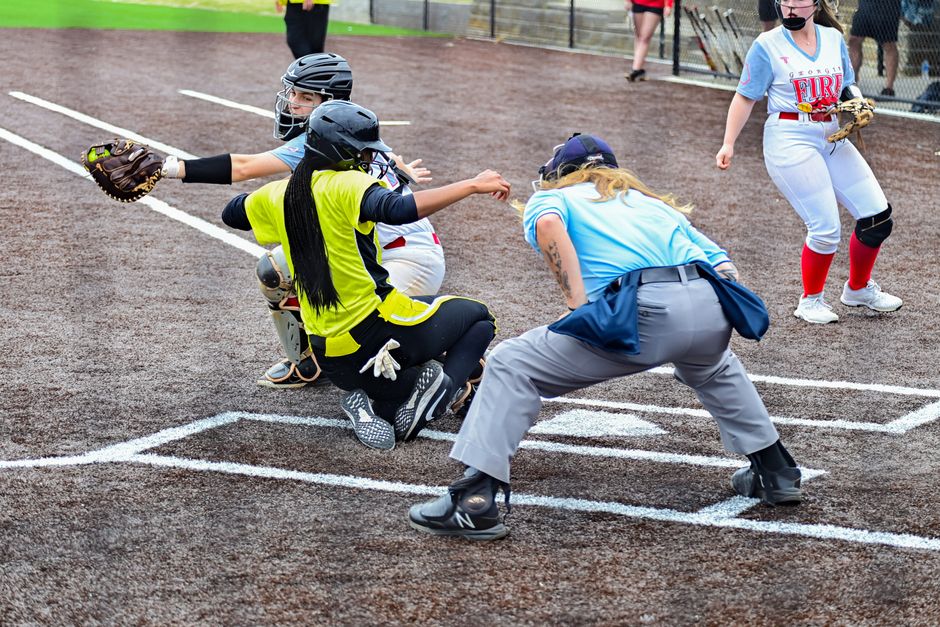
Saturday morning at a 14U travel tournament. Game two, bottom of the third, and the pitcher has already thrown more pitches today than she did all last week. The batter squares one up and a line drive comes straight back up the middle. She gets her glove there in time. Everyone in the bleachers breathes out. That’s softball in one moment: a sport that looks gentle from the parking lot, but asks a lot of a pitcher’s shoulder and puts hard balls a few feet from players’ faces. Most softball injuries come from a short list: overuse in pitchers, ankle sprains, knee injuries, balls to the head and face, and slides gone wrong. This page walks through each one, what lowers the risk, and when to get it checked.
This is general information, not medical advice. If you’re hurt, see a sports medicine doctor, a physical therapist (PT) or a certified athletic trainer (AT). For the big picture of the sport, start at our softball hub.
How often softball players get hurt
Softball’s injury rate is fairly low compared with many team sports, but the injuries it does have are worth knowing. A decade of national surveillance found 1.16 injuries per 1,000 athlete-exposures (one player in one practice or game) in US high school softball and 3.19 in NCAA softball. At both levels, games were riskier than practices, and the most common injuries were ankle sprains and concussions. Many happened while fielding or running the bases. A newer NCAA study (2014–15 to 2018–19) counted 3.92 injuries per 1,000 athlete-exposures. The shoulder took the biggest share (15.2%), then the hand and wrist (11.8%), the knee (11.2%) and the head and face (11.2%). Concussion was the single most common diagnosis.
Emergency rooms see the rest. A 10-year analysis of US emergency department data estimated about 376,000 softball injuries among female players aged 14 to 23 from 2015 to 2024. The head, ankle, knee and face were the most injured areas, and college-aged players went to the ER at more than twice the rate of high school-aged players. The American Academy of Orthopaedic Surgeons (AAOS) sums up the pattern: softball is a non-contact sport, but most serious injuries come from contact with a ball, a bat, the ground, a wall or another player.
The windmill pitcher: shoulder and arm overuse
For years people assumed the underhand windmill motion was easy on the arm. The research says otherwise. In a 1998 study of fastpitch pitchers, forces at the shoulder and elbow reached 70–98% of body weight, and the authors pointed to the biceps and labrum (the rim of cartilage in the shoulder socket) as the structures most likely to wear out. A study of pitchers at the 1996 Olympic Games measured shoulder distraction (the force pulling the arm out of the socket) at about 80% of body weight on average, similar to baseball pitchers. The same authors noted that softball pitchers often throw far more outings and pitches in a week than baseball pitchers do.
AAOS lists biceps tendinitis as the classic windmill injury and notes the motion is unlikely to strain the elbow ligaments the way overhand pitching can. The American Orthopaedic Society for Sports Medicine (AOSSM) adds shoulder tendinitis, back and neck pain, and elbow, forearm and wrist tendinitis for pitchers. Catchers deal with back and knee problems, and AAOS notes that catching can overload the front of the knee.
Fatigue builds fast. In a study of 19 pitchers around age 15 who threw about 99 pitches in a game, hip and shoulder-blade muscles lost close to 20% of their strength by the end. Another study followed high school pitchers through a season and found pain and fatigue climbing with every game pitched. In a survey of 28 high school pitchers, those who threw more than 85 pitches a game were more than twice as likely to have seen a doctor for pain. Those reporting shoulder pain threw about 429 pitches a week, against about 219 for those without.
Here’s the gap: as of 2023, no established pitch count limits existed in US or Canadian softball, and most governing bodies haven’t adopted the recommendations that do exist. AOSSM’s STOP Sports Injuries campaign publishes these maximums:
| Age | Pitches per game | Pitches per day (days 1–2) | Pitches on day 3 |
|---|---|---|---|
| 8–10 | 50 | 80 | 0 |
| 10–12 | 65 | 95 | 0 |
| 13–14 | 80 | 115 | 80 |
| 15 and up | 100 | 140 | 100 |
AOSSM also says girls under 12 should pitch no more than two days in a row, and girls 13 and up no more than three. Two days of rest matter, and rest means no live pitches, batting practice included. The same advice asks coaches to rotate pitchers through other positions, avoid overlapping teams and year-round pitching, and never let a pitcher throw through pain. Count every pitch, too: in a 2025 study of high school varsity pitchers, about a quarter went over the recommendation in games alone, and about half did once bullpen and between-inning warm-up pitches were added. Only 14.8% of parents in a youth survey knew any pitching guidelines existed, so share the table.
ACL tears in female athletes
The anterior cruciate ligament (ACL) usually tears when an athlete plants and cuts, pivots, or lands with the knee nearly straight: rounding a base, chasing a ball in the gap, stopping hard on a pop-up. In NCAA data from 2014 to 2019, ACL tear rates were higher in women’s softball than in its men’s counterpart, and non-contact tears were more common in women’s sports. An earlier study comparing college softball with baseball found the biggest female-to-male gap of the five sports it looked at, although the numbers were small. The encouraging part comes from other sports. Neuromuscular warm-ups with jumping, landing and strength work lowered serious knee injuries in high school girls, and they help most when started in the early-to-mid teens. Our softball training guide shows how to build them in. A “pop”, fast swelling or a knee that gives way needs a doctor.
Ankle sprains
Ankle sprains top the list in high school and college softball. They happen on bases, in the dirt around home plate, and on uneven outfield grass. The National Athletic Trainers’ Association (NATA) calls a previous sprain the most consistent risk factor. It recommends that athletes with a past sprain wear tape or a brace for all practices and games, plus a balance training program of at least three months. A lace-up brace like the ASO EVO Ankle Stabilizer fits under a cleat. Our ankle brace guide compares more options. AAOS also recommends breaking in new cleats before game day.
Balls to the face and head, and concussion
A study of US emergency department records from 2013 to 2017 estimated about 122,000 softball head and face injuries a year, across all ages and both fastpitch and slowpitch. Being struck by the ball caused 74.3% of them, and most of those (83.7%) happened to fielders, not batters. Closed head injuries, bruises, concussions, cuts and fractures were the most common diagnoses.
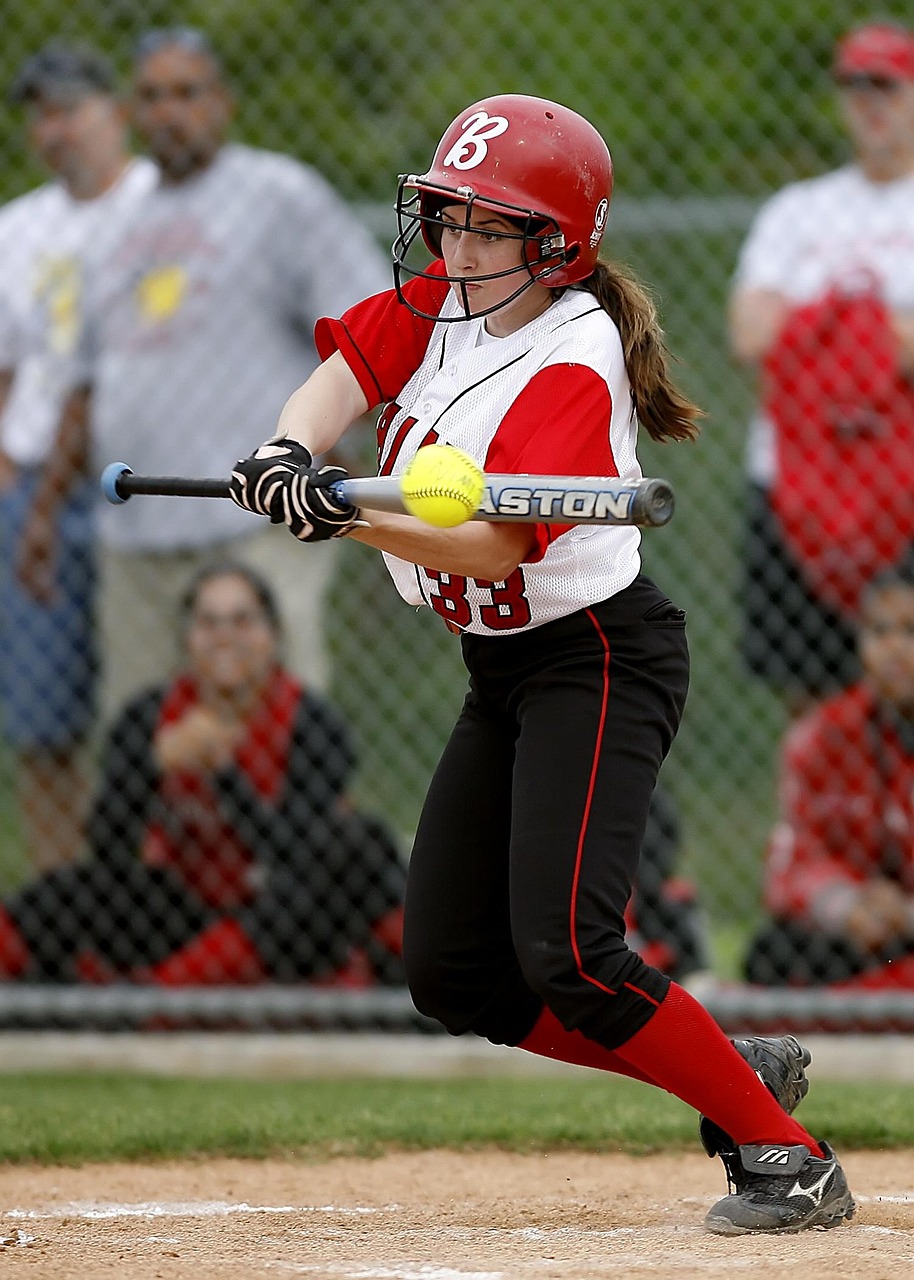
- Batters: NFHS high school rules have required a NOCSAE-approved face mask or guard on every fastpitch batting helmet since January 1, 2006, and helmets must be worn on deck, at bat and on the bases. AAOS adds that face shields on batting helmets can reduce the risk of facial injury.
- Fielders: NFHS rules let players wear face and head protection in the field, and many pitchers and corner infielders now do. In lab tests firing softballs at about 55 mph at a model head, a metal mask that sat far enough from the face (at least 35 mm in front of the upper jaw and 25 mm from the cheekbone) did best. Plastic masks bent enough for the ball to reach the face.
- Catchers: AAOS lists a catcher’s mitt, helmet, face mask, throat guard, long chest protector and shin guards. NFHS requires the catcher’s helmet and mask to meet the NOCSAE standard, with double ear flaps.
- Chest: AAOS advises knowing where the nearest AED is. In very rare cases a ball to the chest can trigger commotio cordis, a cardiac arrest where an AED can save a life.
Concussion: recognize and remove. The CDC’s HEADS UP program asks coaches and parents to watch for a player who looks dazed, is slow to answer or moves clumsily, and to listen for headache, dizziness, nausea, blurry vision, sensitivity to light or noise, or feeling foggy. Remove the player right away and keep her out for the rest of the day until a healthcare provider clears her. Return to sport is gradual and usually takes a week or more. Call 911 for a worsening headache, repeated vomiting, a seizure, growing drowsiness, slurred speech, weakness or unequal pupils.
Sliding injuries
Sliding is where a lot of softball’s ankle, knee, hand and finger injuries happen. In a classic recreational softball study, games played on fields with standard fixed bases produced 45 sliding injuries in 627 games. Fields with breakaway bases that pop off their anchor produced just 2 in 633 games. In Division I college softball, observers counted 12.13 injuries per 1,000 slides, and head-first slides were riskier (19.46 per 1,000) than feet-first slides (10.04). Most of those injuries were minor.
AAOS recommends breakaway bases on every field, not teaching players under 10 to slide, practicing on a sliding mat before sliding in games, and using a double first base so the runner and fielder each have their own bag. Sliding shorts and a slider kneepad such as the Mizuno Adult Slider Kneepad help with scrapes and bruises. They don’t make a bad slide safe.
RIP-IT Defense Softball Fielder's Mask
- Built for fastpitch players
- Ponytail opening
- Removable, washable padding
Rawlings Coolflo Batting Helmet with Facemask
- Attached face mask
- NOCSAE-certified, per maker
- Youth fit, about ages 8–14
Mizuno Adult Slider Kneepad
- 3/8 in neoprene panels
- Knee and shin coverage
- Sold as one kneepad
ASO EVO Ankle Stabilizer
- Lace-up with figure-8 straps
- Fits left or right foot
- Low profile, fits in cleats
Check that any helmet carries the NOCSAE stamp and fits snugly. Ask your league what face protection it requires before you buy. Our softball wearables guide covers tools for tracking practice and recovery.
When to see a doctor, PT or athletic trainer
- Arm or shoulder pain that lasts a week, or comes back every time she pitches. AOSSM says to see a physician, and AAOS says to take every complaint from a young pitcher seriously.
- A knee that popped, swelled fast or gives way.
- An ankle you can’t put weight on, or a joint that looks out of shape.
- Any concussion signs, a ball to the face or eye, or a finger that stays crooked or swollen after a slide.
A sports medicine physician diagnoses the problem and manages most injuries without surgery. A physical therapist guides rehab and the return to throwing. Athletic trainers are licensed or regulated health care professionals who work with physicians, and many high schools and colleges have one at practice. AOSSM’s rule for return: only after a health care professional clears you. For what comes next, see our softball recovery guide and game-day guide.
Softball injury FAQs
What is the most common injury in softball?
In national high school and college surveillance, ankle sprains and concussions were the most common injuries. In NCAA softball, the shoulder was the most often injured body part, and concussion was the most common single diagnosis.
Is windmill pitching bad for the shoulder?
It puts real stress on it. Studies measured shoulder forces of about 70–98% of body weight, similar to baseball pitching, and the biceps is especially loaded. Sensible pitch counts, rest days, strength work for the hips, core and shoulder blade, and stopping when it hurts all help.
How many pitches can a softball pitcher throw?
Most leagues set no limit. AOSSM recommends up to 50 pitches a game at ages 8–10, 65 at 10–12, 80 at 13–14 and 100 at 15 and up, with daily caps over a tournament and two days of rest after.
Should infielders wear a face mask in softball?
Most softball head and face injuries in the ER happen to fielders hit by the ball, and NFHS rules allow face protection in the field. Many pitchers and corner infielders wear one. In lab tests, metal masks that sit well away from the face protected best.
Are breakaway bases safer?
Yes. In a study of over 1,200 recreational games, fields with breakaway bases had 2 sliding injuries against 45 on fields with fixed bases. AAOS recommends them on every field.
Count pitches, rest pitchers, wear the mask, slide on breakaway bases and sit out anything that looks like a concussion. Keep going with our training and nutrition guides, the knee sleeves guide, and the soccer injuries page for more on knee-injury prevention warm-ups.