This article contains affiliate links: if you buy through them we may earn a commission, at no extra cost to you. Learn more.
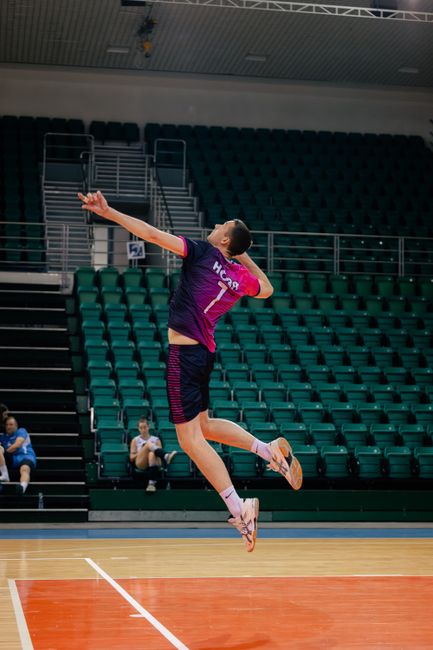
Check-in at 7:30 a.m. in a convention center with dozens of courts. Pool play starts at 8, your team refs the second match, plays the third, then waits two hours for the crossover. On the beach it’s a different kind of long day: hot sand, bright sun and a bracket that keeps you playing into the afternoon if you keep winning. A volleyball game day is often a whole day, and what you eat, drink and do between matches decides how you play in the last one. Here’s a plain plan for club, high school, college, beach and adult rec players.
General information. Players with health conditions, or parents of young players, should check with a doctor or registered dietitian. Back to the volleyball hub.
What a tournament day looks like
USA Volleyball’s 2026 rules for its girls’ national qualifiers and championships show why the day is long:
- The preferred format is pools of four, each match best two out of three sets. The first two sets go to 25, and a third set to 15, win by two with no cap.
- Up to 13 matches can be scheduled on one court in a day, and teams play two rounds of pool play before playoff brackets in many divisions.
- Teams officiate the matches they aren’t playing (referee, scorer, line judges), so “rest” time is often work time.
- Athletic trainers are on site during competition at national qualifiers. Know where they are before the first serve.
High school matches, college weekends with two matches in a day and adult rec leagues are shorter, but the same rules of thumb apply.
Eating through a long day
Sports nutrition guidance from the American College of Sports Medicine (ACSM) and dietitians’ groups suggests a carbohydrate-rich meal 1 to 4 hours before exercise that lasts over an hour (about 1 to 4 grams of carbohydrate per kg of body weight). Go easy on fat, protein and fiber right before play. When there is less than 8 hours between sessions, they suggest small, regular carbohydrate snacks to refuel.
For a tournament, that becomes:
- Breakfast 2 to 3 hours before the first match: oatmeal with banana, a bagel with peanut butter, eggs and toast. Something you’ve eaten before a practice.
- Between matches: small snacks every hour or two: fruit, pretzels, a sandwich half, granola bars, yogurt, chocolate milk.
- Long break (an hour or more): a real meal, like a rice bowl, pasta or a turkey wrap.
- Pack a cooler. Concession stands may be slow, closed or all fried food.
Practice your game-day food on practice days. A tournament is no place to try something new. Our volleyball nutrition page goes deeper.
Drinking enough
AAOS suggests about 24 ounces of fluid 2 hours before exercise, then 8 ounces every 20 minutes during activity. NATA adds that sweat rates vary a lot between players, so it’s worth learning yours by weighing before and after practice. Don’t overdrink either: drinking much more than you sweat can be dangerous too.
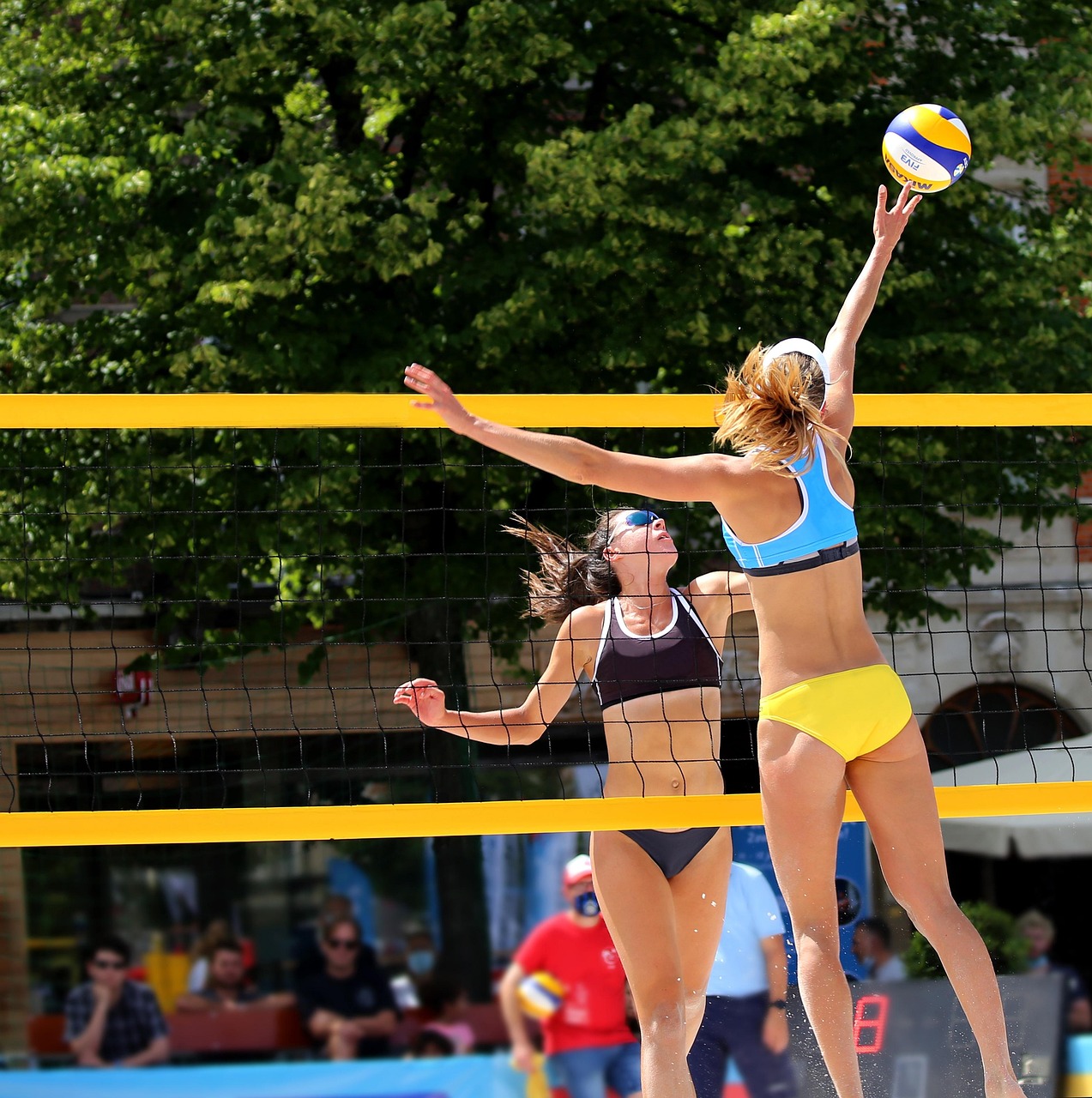
Beach players sweat more than they drink. In a study of 47 men at an outdoor beach tournament, matches lasted about 42 minutes on average. Players lost about 1,440 ml of sweat per match and drank about 731 ml. Air temperatures ran from 26 to 38°C (79 to 100°F).
Salty sweaters and players on tournament weekends often add electrolytes. Nuun Sport tablets are light and low in sugar, and a big bottle like the Nalgene Sustain 32 oz makes it easy to see how much you’ve had. Our electrolyte powder guide compares more. If you have a heart or kidney condition, high blood pressure or are on a low-sodium diet, check with your doctor before adding electrolyte products.
Between matches and during work duty
- Re-warm before you play again. After an hour of sitting or refereeing, legs and shoulders go cold. Do a few minutes of easy movement, jumps and arm swings before your match warm-up.
- Get off your feet when you can. Sit, put your feet up, stay in the shade.
- Keep layers. Big halls can be cold early and hot by afternoon.
- Keep the phone down. A short rest with eyes closed beats an hour of scrolling.
Beach volleyball: heat
Heat illness is rare at elite level, but it happens. Eleven years of FIVB Beach Volleyball World Tour data (8,530 matches) recorded 20 heat-related medical timeouts, and 3 ended in forfeit. Risk went up with air and black globe temperature. The two players who had had diarrhea or a stomach bug in the 5 days before both forfeited. If you’ve just been sick, take the heat seriously.
- Acclimatize: NATA says getting used to heat takes 7 to 14 days of gradual exposure. The first hot tournament of the summer is the riskiest.
- Shade and cooling: use the tent or umbrella between matches, and a wet cooling towel like the MISSION Original Cooling Towel on the neck.
- Hot sand: AAOS advises checking outdoor courts for sharp objects, rocks and glass. Sand socks or a quick spray of water on the sand before warm-up help on scorching days.
- Know the warning signs: headache, nausea, dizziness, cramps or unusual tiredness. Confusion, odd behavior or collapse can mean exertional heat stroke, a medical emergency. Call 911. NATA’s position is that trained staff should cool the player first, ideally with cold-water immersion, and transport second.
Beach volleyball: sun
The American Academy of Dermatology (AAD) recommends a sunscreen that is SPF 30 or higher, broad-spectrum and water resistant. Use about 1 ounce (a shot glass) for the whole body, put it on about 15 minutes before going out, and reapply every 2 hours and right after sweating or swimming. A sport lotion like Blue Lizard Sport Mineral SPF 50 is water resistant for 80 minutes, per the maker. Add a visor or cap and sunglasses between matches. And bring your own ball for warm-ups, like the Wilson AVP OPTX, the official ball of the AVP.
Nuun Sport Tablets
- 300 mg sodium per tablet
- 1 g sugar
- Informed Choice
Blue Lizard Sport Mineral SPF 50
- Zinc oxide + titanium dioxide
- Water resistant 80 minutes
- Fragrance-free, 3 fl oz
MISSION Original Cooling Towel
- 10 x 33 in microfiber
- Wet, wring, snap
- UPF 50
Nalgene Sustain 32 oz Wide Mouth
- 32 oz, wide mouth
- BPA-free Tritan
- Made with 50% plastic-waste material
Wilson AVP OPTX Game Volleyball
- Official ball of the AVP
- Official size
- Built for the beach game
Head knocks on game day
A ball to the head, a collision at the net or a dive into the floor can cause a concussion. The CDC’s HEADS UP rule is simple: if a player shows signs after a blow to the head or body, remove them from play, keep them out for the rest of the day and until a healthcare provider clears them. When in doubt, sit them out. On a tournament day, that means skipping the rest of the matches, however important.
Volleyball game-day FAQs
What should I eat between volleyball matches?
Small, easy carbohydrate snacks every hour or two: fruit, pretzels, half a sandwich, granola bars, yogurt. If there’s a long break, eat a light meal. Avoid heavy, greasy or high-fiber food right before you play.
How much water should I drink at a volleyball tournament?
AAOS suggests about 24 ounces 2 hours before and 8 ounces every 20 minutes during activity. Beach players in the heat often need more, because one study found they drank only about half of what they sweated. Weighing yourself before and after practice shows your own sweat rate.
How often should beach volleyball players reapply sunscreen?
The AAD says every 2 hours, and right after sweating or getting wet. Use SPF 30 or higher, broad-spectrum and water resistant.
Are energy drinks OK on game day?
The American Academy of Pediatrics says energy drinks have no place in the diets of children and teens. Water, milk, sports drinks when needed and food do the job.
How long are matches at a club volleyball tournament?
At USA Volleyball national qualifiers, most pool matches are best two out of three sets (25, 25, 15). With refereeing duty and waiting between rounds, a full day at the gym is normal.
After the last match, the work isn’t over. See our volleyball recovery page for the evening plan, the injuries page for what to do about a rolled ankle, and the soccer game-day page for more on heat rules.