This article contains affiliate links: if you buy through them we may earn a commission, at no extra cost to you. Learn more.
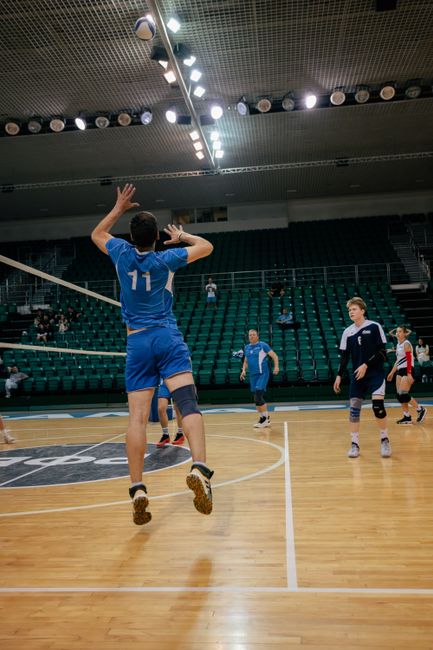
Saturday morning at a club qualifier: forty courts under one roof, whistles everywhere. A middle blocker goes up to stop a quick set, comes down on the hitter’s foot under the net, and the ankle rolls. The same thing happens in a high school gym, an NCAA arena and on Olympic sand. Most volleyball injuries come from a short list: ankle sprains at the net, sore knees from thousands of jumps, a tired hitting shoulder, jammed fingers, a stiff low back and, now and then, a hit to the head. This page goes through each one in plain language. You’ll see what the research says lowers the risk, what braces and tape really do, and the signs that mean stop and get it checked.
This is general information, not medical advice. If you’re hurt, see a sports medicine doctor, a physical therapist (PT) or a certified athletic trainer (AT). For the big picture of the sport, start at our volleyball hub.
How often volleyball players get hurt
The American Academy of Orthopaedic Surgeons (AAOS), citing the U.S. Consumer Product Safety Commission, says about 183,000 volleyball injuries were treated in emergency rooms, doctors’ offices and clinics in 2015.
- High school and college: a national study of girls’ and women’s volleyball counted 1.11 time-loss injuries per 1,000 athlete-exposures (one player in one practice or match) in high school and 3.81 in college. The ankle was the most injured body part at both levels, and ligament sprains were the most common diagnosis.
- World-class indoor: four years of data from the International Volleyball Federation (FIVB) found 3.8 time-loss injuries per 1,000 match hours. The ankle took 25.9% of injuries, then the knee (15.2%), fingers and thumb (10.7%) and lower back (8.9%). The authors called volleyball “a very safe sport, even at the highest levels of play.”
- Beach: at the 2001 Beach Volleyball World Championships, the knee (30%), ankle (17%) and fingers (17%) made up more than half of acute time-loss injuries. The most common overuse problems were low back pain (19%), knee pain (12%) and the shoulder (10%).
Ankle sprains at the net
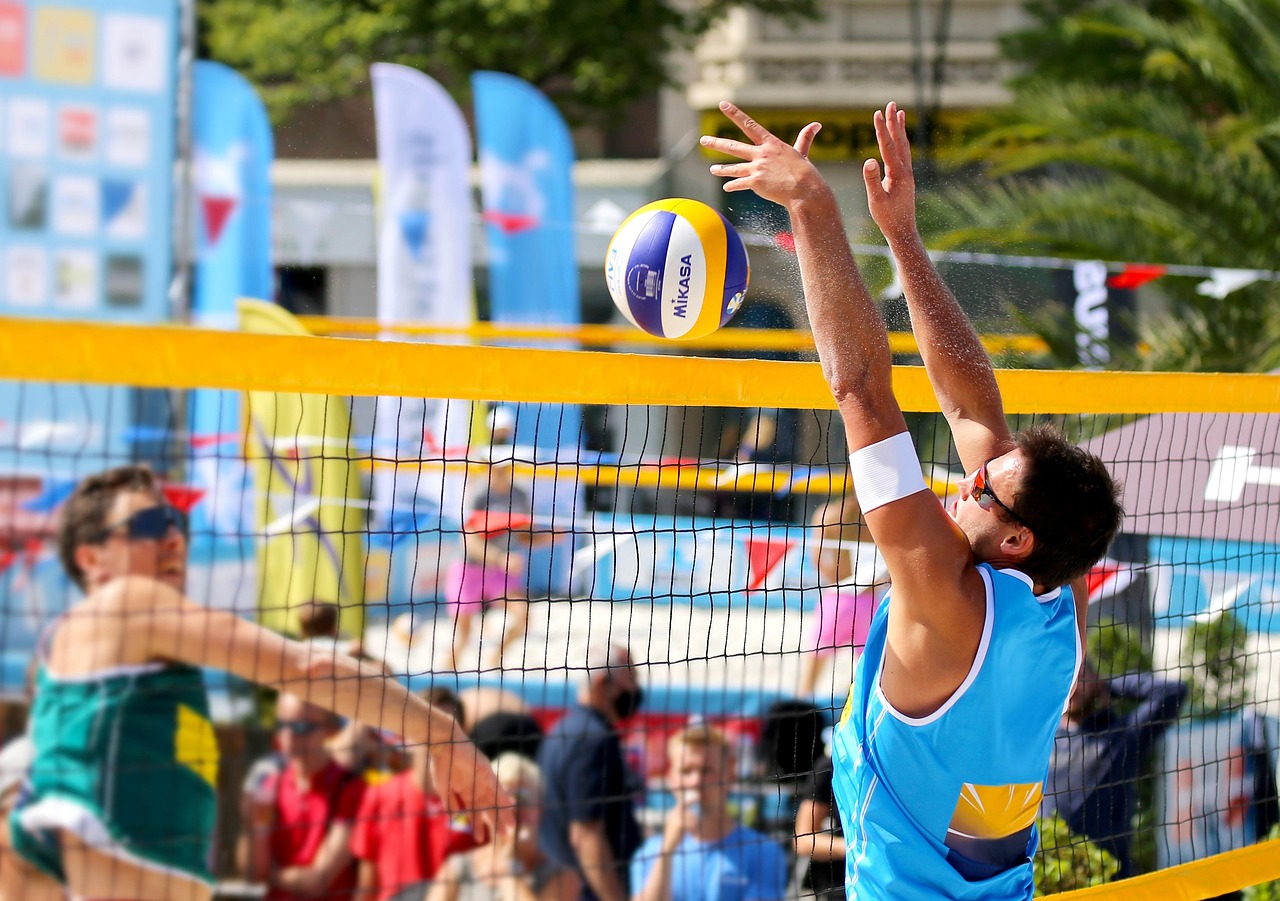
The net is where ankles get hurt. In a Norwegian study of the top two divisions, 86% of ankle sprains happened at the net, mostly when landing after a block (63%) or an attack (29%). Match play carried 3.9 times the risk of training, and 78% of the injured players had hurt the same ankle before.
Video from major FIVB events shows how it happens. Of 24 ankle injuries, 15 came while blocking and 6 while attacking. Blockers were hurt landing on an opponent (11) or a teammate (4). In 11 of the 12 cases where a player landed on an opponent under the net, the attacker had landed in the other team’s court without breaking the center line rule. In NCAA women’s volleyball, ankle ligament sprains were 44.1% of all game injuries over 16 seasons.
What helps:
- Technique and awareness: the Norwegian federation added an injury awareness session, take-off and landing technique for blocking and attacking, and balance-board training for players with repeat sprains. Ankle injuries fell from 0.9 to 0.5 per 1,000 player hours over two seasons.
- Balance training: a Dutch trial with 116 teams added a balance-board program to the warm-up. It cut ankle sprains, but only significantly in players who had sprained an ankle before. Overuse knee injuries rose among players with a past knee injury, so the authors suggest a past knee injury may be a reason to skip it. Ask your PT.
- Rehab the first sprain properly. The National Athletic Trainers’ Association (NATA) calls a previous sprain the most consistent risk factor and recommends a balance and neuromuscular program of at least three months after one.
Ankle braces and tape: what the evidence says
NATA’s position is that athletes with a previous ankle sprain should wear tape or a brace for all practices and games. Lace-up braces, semi-rigid braces and tape all reduce repeat sprains. The benefit is much bigger after a past sprain: in the studies NATA reviewed, you had to brace 5 previously injured athletes to prevent one sprain, against 57 athletes with no history. The largest trial was in high school basketball, which has the same landing problem: lace-up braces cut acute ankle injuries by about two-thirds. The AAOS volleyball page also suggests ankle braces for extra stability, plus knee pads for diving and shoes with good ankle support and cushioning.
Many players keep a lace-up brace like the ASO EVO Ankle Stabilizer or the McDavid 195 in the bag, wear knee pads like the Mizuno LR6 for floor defense, and use zinc-oxide tape such as Mueller MTape for fingers. A brace is a seatbelt, not a fix. Our ankle brace guide compares more options, and your AT or PT can tell you what fits your ankle and your history.
ASO EVO Ankle Stabilizer
- Lace-up with figure-8 straps
- Fits left or right foot
- Low profile, fits in shoes
McDavid 195 Ankle Brace
- Lace-up with figure-8 straps
- Lightweight single-layer fabric
- Several sizes
Mizuno LR6 Volleyball Kneepad
- VS-1 padding in the impact zone
- Front and side protection
- Sold as a pair
Mueller MTape Athletic Tape
- 1.5 in x 15 yd, 2 rolls
- Zinc-oxide adhesive
- Tears by hand
Jumper’s knee (patellar tendinopathy)
Pain just below the kneecap that shows up when you jump, land or climb stairs is often the patellar tendon. Volleyball has more of it than any other sport studied: in 613 elite athletes, 44.6% of volleyball players had current jumper’s knee, against 14.2% across all sports.
Load seems to matter. A four-year study of 141 elite Norwegian players aged 16 to 18 found boys had three to four times the risk of girls. Each extra hour of volleyball training per week raised the odds (odds ratio 1.72), and each extra set of matches per week raised them more (3.88). Still, there is no magic number. A 2024 study that tracked the jumps of elite men with sensors found no clear link between weekly jump load and knee complaints. If your knee hurts, have a sports medicine doctor or PT look at it early, before it becomes a season-long problem. Our volleyball training guide shows how to build jump work in sensibly.
The shoulder
Every spike and jump serve whips the arm overhead. In 422 college club players, about 60% reported a history of shoulder problems. Attackers and jump servers were more likely to have them than setters, defensive specialists and float servers. In a 2025 study of high school boys, 39% had shoulder pain when spiking or serving, and only 5% had told their coach. AAOS lists shoulder tendinitis, bursitis and scapular dyskinesis (the shoulder blade not moving normally) among volleyball’s overuse injuries and names volleyball among the sports where young athletes are at risk of rotator cuff tendinitis.
One volleyball-specific problem to know: wasting of the infraspinatus muscle on the back of the shoulder blade of the hitting arm, caused by pressure on the suprascapular nerve. If you notice a hollow there, or weakness turning the arm out, see a doctor. A shoulder warm-up helps: in recreational teams, a shoulder-focused warm-up twice a week lowered the number and severity of injuries.
Fingers
In US emergency rooms from 2012 to 2022, fingers were 43% of upper-body volleyball injuries in players 18 and under, and more than half of the fractures (57.4%) were in fingers. AAOS lists dislocations and tendon tears from setting and blocking. It says some “sprains” are really fractures or dislocations, and to see a doctor if pain and swelling last more than 48 hours. Watch for mallet finger: the tip droops and only straightens if you push it up. AAOS advises seeing a hand specialist as soon as possible, ideally within a week. Buddy taping is something your doctor or AT may suggest once a fracture has been ruled out.
The low back
Arching back to spike and serve loads the lower spine. Among 75 professional and NCAA Division I men followed for three seasons, the average weekly prevalence of problems was 31% for the knee, 21% for the low back and 19% for the shoulder. In a trial with 70 Japanese high school players, a warm-up with thoracic mobility, trunk stability and stretching exercises lowered new low back pain over four weeks (8.8% against 33.3%). In young athletes, AAOS warns that repeated arching can cause a stress fracture of the spine (spondylolysis), with pain that worsens with activity and can feel like a muscle strain. Back pain that keeps coming back in a teen player deserves a doctor’s visit.
Concussion: recognize and remove
Concussions were 13.5% of high school girls’ volleyball competition injuries and 10.4% in college. For liberos, concussion was the single most common injury (31.4% of high school competition injuries), mostly from hitting the floor while diving. The CDC’s HEADS UP program asks coaches and parents to watch for a player who looks dazed, is slow to respond or moves clumsily, and to listen for headache, dizziness, nausea, vision problems, light or noise sensitivity, or feeling foggy.
- Remove the player from play right away. When in doubt, sit them out.
- Keep them out for the rest of the day and until a healthcare provider clears them.
- Return in steps. Going back to sport is gradual and usually takes a week or more.
- Call 911 for danger signs: a worsening headache, repeated vomiting, seizures, passing out or growing drowsiness, slurred speech, weakness, or unequal pupils.
Knee ligaments and jump-landing programs
In a classic study of high school girls in soccer, volleyball and basketball, girls without a preseason jump-and-land program had 3.6 times the rate of serious knee injury of girls who did one. A later meta-analysis found the biggest drop in ACL injuries when these programs start in the mid-teens. Our soccer injuries page explains the FIFA 11+.
When to see a doctor, PT or athletic trainer
AAOS’s rule for returning to volleyball: symptoms completely gone, no pain or swelling, full range of motion and normal strength, plus a doctor’s clearance after a concussion. Get it checked if you notice:
- You can’t put weight on the leg, or a joint looks out of shape.
- The knee went “pop”, swelled fast or gives way.
- Knee pain below the kneecap that gets worse week by week.
- Shoulder pain at night, weakness, or a hollow on the back of the shoulder blade.
- A finger that stays swollen after two days, looks crooked or has a drooping tip.
- Low back pain that lasts or spreads into the buttock or thigh, or any tingling or weakness.
- Any concussion signs.
A sports medicine physician diagnoses the problem and manages most injuries without surgery. A physical therapist guides rehab and the return to play. Athletic trainers are licensed or regulated health care professionals who work with physicians; USA Volleyball’s championship rules require athletic trainers on site at its national qualifiers.
Volleyball injury FAQs
What is the most common injury in volleyball?
The ankle sprain, usually from landing on another player’s foot at the net. The ankle is the most injured body part in high school, college and world-class volleyball.
Should volleyball players wear ankle braces?
If you’ve sprained an ankle before, NATA recommends tape or a brace for every practice and match, and the evidence is strongest for you. For players with no history the benefit is smaller. Braces are not a substitute for balance training and rehab.
Why is jumper’s knee so common in volleyball?
Volleyball is a jumping sport, and the patellar tendon takes the load of every take-off and landing. In elite athletes, 44.6% of volleyball players had current jumper’s knee. More training hours and more sets per week raised the risk in young elite players.
Why do liberos get concussions?
Liberos dive for the ball all match. In high school data, concussion was their most common injury, mostly from contact with the floor. Good diving technique and knee pads help on the floor, and any head knock means sitting out until checked.
Warm up with purpose, rehab the first sprain, protect the ankle that has rolled before and sit out anything that looks like a concussion. Keep going with our training, game-day and recovery guides, and our knee sleeves and ankle brace guides.