This article contains affiliate links: if you buy through them we may earn a commission, at no extra cost to you. Learn more.
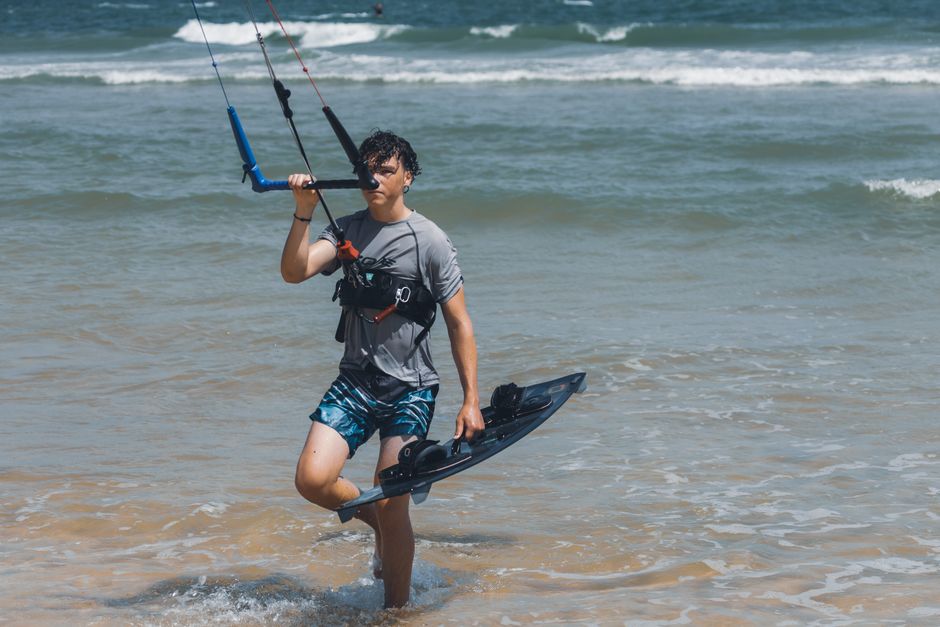
A Saturday afternoon on a wide, empty beach: the wind is steady off the water, a small orange foil kite fills with a soft whump, and someone who has never kited before is laughing as it drags them three steps forward. An hour later they can park it overhead, steer it left and right without looking down, and feel the power build as it sweeps through the middle of the sky. That’s what the best trainer kites are for. A kitesurfing trainer kite is a small, 2 to 3 meter foil kite on a bar or handles that teaches the wind window and kite control on land, cheaply and safely, before you pay for lessons on the water. Here are six real options, how to fly them safely, and when to call a school.
Prices change often. The prices below are what we saw on Amazon in October 2026; check the current price before you buy.
Our top picks
Slingshot B3 Trainer Kite (3 m)
- 3 m ram-air foil
- Bar and lines
- Made to learn before lessons
HQ Rush Pro 300
- 300 cm span
- 3rd-line safety, reverse launch
- 4 to 24 knots
HQ4 Hydra 300
- Closed-cell foil
- Relaunches from water
- 3rd-line safety
Slingshot Trainer Kite (2 m)
- 2 m ram-air foil
- Light breeze to 15 mph
- Wrist leash and bag
HQ Symphony Beach III 2.2
- 87 in dual-line foil
- Straps, no bar
- Ages 14 and up
HQ Symphony Beach III 1.3
- 51 in dual-line foil
- Ages 8 and up
- 6 to 31 mph
Trainer kites compared
| Kite | Size | Control | Wind (maker) | Safety system | About (Oct 2026) |
|---|---|---|---|---|---|
| Slingshot B3 | 3 m | Bar | Not stated | Not stated on listing | $269 |
| HQ Rush Pro 300 | 300 cm span | 3-line bar | 4–24 knots | 3rd line + hand leash | $280 |
| HQ4 Hydra 300 | 300 size | 3-line bar | Not stated | 3rd line + hand leash | $333 |
| Slingshot Trainer Kite 2 m | 2 m | Bar | Light breeze to 15 mph | Wrist leash | $139 |
| HQ Symphony Beach III 2.2 | 87 in wide | 2 lines, straps | 4–31 mph | None stated | $96 |
| HQ Symphony Beach III 1.3 | 51 in wide | 2 lines, straps | 6–31 mph | None stated | $48 |
Why learn on land with a trainer kite
Kitesurfing is mostly kite flying. The board comes later; first you have to steer without staring at the kite, feel where the power is, and react when a gust hits. A trainer kite lets you build that on grass or sand, for hours, at no cost per hour. Lessons are where the money goes: the International Kiteboarding Organization (IKO) says most kitesurfing packages run 6 to 9 hours and cost between 350 and 900 US dollars. Arriving already able to fly a kite means more of that time goes to body dragging and your first rides.
The best trainer kites in 2026
1. Slingshot B3: best overall trainer kite
The B3 comes from a kiteboarding brand and is made for exactly this job. Slingshot’s own listing pitches it as a way to “save time and money by developing your kite skills safely, on your own, before paying for a lesson,” and to build an understanding of the wind plus the strength, muscle memory and coordination kiteboarding needs. Slingshot’s newer trainer listing describes the B3 as its 3-meter ram-air size, recommended for adults, flown on a control bar.
- Good: a bar feels like the real thing; 3 m gives adults a real pull.
- Watch out: the listing doesn’t state a wind range or what’s in the box; at about $269 it costs more than the HQ starters.
- Best for: adults planning lessons this season who want one trainer that lasts.
Check the Slingshot B3 price on Amazon
2. HQ Rush Pro 300: best 3-line trainer
A third line is the big upgrade here. HQ says the Rush Pro’s 3rd-line safety lets you land the kite and gives a reliable reverse launch, so you can relaunch it from the ground on your own. The listing gives a 300 cm span, 111 cm height, ripstop polyester and nylon sail, 0.55 kg weight and a wind range of 4 to 24 knots, and it comes with a control bar, bag with straps, trainer kite guide and hand leash. HQ rates it for ages 16 and up.
- Good: safety line and leash in the box; relaunch without a helper; wide stated wind range.
- Watch out: only a few were left in stock when we looked; 24 knots is far more wind than a beginner should be out in.
- Best for: adults and older teens who practice alone and want a safety system closer to a real kite bar.
Check the HQ Rush Pro 300 price on Amazon
3. HQ4 Hydra 300: best for practice on the water
Most foil trainers soak up water and won’t fly again once they land in the sea. The Hydra is the exception: HQ uses closed-cell construction with a one-way valve and a watertight zipper to keep water out, so it can relaunch from the water. HQ says it works just as well on land and makes enough power to pull you through the water on your first body drags. It has 3rd-line safety for landing the kite when you feel overpowered, and comes with a control bar, bag, trainer kite guide and hand leash; ages 16 and up.
- Good: one kite for the beach and the shallows; safety line; a gentle bridge toward water skills.
- Watch out: the priciest pick at about $333, and stock was very low when we looked; no wind range on the listing. Body dragging belongs with an instructor until you’ve learned self-rescue.
- Best for: learners near a shallow, uncrowded beach who want to practice in the water under supervision.
Check the HQ4 Hydra 300 price on Amazon
4. Slingshot Trainer Kite 2 m: best for kids, teens and lighter riders
Slingshot’s ram-air trainer comes in two sizes on one listing, and the brand suggests the 2-meter version for children and the 3-meter for adults. It’s ready to fly, built for a light breeze up to 15 mph, and comes with the kite, control bar, lines, a safety wrist leash and a travel bag.
- Good: real kite brand at half the B3’s price; wrist leash included; sensible wind limit.
- Watch out: heavier adults will find it light on power; make sure the 2 m size is selected on the listing.
- Best for: families, teens getting ready for IKO’s Discovery course (minimum age 12), and lighter adults.
Check the Slingshot Trainer Kite price on Amazon
5. HQ Symphony Beach III 2.2: best budget trainer
If you just want to learn the wind window for under $100, this 87-inch (about 2.2 m) dual-line foil is a classic. HQ calls it tough and forgiving and popular with beginners; it fills with air as it flies, has no parts to assemble, and comes with a winder, straps and line. It’s made from ripstop polyester, flies in 4 to 31 mph wind, and HQ says kids 14 and older can handle it.
- Good: low price; nothing to set up; real foil-kite feel and some pull.
- Watch out: wrist straps instead of a bar, and no safety leash is listed; HQ markets it as a sport (stunt) kite rather than a kitesurf trainer.
- Best for: curious beginners testing the idea, and a second kite for friends on the beach.
Check the HQ Symphony Beach III 2.2 price on Amazon
6. HQ Symphony Beach III 1.3: best first kite for younger kids
Younger kids aren’t ready for a real trainer, but they can learn steering on a small dual-line foil. This 51-inch version is rated by HQ for ages 8 and up, flies in 6 to 31 mph, and comes with a winder, straps and line.
- Good: about $48; small enough for a child to control in moderate wind.
- Watch out: a starter sport kite, not kitesurf training gear; keep kids in light, steady wind with an adult beside them.
- Best for: kids from about 8 years old who want to fly with the family.
Check the HQ Symphony Beach III 1.3 price on Amazon
How to choose a kitesurfing trainer kite
- Size: 2 to 3 meters suits most learners. A 3 m kite gives adults enough pull to feel the power zone; 2 m suits teens, lighter riders and windy spots. Kids start smaller.
- Bar or handles: a control bar teaches the same steering you’ll use on a real kite. Straps and handles are cheaper and fine for learning the wind window.
- Safety system: a leash, and better a 3rd line (Rush Pro, Hydra), lets you let go and drop the kite’s power. Practice letting go on purpose before you need to.
- Land or water: ordinary foils are land kites. Only a closed-cell kite like the Hydra is made to relaunch from water.
- Wind range: makers’ upper numbers are what the kite survives, not what a beginner should fly in. Even small trainer kites can pull hard in strong wind; learn in light, steady breeze.
- Budget: about $50 to $100 gets a dual-line foil; about $140 to $330 a bar-flown trainer from a kite brand.
Safety: space, wind and a real school
A trainer kite is small, but it isn’t a toy in a gust. Pick a big open field or beach with no trees, buildings, roads or people downwind; kite shop MACkiteboarding suggests leaving 3 to 5 line lengths of room around you. The American Kitefliers Association warns that kite lines conduct electricity: never fly near overhead power lines or in wet or stormy weather, and don’t fly within 5 miles of an airport. The German water-sports schools association VDWS puts it simply: if the wind is gusting, don’t kite, and never kite alone. Never wrap lines around your hands or body, and wear gloves if the lines burn.
Wear a helmet while you practice; trainer kites can drag and lift you. A water-sports helmet such as the Pro-Tec Ace Water (about $66, CE EN 1385) carries over to the water, and an impact vest like the Ride Engine Defender HF (about $164) pads ribs and back once you start body dragging. An impact vest isn’t a life jacket.
Then take lessons with a certified school before you fly a full-size kite. IKO’s Discovery course covers setup, flying and safety systems from age 12, and PASA, a nonprofit association of kite schools, certifies riders through three levels. If a fall leaves pain that doesn’t settle, see a sports medicine doctor, physical therapist or athletic trainer.
Once you’re ready for the full kit, our kitesurfing gear guide covers kites, twin-tips, harnesses and wetsuits. Families can start with kitesurfing for kids, and kitesurfing injuries explains what goes wrong and how riders lower the risk. After a long day on the beach, see our best massage guns and best electrolyte powder guides. Everything else lives on the kitesurfing hub and in our kitesurfing blog.
Trainer kite questions
Do I really need a trainer kite before kitesurfing lessons?
It isn’t required, but it helps. Schools teach kite control first anyway; if you already steer a trainer by feel, more of your paid lesson time goes to the water.
What size trainer kite should I get?
Most adults do well with about 3 meters, such as the Slingshot B3 or HQ Rush Pro 300. Slingshot suggests its 2 m size for children; lighter teens and windy beaches suit 2 m too. Younger kids can start on a small dual-line foil like the HQ Symphony Beach III 1.3 (ages 8 and up).
How windy is too windy for a trainer kite?
Follow the maker’s range (Slingshot’s trainer is built for a light breeze up to 15 mph), and stop well before the top of it while you learn. Gusty wind is the bigger danger: the National Weather Service defines a gust as a swing of 10 knots or more between peaks and lulls, and kite schools say not to fly in it.
Can I use a trainer kite on the water?
Most foil trainers fill with water and won’t relaunch, so they’re for land. A closed-cell kite such as the HQ4 Hydra is designed to relaunch from water and can pull you on first body drags; do that with an instructor until you’ve learned self-rescue.
How many lessons will I need after a trainer kite?
It varies with the person and the wind. The IKO says most packages are 6 to 9 hours. Trainer practice won’t replace them, but it can make those hours count.