This article contains affiliate links: if you buy through them we may earn a commission, at no extra cost to you. Learn more.
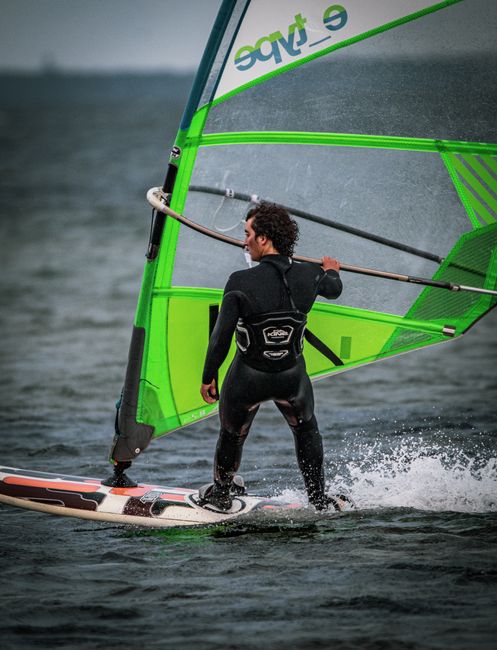
The first proper windy day of spring: whitecaps on the lake, a 6.0 rigged on the grass, and the water still cold enough to make you gasp. You pull on your suit in the parking lot, wade in, sheet in and go. Two hours later, after a dozen falls and a long beat back upwind, you’re either grinning or shivering, and the difference is mostly the neoprene. The best wetsuits for windsurfing keep you warm in the wind as well as in the water, let you move freely on the boom, and don’t flush a cold rush down your back every time you fall in. This guide explains thickness by water temperature, fullsuit vs shorty, zips and seals, boots and impact vests, then gives seven real suits worth buying in 2026.

Prices change often. The prices below are what we saw at the maker or a major retailer in October 2026; check the current price before you buy.
Our top picks
O'Neill Epic 4/3 mm Back Zip Full Wetsuit (men's)
- 4/3 mm fullsuit
- Windproof smoothskin chest and back
- Back zip, knee pads
O'Neill Hyperfreak 4/3+ mm Chest Zip Fullsuit
- 4/3+ mm fullsuit
- F.U.Z.E. chest zip
- Taped, glued and blind-stitched seams
Quiksilver Marathon Sessions 5/4/3 Hooded Chest Zip
- 5/4/3 mm with hood
- Listed for 45°F and up
- Sealed and taped seams
Rip Curl Women's Dawn Patrol 5/4 mm Hooded
- 5/4 mm with hood
- Maker: water below 48°F to 55°F
- E5 flash lining
O'Neill Women's Epic 3/2 mm Back Zip Full
- 3/2 mm fullsuit
- Windproof smoothskin chest and back
- Back zip, knee pads
O'Neill Reactor-2 3/2 mm Back Zip Full (men's)
- 3/2 mm fullsuit
- Back zip
- Ultra-stretch neoprene
O'Neill Reactor-2 2 mm Spring Wetsuit (men's)
- 2 mm short sleeve, short leg
- Back zip
- Ultra-stretch neoprene
Windsurfing wetsuits compared
| Wetsuit | Thickness | Entry | Water it suits | About (Oct 2026) |
|---|---|---|---|---|
| O’Neill Epic 4/3 | 4/3 mm full | Back zip | Cool (about 54-63°F*) | $245 |
| O’Neill Hyperfreak 4/3+ | 4/3+ mm full | Chest zip | Cool (about 54-63°F*) | $420 |
| Quiksilver Marathon Sessions | 5/4/3 mm, hood | Chest zip | 45°F and up (listing) | $400 |
| Rip Curl Women’s Dawn Patrol 5/4 | 5/4 mm, hood | Not stated | Below 48°F to 55°F (listing) | $320 |
| O’Neill Women’s Epic 3/2 | 3/2 mm full | Back zip | Mild (about 64-68°F*) | $127 |
| O’Neill Reactor-2 3/2 | 3/2 mm full | Back zip | Mild (about 64-68°F*) | $160 |
| O’Neill Reactor-2 Spring | 2 mm shorty | Back zip | Warm (about 70-77°F*) | $125 |
*Ranges from O’Neill’s general wetsuit thickness guide, not from the individual listings. Windsurfers spend a lot of time out of the water in the wind, so if you’re between two ranges, the warmer suit is usually the safer choice.
The best wetsuits for windsurfing
1. O’Neill Epic 4/3 Back Zip: best overall
The Epic is a mid-priced 4/3 that suits the long spring and autumn seasons when most of us actually sail. O’Neill pairs UltraFlex neoprene in the shoulders, arms and lower body with windproof smoothskin neoprene and a Fluidflex Firewall lining in the chest and back, which is exactly where the wind hits when you’re hanging off the boom. Seams are glued and blindstitched, with a double super seal neck and Hand-Cuff sleeves to keep water out, Krypto Armor knee pads for uphauling on the board, and a back zip with a small key pocket.
- Good: windproof chest and back panels; easy back-zip entry; a fair price for a 4/3.
- Watch out: a back zip lets in a little more water than a chest zip in big falls.
- Best for: men sailing cool lakes and coasts from spring to late autumn.
Check the O'Neill Epic 4/3 price on Amazon
2. O’Neill Hyperfreak 4/3+ Chest Zip: best premium chest zip
The Hyperfreak is O’Neill’s high-stretch suit, and the “+” means a little extra thickness over a standard 4/3. The listing describes a F.U.Z.E. chest-zip closure meant to stop flushing, glued and blind-stitched seams with TB3X taping in key areas, and drain holes that let water out of the chest-zip area. On a windsurfer, that stretch matters most in the shoulders, where you pump the rig and hold the boom for hours.
- Good: very flexible; chest zip seals better against flushing.
- Watch out: the priciest 4/3 here; chest zips take practice to get into; this listing is a single size (L) and stock was low.
- Best for: regular sailors who want maximum freedom of movement.
Check the O'Neill Hyperfreak 4/3+ price on Amazon
3. Quiksilver Marathon Sessions 5/4/3 Hooded: best for cold water
For winter sailors and cold northern coasts, a hooded 5/4/3 is the next step up. The Marathon Sessions is a chest-zip fullsuit with an attached hood and sealed and taped seams, and the listing rates it for water of 45°F and up. The three numbers mean the thickest neoprene sits on the core, thinner panels in the legs and the thinnest where your arms need to move.
- Good: built-in hood; sealed and taped seams for cold, windy days.
- Watch out: too warm for summer; add boots and gloves in really cold water.
- Best for: men sailing through winter or in cold ocean water.
Check the Quiksilver Marathon Sessions price on Amazon
4. Rip Curl Women’s Dawn Patrol 5/4 Hooded: best women’s cold-water suit
Rip Curl built this hooded 5/4 for cold water and says it suits water temperatures from below 48°F to 55°F. The listing describes E5 neoprene for stretch, an E5 flash lining for fast-drying core warmth and an E4 thermo lining that holds heat without limiting movement. It’s cut for women, which matters: a suit that gaps at the lower back or chest flushes cold water no matter how thick it is.
- Good: a women’s cut with a hood and warm linings.
- Watch out: stock in some sizes was low when we checked.
- Best for: women sailing in late autumn, winter and early spring.
Check the Rip Curl Women's Dawn Patrol 5/4 price on Amazon
5. O’Neill Women’s Epic 3/2 Back Zip: best women’s three-season suit
The women’s Epic shares the men’s build in a thinner 3/2: UltraFlex neoprene in the shoulders, arms and lower body, windproof smoothskin with a Fluidflex Firewall in the chest and back, glued and blindstitched seams, a double super seal neck, Krypto Armor knee pads and a back zip. O’Neill pitches it for beginners and experienced riders alike, and at the price we saw it was the best value here.
- Good: windproof upper body at a low price; easy to get in and out of.
- Watch out: the price varies a lot by size and color.
- Best for: women sailing mild water from late spring to early autumn.
Check the O'Neill Women's Epic 3/2 price on Amazon
6. O’Neill Reactor-2 3/2 Back Zip: best budget fullsuit
The Reactor-2 is O’Neill’s entry-level fullsuit and the one we suggest in our windsurfing gear guide for learners. It has a back zip with a water-resistant closure, ultra-stretch neoprene and “seamless paddle zones” with few seams across the arms and shoulders. For a first season of lessons in mild water, it covers you from neck to ankle without a big spend.
- Good: low price; simple back-zip entry; wide size range.
- Watch out: no windproof panels, so it feels colder on breezy days than the Epic.
- Best for: beginners and summer sailors on a budget.
Check the O'Neill Reactor-2 3/2 price on Amazon
7. O’Neill Reactor-2 2 mm Spring: best shorty for warm water
In warm summer water a fullsuit is too much, and a shorty (short sleeves, short legs) is the classic answer. This 2 mm spring suit uses the same ultra-stretch neoprene and back zip as the Reactor-2 fullsuit. It keeps your core warm between falls and protects against the harness and board rubbing, while leaving your arms and legs free.
- Good: cool and light for summer; easy on and off.
- Watch out: bare arms and legs mean more sun and more scrapes; not for cool water.
- Best for: warm lakes, summer holidays and tropical spots.
Check the O'Neill Reactor-2 Spring price on Amazon
How to choose a windsurfing wetsuit
- Thickness by water temperature. The first number is the core, the second the arms and legs. O’Neill’s guide suggests a rash guard above about 79°F, 2 mm or a shorty at 70-77°F, a 3/2 or 4/3 at 64-68°F, a 4/3 or 5/4 at 54-63°F, a 5/4 or 6/5 at 46-52°F and 7 mm or more below that, with a hood, gloves and boots in cold winter water. Thicker suits are warmer but stiffer.
- Fullsuit vs shorty. A fullsuit covers arms and legs and is the default for most windsurfing outside the tropics. A shorty or spring suit is for warm water. A neoprene top over boardshorts is another summer option.
- Back zip vs chest zip. A back zip is easier to put on. A chest zip usually seals better and leaves the back panel uninterrupted, which helps when you fall in again and again.
- Seams and seals. Flatlock seams are fine for warm water. For cool and cold water, look for glued and blind-stitched or taped seams, plus snug neck, wrist and ankle seals, so water doesn’t flush through.
- Fit for windsurfing. A wetsuit should fit snug with no gaps at the lower back, armpits or neck. Try it with your arms raised as if holding a boom; a suit that pulls across the shoulders will tire you out.
- Boots and impact vests. Foot cuts and bruises are among the most common windsurfing injuries, so neoprene boots help on rocky launches; the O’Neill Reactor 2 mm reef boot (about $55) has a thick textured rubber sole. In cold water, thicker boots and gloves keep you sailing longer. For jumping, waves and foiling, an impact vest like the Ride Engine Defender HF (about $164) goes over your wetsuit; the maker says plainly it is not a Coast Guard life vest.
Cold-water safety
The National Weather Service advises dressing for the water temperature, not the air, and the US Coast Guard warns that cold shock hits in the first minute of a fall into cold water and that cold can weaken your arms and legs within about 10 minutes. On a windsurfer, wind on wet neoprene makes it feel colder still. Sail with a friend, stay with your board if anything goes wrong (it floats and is easier to see than a swimmer), and head in early if you start shivering. If you feel numb, confused or can’t stop shivering after a session, get warm and get medical help.
For boards, rigs, harnesses and helmets, see our full windsurfing gear guide. Our windsurfing injuries page covers feet, backs and foil safety, and the windsurfing for kids page helps parents get young sailors started. Back to the windsurfing hub, more posts in windsurfing, and for sore shoulders after a long session, our massage gun and recovery shoe guides.
Windsurfing wetsuit questions
What thickness wetsuit do I need for windsurfing?
Go by the water temperature. As a rough guide from O’Neill, a 3/2 suits about 64-68°F, a 4/3 about 54-63°F and a hooded 5/4 colder water. Because the wind cools you, many windsurfers pick the warmer option when unsure.
Is a surf wetsuit OK for windsurfing?
Yes. Most wetsuits sold for windsurfing are surf-style suits, including all the picks here. Look for stretch in the shoulders and, for windy days, smooth or windproof panels on the chest and back.
Should a beginner windsurfer buy a shorty or a fullsuit?
Unless the water is warm, a fullsuit. Beginners fall in a lot and spend more time in the water than experienced sailors, and a fullsuit also protects shins and knees when climbing back on the board.
Do I need wetsuit boots for windsurfing?
They’re a good idea on rocky or shelly launches, since foot cuts are one of the most common windsurfing injuries, and essential in cold water. Thin boots keep more feel on the board; thicker ones are warmer.
Does an impact vest replace a life jacket?
No. Many impact vests, including the Ride Engine Defender HF, are not Coast Guard-approved life vests. For beginners, kids and cold or open water, wear a proper life jacket; some youth foil classes require an impact vest that also meets a flotation standard.