This article contains affiliate links: if you buy through them we may earn a commission, at no extra cost to you. Learn more.
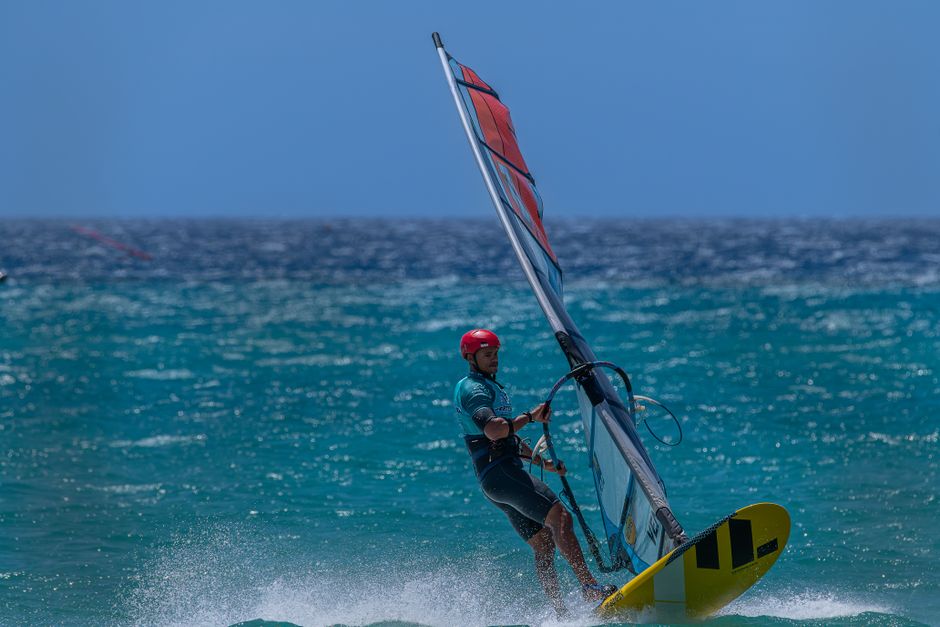
Late afternoon, the wind has picked up to force 6 and the bay is full of whitecaps. A windsurfer on a slalom board, still on the sail he rigged at lunchtime, hooks in, steps into the footstraps and lights up. Then a gust hits. The rig rips forward, his feet stay in the straps for a split second too long, and he’s thrown over the front of the board into the boom. Windsurfers call it a catapult, and it’s behind a large share of windsurfing injuries. This page covers what the published research says hurts windsurfers, from beginners on a lake to wave sailors and Olympic iQFOiL racers, what lowers the risk, and when to get help.
This page is general information, not medical advice. If you’re hurt, see a sports medicine doctor, physical therapist (PT) or certified athletic trainer (AT). For the bigger picture, start at our windsurfing hub.
How risky is windsurfing? What the numbers say
A Dutch hospital study at a North Sea beach counted 5.2 injuries per 1,000 hours of windsurfing, a little lower than kitesurfing (7.0) with similar severity. A British study of 107 racing and recreational windsurfers found 1.5 injuries per person per year; wave and slalom sailors got hurt most (2.0 per year), against 1.0 for course racers and 1.2 for recreational sailors. In a German internet survey of 327 windsurfers over one season, bruises were the most common injury, but 70 riders reported fractures and 67 injuries needed surgery. A Greek study recorded 22 severe windsurfing accidents in one year in the Aegean Sea, with two deaths.
A 2023 review of recreational windsurfing injuries notes that studies use different definitions, so the rates are hard to compare. The patterns, though, are consistent:
| Who | Most common problems | Study |
|---|---|---|
| Recreational and racing windsurfers (UK) | Muscle strains (35% of new injuries), lower-back strain, knee and lower leg, shoulder and elbow | Dyson et al., 2006 |
| World Cup pros | Ankle sprains (22% of all injuries), severe knee ligament and meniscus injuries, head injuries (17%) | German study, 2001 |
| US and Caribbean windsurfers | Sprains, cuts, bruises, fractures; jumps, high-speed and catapult falls riskiest | Nathanson and Reinert, 1999 |
| Olympic iQFOiL racers | Low-back muscle cramps and spasm, cuts and abrasions, bruises, feet and toes | 2021 European Championships study |
Overpowered and catapulted: how most accidents happen
In a German study of 44 semi-professional racers on the national windsurf tour, the most frequent accident was the catapult crash (57%), and the most common cause was being overpowered: a sail too big for the wind (43%). The larger German survey found most accidents happened in force 5 to 6 winds and after about two hours on the water; technical mistakes were the leading cause, difficult jumps such as forward and back loops were the most dangerous moves, and in 46 cases riders had underestimated the weather.
- Rig for the wind you see. VDWS, the German association of water-sports schools, says sail size, board volume and fin should suit the wind, your weight and your skill. If you’re overpowered, come in and rig down.
- Take breaks. The authors of the German survey suggest a longer break after about 60 minutes, and not practicing difficult moves after an hour of sailing without one. Fatigue makes for sloppy technique.
- Learn to fall. When you feel a catapult coming, let go of the boom and try to fall away from the rig and board rather than into them.
- Save loops for fresh legs and clear water, and wear a helmet when you train them (more below).
Footstraps, knees and ankles
Footstraps give control at speed, but they also hold the foot while the body goes elsewhere. In the World Cup study, 59% of all injuries were in the legs, 61% of the pros had injured an ankle, and 80% of knee injuries were severe ligament or meniscus injuries. The authors blamed the twisting forces on a knee when the foot stays fixed in a fall, and called for straps that release the foot. In the racer study, ligament tears in the lower leg were the most common injury (33%).
- Don’t set footstraps so tight or deep that your foot can’t come out in a fall; a shop or coach can help you adjust them. Learn to sail in the straps only once you’re comfortable planing.
- Build leg strength, landing control and balance on land (see windsurfing training).
- After a knee sprain, a sleeve like the Bauerfeind GenuTrain is comfortable for some sailors, but it’s not a substitute for rehab; ask your PT. More options in our best knee sleeves and best ankle braces guides.
Low back, shoulders and elbows
Windsurfing loads the back in a way few sports do. In the British study, nearly a quarter (22%) of new lower-body injuries were lower-back muscle strains, and they made up 34% of injuries that came back. The shoulder, upper arm and elbow accounted for 41% of new upper-body soft-tissue injuries. In elite iQFOiL racers, where riders pump the sail with big knee and trunk movements, low-back muscle cramps and spasm were the single most common problem, and the lower back was the most injured area (26%).
- Uphaul with your legs. Pulling a wet sail out of the water with a rounded back is a classic beginner strain. Bend your knees, keep your back straight and lift gradually.
- Use the harness. Once you can, hooking in takes load off the arms; harness line length and boom height should let you hang with straight arms.
- Train the trunk. Core and hip-hinge strength help; see training.
- Warm up. Only about 30% of the iQFOiL racers said they regularly warmed up before training on the water. A few minutes on the beach costs nothing.
Head injuries, helmets and impact vests
Head injuries come from the boom, mast and board in catapults and failed jumps. In the World Cup study, 17% of injuries were to the head and only 10% of the pros used a helmet; the authors recommended one. The British study found five concussions among wave and slalom sailors and pointed to the need for head protection. Foil racing has changed the culture: at the 2021 iQFOiL European Championships, 90% of racers wore helmets and 73% impact vests in training.
Concussion: use the CDC HEADS UP rule. If you think someone has a concussion, take them out of the water for the rest of the day, and they don’t sail again until a health care provider clears them. Call 911 for danger signs: one pupil larger than the other, a worsening headache, slurred speech, weakness or numbness, repeated vomiting, seizures, increasing confusion or loss of consciousness. A water helmet like the Pro-Tec Ace Water and an impact vest like the Ride Engine Defender HF are common choices. An impact vest isn’t automatically a life jacket; check the label.
Foils, fins and cuts
Since Paris 2024 the Olympic windsurfing class, iQFOiL, flies on a hydrofoil, and foiling has spread to recreational windsurfers. The iQFOiL study found a higher injury prevalence than in the old non-foiling RS:X class (52% of racers over a year; 61% of women and 46% of men). Cuts and abrasions were 23% of injuries, the foot (13%) and toes (9%) were often hurt, and the foil was the piece of gear most often involved, ahead of footstraps and the boom. The authors note a steep learning curve when sailors move to foiling. Only one racer in the study wore neoprene boots, though wingfoil researchers recommend cut-resistant booties in any water temperature.
- Fall away from the foil, never toward it, protect your head with your arms, and keep foils clear of swimmers.
- Wear booties like the O’Neill Heat 3mm for foils, rocks and reefs.
- Cuts in seawater can get infected. The CDC advises staying out of salt or brackish water with an open wound if you can, covering it with a waterproof bandage, and washing it with soap and clean running water. Redness, heat, swelling or fever means see a doctor.
Drowning, drifting and cold water
A broken mast foot or a dying wind can leave you far from shore. VDWS’s emergency rules: stay calm and save your energy, stay with your board (it floats and is easier to spot than a head), send clear distress signals, raise your rig regularly so you’re seen, and leave your gear only if you absolutely must. Learn to roll up the rig and paddle the board back before you need to.
- Cold water is anything 70°F (21°C) or lower, says the National Weather Service. The first minute brings cold shock (gasping); within about 10 minutes you can lose muscle control. Dress for the water temperature, not the air.
- Hypothermia signs (CDC): shivering, exhaustion, confusion, fumbling hands, slurred speech, drowsiness. Get the person somewhere warm, remove wet clothes and warm the core; a body temperature below 95°F is an emergency.
- Don’t go out alone in questionable conditions and tell someone where you’re sailing (VDWS). Offshore wind is the classic trap for windsurfers.
- Wear flotation when learning, far out or in cold water, and consider a personal locator beacon (see best wearables).
Sun, eyes and ears
In a survey of 240 elite surfers, windsurfers and Olympic sailors at world championships, 77% had been sunburned the previous season. The American Academy of Dermatology recommends broad-spectrum, water-resistant SPF 30+ sunscreen, reapplied every 2 hours and after getting wet, plus a long-sleeve UPF top. Wind, sun and spray are linked to pterygium (“surfer’s eye”), says the American Academy of Ophthalmology. Surfer’s ear (bony growth in the ear canal from cold water and wind) is common in windsurfers; a German study of windsurfers and kitesurfers found wearing a neoprene hood was linked to less severe cases. More on this in Session Day and Race Day.
Protective gear many windsurfers use
Pro-Tec Ace Water Helmet
- For wake, kayak and kite
- Low profile shell
- About $55
Ride Engine Defender HF Impact Vest
- For foiling and watersports
- Impact protection for falls
- About $164
O'Neill Heat 3mm Round Toe Boot
- 3 mm neoprene
- Textured rubber sole
- About $80
Helmets, vests, harnesses and boards are covered in detail on our windsurfing gear page, and young sailors’ safety on the youth windsurfing page.
When to see a sports medicine doctor, PT or athletic trainer
- Call 911 right away: any concussion danger sign, a near-drowning (even if the sailor seems fine afterward), a possible broken bone or spine injury (keep the person still), severe chest pain or trouble breathing, or hypothermia.
- Within a day or two: a pop and swelling in the knee, you can’t bear weight, a suspected concussion, or a deep cut from a fin or foil.
- Soon: low-back, shoulder or elbow pain that keeps coming back, pain that runs down a leg, a cut that looks infected, ear pain or hearing loss, or a growth on the white of the eye.
Return to sailing is a process, not a date: strength work, then easy sailing in light wind, footstraps and jumps last, guided by whoever is treating you. Look after the basics on our windsurfing recovery page. Kiters have their own guide at kitesurfing injuries, and team-sport athletes can compare soccer injuries.
Windsurfing injuries: FAQs
What is the most common windsurfing injury?
Bruises, cuts and muscle strains, especially lower-back strain. Among more serious injuries, ankle sprains and knee ligament injuries are common, often linked to feet held in the footstraps during a fall.
What is a catapult fall in windsurfing?
Being thrown over the front of the board when the rig is ripped forward, usually by a gust while you’re hooked in and overpowered. It’s one of the riskiest falls; rigging the right sail size and learning to let go and fall clear help.
Why does my lower back hurt after windsurfing?
Uphauling, holding the rig and pumping load the back muscles, and low-back strain is one of the most common windsurfing injuries. Lifting with your legs, using the harness, and core and hip-hinge training help many sailors. Pain that runs down the leg or comes with numbness needs a doctor.
Should windsurfers wear a helmet?
Researchers studying wave, slalom and World Cup windsurfers recommend one, and most Olympic iQFOiL racers now wear them. Beginners near other sailors, jumpers, foilers and wave sailors have the most reason to.
Is windfoiling more dangerous than regular windsurfing?
Elite iQFOiL racers reported more injuries than racers did in the old non-foiling Olympic class, mostly back cramps, cuts and bruises, with the foil the gear most often involved. Booties, a helmet, an impact vest and falling away from the foil all help.