This article contains affiliate links: if you buy through them we may earn a commission, at no extra cost to you. Learn more.
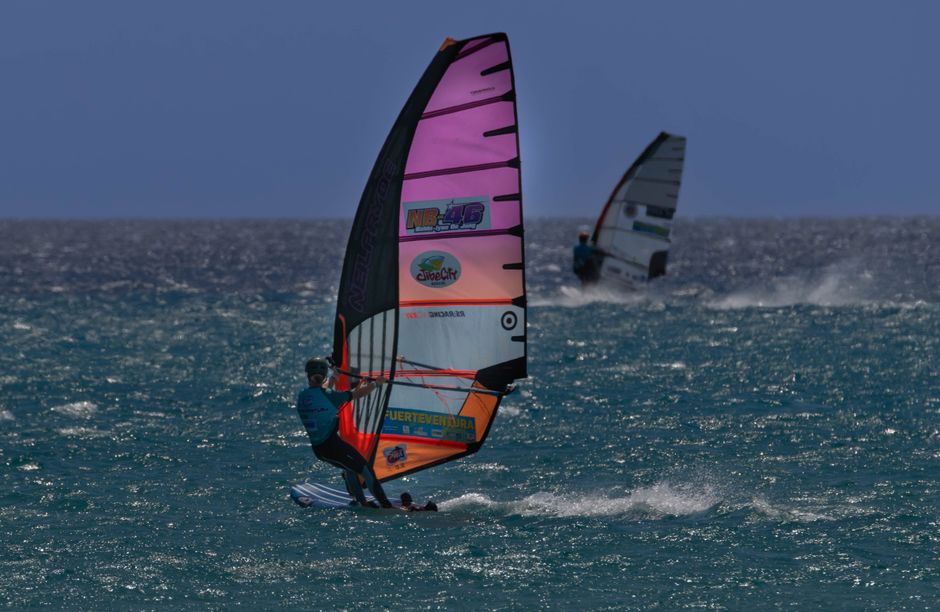
The wind app pinged before breakfast: 16 to 20 knots, side-shore, building after lunch. By noon the car park at the beach is full of vans, sails are laid out on the grass, and everyone is asking the same question: what size are you rigging? A good windsurfing day starts long before you step on the board, and a race day is longer still: a skippers’ meeting, waiting for wind, several races and hours on the water. This page is Session Day and Race Day for windsurfers, from a first summer on a lake to wave sailing, slalom and iQFOiL regattas: reading the wind, choosing your sail, sailing with a buddy, staying fueled and hydrated, and handling sun, cold water and storms.
General information, not medical advice. Back to the windsurfing hub.
Read the wind and weather before you rig
Misjudging the wind is a big part of how windsurfers get hurt. In a German survey of 327 windsurfers, most accidents happened in force 5 to 6 winds, and in 46 cases sailors had underestimated the weather. Check the forecast, then check the water from the beach:
- Strength. On the Beaufort scale used by the National Weather Service, force 4 (11 to 16 knots) brings fairly frequent whitecaps, force 5 (17 to 21 knots) many whitecaps, and force 6 (22 to 27 knots) large waves and extensive foam. Beginners learn best in light, steady wind; planing and footstraps come in stronger breezes.
- Gusts. The Weather Service defines a gust as a swing of 10 knots or more between peaks and lulls. Dark patches racing across the water, or hills and buildings upwind, mean gusty air.
- Direction. Side-shore and side-onshore wind bring you back to the beach if something breaks. Offshore wind blows you away from land and is usually gusty after crossing it; avoid it unless there’s a rescue boat. Straight onshore wind makes getting out through waves hard.
- Marine forecast. Check the Weather Service’s coastal or nearshore marine forecast. A Small Craft Advisory is issued for winds or seas hazardous to small boats (the threshold varies by region); treat it as a signal to rethink.
- Storms and squalls bring sudden wind shifts and gusts as well as lightning. If one is building, don’t launch.
- The spot. Know where shallows, rocks, piers, swimmers and boat channels are, and the right-of-way rules for crossing other sailors (see windsurfing rules).
Rig the right size, and check your gear
Being overpowered is the classic windsurfing mistake. In a study of semi-professional racers, a sail too big for the wind was behind 43% of accidents, and the catapult crash was the most common fall. VDWS, the German association of water-sports schools, says sail size, board volume and fin should suit the wind, your weight and your skill, and that you should check your equipment before every session. When in doubt, rig smaller: it’s easier to go out again on a bigger sail than to recover from a crash.
- Mast foot and base secure, uphaul rope and harness lines not frayed, boom clamp tight.
- Fin or foil screws tight; foil edges covered on the beach.
- Footstraps adjusted so your feet can come out in a fall.
- Helmet and impact vest for jumping, foiling and racing (see windsurfing gear).
Buddy, breaks and self-rescue
VDWS asks windsurfers to tell others where they plan to sail and not to go out alone in questionable conditions. Its emergency rules are simple: stay calm and save energy, stay with your board, send clear distress signals, raise your rig now and then so you can be seen, and only leave your gear if you absolutely must. Make it routine:
- Agree on a sailing zone and a time to check in on the beach with a buddy.
- Learn self-rescue in easy conditions: de-rig in the water, roll the sail around the mast, lie on the board and paddle in.
- Take breaks. The German survey found most accidents came after about two hours on the water, and its authors suggest a longer break after an hour.
- On remote spots, carry a way to call for help: a phone in a waterproof case or a personal locator beacon (see best wearables).
Hydration: you sweat more than you think
Wind and spray keep you cool, so thirst sneaks up. Olympic windsurfers race at more than 85% of max heart rate, and a field study of amateur windsurfers at regattas found their daily fluid intake was too low and they ate less energy than they burned.
- Before: the American College of Sports Medicine (ACSM) suggests about 5 to 10 mL per kilogram of body weight 2 to 4 hours before exercise (about 350 to 700 mL for a 70 kg sailor), aiming for pale urine.
- During: come in for a drink on long sessions. The National Athletic Trainers’ Association (NATA) suggests keeping body-mass loss under about 2% and drinking to thirst when you don’t know your sweat rate, without overdrinking. On hot days or long race days, an electrolyte mix like Skratch Labs Hydration replaces sodium.
- After: weigh yourself before and after a few sessions to learn your sweat rate; ACSM suggests about 1.25 to 1.5 liters per kilogram lost.
- Keep a big bottle like the Nalgene 32 oz in the shade by your gear.
Fueling a session or a regatta
Eat a familiar meal 1 to 4 hours before you sail, with carbohydrate and not too much fat or fiber (ACSM). For long days, ACSM and the IOC consensus suggest about 30 to 60 g of carbohydrate an hour for 1 to 2.5 hours of stop-and-go exercise: a banana, a sandwich, rice cakes or a sports drink between runs or races. A regatta strings many races together over several days, and reviewers of Olympic windsurfing stress nutrition for exactly that reason. Eat something between races even if you’re not hungry, and pack a cooler, because waiting for wind can push lunch into the afternoon. More on the windsurfing nutrition page.
Race day at a regatta
- Read the sailing instructions and go to the skippers’ meeting: course, start times, signals and safety rules.
- Warm up on land and on the water. Only about 30% of iQFOiL racers said they regularly warmed up before training, and low-back cramps were their most common problem.
- Plan for waiting. Shade, layers, food and water on the beach, and something warm if the wind dies and you’re wet.
- Between races: drink, eat a little, and stay warm or cool as needed.
Where to race, from local club series to the PWA World Tour and the Olympics, is on our windsurfing leagues and associations page.
Sun: wind hides the burn
A breeze makes it easy to forget the sun, and the water reflects it back at you. In a survey of 240 elite surfers, windsurfers and Olympic sailors, 77% had been sunburned the previous season. The American Academy of Dermatology (AAD) recommends broad-spectrum, water-resistant SPF 30 or higher, about 1 ounce for the body, applied 15 minutes before going out and reapplied every 2 hours and after swimming or sweating, plus SPF 30 lip balm. A mineral sport sunscreen like Blue Lizard Sport SPF 50, a long-sleeve UPF rash guard like the O’Neill Basic Skins and sunglasses on the beach cover most of it. The American Academy of Ophthalmology links wind, UV and dust to pterygium, a growth on the eye sometimes called “surfer’s eye”.
Heat on the beach, cold in the water
Heat: rigging and waiting in full sun can be hot work. NATA recommends acclimatizing to heat over 7 to 14 days. Heavy sweating, weakness, dizziness, headache or nausea are signs of heat exhaustion: get into shade, cool down and drink. Confusion or collapse is an emergency: call 911 and cool the person right away.
Cold: the National Weather Service calls any water 70°F (21°C) or lower “cold water”. A fall can bring a gasp reflex, and within about 10 minutes you can lose muscle control. Wear a wetsuit for the water temperature, not the air, and a hood in cold water, which a German study linked to milder surfer’s ear in windsurfers and kitesurfers. Get changed and warm quickly after the session; wind chill on a wet body is real.
Lightning and storms
A tall mast on open water is the last place to be in a thunderstorm. NATA’s rule: “When thunder roars, go indoors.” No place outside is safe; shelter in a building or a hard-topped car, and wait 30 minutes after the last thunder before going back out. Race committees postpone for storms too.
Session Day checklist
- Forecast, gusts, direction and storms checked; spot hazards known.
- Sail size for the wind you see; gear checked.
- Buddy, check-in time and plan agreed; someone on land knows where you are.
- Wetsuit for the water temperature, booties, helmet and vest as needed.
- Sunscreen on 15 minutes before, rash guard, lip balm, sunglasses for the beach.
- Water, electrolytes and snacks in the shade.
Blue Lizard Sport Mineral SPF 50
- Zinc oxide + titanium dioxide
- 80 min water resistant
- About $9 (3 oz)
O'Neill Basic Skins Long-Sleeve Rash Guard
- UPF 50+
- Long sleeves
- About $40
Skratch Labs Hydration Mix
- 400 mg sodium per serving
- About 20 g carbs
- About $24 for 20 servings
Nalgene Sustain 32 oz Wide Mouth
- 32 oz, wide mouth
- BPA-free Tritan
- About $16
After the session, head to windsurfing recovery; if something went wrong, see windsurfing injuries. Kiters have their own kitesurfing Session Day page, and you’ll find more drink mixes in our best electrolyte powder guide.
Session Day and Race Day: FAQs
What wind is good for beginner windsurfers?
Light, steady wind well below the whitecap stage, on flat water, blowing side-shore or side-onshore, ideally with a school that picks the day and the gear for you. Gusty and offshore wind are the ones to avoid.
What size sail should I use?
It depends on the wind, your weight, your board and your skill. If you’re overpowered and fighting the rig, rig smaller: an oversized sail was the leading cause of accidents in a study of windsurf racers.
What should I do if I can’t sail back?
Stay calm, stay with your board and signal for help; raise the rig now and then so you’re seen. If you’re sure you can reach safety, de-rig, roll the sail around the mast and paddle the board in.
How much should I drink when windsurfing?
Start hydrated, drink between runs on long sessions and to thirst, and replace what you lost afterward. Weighing yourself before and after a few sessions shows your sweat rate. Add electrolytes on hot days or long race days.
Should I get off the water for lightning?
Yes, right away. If you can hear thunder, you’re close enough to be struck. Sail in, shelter in a building or hard-topped car, and wait 30 minutes after the last thunder.