This article contains affiliate links: if you buy through them we may earn a commission, at no extra cost to you. Learn more.
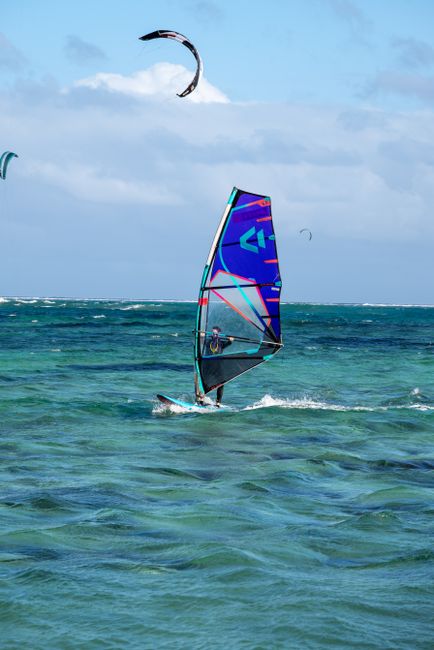
The car park at a windsurf spot on a windy morning tells you everything about the gear: vans with boards on the roof, three or four sails rigged on the grass in different sizes, someone pulling on a wetsuit behind an open door, someone else adjusting harness lines on a boom. Windsurfing has more kit than most water sports, and it’s easy to buy the wrong thing. This guide to windsurfing gear walks through what you really need, in the order you’ll need it: the board and rig, the harness, safety gear, wetsuits and boots, and the recovery gear that keeps you sailing.
Buying guide · Our Windsurfing buying guide compares the gear we'd pick, with prices and sizing:
Prices change often. The prices below are what we saw on Amazon in October 2026; check the current price before you buy.
Our windsurfing gear picks
Spatium Inflatable Windsurf Board and Sail Set
- Inflatable board + 5 m² sail
- Seller: for 11–15 knots
- Stated capacity 340 lb
Spatium Beginner Windsurf Sail (5 m²)
- 5 m² sail, luff 400 cm
- Three-piece fiberglass mast
- Boom 184 cm
Epic Gear Viper Waist Harness
- Removable windsurf rear handle
- Quick-release bar
- Safety knife pocket
Dakine Wahine Waist Harness
- Women-specific slim fit
- Flexible composite shell
- Kite or windsurf spreader bar
Pro-Tec Ace Water Helmet
- CE EN 1385 water-sports standard
- 15 vents for drainage
- Sizes XS to XL
Ride Engine Defender HF Impact Vest
- Made for foiling incl. windsurf
- Impact shells in high-risk areas
- Not a life jacket
O'Neill Reactor-2 3/2 mm Back Zip Wetsuit
- 3/2 mm full suit
- Back zip
- Surf, paddle, sail
Windsurfing gear compared
| Gear | What it’s for | Key fact | About |
|---|---|---|---|
| Spatium inflatable board and sail set | Learning on lakes and calm bays | Seller: 5 m² sail for 11–15 knots; 340 lb capacity | $1,149 |
| Spatium 5 m² beginner sail | A first rig | Three-piece fiberglass mast, 184 cm boom | $629 |
| Epic Gear Viper harness | Hooking in once you plane | Removable rear handle for windsurfing | $157 |
| Dakine Wahine harness | Women’s waist harness | Spreader bar for kite or windsurf | $130 |
| Pro-Tec Ace Water helmet | Jumping, waves, foiling | CE EN 1385 | $66 |
| Ride Engine Defender HF | Impact protection on a foil | Not a life jacket | $164 |
| Dakine Surface impact vest | Impact protection | 3 cm closed-cell foam; not flotation | $170 |
| O’Neill Reactor-2 3/2 | Cool water | 3/2 mm back-zip full suit | $160 |
| O’Neill Reactor reef boot | Rocks, shells, fins | 2 mm, textured sole | $55 |
Board and rig: buy after your lessons
The board and rig (sail, mast, boom, mast foot and extension) are the big spend, and the right choice depends on your weight, your level and your local wind. Take lessons first, try rental gear, and ask your instructor or a local shop before buying. A few rules of thumb hold everywhere: beginners need a big, wide board with lots of volume and a daggerboard for stability, and a small sail they can pull up easily; sailors get onto smaller boards and choose a sail size for each day’s wind as they improve. Being overpowered with too much sail is a classic cause of crashes, so when in doubt, rig smaller.
Most performance boards and sails are sold through windsurf shops and the brands themselves; the Olympic iQFOiL, for example, uses Starboard boards and Severne sails. For learning on a lake, inflatable sets have made the sport easier to store and carry. The Spatium inflatable windsurf board and sail set (about $1,149) pairs an inflatable board (325 by 84 cm or 350 by 76 cm, depending on color) with a 5-square-meter sail that the seller pitches for beginners in 11 to 15 knots, with a stated capacity of 340 pounds. If you already have a big stand-up paddleboard with a mast-foot insert, the Spatium 5-square-meter beginner sail (about $629) comes with a three-piece fiberglass mast and a 184 cm boom. These are entry-level, budget-brand sets: fine for learning in light wind, not for planing in strong wind. Check that the mast foot fits your board.
Harness: let your body hold the sail
Once you can sail back and forth in steady wind, a harness changes everything. Harness lines on the boom hook into a hook on your harness, so your body weight, not your arms, holds the pull of the sail. That saves your forearms and lets you sail for hours. Harnesses come as waist harnesses, which most freeride and wave sailors use, and seat harnesses, which sit lower on the hips. The Epic Gear Viper (about $157) is a waist harness with a removable rear handle for windsurfing or kiteboarding, a quick-release bar, a thermo-formed lower back support and a safety knife pocket. The Dakine Wahine (about $130) is a women-specific slim-fit waist harness with a flexible composite shell, memory foam and a spreader bar that works for kite or windsurf. Your instructor will show you where to set the harness lines on the boom so the sail feels balanced when you hook in.
Safety gear: helmet, impact vest, flotation
Head and neck injuries are the second most common windsurfing injuries after the legs, and on a foil, the foil itself was the most damaging piece of equipment in a study of iQFOiL racers. That’s why helmets and impact vests are standard for jumping, wave sailing and foiling, and why the iQFOiL Youth and Junior classes require both.
- Helmet: the Pro-Tec Ace Water (about $66) meets the CE EN 1385 water-sports helmet standard, drains through 15 vents and comes in sizes XS to XL.
- Impact vest: the Ride Engine Defender HF (about $164) is made for kite, surf, windsurf and wing foiling, with impact shells in high-risk areas. The Dakine Surface impact vest (about $170) uses 3 cm closed-cell foam and works with seat or waist harnesses.
- Flotation: both vests above say plainly that they’re not life jackets. Federal US rules exempt sailboards from carrying one, but for beginners, kids, cold water and races that require it, choose a US Coast Guard-approved life jacket or an impact vest that also carries a flotation rating.
Wetsuits, boots and sun
The National Weather Service advises dressing for the water temperature, not the air, and the US Coast Guard warns that cold shock hits in the first minute in cold water. For windsurfing, wind chill makes it colder still. O’Neill’s thickness guide suggests a 3/2 or 4/3 mm full suit for water around 64 to 68°F, and thicker suits plus boots, gloves and a hood in cold winter water. The O’Neill Reactor-2 3/2 back-zip wetsuit (about $160) is an affordable full suit for surfing, paddling and sailing. On the feet, foot cuts and bruises are among the most common windsurfing injuries; the O’Neill Reactor 2 mm reef boot (about $55) has a round toe, flatlock seams and a thick textured rubber sole for rocky launches. For sun, the American Academy of Dermatology recommends a broad-spectrum, water-resistant sunscreen of SPF 30 or higher, reapplied every two hours, and a long-sleeve rash guard on hot days.
Recovery gear for windsurfers
Long days on the boom load the forearms, shoulders and lower back. Many sailors bring a small massage gun such as the Theragun Mini (about $220) in the van, and slip into soft OOFOS OOahh slides (about $60) after a day barefoot on the beach. These are for comfort, not treatment; pain that lasts is a reason to see a sports medicine doctor or physical therapist. See our guides to massage guns, foam rollers and recovery shoes, and pack an electrolyte drink for long, hot sessions.
Dakine Surface Impact Vest
- 3 cm closed-cell foam
- Seat and waist harness compatible
- Not a flotation vest
Theragun Mini (3rd Gen)
- Pocket-size massage gun
- Fits a travel bag
- 3 speeds
OOFOS OOahh Slide
- OOfoam slide
- APMA Seal of Acceptance
- Machine washable
How to choose windsurfing gear
- Lessons before purchases. Rent first; your instructor can tell you what board volume and sail sizes fit your weight and local wind.
- Buy for the water you have. Light-wind lakes call for big boards and bigger sails; windy ocean spots for smaller ones.
- Check compatibility. Mast foot, mast diameter and boom size must match across brands.
- Safety gear isn’t optional once you jump, sail waves or foil: helmet and impact vest at least.
- Dress for the water. The right wetsuit and boots extend your season more than any board.
More from this section: windsurfing guide, rules and safety, injuries and best wearables for windsurfing. Kitesurfers have their own list at kitesurfing gear.
Windsurfing gear questions
What windsurfing gear do I need as a beginner?
For lessons, usually just a wetsuit or rash guard, sunscreen and maybe reef boots; schools supply the board, rig and life jacket. When you buy, start with a big, stable board and a small, light sail, and add a harness once you can sail in steady wind.
Are inflatable windsurf boards any good?
For learning and light-wind cruising on lakes, yes: they’re stable, easy to store and easy to carry. They’re less suited to planing in strong wind, where a hard board performs better.
Do I need a helmet for windsurfing?
It’s strongly recommended for jumping, wave sailing, foiling and racing, and required in some classes such as the iQFOiL Youth and Junior. For calm-water freeriding it’s your call, but head injuries are the second most common windsurfing injuries after the legs.
Is an impact vest a life jacket?
Usually not. Many impact vests, including the Ride Engine Defender and Dakine Surface, state they are not flotation devices. If you need flotation, choose a US Coast Guard-approved life jacket or a vest that carries a flotation rating.
What wetsuit thickness do I need for windsurfing?
It depends on the water temperature. O’Neill’s guide suggests a 3/2 or 4/3 mm full suit for water around 64 to 68°F, and thicker suits plus boots, gloves and a hood in colder water. Remember the wind chill and dress for the water, not the air.