This article contains affiliate links: if you buy through them we may earn a commission, at no extra cost to you. Learn more.
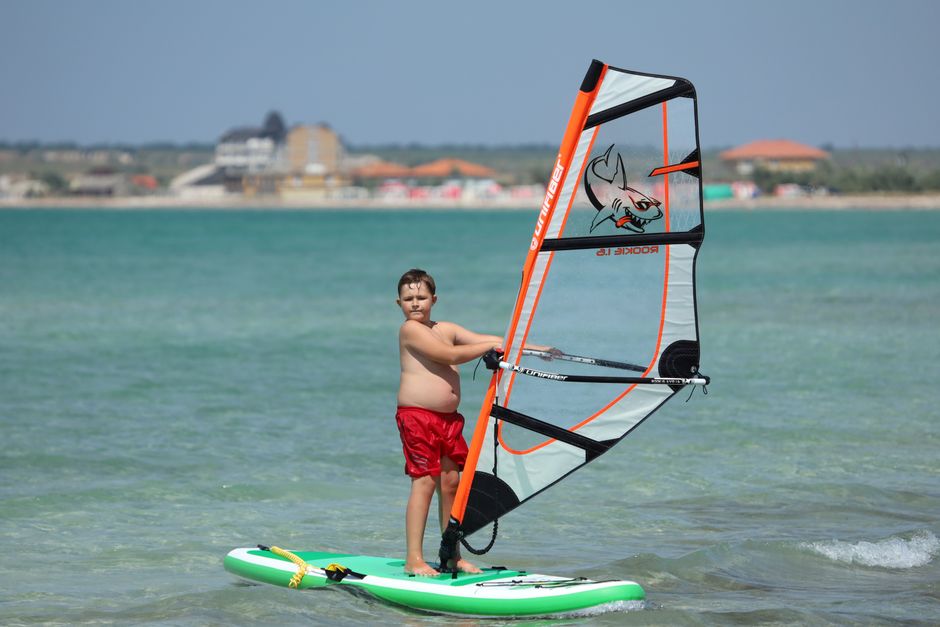
A summer camp on a calm lake. A row of wide, soft boards lines the shallows, each with a little sail. An instructor shows a group of kids how to stand up, grab the uphaul rope and lift the sail out of the water. The first tries end with a splash. By lunchtime, half of them are sailing across the bay and back, grinning. That’s how most windsurfers start, and it’s one of the best ways for a child to learn to read the wind and the water. This page answers parents’ questions about windsurfing for kids and teens: when to start, how to choose a program, how to keep them safe and what the racing path looks like.
For the big picture, see our windsurfing guide.
What age can kids start windsurfing?
There’s no single official minimum age for windsurfing. What matters more is that your child can swim, is comfortable falling into the water and can follow an instructor’s directions. Windsurfing suits kids well because the power is easy to let go of: drop the sail and the board simply stops. Equipment is the key. Children need small, light sails and wide, stable boards; an adult rig is too heavy for them to pull up and too powerful to control.
The racing classes show how young the sport starts. The Techno 293, the main youth class, runs world championships for Under 13, Under 15 and Under 17, with smaller sails for younger groups: 5.8 square meters for Under 13, 6.8 for Under 15 and 7.8 for Under 17. The iQFOiL class says its Junior and Youth categories take athletes from their first time windsurfing all the way to the Olympic pathway.
Lessons, camps and choosing a program
Most kids learn at summer camps, community sailing centers, yacht club junior programs and windsurf schools. US Windsurfing lists schools and camps, and it now runs the windsurfing instructor programs that US Sailing used to run, with an emphasis on safety, risk management and the basic skills. Certified instructors keep first aid and CPR current. When you visit a program, look for:
- Certified instructors and a clear ratio of instructors to kids.
- A safe spot: calm, shallow water with onshore or side-shore wind, so a tired child drifts back toward land, not away from it.
- A rescue boat on the water whenever kids are sailing.
- Kid-sized gear: small sails, light masts and wide beginner boards.
- Life jackets on every child, plus wetsuits when the water is cool.
Kids usually move through the same steps as adults: balance and uphauling, sailing across the wind, turning, then steering upwind. Older, stronger teens move on to beach starts, the harness and footstraps, and eventually planing and foiling. Let them go at their own pace; confidence in the water is worth more than speed.
Keeping young windsurfers safe
Life jacket, helmet and whistle
Federal US rules don’t require sailboards to carry a life jacket, but every good kids’ program puts one on each child, and you should too. A US Coast Guard-approved youth vest sized to your child’s weight, such as the O’Neill Youth Superlite (about $41, Type III, for 50 to 90 pounds), is the basic piece. For racing and foiling, the rules get stricter: the iQFOiL Youth and Junior class rules require a helmet that meets a recognized standard and has a brightly colored area visible from above, a whistle, and an impact vest that also meets a flotation standard (such as USCG Type III), worn at all times. Many impact vests sold for kite and wing foiling are not flotation-rated, so check the label against the event’s rules. A helmet such as the Pro-Tec Ace Water (about $66, CE EN 1385, sizes from XS) fits many teens, and a Fox 40 Classic whistle (about $7) clips onto the vest.
O'Neill Youth Superlite USCG Life Vest
- USCG Type III
- Youth 50–90 lb
- Three quick-release buckles
Pro-Tec Ace Water Helmet
- CE EN 1385 water-sports standard
- 15 vents for drainage
- Sizes XS to XL
O'Neill Youth Basic Skins UPF 50+ Long Sleeve
- UPF 50+ rash guard
- Long sleeves
- Youth sizes
Cold water and sun
Beginners spend a lot of time in the water, and kids get cold quickly. The National Weather Service advises dressing for the water temperature, not the air, so a wetsuit is often the most important gear for a young windsurfer. If your child is shivering, bring them in to warm up. For sun, the American Academy of Dermatology recommends a broad-spectrum, water-resistant sunscreen of SPF 30 or higher, reapplied every two hours and after swimming. A long-sleeve UPF rash guard such as the O’Neill Youth Basic Skins (about $24 to $30) covers the shoulders and arms that get burned most.
Concussion and injuries
A fall onto the board or a knock from the boom can cause a concussion. The CDC’s HEADS UP program asks coaches and parents to watch for a child who seems dazed, confused or slow, or who reports headache, dizziness, nausea or sensitivity to light. Take them off the water for the day and don’t let them return until a healthcare provider clears them. Call 911 for danger signs such as repeated vomiting, a seizure, passing out or a headache that gets worse. Most other windsurfing injuries hit the feet and legs (cuts, bruises, twisted ankles), so reef boots help on rocky or shell-covered shores. Our windsurfing injuries page covers more.
Growing bodies and long days
Long hours hanging on the boom load the lower back, shoulders and forearms. In a study of elite iQFOiL racers, the lower back was the most commonly injured area and long training sessions were behind almost a third of injuries, and a German study of recreational windsurfers suggested a longer break after about an hour of sailing. For kids, that means regular rest breaks, snacks and water between sessions, and a warm-up before they go out. Sleep matters too: the CDC recommends 9 to 12 hours a night for children 6 to 12 and 8 to 10 hours for teens. See a pediatrician, sports medicine doctor or physical therapist for pain that lasts more than a few days or changes how your child moves.
The youth racing path
For kids who love racing, the ladder is clear:
- Club and regional races: local series and US Windsurfing regional tours, often with youth fleets.
- Techno 293: US Windsurfing’s youth class, with Under 13, 15 and 17 divisions and world championships that US Sailing says typically draw more than 400 sailors.
- iQFOiL Junior and Youth: foiling windsurfers for under-17s (sails of 5.0, 6.0 and 7.0 square meters) and under-19s. The 2025 iQFOiL Youth and Junior World Championships in Brest, France, drew 379 young windsurfers from 38 nations.
- U.S. Youth Championship and the US Sailing Youth Team: the 2026 championship, October 9 to 12 in Long Beach, includes iQFOiL Youth and Junior fleets and is open to sailors who don’t turn 20 during the year. The Youth Team picks up to two women and two men in the iQFOiL.
- Youth Sailing World Championships: World Sailing’s youth worlds include the iQFOiL.
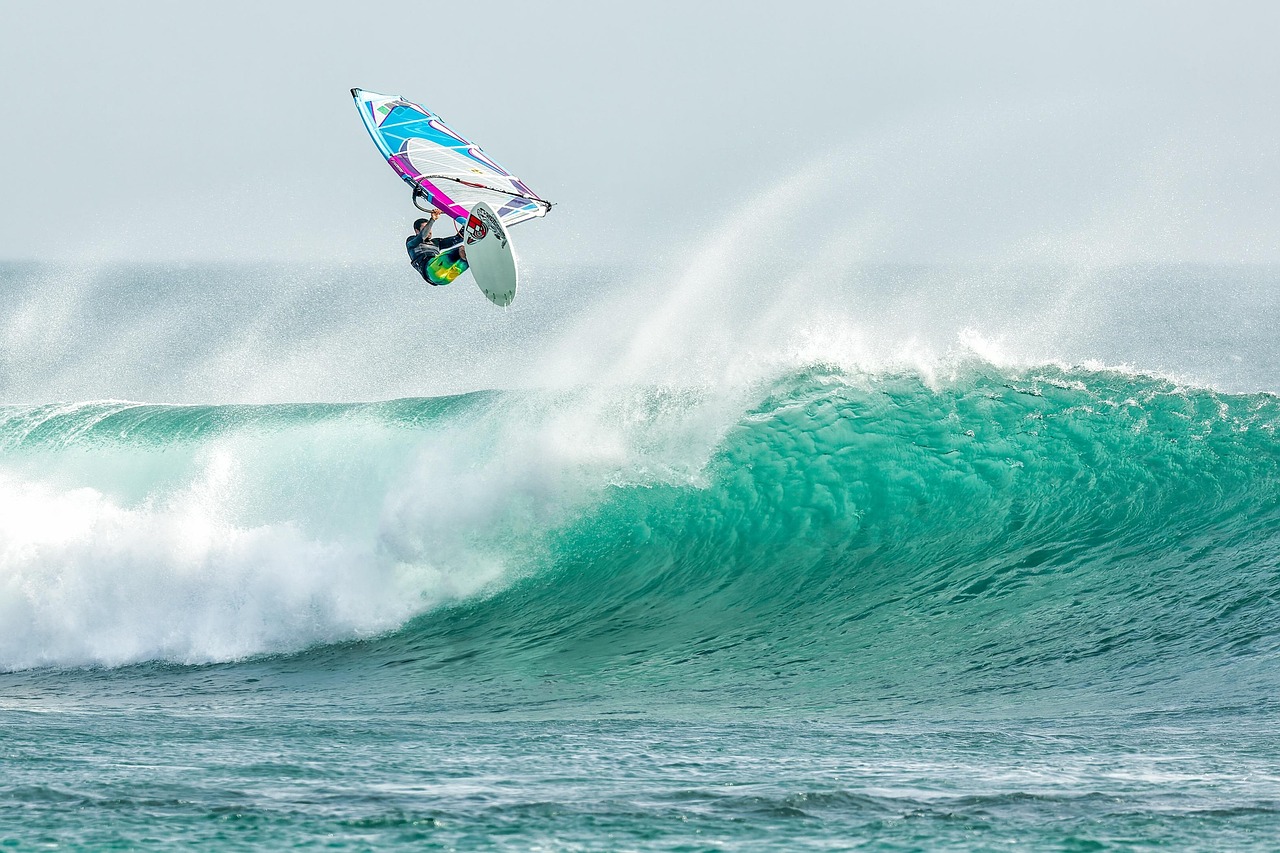
Teens who love waves or freestyle more than racing can enter local and national events on the IWT wave pyramid, and the PWA runs youth slalom events. Our leagues and associations page explains each step, our rules page covers right of way, and our gear page covers wetsuits and boots. If your child also wants to try kites, see kitesurfing for kids.
Parents’ questions about windsurfing
Is windsurfing safe for kids?
With the right setup it’s one of the friendlier wind sports for kids: small sails, calm and shallow water, onshore or side-shore wind, a certified instructor, a rescue boat and a life jacket. The power stops when they let go of the sail. Risk grows with strong wind, waves, jumping and foiling.
Does my child need to be a strong swimmer?
They should be able to swim and be comfortable falling in, because they will fall in a lot. A life jacket is still a must for beginners. Ask the program what swimming test, if any, they use.
Should we buy gear right away?
Usually not. Camps and sailing centers supply boards and sails sized for kids. Start with a life jacket, a wetsuit or rash guard, sunscreen and maybe reef boots, then buy a board and rig once you know your child is hooked and the instructor can advise on sizes.
Does my teen need a helmet?
For calm-water lessons it’s often optional, but it’s a good habit for racing, jumping and foiling. The iQFOiL Youth and Junior classes require a helmet, a whistle and a flotation-rated impact vest.
Can kids windsurf in the Olympics?
Not as kids, but the path starts young. US Sailing says most Olympic sailors started in the Techno 293; today young racers go on through iQFOiL Junior and Youth, then move to the senior iQFOiL used at Paris 2024 and LA28.