This article contains affiliate links: if you buy through them we may earn a commission, at no extra cost to you. Learn more.
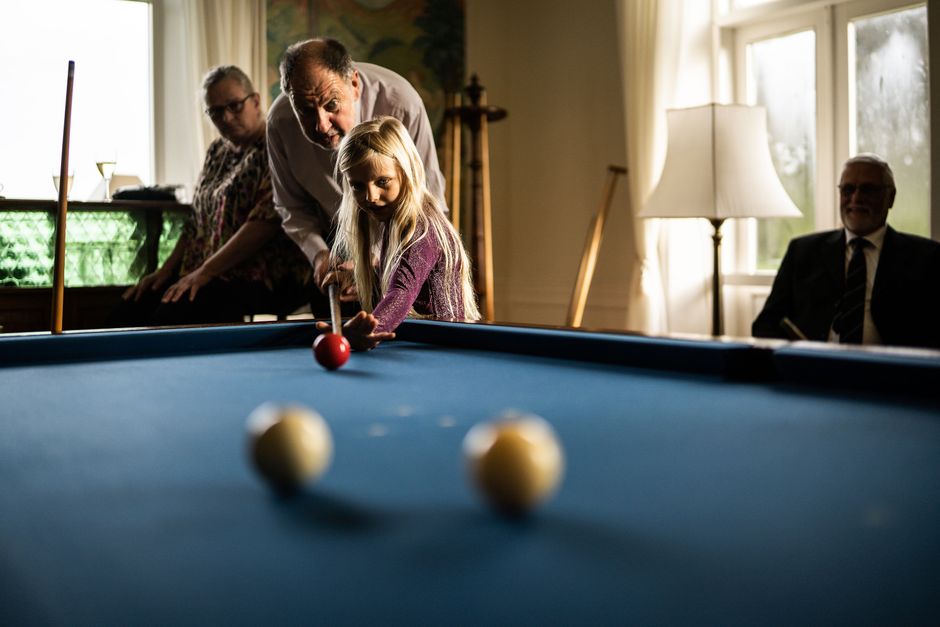
A rainy Saturday, a pool table in a friend’s basement, and a ten-year-old who has just made her first bank shot. She’s hooked. Pool is one of the few sports a kid can play with a grandparent on equal terms, and it teaches patience, focus and a feel for angles that no worksheet can. This guide is for parents: when kids can start playing pool, cues that fit, junior pool programs and tournaments, safety at the table and the questions parents ask most.
For the big picture, start at our billiards hub; the rules page explains 8-ball, 9-ball and 10-ball in plain words.
Is pool a good sport for kids?
For most kids, yes. It’s a low-injury sport, it rewards practice more than size or speed, and boys and girls can play together. A study of US emergency room visits from 2000 to 2020 (Bhardwaj and colleagues, Medicine, 2024) estimated 78,524 billiards-related ER visits over 21 years, with an average patient age of about 25. Half of them came from being struck by a ball or cue, and most were bruises, scrapes or cuts. That points to the main safety lessons for kids: give the shooter room, and keep balls on the table.
Pool isn’t a workout, though. Kids still need their daily active play, so treat pool as one of their sports rather than their only one.
When can kids start, and with what cue?
There’s no official starting age. A good sign is a child who can stand at the table, rest a hand on the cloth for a bridge and keep one foot on the floor (a WPA rule for every shot). Tournament tables stand 29¼ to 31 inches high, so very young kids will reach only the near side at first, and that’s fine.
- Size the cue to the child. A standard cue is 58 inches and often weighs 18 to 21 ounces, which is long and heavy for a small player. Shorter, lighter cues are easier to control. The GSE one-piece maple “shorty” cues come in 36 inches (12 oz), 42 (14 oz), 48 (15 oz), 52 (18 oz) and 58 (20 oz), for about $30 on Amazon in October 2026. The HMQQ two-piece cues come in 42, 48 and 58 inches in 2- or 4-packs (about $29), handy for siblings.
- Move up as they grow. When a short cue starts to feel cramped, go up a size. Teens can usually handle a full-length cue.
- Chalk and good habits: a box of Master chalk (about $10), chalk every shot or two, and learn the stance and bridge from someone who knows. The BCA’s Professional Billiard Instructors Association and the Billiard Education Foundation’s junior instruction programs are good places to look.
GSE Shorty Pool Cues (36–58 in)
- 36, 42, 48, 52, 58 inches
- 12–20 oz by length
- One-piece Canadian maple
HMQQ Two-Piece Pool Cues
- 42, 48 or 58 inches
- 17–20 oz
- 2- or 4-pack, 13 mm tips
Master Billiard Chalk, 12 Cubes
- 12 cubes
- Colors to match cloth
- Made in the USA
Where kids can play
- At home or with friends: the easiest start. See our gear page for table sizes and how much room you need.
- Pool halls: many welcome families, but many also serve alcohol and set their own age rules. Call ahead.
- Adult leagues: APA regular league play is for members 18 and older (higher in some areas). APA ran Junior Championships for players aged 7 to 18, but it cancelled its juniors program indefinitely after the 2024 event.
- Billiard Education Foundation (BEF): the main US junior organization, formed in 1994 from the Billiard Congress of America’s junior programs. It runs junior instruction, a Pool in School program, an Academic All-Americans award, the Junior Artistic Pool Challenge, local qualifiers and junior state championships.
Junior tournaments: the ladder
Competitive juniors usually move from a local qualifier or state championship to the BEF Junior National Championships. The 2026 event was held July 6–11 at the Grand River Center in Dubuque, Iowa, with 97 players, and the 2027 event returns to Dubuque. Players must be 18 or younger and may not turn 19 in the competition year, must be U.S. citizens and need a BEF membership ($15 a year). Divisions are by age and gender (recent 9-ball champions came from 12-and-under, 14-and-under, 16-and-under and 18-and-under divisions), and players compete for academic scholarships and a chance to represent the United States abroad. If there’s no qualifier near you, BEF invites families to ask for one.
At the top, the World Pool-Billiard Association holds junior world championships. In 2026 they were in Oslo, Norway, in June, with an under-19 heyball event for 32 boys and 32 girls. For the adult leagues and pro tours your junior may grow into, see our leagues and associations page.
Safety at the table
- Room to stroke: teach kids to look behind them before they shoot and to stand back from someone else’s stroke, especially on the break.
- Balls stay down: no throwing balls and no jump shots until they’re taught properly. A ball off the table is a foul for a reason.
- No sitting or climbing on the table, and no sword fights with cues.
- Head knocks: if a child is hit in the head and seems dazed or complains of headache, dizziness, nausea or blurry vision, the CDC’s HEADS UP advice is to stop play and have a healthcare provider check them. Call 911 for danger signs like repeated vomiting, a worsening headache or unusual drowsiness.
- Sleep on tournament weekends: junior events can run long. The CDC, citing the American Academy of Sleep Medicine, recommends 9–12 hours a night for children 6–12 and 8–10 for teens. Pack water, like a 32-ounce Nalgene (about $16), and real food. Our tournament day page has more.
Teens who play for hours can get a sore back or neck from the bent-over stance. Breaks, standing tall between shots and other sports help. Pain that lasts or keeps coming back is worth a visit to a pediatrician or sports medicine doctor. See our billiards injuries page. If your child also plays a team sport, our youth soccer guide covers the bigger picture of kids’ sports.
Parents’ questions about kids and pool
What age can a child start playing pool?
There’s no official minimum. Many kids start around the age they can reach the table comfortably with a short cue. Junior tournaments run up to age 18, with age-group divisions.
What size pool cue should a child use?
Shorter and lighter than an adult’s 58-inch cue. Kids’ and “shorty” cues come in lengths from 36 to 52 inches. Pick one they can hold level without strain and move up as they grow.
Can kids join a pool league?
Not APA regular league play, which is for members 18 and up. Juniors usually play through the Billiard Education Foundation’s qualifiers, state championships and Junior Nationals, and in local junior clinics where they exist.
Are there scholarships for pool?
Yes, on a small scale. The Billiard Education Foundation awards academic scholarships connected to its Junior National Championships and recognizes students through its Academic All-Americans program. Pool isn’t an NCAA sport, so there are no college athletic scholarships for it.
Is pool safe for kids?
Very safe compared with most sports. The main risk is being hit by a ball or cue, so teach kids to give the shooter room, keep balls on the table and never swing a cue around.