This article contains affiliate links: if you buy through them we may earn a commission, at no extra cost to you. Learn more.
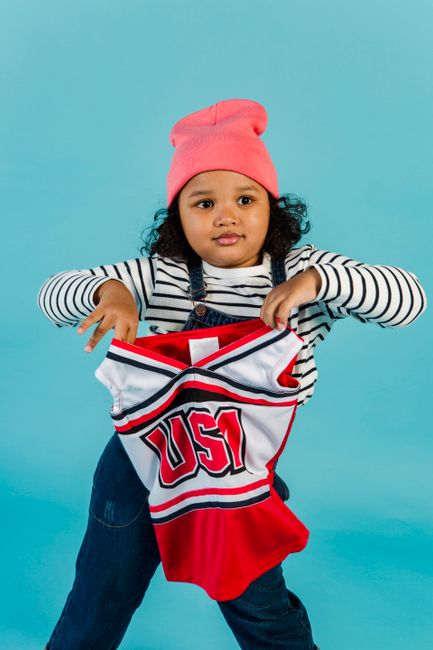
The first practice: a six-year-old in a borrowed T-shirt and a bow almost as big as her head, holding hands with three new friends to learn her first motion and her first “Go, team!” A few seasons later she’s doing back walkovers in the kitchen and asking about an all-star tryout. Youth cheerleading can build strength, confidence and lifelong friendships. It can also become a year-round, high-skill sport faster than parents expect. This guide covers when kids can start, rec versus school versus all-star, the safety questions to ask, costs, and the questions parents ask most about cheerleading for kids.
What age can kids start cheerleading?
The American Academy of Pediatrics (AAP) says most children don’t have the motor skills for organized sports before about age 6, and that by 6 most are ready for simple organized sports. Cheer fits that: the AAP’s 2024 cheer statement describes most participants as girls between 6 and 17. In all-star cheer, the youngest competitive division in the 2025–26 USASF age grid is “Tiny,” for children about 6–7 years old; then Mini (about 7–9), Youth (8–12), Junior (9–15) and Senior (13–19). Many gyms and park programs offer fun, noncompetitive tumbling or cheer classes for younger kids; ask what they actually teach.
Rec, school or all-star?
| Rec / youth league | School | All-star | |
|---|---|---|---|
| Who runs it | Youth football leagues (such as Pop Warner), park districts, community programs | Middle and high schools, under state association rules | Private gyms, under USASF rules |
| Main purpose | Cheering for a youth team, learning basics, some competitions | Sideline cheer at games, school spirit, often a competition season | Competition only |
| Skills | Basics, simple stunts and jumps | Depends on the squad and state rules | By level, 1 to 7 |
| Season | Usually a fall season | Summer camp through basketball season | Usually most of the year, with summer tryouts and spring championships |
| Commitment | Lowest | Medium to high | Highest, often with travel |
All-star levels follow skills, not age. A child usually starts at Level 1 (no flips, low stunts) and moves up as the whole team masters skills. USASF also has prep and novice divisions with shorter routines (2:00 and 1:30) that suit newer athletes. Boys are welcome everywhere; coed divisions exist from Level 3 Senior up, and younger divisions are open to boys and girls. More on levels in cheerleading rules.
Safety and spotting: what to look for
Overall injury rates in cheer are lower than in many sports, but the AAP notes injuries can be serious, and more than half of high school cheer injuries happen during stunts. That’s why who coaches, how they spot and where they practice matter so much. The AAP’s 2024 recommendations and the USA Cheer and USASF rules give parents a simple checklist:
- Credentialed coaches: trained and certified in stunting and spotting (USA Cheer for school programs, USASF for all-star gyms).
- Progressions: kids learn skills step by step and master each one before moving on, with spotters until they do.
- Trained spotters for every stunt that needs one, and an adult coach watching.
- Safe surfaces: mats or a spring floor for stunts and tumbling; no basket tosses on gym floors, concrete or other hard surfaces; pyramids no higher than two people for youth.
- A yearly physical before the season and a written emergency action plan at every practice site.
- Concussion education for athletes, coaches and parents.
Athlete protection: USASF requires owners, coaches and staff to complete U.S. Center for SafeSport training, and adults in warm-up rooms at USASF events must pass a background screening. SafeSport’s 2025 Minor Athlete Abuse Prevention Policies say one-on-one time between adults and minors should be observable and interruptible, and electronic messages open and transparent. It’s fair to ask any program how it follows them.
Concussions: what parents should know
Concussions were the most common single cheer injury in a national high school study (31.1% of injuries), and emergency visits for cheer-related concussions and head injuries rose 44% from 2010 to 2019 even as other cheer injuries fell. Bases and spotters get hit too, not only flyers. The CDC’s HEADS UP signs to watch for: headache, dizziness, looking dazed, confusion, balance problems, sensitivity to light or noise, or just “not feeling right.” If you see any, take your child out for the day and have a healthcare provider check them before any stunting or tumbling. Call 911 for danger signs such as seizures, repeated vomiting, growing drowsiness or a worsening headache. More in cheerleading injuries.
Year-round cheer and overuse
All-star seasons can run most of the year, and many kids also tumble privately or cheer for school. The AAP’s guidance on overuse in young athletes suggests at least one or two days off a week from organized sport and a total of two to three months off a year from a single sport, in one-month blocks, and warns about doing one sport all year at a young age. Wrists and lower backs take a lot in cheer: tumbling and basing load the wrists, and back walkovers and handsprings arch the lower back. Pain that keeps coming back is a reason to see a sports medicine doctor, physical therapist or athletic trainer, not to tape it and push on. See also cheerleading training and recovery.
How much does cheerleading cost?
It varies more than almost any youth sport, and we couldn’t find a trustworthy national figure for cheer alone. For context, the Aspen Institute’s Project Play survey found the average US family spent $1,016 on a child’s main sport in 2024, up 46% since 2019. Rec cheer is usually the cheapest; school cheer often adds uniforms, camp and competition fees; all-star adds monthly tuition, competition entry fees, choreography and music, uniforms and bows, and travel. Before you commit, ask the program for a written list of every fee for the season, including travel to out-of-town events.
What your child needs to start
Not much at first: comfortable athletic clothes, hair tied up, no jewelry (USASF bans it entirely, apart from medical IDs) and a water bottle. Once the team competes, you’ll need real cheer shoes, since USASF requires soft-soled shoes with a solid sole, not dance shoes or gymnastics slippers. The chassé Apex Youth comes in kids’ sizes with gripping panels for stunting, at about $53–68. Uniforms and bows are usually ordered through the team. More in our cheerleading gear guide.
chassé Apex Youth Cheerleading Shoes
- Youth sizes
- Gripping panels for stunting
- Rubber sole
Nalgene Sustain 32 oz Wide Mouth
- 32 oz, wide mouth
- BPA-free Tritan
- Made with 50% plastic-waste material
OPTP Stretch Out Strap
- 6 ft nylon strap
- Ten loops
- 40-page exercise booklet
Back to the cheerleading hub, or see leagues and associations, game day and competition day and, for comparison, youth gymnastics and youth soccer.
Parents’ questions about youth cheerleading
Is cheerleading safe for kids?
It can be, with the right program. Cheer’s overall injury rate is lower than most high school sports, but injuries can be serious. Look for certified coaches, trained spotters, mats, skill progressions and a concussion policy.
Does my child need gymnastics or tumbling classes first?
No. Level 1 teams don’t do flips, and good programs teach tumbling from the basics. Extra tumbling classes help kids who want to move up levels, but they add hours, so watch the total load.
Is my child too small or too tall to be a flyer or a base?
Coaches assign positions based on size, strength and skill, and they change as kids grow. Every position matters, and bases and spotters need as much technique as flyers.
Can my child practice stunts at home?
Stretching, jumps, motions and conditioning, yes. Stunts, tosses and new tumbling skills belong in the gym with a coach, trained spotters and proper mats, never on a hard floor or a trampoline.
How many days off should a young cheerleader have?
The AAP suggests at least one or two days off a week from organized sport, and two to three months a year away from a single sport, in one-month blocks.
Can boys do cheerleading?
Yes. Youth all-star divisions are open to boys and girls, many teams compete in coed divisions, and the college nationals have coed divisions too.