This article contains affiliate links: if you buy through them we may earn a commission, at no extra cost to you. Learn more.
The night before the first practice, the bag gets packed on the living room floor: a new stick still in its plastic sleeve, shin guards, a mouthguard boiled and bitten into shape, maybe goggles, turf shoes and a water bottle. Field hockey uses a hard ball and swinging sticks, so the gear is about protection as much as play. This guide is a field hockey equipment list with the reasons behind each item: sticks by length and composition, the shin guards and mouthguards the rules require, the ASTM F2713 eyewear rules for girls’ high school, penalty-corner masks, goalkeeper gear, turf shoes, balls and the recovery gear for after.
Buying guide · Our Field Hockey buying guide compares the gear we'd pick, with prices and sizing:
Prices change often. The prices below are what we saw at the maker or a major retailer in October 2026; check the current price before you buy.
The checklist: what the rules require
| Level | Field players | Goalkeepers |
|---|---|---|
| US high school (NFHS) | Required: stick, shin guards, mouthguard in a visible color (not white or clear). Optional: goggles (must be labeled ASTM F2713), penalty-corner face mask | Helmet with a rounded cage covering the whole head, wrap-around throat protector, chest protector under the jersey, mouth protector, gloves, leg guards and kickers |
| College (NCAA) | Required: mouthguard at all times. Optional: soft headgear | Full-face helmet covering the back of the head, throat protector and chest protector at all times; mouthguard strongly recommended |
| International (FIH) | Recommended: shin, ankle and mouth protection; a face mask when defending a penalty corner. Goggles or a mask for the whole game only for medical reasons | At least headgear, leg guards and kickers |
Our top picks
STX RX 50 Field Hockey Stick
- 100% fiberglass
- Thin handle for small hands
- Ages 10 and under
Grays GX1000 Field Hockey Stick
- Carbon, aramid and fiberglass
- For newer players
- About $100
Osaka Pro Tour 40 Stick
- 40% carbon, 55% fiberglass, 5% kevlar
- Low bow
- About $166
Grays G600 Shin Guards
- Polymer shell, raised spine
- Ankle padding
- About $30
Shock Doctor Gel Max Mouthguard
- Boil-and-bite fit
- Youth and adult sizes
- Pick a bright color
STX 2See-S Junior Goggle
- Meets NFHS regulations (maker)
- SEI certified
- About $50
Osaka Field Hockey Face Mask
- Clear visor
- Adjustable straps
- About $60
OBO Robo ABS Goalie Helmet
- ABS shell, steel cage
- Throat protector attached
- About $300
adidas Fabela Rise 2 Women's Shoes
- Field hockey and lacrosse
- Dimpled rubber outsole
- About $140
Champion Sports Field Hockey Balls (12-Pack)
- Official size
- NFHS approved (maker)
- About $42 for 12
Sticks: length, composition and bow
Length: STX’s rule of thumb is that the top of the stick should reach about 2 inches below the hip bone when the player stands up straight. Forwards often like a shorter stick for close control, defenders a longer one for reach. Sticks are sold in inches, and kids’ sticks are much shorter; the RX 50 below comes in a 28-inch size, for example.
Composition: sticks are wood or a composite of fiberglass, aramid (Kevlar) and carbon. Fiberglass is flexible, light and forgiving; aramid dampens vibration; carbon is stiff and adds power. STX groups its sticks as beginner (fiberglass, for children under 10), competitive (a carbon blend, ages 10 to 15) and elite (mostly carbon, 15 and up). More carbon isn’t better for a new player: a stiff stick makes receiving the ball harder.
Bow: the curve along the stick. STX says a lower bow makes it easier to get under the ball for 3D skills; the rules cap the bow at 25 mm, and every stick must pass through a 51 mm ring and weigh no more than 737 grams.
- STX RX 50 (about $50): 100% fiberglass with a thin handle, made for players 10 and under.
- Grays GX1000 (about $100): a novice composite of carbon, aramid and fiberglass, with a chamois grip included.
- Osaka Pro Tour 40 (about $166): 40% carbon, 55% fiberglass and 5% kevlar with a low bow, built for ball control first, then flicking and shooting.
Check the Grays GX1000 price on Amazon
Shin guards and mouthguards (required)
High school rules require shin guards for every field player, and the FIH recommends shin, ankle and mouth protection at every level. Field hockey shin guards are worn under long socks and usually have a hard shell; the Grays G600 (about $30) has a light polymer shell with a raised center spine, side vents, left and right shapes and ankle padding, sized by the player’s height.
Mouthguards are required for every field player in high school and in the NCAA. In high school the mouthguard must be a readily visible color, not white or clear, and from 2026 it can’t have attachments that don’t protect the teeth or mouth. NFHS rules for goalkeepers’ tooth protectors recommend a guard fitted to the player, either made from a mold of the teeth or a boil-and-bite type pressed onto them. The Shock Doctor Gel Max is a boil-and-bite guard in youth (10 and under) and adult sizes; choose a bright color.
Check the Grays G600 price on Amazon
Protective eyewear: ASTM F2713 and girls’ high school
ASTM F2713 is the eye-protector standard for field hockey. The NFHS history in short:
- 2011 to 2019: every high school field player had to wear eye protection meeting the ASTM field hockey standard (F2713) at the time of manufacture.
- Since 2020: “goggles may be worn by all field hockey players.” Any goggles worn must be permanently labeled with the ASTM F2713 standard. States, schools and parents can still require them, so check your state association.
- Why it changed: NFHS said the standard isn’t protective against a direct ball to the eye in testing, players who wear glasses had no certified options, and mandatory goggles kept players from wearing full face masks at penalty corners.
- What the research found: while goggles were required, a 2015 Pediatrics study saw eye and orbital injuries fall and severe eye injuries drop 67%, with no rise in concussions.
Lacrosse goggles are made to a different standard, so a dual-sport goggle needs both marks. The STX 2See-S junior goggle (about $50) is a dual-sport cage goggle with silicone padding that STX says meets NFHS field hockey regulations and women’s lacrosse standards and is SEI certified; check the frame for the F2713 stamp before the first game. Players who wear glasses should ask an eye doctor about prescription options.
Check the STX 2See-S price on Amazon
Penalty-corner face masks
The FIH recommends that every defender at a penalty corner wear a smooth face mask (preferably transparent or one color) or a metal-grill mask that follows the face, and the 2026 rules ask players to take it off safely once the corner is over. High school rules have allowed corner masks since 2020 and wire-caged masks since 2025, which must come off after the corner. The Osaka field hockey face mask (about $60) has a clear, shatter-resistant visor and adjustable straps.
Goalkeeper gear
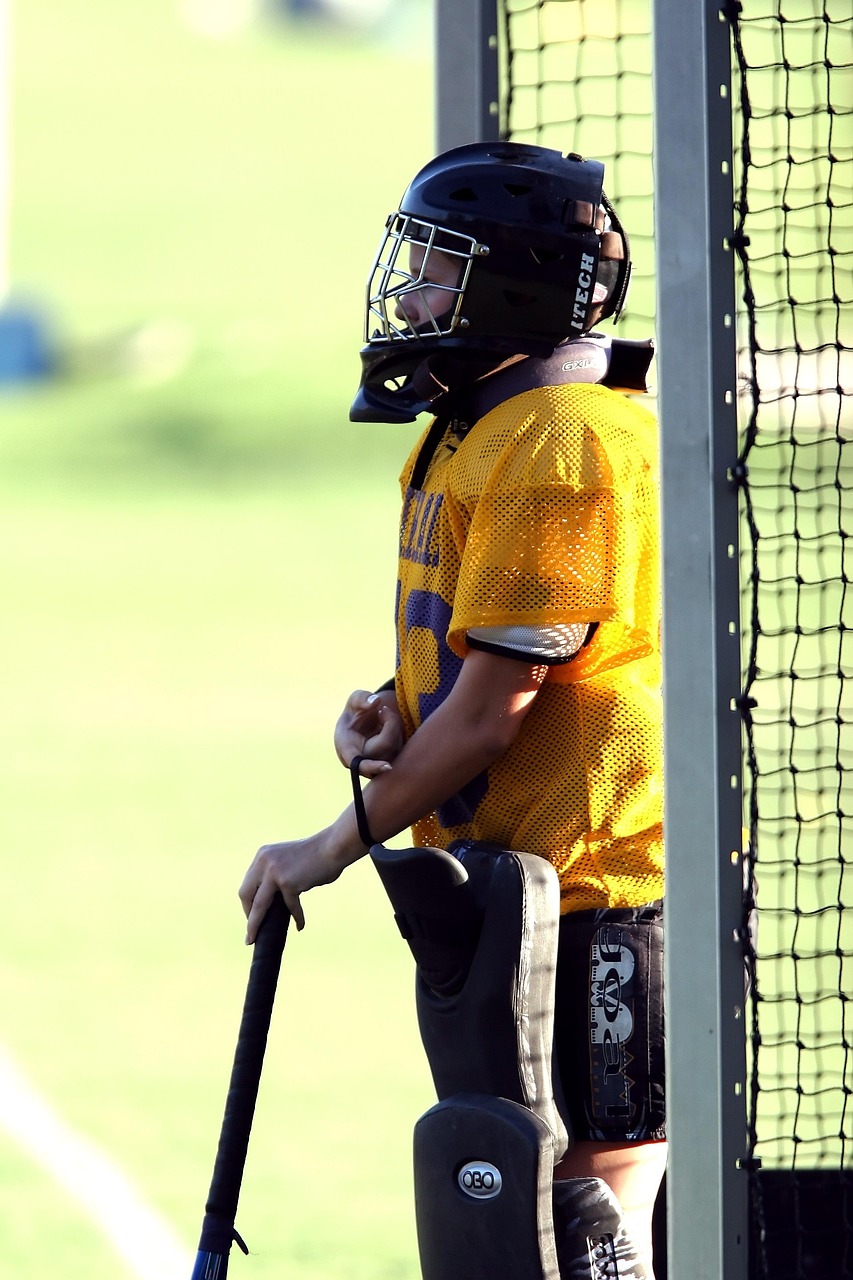
Goalkeepers wear the most gear, and the rules spell it out: a helmet with a cage that covers the whole head (rounded at all points in high school), a throat protector, a chest protector, padded hand protectors, leg guards and kickers, and a mouthguard. A full kit is expensive, and many schools and clubs lend one, so ask first. The OBO Robo ABS helmet (about $300) has a light ABS shell, a high-carbon steel wire cage and an attached throat protector; the seller notes that high school goalies still need a separate wrap-around throat protector. For goalies under 12, the TK 3 Junior helmet (about $150) has a cat-eye cage and fits heads of 16.5–19.7 inches.
Check the OBO Robo helmet price on Amazon
Turf shoes and balls
Most field hockey is played on artificial turf, so players wear field hockey or turf shoes with a rubber outsole of small studs or dimples rather than long cleats. The adidas Fabela Rise 2 (about $140) is a women’s field hockey and lacrosse shoe on a female-specific last, with a mesh upper, a water-repellent heel foam, an EVA midsole and a multi-dimpled rubber outsole.
The ball is hard and spherical, 224–235 mm around and 156–163 grams under FIH rules, white or a contrasting color. For practice at a wall or in the driveway, Champion Sports field hockey balls (about $42 for 12) are hollow plastic balls in pink, yellow, orange or white that the maker says are NFHS-approved.
Check the adidas Fabela Rise 2 price on Amazon
Recovery gear for the bag
After a game spent crouched over a stick, tight hamstrings, hips and low backs are common. Many players carry a small massage gun like the Hypervolt Go 3 (about $149, 1.6 lb, up to 4 hours of battery), a TriggerPoint GRID 1.0 foam roller (about $40), and recovery slides like the OOFOS OOahh (about $60, with the APMA Seal of Acceptance) once the turf shoes come off. These are comfort tools, not treatment; back pain that lasts or spreads into a leg needs a sports medicine doctor, physical therapist or athletic trainer. Our best massage guns, best foam rollers and best recovery shoes guides compare more, and the field hockey recovery page covers the routine.
Check the Hypervolt Go 3 price on Amazon
How to choose field hockey gear
- Check your league’s rules first: high school, college and club rules differ on mouthguard color, goggles and masks.
- Look for the stamp: goggles must be permanently labeled ASTM F2713 for NFHS play.
- Match the stick to the player: length to the hip, and flexible fiberglass for beginners before stiff, high-carbon sticks.
- Fit beats features: use makers’ size charts for shin guards, helmets and shoes, and refit growing kids every season.
- Don’t alter equipment: NFHS rules say gear must be worn as the maker intended.
Back to the field hockey hub, or see the field hockey rules, youth field hockey and the best field hockey wearables. Playing two sports? Our lacrosse gear guide covers goggles for the other stick sport.
Field hockey gear questions
What size field hockey stick do I need?
Stand straight with the stick beside you: the top should reach about 2 inches below your hip bone. Forwards may go a little shorter and defenders a little longer.
Are field hockey goggles required?
Not under national high school rules since 2020, but any goggles worn must be labeled ASTM F2713, and some states, schools and parents still require them. The international FIH rules allow goggles during play only for medical reasons, so college and club players should check their competition’s rules.
Can I use lacrosse goggles for field hockey?
Only if they’re also certified for field hockey. Field hockey and lacrosse goggles are made to different ASTM standards, so look for the F2713 mark; some dual-sport goggles carry both.
What color mouthguard do you need for high school field hockey?
Any readily visible color except white or clear. Since 2026, it also can’t have attachments that don’t protect the teeth or mouth.
How much carbon should my field hockey stick have?
Beginners and kids do best with fiberglass or wood, which is more forgiving. A carbon blend suits developing players around 10 to 15, and high-carbon sticks are for experienced players who want more power, according to STX.