This article contains affiliate links: if you buy through them we may earn a commission, at no extra cost to you. Learn more.
Saturday morning at a youth clinic: a row of eight-year-olds in pinnies and brand-new shin guards, sticks almost as long as their legs, chasing oversized practice balls across the turf while a coach yells “flat side!” Half of them will be hooked by lunchtime. Youth field hockey in the US grows from clinics like this into middle school teams, 7v7 club play, indoor tournaments in the winter and, for some, high school and college. This guide is for parents and coaches: when kids can start, how small-sided play works, the protective gear youth players need, safety basics, the questions parents ask most, and how college recruiting works.

When can kids start field hockey?
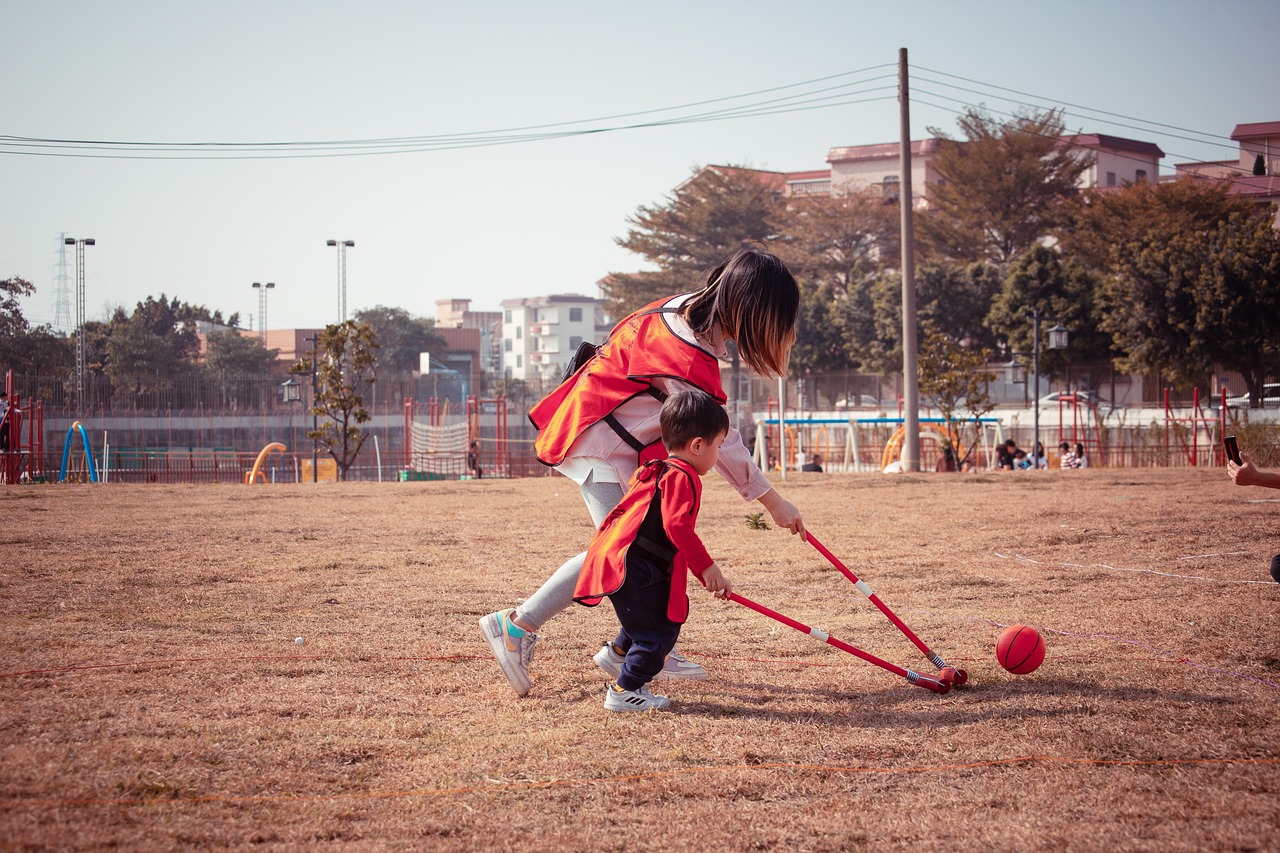
Early. USA Field Hockey’s Play & Learn clinics are for boys and girls aged 5 to 14 and teach the basic skills and rules before a child joins a team; the clinic includes a stick, two practice balls, a pinnie, a stick bag, shin guards and a one-year local membership. Its GAME ON small-sided game can be played on school yards, grass, turf, gym floors or tennis courts, and beginner packs come with plastic or wood sticks and oversized “GO” balls for the backyard. Most kids then join a recreation, school or club team; USA Field Hockey’s Club Finder lists programs near you.
A USA Field Hockey U-12 membership costs $25 a year and includes accident insurance for sanctioned events, club practices and clinics, plus entry to national events such as the National Indoor Tournament, whose 2026 season had U-10 and U-12 co-ed divisions.
Small-sided play: GAME ON, 7v7, then 11v11
| Stage | Format | Why |
|---|---|---|
| First steps | GAME ON and other small-sided games on any flat surface | A safe, fun first exposure for boys and girls of any ability |
| Under 14 | 7v7 on half a field; games can be played without goalkeepers if none are available | More touches, and a bridge to the full game; USA Field Hockey’s events run U-10, U-12 and U-14 co-ed 7v7 divisions |
| Teens | 11v11 on a full field (high school, club and college) | The standard game under NFHS and FIH rules |
| Winter | Indoor hockey | Fast, skill-heavy and a big part of the youth calendar |
USA Field Hockey encourages program leaders to change the number of players per side to suit the age, size and experience of the group. In February 2026 it dropped the five-a-side Hockey5s format at its national events and replaced it with 7v7, though local clubs can still run Hockey5s.
Required protective gear for youth players
- Shin guards: required for field players under high school (NFHS) rules, and the one piece of gear every beginner clinic hands out. They go under long socks, and some models add ankle padding.
- Mouthguard: required for every field player in high school and college. In high school it must be a readily visible color, not white or clear, and from 2026 it can’t have attachments that don’t protect the mouth.
- Goggles: optional under national high school rules since 2020, but if worn they must be permanently labeled for ASTM F2713. Some states, schools, leagues and parents still require them, so ask your program.
- Goalkeepers: a helmet with a full cage covering the whole head, a wrap-around throat protector, a chest protector, padded gloves, leg guards, kickers and a mouthguard. Many programs lend goalie kits, so ask before you buy.
- Stick and shoes: a stick sized to the child (the top about 2 inches below the hip bone) and turf or field shoes.
Why goggles matter to many parents: from 2011 to 2019, US high school rules required them, and a 2015 study in Pediatrics found eye and orbital injuries were about three times more common in states without a goggle mandate, with severe eye injuries down 67% after the national rule and no rise in concussions. NFHS made them optional again in 2020, noting the standard isn’t tested against a direct ball to the eye and that players with glasses had few certified options.
For a first season, the STX Field Hockey Start Pack (Junior) (about $100) bundles a 100% fiberglass HPR 50 stick, a stick bag, reversible shin guards and two balls. If you only need a stick, the STX RX 50 (about $50) is fiberglass with a thin handle for small hands, made for players 10 and under. The STX 2See-S junior goggle (about $50) is a dual-sport goggle that STX says meets NFHS field hockey regulations and is SEI certified; check for the F2713 stamp. Add a bright Shock Doctor Gel Max mouthguard in a youth size. Young goalies can start in the TK 3 Junior helmet (about $150), a cat-eye cage helmet for under-12s. Our field hockey gear guide covers sizing in detail.
STX Field Hockey Start Pack (Junior)
- HPR 50 fiberglass stick
- Shin guards, bag, 2 balls
- About $100
STX RX 50 Field Hockey Stick
- 100% fiberglass
- Thin handle for small hands
- Ages 10 and under
STX 2See-S Junior Goggle
- Meets NFHS regulations (maker)
- SEI certified
- Silicone padding
Shock Doctor Gel Max Mouthguard
- Boil-and-bite fit
- Youth size (10 and under)
- Pick a bright color
TK 3 Junior Goalie Helmet
- Under-12 beginners
- Cat-eye cage
- 16.5-19.7 in heads
Safety basics for parents and coaches
- Concussion: follow the CDC’s HEADS UP rule. If a child shows signs after a knock to the head or body (headache, dizziness, confusion, feeling “off”), take them out, keep them out that day and until a healthcare provider clears them, and call 911 for danger signs such as worsening headache, repeated vomiting, seizures or growing drowsiness. The CDC offers free online training for youth coaches.
- Stick and ball: a large US study found most injuries in girls’ and women’s field hockey were to the legs and the head and face, and an NCAA study found the stick and ball caused most head and face injuries. Teach kids to keep sticks low and never to raise the ball toward players.
- Heat: fall seasons start in August. The National Athletic Trainers’ Association recommends easing athletes into the heat over 7–14 days; give frequent water breaks and use the quarter breaks.
- Backs: field hockey is played bent forward. Back pain that lasts in a growing child deserves a visit to a sports medicine doctor or physical therapist, not just rest.
- Load: the American Academy of Pediatrics suggests delaying single-sport specialization until about age 15–16, with 1–2 days off a week and time off each year. A study of young athletes linked playing more hours a week than their age in years with a higher injury risk.
Our field hockey injuries guide covers prevention and when to see a professional, and the recovery page covers tournament weekends.
College recruiting basics
More than 280 NCAA teams play college field hockey, so there’s a level for most committed players. NCAA Division I coaches can’t call, text or send recruiting material until June 15 after a player’s sophomore year, and visits and off-campus contact start August 1 before junior year. Division II contact opens June 15 before junior year, and Division III coaches can contact players any time. Division I teams offer 12 to 27 scholarships depending on the school, Division II up to 6.3, and Division III none. The National Field Hockey Coaches Association suggests registering with the NCAA Eligibility Center (Division I and II), sending a short skills video, and having the player, not the parent, contact coaches. Many players are also seen through USA Field Hockey’s Nexus pathway (ages 11 to 19) and national tournaments. Our leagues and associations guide has the full picture.
Back to the field hockey hub, or read the field hockey rules. Raising a multi-sport kid? See our youth soccer and youth lacrosse guides.
Youth field hockey questions
What age is best to start field hockey?
Kids can start at 5 in USA Field Hockey’s Play & Learn clinics (ages 5 to 14), and plenty start in middle school or even high school. Small-sided games make the first seasons fun for any age.
Can boys play field hockey?
Yes. Play & Learn, the youth 7v7 divisions and Nexus are open to boys and girls, and the National Indoor Tournament has co-ed and boys’ divisions. US high school field hockey is mostly a girls’ sport, so ask your state association about boys’ eligibility.
Does my child need goggles for field hockey?
Not under national high school rules since 2020, but some states, schools and leagues require them. If your child wears them, choose goggles stamped ASTM F2713. Research found far fewer eye injuries while they were required.
What size field hockey stick does my child need?
Stand the stick next to your child: the top should reach about 2 inches below the hip bone. Young players do best with a light, forgiving fiberglass or wood stick rather than a stiff, high-carbon one.
When do college coaches start recruiting field hockey players?
Division I coaches may start calling and sending recruiting material on June 15 after sophomore year, and visits begin August 1 before junior year. Players can email coaches and attend camps earlier, and Division III coaches may contact players at any time.