This article contains affiliate links: if you buy through them we may earn a commission, at no extra cost to you. Learn more.
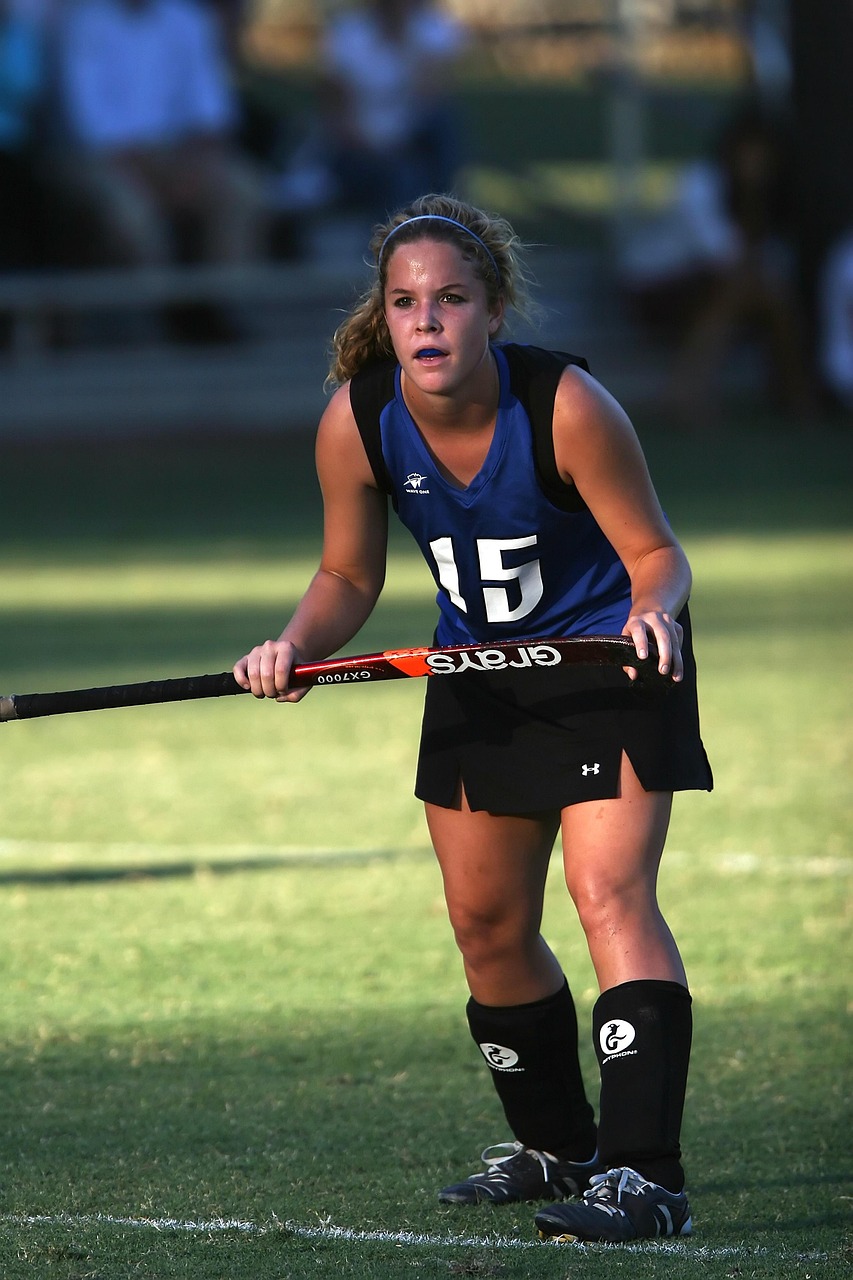
Penalty corner, fourth quarter, one-goal game. The ball is inserted, stopped, and the drag-flicker loads up low and long. Four defenders sprint off the line toward a hard ball traveling at the height of their knees, shins and faces. That moment sums up field hockey’s injury story: a sport played bent over at the waist, with a hard ball and swinging sticks at close range. From middle school teams to NCAA programs, the Olympics and adult club hockey, most players never have a serious injury, but the same handful of problems keep showing up. Here they are, with what helps prevent them and the signs that mean “stop and get it checked”.
This page is general information, not medical advice. If you’re hurt, see a sports medicine doctor, physical therapist (PT) or certified athletic trainer (AT). For the bigger picture of the sport, start at our field hockey hub.
What the injury numbers show
Athletic trainers have tracked US field hockey injuries for years. Across high school and college, most injuries hit the lower body and the head and face, and the most common types are muscle strains and bruises (contusions). Injury rates are roughly double in games compared with practice at both levels, and college players are hurt more often than high school players. In the most recent published NCAA women’s field hockey data (2014–15 through 2018–19), head and face injuries made up 16% of all injuries, thigh injuries 12.3%, and concussion was the single most common injury reported (8.6%).
Low back pain and the crouched posture
Field hockey is played low: knees bent, trunk flexed forward, stick on the ground, often twisting to receive or hit. Researchers have studied what that does to the back. In a UK survey of Premier and Division One players, 44% reported non-specific low back pain; playing position, performing the drag flick and a feeling of low-back stiffness or tightness were among the factors linked with it. A Dutch study of young elite players (14–25) found a 12-month back-pain rate of 56%, and a 2025 study of South African schoolboy players found 63% had back pain during a three-month season. The drag flick deserves a special mention: a 2026 review of its biomechanics describes deep lunges with strong forward bend, twist and high shear loads on the lower spine, and calls for technique work, conditioning and limits on repetitions for specialists.
To keep it honest, one survey of NCAA Division III players found back pain just as common in non-players (55% vs 56%), so the sport isn’t the only cause. What helps most players is the boring stuff: trunk and hip strength, building up drag-flick volume gradually, and not playing through pain that keeps coming back. See a doctor promptly for back pain with leg numbness, tingling or weakness, pain that wakes you at night, pain after a fall, or back pain in a young athlete that gets worse with activity and better with rest. AAOS notes that in young athletes this can be spondylolysis, a stress fracture in a small part of a vertebra, and a collegiate field hockey player has been reported with a stress fracture of the sacrum. More on building a stronger trunk is on our field hockey training page.
Ankle sprains, hamstrings and knees
Ankle sprains and muscle strains
Quick cuts on turf, tackles and stepping on a stick or the ball all roll ankles. The National Athletic Trainers’ Association (NATA) says the most consistent risk factor for an ankle sprain is a previous sprain, recommends a balance and neuromuscular program of at least three months, and recommends tape or a brace for practices and games for athletes who have sprained an ankle before. A long-running study of one NCAA field hockey team (810 injuries across 124 athletes, 2008–2024) found that an early ankle sprain, hamstring strain or back strain predicted more injuries over a player’s career, and most follow-up injuries happened within about 10 weeks (69 days). The lesson: rehab the first one fully.
ACL and knee injuries in female players
The American Academy of Orthopaedic Surgeons (AAOS) explains that most ACL tears happen without contact, when an athlete pivots, cuts or lands with the knee nearly straight; players often feel a pop, the knee gives way and swells within a day. Female athletes have a clearly higher risk, which AAOS puts at 2 to 8 times that of males. Field hockey’s bent-knee posture may help a little: research has found ACL injuries less common in women’s field hockey than in women’s lacrosse, and field hockey players landed with more knee bend in a Division I study. But tears still happen, and elite players cut differently while holding a stick low, so prevention drills belong with the stick. Programs built on jumping, landing and strength work cut non-contact ACL injuries in female athletes by about two-thirds, according to a summary of eight meta-analyses. For support after a knee injury, see our knee sleeves guide and ask your PT.
Hand, face and eye injuries from sticks and balls
The ball is hard (the international rules set its weight at 156–163 grams) and it can rise. In NCAA data, contact with an elevated ball caused about 48% of head, face and eye injuries, and a raised stick another 22%. Common results are cuts, broken noses, dental injuries and, rarely, eye injuries.
- Hands and fingers: a 16-year NCAA study compared stick sports and found ungloved field hockey players had about twice the odds of a hand fracture and about four times the odds of a finger fracture compared with gloved ice hockey and lacrosse players. A padded left-hand glove such as the Gryphon G-Mitt G5 or the open-palm STX Stallion glove is optional in most leagues, but many players wear one.
- Eyes: when US high schools required goggles (2011–2020), studies found far fewer eye injuries: eye and orbital injuries were about three times as common without a mandate, and severe eye injuries dropped by 67% after it. Concussion rates didn’t change. Since 2020, the NFHS rule says goggles may be worn, they must carry the ASTM F2713 field hockey label, and states, schools and parents can still require them. Goggles like the STX 2See-S are listed as meeting NFHS field hockey rules.
- Mouth and shins: NFHS requires a mouth protector and shin guards for high school field players, and the international rules recommend shin, ankle and mouth protection. A boil-and-bite guard like the Shock Doctor Gel Max is inexpensive insurance for your teeth.
- Penalty corners and goalkeepers: defenders may wear a face mask on penalty corners, and under the international (FIH) rules goalkeepers must wear full protective equipment, including headgear at all times except when taking a penalty stroke. The full gear rundown is on our field hockey gear page.
Any eye injury that affects vision, or blood in the eye, needs same-day care. A finger that looks crooked, can’t straighten or stays swollen should be X-rayed; “jammed fingers” are sometimes fractures.
STX 2See-S Dual Sport Goggle
- Meets NFHS field hockey rules
- Also meets women's lacrosse standard
- About $50
Gryphon G-Mitt G5 Glove
- Hard-shell knuckle protection
- Protects to first knuckle
- About $30
Shock Doctor Gel Max Mouth Guard
- Youth and adult sizes
- Gel-fit liner
- About $12
ASO EVO Ankle Stabilizer
- Lace-up with figure-8 straps
- Fits left or right foot
- Low profile, fits in turf shoes
Concussion: recognize it and remove the player
A raised ball, a stick to the head, a collision or a fall on hard turf can all cause a concussion. In US high school data, girls’ field hockey had the third-highest concussion rate of the girls’ sports tracked. The CDC’s HEADS UP program is direct: if you think a player may have a concussion, remove them from play. “When in doubt, sit them out.” They stay out for the rest of that day and until a health care provider clears them.
Signs to watch for (CDC): looking dazed or confused, slow answers, clumsiness, forgetting plays, mood changes, vomiting. Players may report headache, dizziness, nausea, blurry vision, sensitivity to light or noise, or feeling foggy. Call 911 or go to the emergency department for the danger signs: one pupil larger than the other, a headache that gets worse and doesn’t go away, slurred speech, weakness or numbness, repeated vomiting, seizures, increasing confusion, or loss of consciousness.
Coming back is gradual: the CDC describes six steps (back to school and daily life, light aerobic exercise, sport-specific exercise, non-contact drills, full practice, then games), moving on only without new symptoms. The 2022 Amsterdam consensus on concussion in sport recommends only relative rest for the first 24–48 hours, and the American Medical Society for Sports Medicine (AMSSM) says there is no same-day return after a concussion diagnosis and that students get back to the classroom before full return to sport.
Heat on turf
Most field hockey is played on artificial turf, and much of the US season starts in August heat. Penn State’s Center for Sports Surface Research measured maximum synthetic turf surface temperatures averaging 140 to 170°F on hot, sunny days; watering cools the surface, but it rebounds in about 20 minutes. Players also sweat a lot: Australia’s national women’s squad lost 1.2 to 1.8 liters an hour in matches in the heat. NATA recommends 7–14 days of gradual heat acclimatization at the start of preseason. Early warning signs of heat illness include headache, dizziness and nausea. A player who is confused, collapses or acts strangely in the heat is a medical emergency: call 911 and, per NATA, cool first (cold-water immersion is most effective), transport second. Our field hockey game-day page covers hydration and heat in detail.
When to see a sports medicine doctor, PT or athletic trainer
- Right away (emergency): any concussion danger sign, signs of heat stroke, an eye injury affecting vision, a possible broken bone, a joint that looks out of place, or numbness and weakness.
- Within a day or two: a pop and swelling in the knee, you can’t bear weight, a suspected concussion, a finger that won’t straighten, or a sudden sharp muscle pain that stopped you playing.
- Soon: back pain that keeps returning or hurts at night, pain that changes how you run, swelling that lasts more than a few days, or a limp in a young player.
A sports medicine physician diagnoses; a physical therapist guides rehab; a certified athletic trainer is often first on the field at high schools and colleges. Return is a process, not a date: walking, jogging, sprinting, cutting, stick work in the low position, team practice and then games, only when each step causes no pain or swelling. For after-game care, see field hockey recovery, and compare with our soccer injuries page for the prevention research on hamstrings and ankles. Many players who’ve had a sprain also look at our ankle brace guide.
Field hockey injuries: FAQs
What is the most common injury in field hockey?
Lower-body strains, ankle sprains and bruises, plus head and face injuries from the ball and stick. In the latest NCAA women’s data, concussion was the single most reported injury (8.6%).
Why do field hockey players get back pain?
The game is played bent forward with lots of twisting, and the drag flick adds deep bending and rotation under load. Surveys find back pain in roughly half of players (though it’s common in non-players too). Trunk and hip strength, gradual drag-flick volume and early care help.
Are goggles required in field hockey?
Not under current NFHS high school rules: since 2020, goggles may be worn and must be labeled ASTM F2713. States, schools and parents can still require them. The international rules allow goggles only for medical reasons. Research from the years US high schools required goggles found far fewer eye injuries with them.
Should field hockey players wear a glove?
It’s optional in most leagues, but NCAA data show ungloved field hockey players had about four times the odds of a finger fracture compared with gloved stick-sport athletes. A left-hand glove that protects the knuckles is a common choice, especially for defenders on penalty corners.
Can a player go back in after being hit in the head if they feel fine?
Not if a concussion is suspected. The CDC says remove the player and keep them out the same day until a health care provider clears them, and AMSSM states there is no same-day return to play after a concussion diagnosis. Symptoms can appear hours later.