This article contains affiliate links: if you buy through them we may earn a commission, at no extra cost to you. Learn more.
Your drive slices toward the trees. Did it go out of bounds or is it just in the rough? Your playing partner says “hit a provisional,” someone else says “just drop one.” Golf’s rules can feel like a maze, but the core is short and sensible. This page explains the rules of golf in plain words: how a round works, the penalties you’ll actually meet, golf etiquette (which the Rules now call standards of conduct), what rangefinders and GPS can and can’t do, and how the World Handicap System works. It applies from your first nine holes to the U.S. Open.
One rulebook covers the whole world: The R&A (for everywhere outside the US and Mexico) and the USGA (for the US and Mexico) write the Rules of Golf together. The current edition took effect on January 1, 2023, and the next is due on January 1, 2028. For the big picture of the sport, start at our golf hub.
The basics of a round
- Play it as it lies. Rule 1 starts with the whole idea: play the course as you find it and play the ball as it lies. You get relief only where a Rule allows it.
- Five areas of the course. The teeing area where each hole starts, the putting green, bunkers, penalty areas (water and other marked areas), and the general area, which is everything else: fairway, rough and trees.
- Stroke play or match play. In stroke play, the fewest total strokes (including penalty strokes) wins. In match play, you win a hole by taking fewer strokes than your opponent, and you win the match when you’re more holes up than there are holes left. Scores can be gross or net (with handicap strokes), and Rule 21 adds formats like Stableford and Maximum Score.
- 14 clubs, conforming equipment. You can’t start or play a round with more than 14 clubs. The penalty in stroke play is two strokes for each hole where you broke the rule, up to four; in match play, one hole deducted per hole, up to two. Clubs and balls must conform to the Equipment Rules.
- Call your own penalties. Players are expected to recognize when they break a Rule and apply the penalty honestly. Knowingly ignoring a penalty means disqualification.
The penalties you’ll meet most
| Situation | Penalty | What you do |
|---|---|---|
| Lost ball (not found within 3 minutes) or out of bounds | 1 stroke | Stroke and distance: play again from where you last hit. |
| Ball might be lost or out of bounds | Only if you need it | Hit a provisional ball to save time, but say the word “provisional” first. |
| Ball in a penalty area (yellow or red) | None to play it as it lies; 1 stroke for relief | Stroke and distance, or drop back on the line from the hole through where the ball crossed. Red areas also allow a drop within two club-lengths of where it crossed. |
| Unplayable ball (your call, anywhere but a penalty area) | 1 stroke | Stroke and distance, back on the line, or within two club-lengths. In a bunker, dropping outside the bunker costs 2 strokes. |
| More than 14 clubs | 2 strokes per hole, max 4 (stroke play) | Declare the extra club out of play right away. |
A few rules surprise newer golfers. On the putting green you may repair ball marks and spike marks, and you can leave the flagstick in the hole: if your putt hits it, there’s no penalty. Players with disabilities (blind players, amputees, players using mobility devices and players with intellectual disabilities) have their own modifications in Rule 25, part of the main Rules since 2023.
Golf etiquette: the standards of conduct
Rule 1.2 turns etiquette into three plain expectations, and they matter as much at a muni on Saturday as at a tour event:
- Integrity: follow the Rules, apply your penalties and be honest about every score, including the ones you post for your handicap.
- Consideration for others: play at a prompt pace (the Rules recommend taking no more than 40 seconds for a stroke, and usually less), don’t distract players who are hitting, and look out for everyone’s safety. Never swing toward people, wait until the group ahead is out of range, and if a ball heads toward anyone, shout “Fore!” loudly.
- Care for the course: replace divots, repair ball marks, rake bunkers and avoid needless damage.
A committee can add its own code of conduct, with penalties up to disqualification for serious misconduct. Safety extends to carts: the American Academy of Orthopaedic Surgeons (AAOS) reminds golfers to keep their feet inside the cart, and a US emergency-room study estimated 156,040 golf-cart injuries from 2007 through 2017. Kids should stand well clear of anyone swinging a club.
Weather and lightning
Rule 5.7 lets any player stop play if they reasonably believe there is danger from lightning; you don’t need to wait for a siren. Get to a safe building or a hard-topped vehicle, not under a tree or a shelter that isn’t built for lightning. The National Athletic Trainers’ Association’s rule is “When thunder roars, go indoors,” and to wait 30 minutes after the last thunder or lightning before going back out. More on staying safe in heat and sun on our golf injuries page.
Rangefinders, GPS and golf apps: the rules on distance devices
Since 2019, distance-measuring devices are allowed by default under Rule 4.3, unless the committee bans them with a Local Rule (Model Local Rule G-5). What you can and can’t do:
- Allowed: distance and direction information from a laser rangefinder, GPS watch, handheld or app; weather forecasts; temperature and humidity; notes and club data you gathered before the round.
- Not allowed: measuring elevation changes (the “slope” feature), measuring wind speed on the course, getting club recommendations or other interpreted advice, or alignment devices.
That’s why many rangefinders have a slope switch: on for practice, off for competition. The Bushnell Tour V6 Shift has an external slope switch and a magnetic cart mount (about $300 on Amazon in October 2026), and the Callaway 300 Pro also has an external slope switch and pin-lock vibration (about $200). Tours go further: the PGA TOUR’s 2026 regulation allows only traditional optical, rangefinder-style devices where DMDs are permitted, not watches, phones or apps, and bans green-contour maps. Your club or junior tour may have its own Local Rule, so check the notice board or the entry information. Our golf gear page compares devices.
Bushnell Tour V6 Shift
- External slope on/off switch
- 1,300-yard range, 6x
- Magnetic cart mount
Callaway 300 Pro Rangefinder
- External slope switch
- 5–1,000 yards, 6x
- Pin-lock vibration
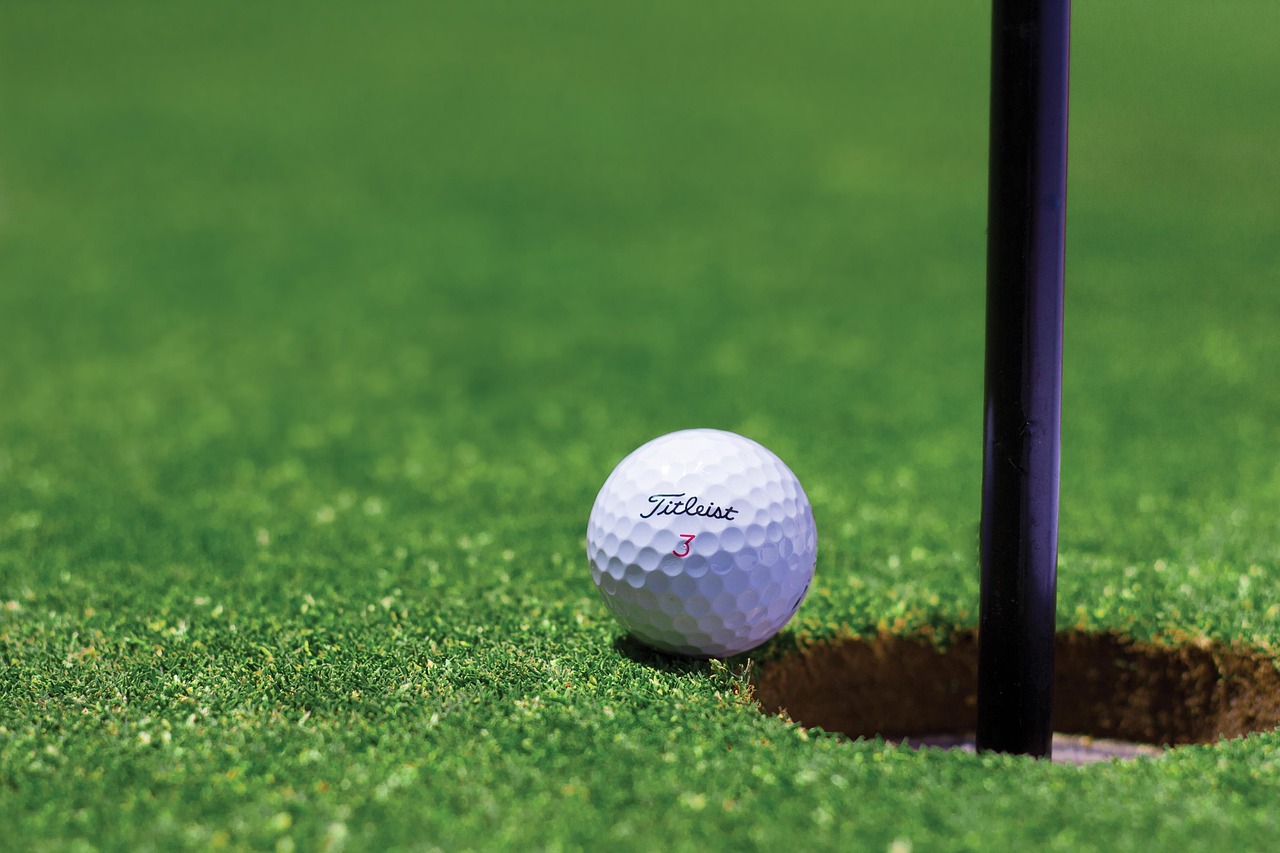
Titleist Pro V1 Golf Balls
- Urethane cover
- 388-dimple design
- Softer feel than Pro V1x (maker)
The World Handicap System
Since 2020, one handicap system, run by the USGA and The R&A, works around the world. The key numbers:
- Getting one: post scores for 54 holes, in any mix of 9- and 18-hole rounds, through a club or golf association.
- Handicap Index: once you have 20 scores, it’s the average of your best 8 “score differentials” from the most recent 20. The maximum is 54.0 for everyone.
- Course Handicap: how many strokes you get on a given course and set of tees: Handicap Index × (Slope Rating ÷ 113) + (Course Rating − par).
- Maximum hole score: for handicap purposes, a blow-up hole counts as no worse than a net double bogey (double bogey plus any strokes you get on that hole).
- Playing Conditions Calculation: adjusts the day’s score differentials when weather or course setup makes scoring unusually hard or easy.
How the rules differ by level
The Rules of Golf are the same for everyone; what changes is the Local Rules and terms of the competition each committee adds. Pro tours, for example, restrict green-reading materials and limit distance devices. High school golf is run by state associations, which publish their own local rules and championship formats. College events (NCAA, NAIA and NJCAA) add team scoring and their own conditions of competition. Junior tours such as the AJGA, U.S. Kids Golf and PGA Jr. League set their own tees, formats and device policies: PGA Jr. League plays a team scramble, for example. Our leagues and associations page and junior golf guide cover those organizations.
Golf rules questions
What is the penalty for a lost ball in golf?
One stroke, plus the distance: you play again from where you last hit. A ball is lost if it isn’t found within three minutes of starting to search. If you think your ball might be lost or out of bounds, hit a provisional ball first to save walking back.
Can you leave the flagstick in when putting?
Yes. Under Rule 13.2 you may leave it in the hole, and there’s no penalty if your ball hits it. Decide before you putt.
Can I use a rangefinder with slope in a tournament?
You can use the rangefinder, unless a Local Rule bans distance devices, but the slope function must be off. Measuring elevation changes during a round breaks Rule 4.3.
How long should a shot take?
The Rules recommend no more than 40 seconds once it’s your turn and you can play without interference, and usually less. Being ready when it’s your turn is the easiest way to keep the round moving.
What is the maximum golf handicap?
54.0, for men and women, under the World Handicap System. You need scores from 54 holes to get your first Handicap Index.
Back to the golf hub, or see golf gear, junior golf and the best golf wearables (GPS watches and what’s legal). Also play a team sport? See our soccer rules page.