This article contains affiliate links: if you buy through them we may earn a commission, at no extra cost to you. Learn more.
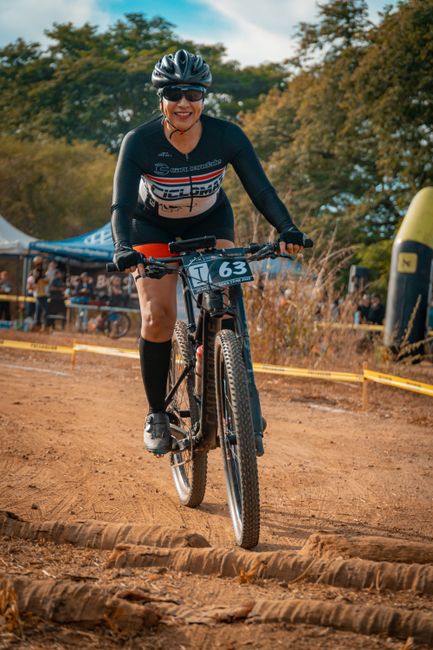
On October 2–4, 2026, the world’s best cross-country and downhill racers lined up at the Lake Placid Olympic Sites in New York for the last round of the World Cup season. Two thousand miles away, a high school team is packing its tent for a Sunday NICA race, and somewhere else a trail club is out with rakes and loppers fixing a washed-out berm. Mountain biking is run by a mix of sport bodies, school leagues and trail groups. Here’s who’s who, from the World Cup and the Olympics to mountain bike associations in your town.
Who runs mountain biking
| Organization | What it does |
|---|---|
| UCI (Union Cycliste Internationale) | World governing body for cycling, including mountain bike; writes the race rules and runs the World Cups and world championships. |
| USA Cycling | US governing body for competitive cycling, recognized by the UCI and the US Olympic & Paralympic Committee; licenses racers, sanctions races, runs national championships and the collegiate program. |
| NICA (National Interscholastic Cycling Association) | Middle and high school mountain bike leagues across the US. |
| IMBA (International Mountain Bicycling Association) | Trail access, trail building and advocacy, with local chapters and clubs. |
| Local trail associations and clubs | Build and maintain trails, organize group rides, races and trail work days. |
The World Cup: WHOOP UCI Mountain Bike World Series
Since 2023, the UCI and Warner Bros. Discovery Sports have run the World Cups for cross-country Olympic (XCO), short track (XCC), downhill and enduro under one brand, the WHOOP UCI Mountain Bike World Series. As of the 2026 season it has 14 race weekends between May and October in nine countries on three continents:
- Asia: it opened May 1–3 in South Korea, the first XCO and XCC World Cup rounds ever held in Asia.
- Europe: Nové Město na Moravě (Czechia), Loudenvielle-Peyragudes (France), Saalfelden-Leogang (Austria), Lenzerheide (Switzerland), Val di Fassa and La Thuile (Italy), Pal Arinsal (Andorra), Aletsch Arena-Bellwald (Switzerland) and two weekends in Haute-Savoie (France).
- North America: cross-country at Soldier Hollow in Midway, Utah (September 19–20), downhill at Whistler Mountain Bike Park in British Columbia (September 25–27, its first downhill World Cup), and the cross-country and downhill finale at Lake Placid (October 2–4).
Under-23 riders have their own XCO World Cup races, and the enduro World Cup visits mostly European venues. The formats are explained on our trail rules and racing page.
World championships and the Olympics
The 2026 UCI Mountain Bike World Championships were held August 26–30 in Val di Sole, Italy, where winners earn the rainbow jersey. Cross-country has been an Olympic sport since the Atlanta 1996 Games. At LA28, the races are at the Industry Hills MTB Course in the City of Industry: the men’s cross-country on Monday, July 17, and the women’s on Tuesday, July 18, 2028. USA Cycling selects the US team.
Elite gravity racing is hard on the body. At the 2023 downhill world championships in Fort William, Scotland, 10.4% of the 230 riders were injured over five days, with more injuries in training runs than in racing, and women’s injuries tended to be more severe. That’s one reason pros invest so much in protection and recovery.
USA Cycling: racing in the US
Most US mountain bike races are sanctioned by USA Cycling. You can try one with a one-day license, and an annual membership lets you earn upgrades through three categories: Category 3 (beginner), Category 2 and Category 1. Juniors (ages 9–18) usually race in two-year age groups, and riders 19–22 can race under-23. The 2026 national championships:
- Enduro: June 6–7, Kellogg, Idaho, with the North American Enduro Cup.
- Endurance (short track, cross-country, marathon): July 12–19, Roanoke, Virginia.
- Gravity (downhill): July 23–26, Big Bear Lake, California, with the Monster Energy Pro Downhill Series.
- Collegiate: October 7–11, Powderhorn Mountain Resort, Grand Junction, Colorado.
NICA: middle and high school leagues
NICA was founded in Berkeley, California in 2009. As of 2026 it lists 33 leagues (including NICA Australia), more than 25,000 student-athletes, 1,055 teams and 15,000 adult coaches. Its mission: “NICA uses mountain bikes as a tool to build strong minds, bodies, character, and community.” Teams can be school teams or composite teams from several schools. High school riders race cross-country by gender and grade (freshman, sophomore, junior varsity, varsity), score points for their team and can qualify for a state championship; many leagues also have middle school categories.
Beyond racing, NICA runs GRiT (Girls Riding Together) to bring more girls and women coaches into the sport, Teen Trail Corps for trail work and advocacy, and NICA Adventure for non-racing rides. Coaches are licensed and trained, and NICA tracks injuries: in five seasons (2018–2022) about 2.2% of student-athletes had an injury event, and the rate fell by 27%. NICA requires any rider or coach with a concussion to stay out until a physician clears them in writing. Parents’ questions are answered in our youth mountain biking guide.
College mountain biking
College mountain biking isn’t an NCAA sport; it runs through USA Cycling’s collegiate program, with club teams and a growing number of varsity programs (some with scholarships), grouped into regional conferences. Riders race cross-country, short track, downhill, dual slalom and team relay, and the season ends at Collegiate Nationals, held at Powderhorn Mountain Resort in Colorado in 2025 and 2026. Racers need a USA Cycling license and must be full-time students. If you’re a high school racer, ask the college’s club before you apply: many welcome beginners.
IMBA and local trail associations
IMBA was founded in 1988 by a group of California mountain bike clubs worried about trails closing to bikes. Its mission is “to create, enhance, and protect great places to ride mountain bikes.” It publishes the Rules of the Trail and the trail difficulty rating system, helps design trails and bike parks, and works with hundreds of local chapters and clubs. Your local trail association is usually where the real work happens: building and fixing trails, posting trail conditions, running group rides for beginners, women, kids and seniors, and talking to land managers. Joining one and showing up for a trail day is the easiest way to give back, and it’s also how many riders find their riding friends.
Gear seen at the races
Prices change often. The prices below are what we saw at the maker or a major retailer in October 2026; check the current price before you buy.
Gravity racers need a full-face helmet. The Fox Proframe RS is certified to ASTM F1952 for downhill as well as the CPSC bike standard, weighs about 820 g in size medium and lists at $399.95 (often on sale). Cross-country and trail racers usually wear a half-shell like the Bell Nomad 2 MIPS (about $76). After a race weekend, a Theragun Mini (about $220) fits in a race bag. More in mountain bike gear and our massage gun guide.
Fox Proframe RS Full-Face Helmet
- ASTM F1952 DH + CPSC 1203
- MIPS Integra Split, BOA fit
- About 820 g (size M)
Bell Nomad 2 MIPS Helmet
- Integrated MIPS
- Adjustable visor
- S/M 52-57 cm, M/L 53-60 cm
Theragun Mini
- 3 speeds, 3 attachments
- Travel lock and case
- About $220
Back to the mountain biking hub. Road, track and BMX racing are on our cycling leagues and associations page.
Mountain bike leagues and associations questions
Is mountain biking in the Olympics?
Yes. Cross-country has been an Olympic event since 1996. At LA28 the men race July 17 and the women July 18, 2028, at the Industry Hills MTB Course in the City of Industry, east of downtown Los Angeles. Downhill and enduro are not Olympic events.
How do I start racing mountain bikes?
Find a local USA Cycling-sanctioned race or series, buy a one-day license, and enter the beginner category (Category 3) in your age group. Pre-ride the course if allowed, start at the back, and enjoy it. Students can race with a NICA team or a college club.
Is college mountain biking an NCAA sport?
No. It’s run by USA Cycling’s collegiate program, with club and varsity teams. Some varsity programs offer scholarships. Collegiate Nationals include cross-country, short track, downhill, dual slalom and team relay.
What does IMBA do?
IMBA works to create, enhance and protect places to ride mountain bikes: trail access, trail design and building, the Rules of the Trail and support for local chapters and clubs. Joining your local chapter supports the trails you ride.
Where are the US World Cup mountain bike races in 2026?
Cross-country at Soldier Hollow in Midway, Utah, September 19–20, and both cross-country and downhill at Lake Placid, New York, October 2–4. Whistler, in Canada, hosts downhill September 25–27.