This article contains affiliate links: if you buy through them we may earn a commission, at no extra cost to you. Learn more.
Saturday morning at the pump track: a six-year-old on a little 20-inch bike rolls over the first hump, then the second, then figures out how to pump through the whole loop without pedaling, grinning the entire time. Ten years later the same kid is on the start line of a high school race with a team tent full of friends behind her. Youth mountain biking builds fitness, confidence and a love of the outdoors, and it’s one of the few school sports where nobody sits on the bench. This guide is for parents: when kids can start, how to choose a bike and protective gear, where to ride, NICA high school racing, how to keep young riders healthy, and the questions parents ask most.
When can kids start mountain biking?
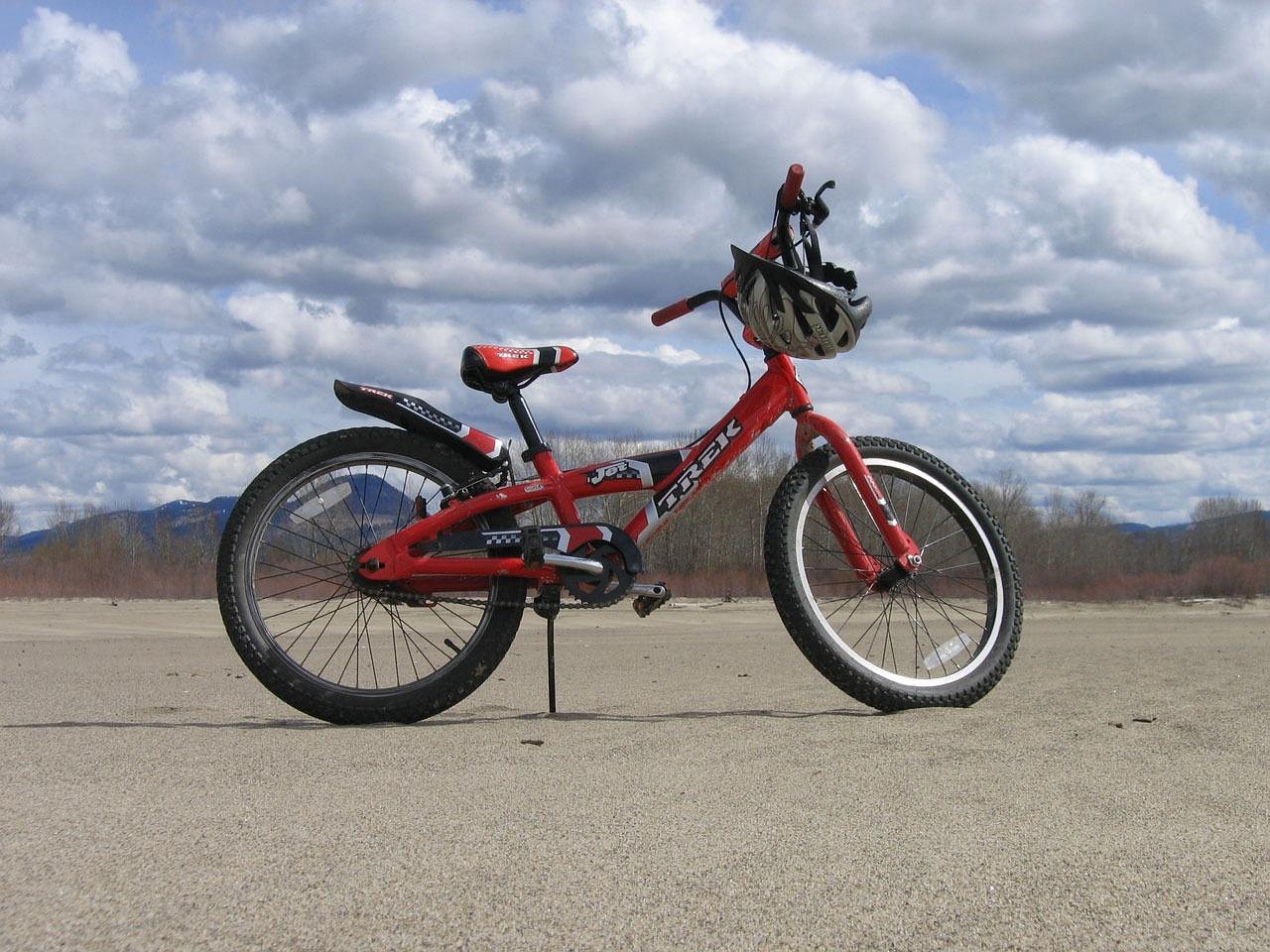
Many kids start on a balance bike as toddlers, which teaches balance and steering before pedals. The Strider 12 Sport is a popular one for ages 1–4 (about $150). Once a child is confident on a pedal bike with hand brakes, smooth dirt paths, pump tracks and green-circle trails are the next step. There’s no magic age: what matters is that they can brake, steer and look ahead, and that it stays fun. Short rides with snack stops beat a long slog every time.
Kids’ mountain bikes: size and fit
The American Academy of Pediatrics (AAP) is clear: don’t buy a bike for a child to “grow into.” An oversized bike is hard to control and dangerous. When seated, a child should be able to put the balls of both feet on the ground. Kids’ bikes are sized by wheel size, and REI’s general guide looks like this:
| Wheel size | Child’s height | Inseam |
|---|---|---|
| 20 inch | About 4’0″–4’5″ | 22–25 in |
| 24 inch | About 4’5″–4’9″ | 24–28 in |
| 26 inch and up | About 4’9″ and taller | 28 in and up |
Age is a poor guide, since two seven-year-olds can need different sizes; measure height and inseam, and check the maker’s chart. For trails, look for hand brakes small hands can reach and squeeze, light weight (a heavy bike is hard for a small rider), wide knobby tires and simple gearing. If you’re considering suspension, ask the shop whether it’s light and soft enough to work for your child’s weight. A local bike shop can check fit and adjust the brake levers.
Where kids should ride: skills parks, pump tracks and green trails
IMBA points families to pump tracks and skills areas, where kids build skills and confidence close to the car and the parents, and to beginner trails with little climbing or descending for a first time on dirt. Many trail systems mark trails with IMBA’s ratings: white and green circles for beginners, blue squares for intermediate riders. Teach the trail rules early: yield to hikers and horses, say hi, stay on the trail and stay off muddy trails (see trail rules and racing). Bike parks with lifts and jumps are best saved for confident teens with full-face helmets and pads, ideally after a coached lesson.
Protective gear for kids
Prices change often. The prices below are what we saw at the maker or a major retailer in October 2026; check the current price before you buy.
- Helmet, every ride. The AAP says helmets on every ride, and the CPSC says every bike helmet made since 1999 must meet its standard; look for the label. Bring your child to try it on: snug, level, not moving, strap buckled. Replace it after any crash. A football helmet isn’t a substitute, and kids shouldn’t wear bike helmets on playgrounds or in trees (strangulation risk).
- Full-face helmet for bike parks and downhill. The CPSC points to helmets certified to ASTM F1952 for downhill racing.
- Full-finger gloves protect hands, and knee pads or knee-shin guards are standard for trail and gravity riding.
- Eye protection: sunglasses on trails; goggles with a full-face helmet.
- Water: a bottle or small hydration pack, plus a snack.
For younger kids, the Bell Sidetrack II MIPS comes in Universal Child (47–54 cm) and Universal Youth (50–57 cm) sizes, with 14 vents, a visor, a MIPS liner and an easy-turn fit dial (about $63 to $77). Teens heading to the trailhead can step up to the Bell Nomad 2 Jr MIPS, a 335 g trail helmet with a visor in a 52–57 cm youth size. The G-Form Youth Pro-Rugged knee-shin guards use a material that stays flexible while riding and hardens on impact, the maker says (about $125), and the 100% Strata 2 Youth goggles (about $40) pair with a full-face helmet for bike park days.
Bell Sidetrack II MIPS Kids' Helmet
- MIPS liner, Ergo Fit dial
- Child 47-54 cm / Youth 50-57 cm
- 14 vents, visor
Bell Nomad 2 Jr MIPS
- Integrated MIPS
- Universal Youth 52-57 cm
- 335 g, adjustable visor
G-Form Youth Pro-Rugged Knee-Shin Guards
- Flexible, hardens on impact (maker)
- Adjustable straps
- Ventilated mesh back
100% Strata 2 Youth Goggles
- Youth-specific fit
- Anti-fog polycarbonate lens
- 40 mm silicone strap
Strider 12 Sport Balance Bike
- No pedals, ages 1-4
- Adjustable seat and bars
- Never-flat tires
NICA: middle and high school racing
The National Interscholastic Cycling Association (NICA) runs mountain bike leagues for students, with high school riders (grades 9–12) at the core and middle schoolers (grades 6–8) in many leagues. As of 2026 it lists more than 25,000 student-athletes on 1,055 teams in 33 leagues. Teams can come from one school or several (composite teams), so a school without a team isn’t a dead end. Races are cross-country, by grade and gender, and NICA’s approach is “no selections and no sidelines”: everyone rides, at their own level, in a “challenge by choice” setting. There’s also GRiT (Girls Riding Together) for girls, Teen Trail Corps for trail work, and NICA Adventure for riders who don’t want to race. Coaches are trained and licensed. Ready to look further ahead? See leagues and associations, including USA Cycling junior racing and college teams.
Keeping young riders healthy
Injuries are mostly from falls. NICA’s injury surveillance (2018–2022) found about 2.2% of student-athletes had an injury event in a season, and the rate fell 27% over five years. The wrist and hand (23.2%), head and brain (23.0%) and shoulder and collarbone (15.9%) were hurt most. A study of US emergency-room data suggested better coaching on front-brake control for young riders, so practice smooth braking on easy ground.
Concussion: when in doubt, sit them out. The CDC says a child with a possible concussion should stop riding right away, not return the same day, and be checked by a health care provider; seek emergency care for danger signs such as a worsening headache, repeated vomiting, unusual drowsiness or confusion. NICA requires written clearance from a physician before a rider returns.
Heat, water and sleep. Send water and snacks on every ride, ride early on hot days, and watch for signs of heat illness. Teens need 8–10 hours of sleep a night (AASM), which matters for recovery and reaction time. Don’t overdo it: the AAP advises against early single-sport specialization, and a study found young athletes who train more hours per week than their age in years had higher injury risk. Mixing mountain biking with other sports is a good thing. Pain that lasts, or any injury after a crash, is a reason to see a pediatric sports medicine doctor, physical therapist or athletic trainer. More on our mountain bike injuries page.
Back to the mountain biking hub, or see mountain bike gear. For road riding and first bikes, see youth cycling; play soccer too? Try youth soccer.
Parents’ questions about youth mountain biking
What size mountain bike does my child need?
Size by height and inseam, not age. As a rough guide from REI, 20-inch wheels fit kids about 4’0″–4’5″, 24-inch about 4’5″–4’9″, and 26-inch and up from about 4’9″. Seated, your child should reach the ground with the balls of both feet. Don’t buy a bike to grow into.
Is mountain biking safe for kids?
Injuries happen, mostly from falls, but in NICA’s five-year data only about 2.2% of student-athletes had an injury in a season, and the rate fell over time. A helmet on every ride, trails that match their skills, coaching and good brakes all help.
Does my child need knee pads?
For paved paths and easy trails, a helmet and gloves are the basics. For rocky trails, pump tracks, jumps and bike parks, knee pads or knee-shin guards are a smart addition, and a full-face helmet is the norm for downhill and lift-served riding.
Can middle schoolers join NICA?
In many leagues, yes: grades 6–8 can join alongside high school riders in grades 9–12. Rules vary by state league, so check your local league’s website, and ask about composite teams if your school doesn’t have one.
What should I do if my child hits their head in a crash?
Stop the ride, even if they seem fine, and have a health care provider check them. Watch for danger signs like a worsening headache, repeated vomiting or confusion, and call 911 if you see them. Replace the helmet, and don’t let them ride again until they’re cleared.