This article contains affiliate links: if you buy through them we may earn a commission, at no extra cost to you. Learn more.
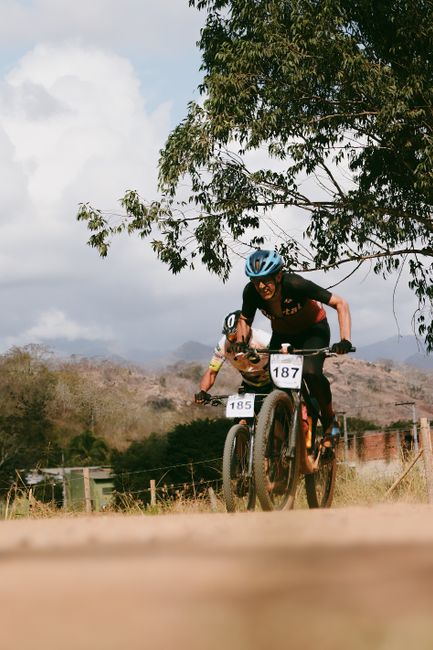
You come around a blind corner on a shared trail, a little fast, and there they are: two hikers and a horse. What you do in the next two seconds says a lot about mountain biking. Trail riding has no referee, so the mountain bike trail rules are a code riders keep for each other, for hikers and horses, and for the land managers who decide which trails stay open to bikes. Racing adds a rulebook on top. This page covers both: trail etiquette and right of way, then the race formats from cross-country to downhill and the rules that matter on race day.
IMBA Rules of the Trail
The International Mountain Bicycling Association (IMBA) publishes the Rules of the Trail that most clubs and trail systems in the US point to. In short:
- Respect the landscape. Stay on the trail (“keep singletrack single”) and follow Leave No Trace. Don’t ride muddy trails; it causes ruts, widening and work for trail builders. Ride through standing water, not around it, and ride (or walk) technical features rather than going around them.
- Share the trail. Mountain bikers yield to horses and people on foot, and riders going downhill yield to riders climbing. Be nice. Say hi.
- Ride open, legal trails. Poaching closed trails, building illegal singletrack or adding unauthorized features hurts access for everyone, and poorly built features can seriously injure other riders.
- Ride in control. IMBA calls speed, inattention and rudeness the main sources of trail conflict. To pass, slow down, ring a bell or call out, and wait until the other person is out of the way. Be extra careful around horses and on blind corners, and make sure you can hear what’s around you.
- Plan ahead. Be self-sufficient: carry what the ride needs, know how to fix a flat and make small repairs, bring a map or trail app, and ride with a partner or tell someone your plan if you go alone.
- Mind the animals. Leave wildlife and cattle alone, and check the leash rules before you bring a dog.
And one more from IMBA: check with your local land manager for the rules of each trail system.
Right of way: the yield triangle
The yield triangle is simple: bikes yield to everyone, hikers yield to horses, and on a bike-to-bike meeting, the descending rider yields to the climbing rider (it’s much harder to restart on a climb). IMBA says land managers have used it since the late 1970s, and it’s a big reason bikes are allowed on so many shared trails. In practice:
- Hikers and runners: slow down early, say hello, and pass at walking speed once they’ve stepped aside. Thank them.
- Horses: stop well back, say hi and talk to the rider, which helps the horse recognize you as a person, and ask how they’d like to pass. Never ride up fast behind a horse.
- Other riders: going down, pull over for riders coming up. Overtaking on a climb, ask to pass and wait for a wide spot.
- Directional or bike-only trails: some trails are one-way or downhill-only. IMBA notes there are regional differences, so know the local code and read the signs.
A bell makes all of this easier. The Spurcycle Compact Bell is a small 28 g bell with a brass dome and a clear, friendly tone (about $41), and it’s half the width of the original Spurcycle mount, so it fits a crowded mountain bike cockpit.
Check the Spurcycle Compact Bell price on Amazon
Trail difficulty ratings
Many US trail systems use IMBA’s trail difficulty rating system, adapted from ski-area signs: white circle (easiest), green circle (easy), blue square (more difficult), black diamond (very difficult) and double black diamond (extremely difficult). It rates technical challenge (trail width, surface, grade and obstacles), not distance or climbing, so a “green” trail can still be a long day. IMBA’s guidance is to rate trails relative to others in the same region, so a blue at one place may ride like a black somewhere else. When you’re new to a place, start a level lower than usual and walk any feature you aren’t sure about. IMBA’s rule still applies: ride or walk the feature rather than cutting around it.
Mountain bike race formats
The UCI’s mountain bike rules (Part 4 of its regulations) define the formats used from local races to the World Cup:
| Format | How it works | Length at top events |
|---|---|---|
| Cross-country Olympic (XCO) | Mass start, laps of a varied course; first across the line wins. The Olympic event. | Elite: 1:20–1:40. Juniors: 1:00–1:15. |
| Short track (XCC) | Short, fast laps; start and finish in the same area. | 20–30 minutes on a course of 2 km or less. |
| Marathon (XCM) | One long lap or up to three laps; mass start. | 60–160 km. |
| Downhill (DHI) | One rider at a time on a descending course; a qualifying or seeding run, then a single-run final. Fastest time wins. | Course 1.5–3.5 km, 2–5 minutes. |
| Enduro (EDR) | Untimed liaison stages (pedaling or lifts) between timed, mostly downhill stages; stage times are added up. | Varies by event. |
| Four cross (4X), pump track, eliminator, e-MTB | Head-to-head heats (4X, eliminator), timed laps on a pump track, and races for e-mountain bikes. | Short heats. |
Local races follow the same ideas with shorter distances for beginners, kids and masters. The leagues and associations page covers who runs which races.
Race rules that matter
- Let faster riders pass. UCI rules say a rider must act in a sporting manner and let any faster rider overtake without blocking. In practice, call out when you want to pass, and when you’re the slower rider, move over where it’s safe.
- Stay on course. If you leave the course, you must rejoin between the same two course markers where you left, or you can be disqualified.
- Help only in the zone. In cross-country, food and mechanical help are allowed in feed/technical assistance zones. In enduro, outside help is only allowed in the technical assistance zone, riders use one frame, fork and pair of wheels for the whole race, and replacing a broken part (with approval) costs a 3-minute penalty.
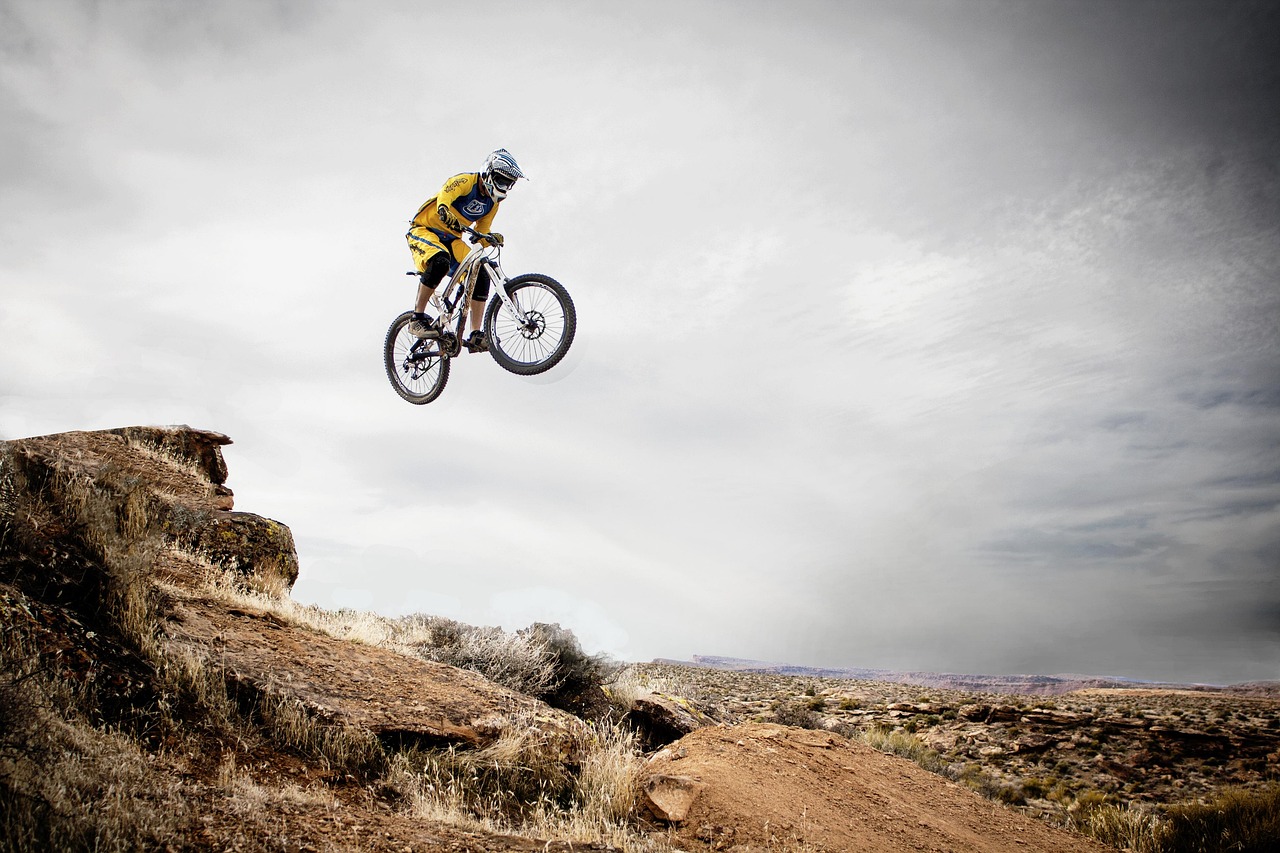
- Full-face helmets for gravity racing. In downhill, a full-face helmet with a peak must be worn in racing and in training on the course; in enduro, riders must wear one at all times while riding, on liaison and timed stages. Open-face helmets aren’t allowed.
- Downhill clothing. A long-sleeved jersey, plus long pants or shorts with knee and shin protection. The UCI also strongly recommends rigid back, elbow, knee and shoulder protection, neck protection and full-finger gloves.
- Pump track: flat pedals only (no clipless), and a helmet is mandatory.
In the US, USA Cycling groups mountain bike racers in three categories: Category 3 (beginner), Category 2 and Category 1, with juniors usually racing in two-year age groups. High school racers in NICA leagues race cross-country by grade and gender. Your local race’s technical guide has the details, including course practice times, so read it before the day. Our ride day and race day page covers fueling and warm-up, and mountain bike gear covers helmets and pads.
Safety rules every rider should keep
Wear a helmet that meets the CPSC standard on every ride, and a full-face helmet for downhill and bike parks. Pre-ride or walk new features before hitting them at speed. Carry water, a pump, a spare tube and a multi-tool; the CamelBak M.U.L.E. 12 (about $85) holds a 100 oz reservoir plus a tool organizer. And if you or a friend hits your head, the CDC’s rule applies: stop riding for the day and see a health care provider before riding again. The mountain bike injuries page covers what to watch for.
Spurcycle Compact Bell
- 28 g, brass alloy dome
- Half-width mount
- 31.8 mm bar clamp version
Bell Nomad 2 MIPS Helmet
- Integrated MIPS
- Adjustable visor
- S/M 52-57 cm, M/L 53-60 cm
CamelBak M.U.L.E. 12 Hydration Pack
- 100 oz (3 L) Crux reservoir
- 12 L of storage
- Tool organizer, helmet carry
Back to the mountain biking hub, or see the youth guide. Ride on the road too? See cycling rules and road safety.
Trail rules and racing questions
Do mountain bikers have to yield to hikers?
Yes, on shared trails. IMBA’s yield triangle says mountain bikers yield to people on foot and to horses. Slow down early, say hello, and pass slowly once they’ve stepped aside. Some bike-only or directional trails have different rules, so check the signs.
Who has the right of way, uphill or downhill riders?
The climbing rider. Under IMBA’s Rules of the Trail, descending riders yield to riders coming up, because restarting on a climb is hard and the descending rider can usually see and stop more easily.
Can I ride when the trails are muddy?
Usually no. IMBA asks riders not to ride muddy trails because it causes ruts and widening. Many trail systems post a status online or on social media; if your tires leave deep marks, turn around. If you hit a puddle mid-ride, go through it, not around.
What’s the difference between XC, enduro and downhill racing?
Cross-country is a mass-start race over laps with lots of climbing; the first rider across the line wins. Downhill is one timed run down a steep course. Enduro mixes untimed climbs with several timed descents, and the fastest total time wins.
Is a full-face helmet required for enduro racing?
At UCI enduro events, yes: riders must wear a full-face helmet at all times while riding, on both liaison and timed stages. Local series set their own rules, so check the technical guide.